
Path of the Fallen Fire
Critique
1. Introduction This realistic painting captures a late autumn forest path from a striking low-angle perspective. The composition is dominated by a dense carpet of fallen maple leaves that leads the viewer's gaze toward a luminous background. By focusing on the intricate details of the forest floor, the work evokes a profound sense of seasonal transition and tranquil atmosphere. The artist successfully creates a space where the ephemeral beauty of nature is preserved through meticulous execution. 2. Description The foreground features highly detailed maple leaves in vibrant shades of red, orange, and yellow, many adorned with delicate water droplets. Each leaf's texture and vein structure are rendered with precision, creating a tactile quality. As the path recedes, the colors blend into a soft, golden glow as sunlight filters through the trees, creating a misty effect in the distance. Overhanging branches at the top provide a natural frame, enhancing the overall sense of depth within the woods. 3. Analysis The use of color establishes a dramatic contrast between the intense warm tones of the foreground and the ethereal light of the background. The extreme perspective emphasizes the physical presence of the leaves, while the shallow depth of field creates a photographic realism. Light is handled with exceptional sensitivity, as reflected highlights on the water droplets add a sense of freshness and vitality. The rhythmic layering of forms guides the eye smoothly through the scene, suggesting movement within the stillness. 4. Interpretation and Evaluation This work represents a masterful intersection of technical prowess and emotional resonance, highlighting the quiet beauty of often-overlooked natural elements. By centering the composition on the forest floor, the painting invites a contemplative immersion into the cycle of nature. The interplay between the symbolic "death" of the fallen leaves and the life-affirming quality of the light creates a complex narrative. The artist's ability to balance intricate detail with a cohesive atmospheric effect is particularly noteworthy. 5. Conclusion A persistent observation of minute details allows the painting to vibrate with the living breath of the forest. While the initial impression is one of brilliant individual colors, the final understanding reveals a harmonious unity achieved through light. It is a dense and compelling work that elevates fragments of the earth into a universal vision of beauty.
Same Subcategory
Similar Artworks
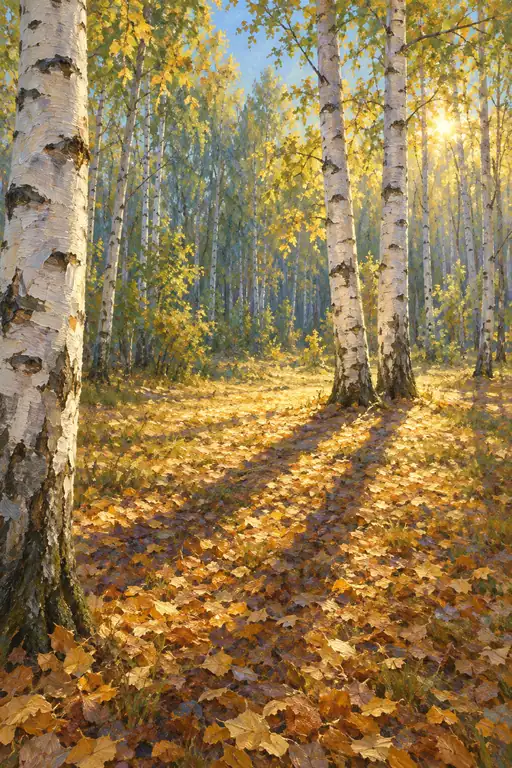 Sanctuary of Gilded Birch
 Golden Carpet of the Birch Grove
 Golden Leaves Crowned in Morning Dew
 Song of the Hidden River
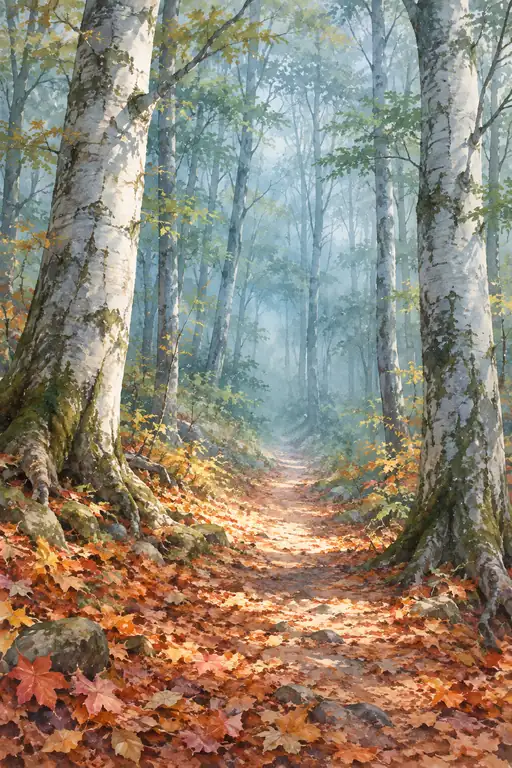 Golden Path into Mist
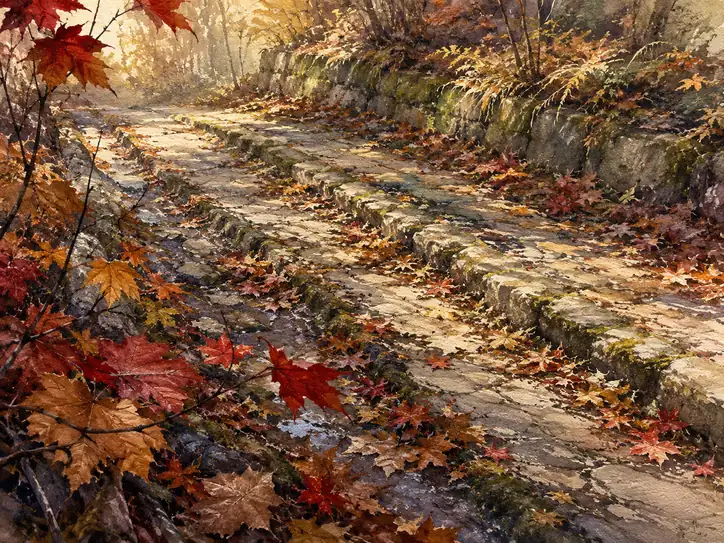 The Soft Footsteps of Autumn
 Autumn's Golden Breath over the Stream
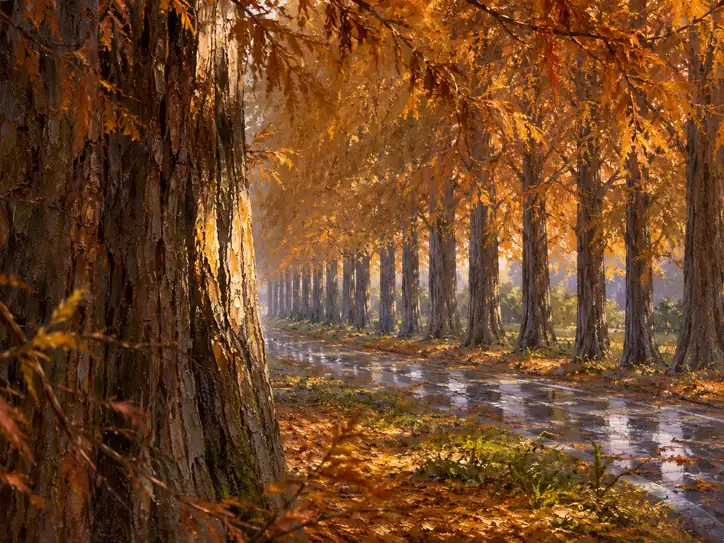 Golden Corridor of the Sleeping Forest
 Whispers of the Amber Cascade
 A Crimson Canopy Burning in the Water Mirror