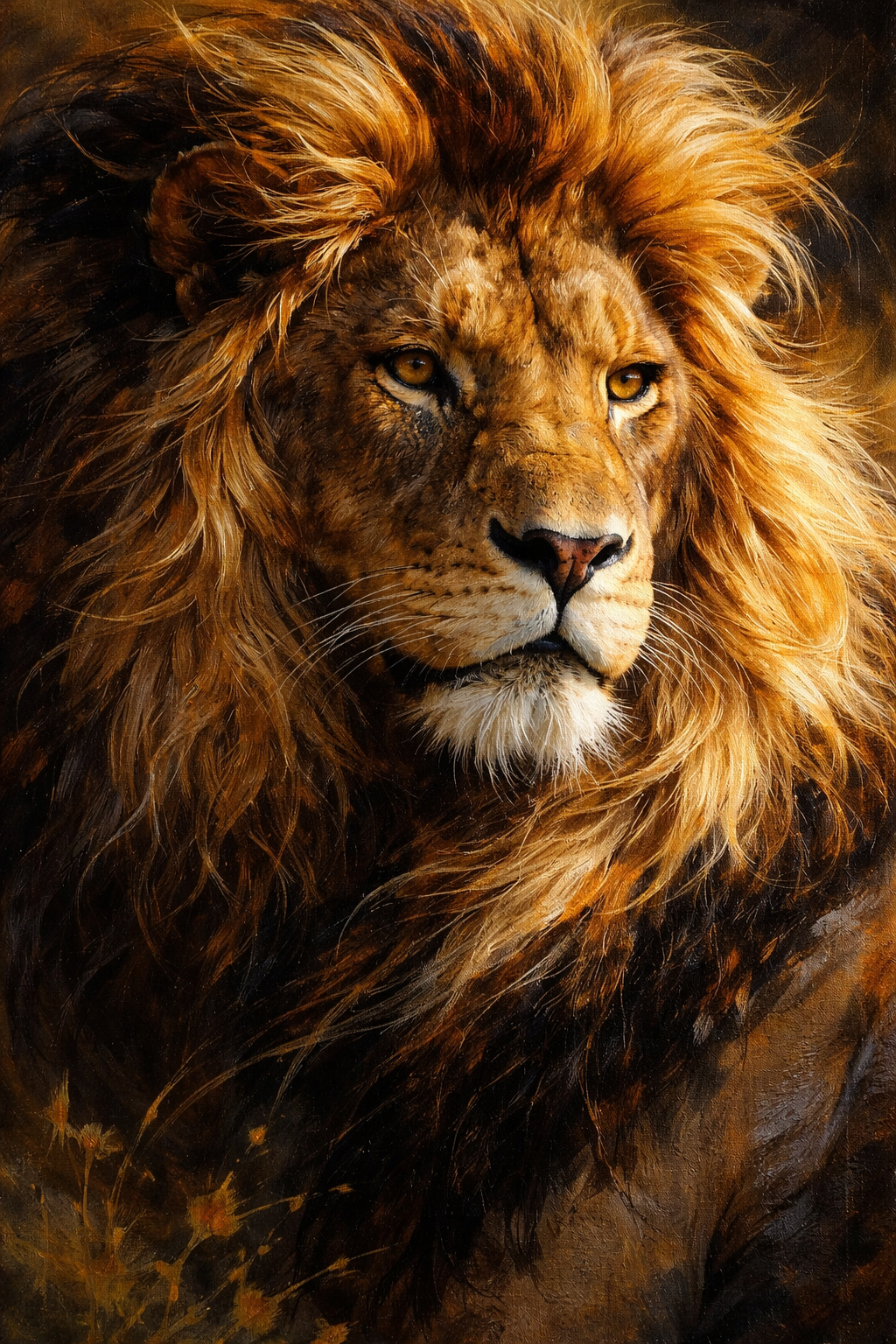
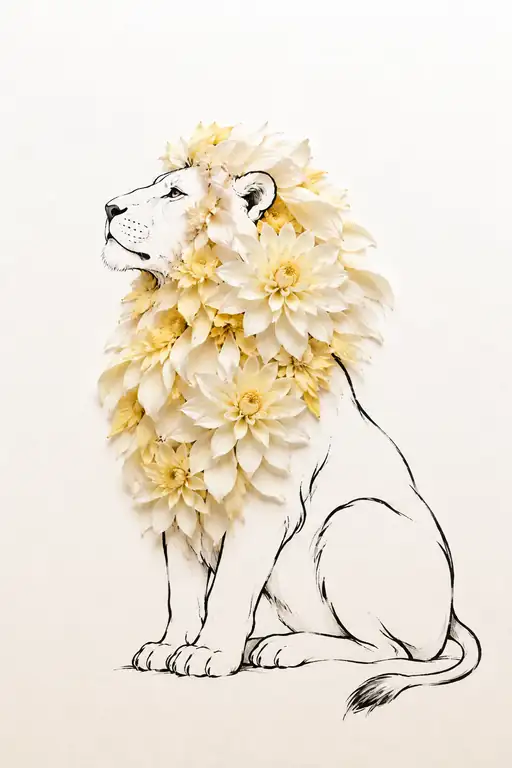
Golden Reverie of the Fields
Critique
1. Introduction This oil painting presents a formal portrait of a male lion, focusing on the character and presence of the subject. The work utilizes a classical approach to animal portraiture, emphasizing the dignity and power of the animal through careful observation. By isolating the lion against a dark background, the artist creates a timeless study of one of nature's most iconic predators. 2. Description The composition features the head and shoulders of a lion, turned slightly to the right of the canvas. The animal's intense amber eyes gaze into the distance with a steady, calm expression. A voluminous, multi-toned mane surrounds the face, with individual strands of hair rendered in shades of gold, brown, and black. The background is a deep, dark brown that suggests a nocturnal or shadowed environment, providing a sharp contrast to the illuminated subject. 3. Analysis The artist demonstrates exceptional skill in depicting diverse textures, particularly the contrast between the soft fur of the face and the coarse, wild quality of the mane. Light is directed from the side, creating strong highlights that define the anatomical structure of the lion's head and the depth of its features. The color palette is restricted to warm earth tones, which enhances the regal and somber atmosphere of the piece. The use of fine brushwork in the facial area provides a level of detail that conveys a sense of psychological depth. 4. Interpretation and Evaluation This work succeeds as an exploration of majesty and stoicism in the animal kingdom. The technical precision in rendering the lion's features elevates the piece beyond a simple likeness, imbuing the subject with a perceptible sense of wisdom and authority. The decision to employ dramatic chiaroscuro lighting effectively focuses the viewer's attention on the intense gaze of the predator. Overall, the painting achieves a balanced harmony between representational accuracy and emotional resonance, making it a highly effective example of wildlife art. 5. Conclusion In summary, the painting is a masterful tribute to the innate dignity of the lion. The initial impact of the animal's physical presence is followed by an appreciation for the subtle nuances of light and texture that define the work. It remains a powerful and enduring portrayal that captures the essence of the subject with remarkable clarity and respect.
Same Subcategory
 Sunlit Whispers of the Meadow
Similar Artworks
 Monarch of the Golden Frost
 Dancing Shadows in the Morning Light
 Gentle Eyes in a Golden Kingdom
 Sovereign of the Golden Forest
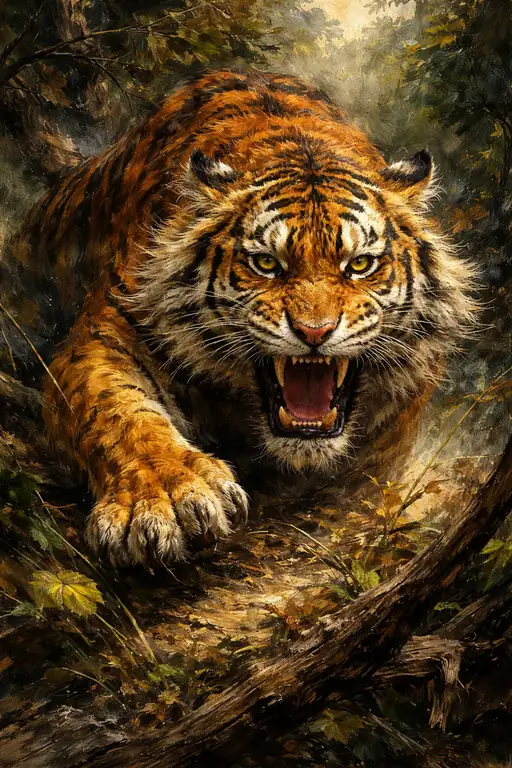 Fierce Shadows of the Untamed Forest
 Warmth in the White Silence
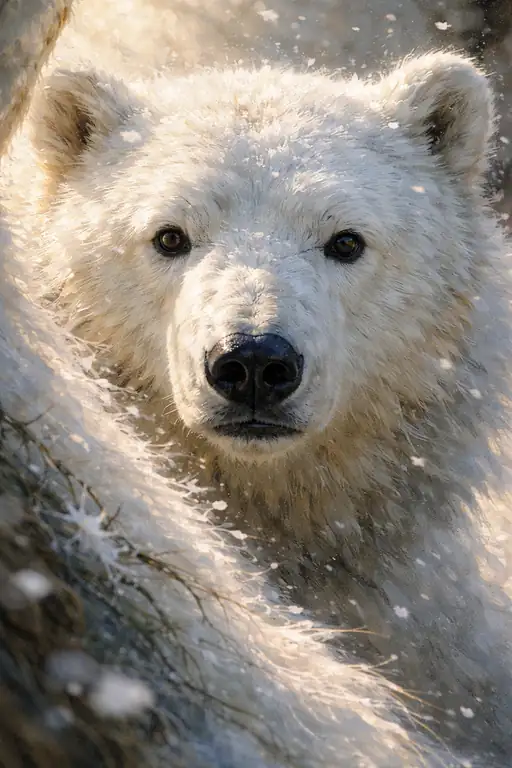 Quiet Dignity in the Frost
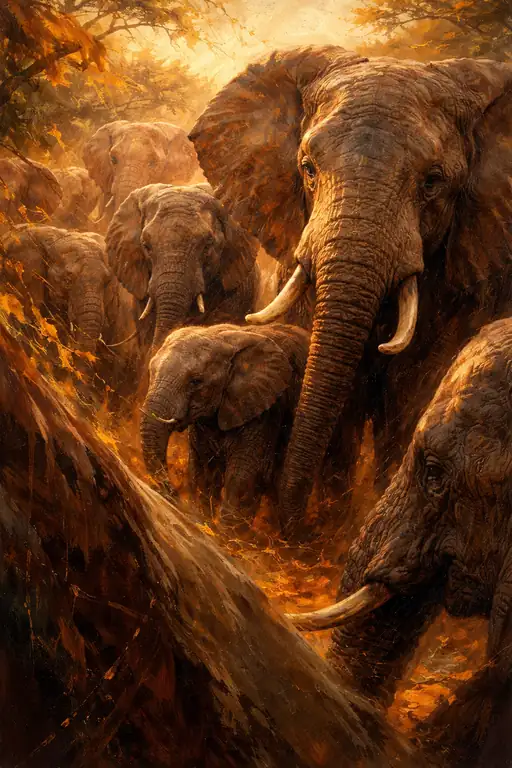 The Gentle Gaze of the Innocent
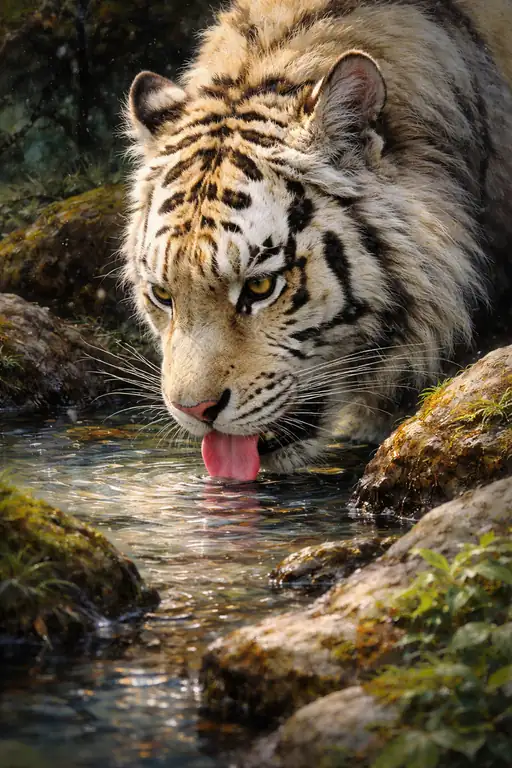 Eyes of the Wild, Heart of the Stream
 Strength at Ease in Its Own Light