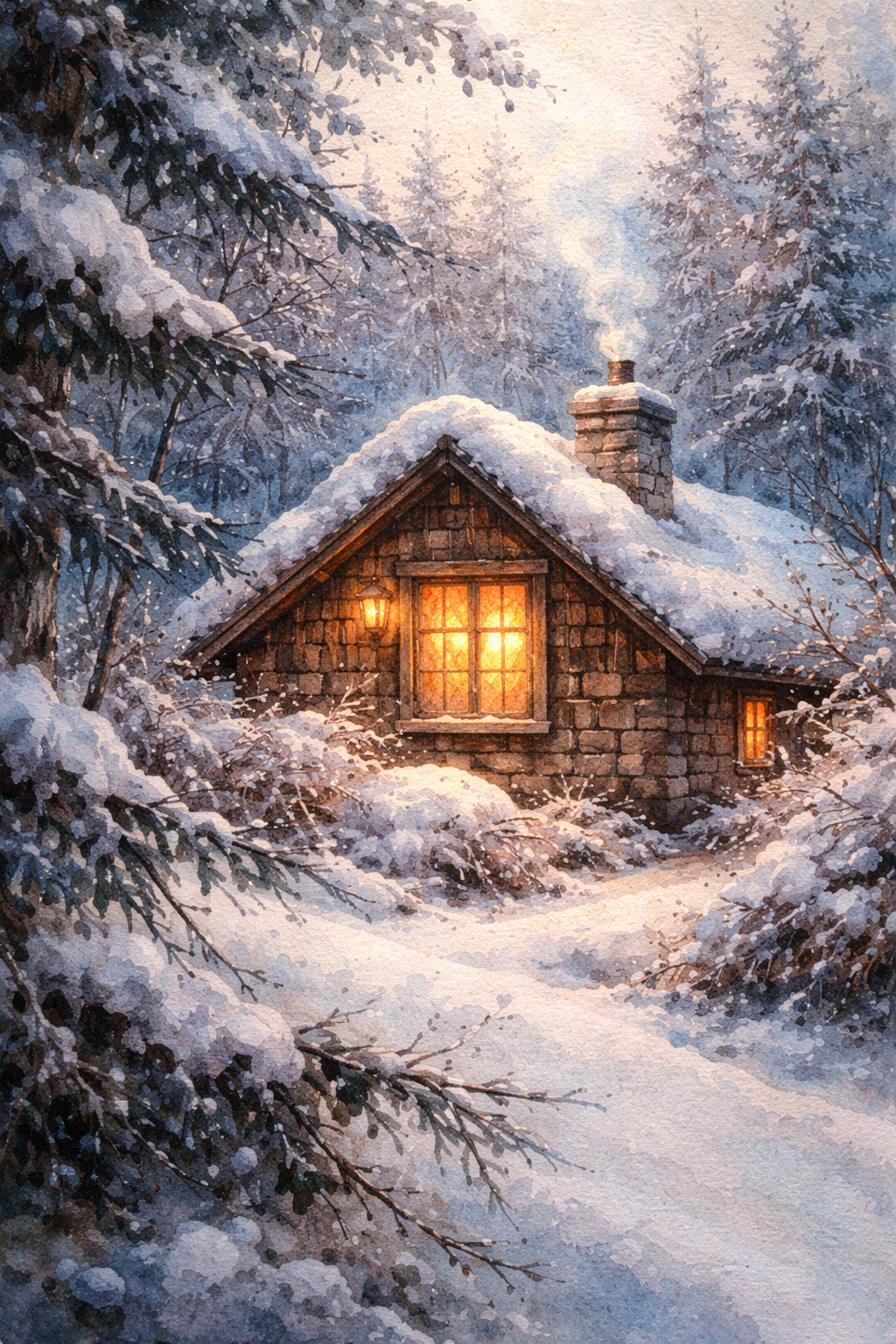
A Solitary Glow in the Frozen Silence
Critique
1. Introduction This artwork portrays a humble stone cabin situated in a dense, snow-covered forest, rendered in a soft and evocative painterly style. The central focus is the warm, golden light emanating from a single window, which serves as a beacon of comfort amidst the cool, wintry tones of the landscape. By contrasting the rugged stonework of the cabin with the delicate, crystalline texture of the snow, the painting explores themes of endurance, refuge, and the quiet beauty of a winter woodland. It invites the viewer into a contemplative space where the silence of the forest is palpable. The work effectively uses light to create a narrative of home and safety in a secluded environment. 2. Description The composition is vertically oriented, featuring a small stone cabin with a steeply pitched roof covered in a thick mantle of snow. A large window at the center glows with a brilliant amber light, suggesting a warm hearth within. To the right, a stone chimney releases a wisp of white smoke into the pale, misty sky. The cabin is surrounded by tall pine trees, their branches heavily laden with snow, which frame the building and create a sense of enclosure. The foreground consists of a pristine snowdrift, with subtle shadows and highlights that suggest a path leading toward the structure. The overall atmosphere is one of soft, diffused light, characteristic of a snowy day. 3. Analysis The artist utilizes a limited but effective color palette, focusing on a range of cool greys and blues to define the forest and snow, while reserving warm oranges and yellows for the interior light. The texture of the paper or canvas is visible through the paint, adding a grainy, organic quality that complements the natural subject matter. The brushwork is particularly delicate in the rendering of the snow-covered pine needles, where small, precise dabs suggest the weight and accumulation of the flakes. The vertical lines of the trees provide a strong rhythmic structure, leading the viewer’s eye upward toward the misty background. Light is handled with great sensitivity, appearing to glow from within the cabin and softly illuminate the immediate surroundings. 4. Interpretation and Evaluation The painting successfully evokes a sense of profound peace and the romanticized ideal of solitary living in harmony with nature. The glowing window acts as a powerful emotional anchor, transforming the cold forest into a welcoming and mysterious scene. The artist’s choice of a stone cabin adds a sense of permanence and strength, contrasting beautifully with the ephemeral and fragile nature of the falling snow. The composition feels intimate and protected, as if the forest itself is shielding the dwelling from the outside world. This work is a fine example of atmospheric landscape painting, where the mood is just as important as the physical depiction of the scene. 5. Conclusion Upon first viewing, the eye is immediately drawn to the radiant center of the cabin, which provides a direct sense of warmth and invitation. As the viewer explores the surrounding forest, they become aware of the subtle gradations of light and the meticulous detail that gives the snow its tactile reality. The piece effectively summarizes the quiet majesty of a winter sanctuary, focusing on the sensory experience of cold and light. This transition from a single focal point to the wider, immersive environment is the key success of the artwork. It concludes as a refined and emotionally evocative study of light as a source of hope and comfort.
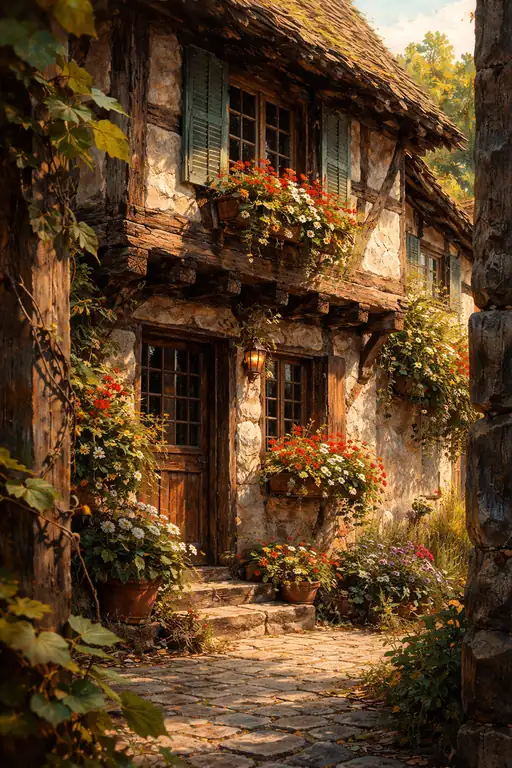 The House Where Time Sleeps
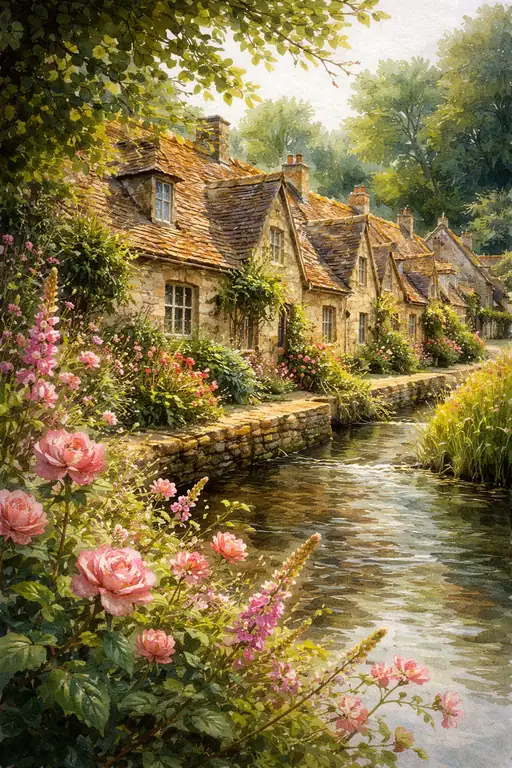 Bibury's Quiet Slumber: Reflections of Arlington Row
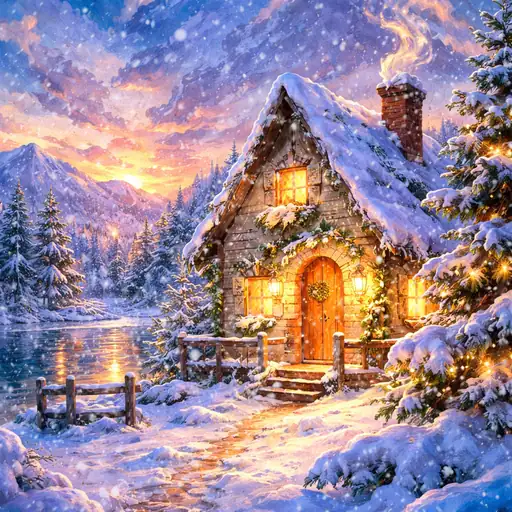 Sanctuary in the Winter Twilight
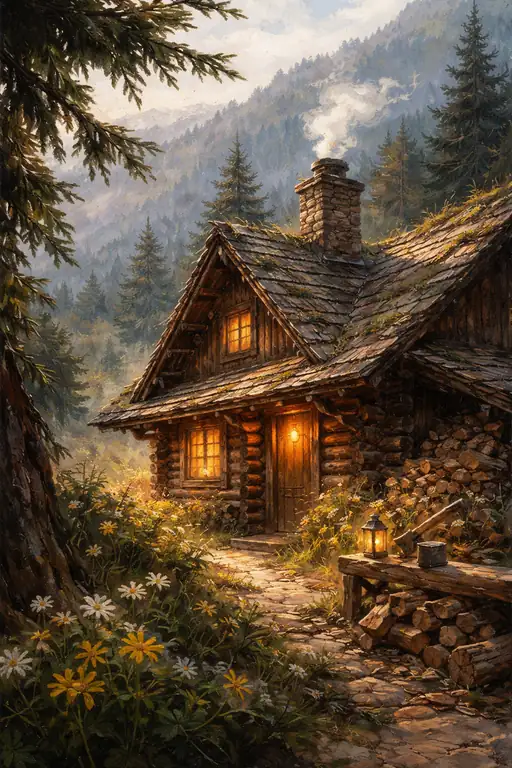 Glowing Solitude in the Misty Pines
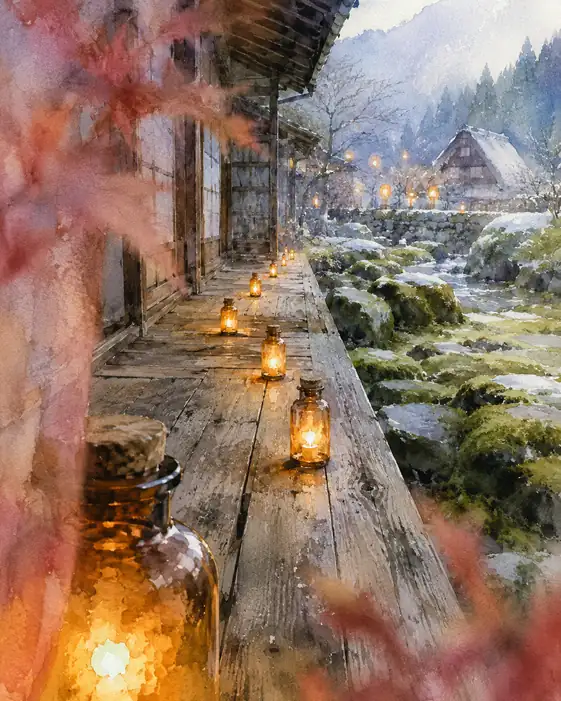 Whispers of Winter Warmth
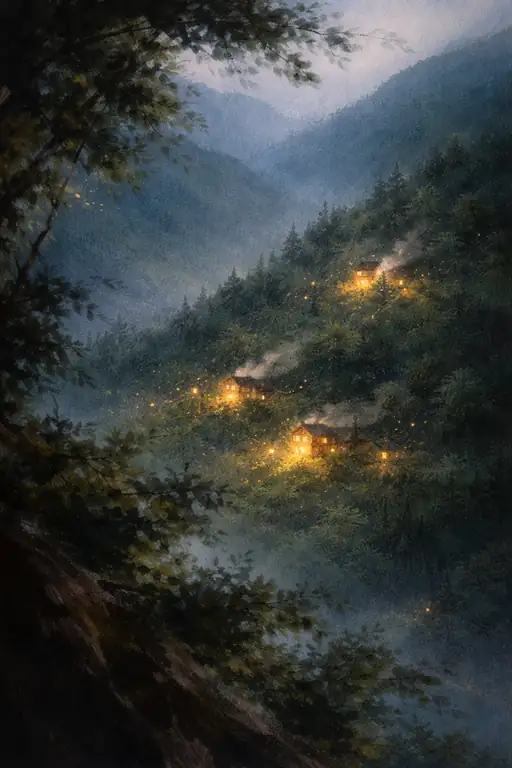 Refuge from the Mountain's Shadow
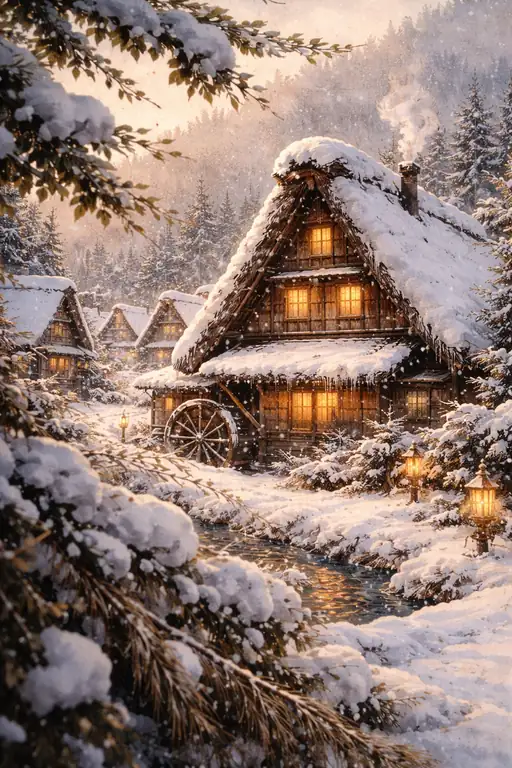 Warmth in the Frozen Valley
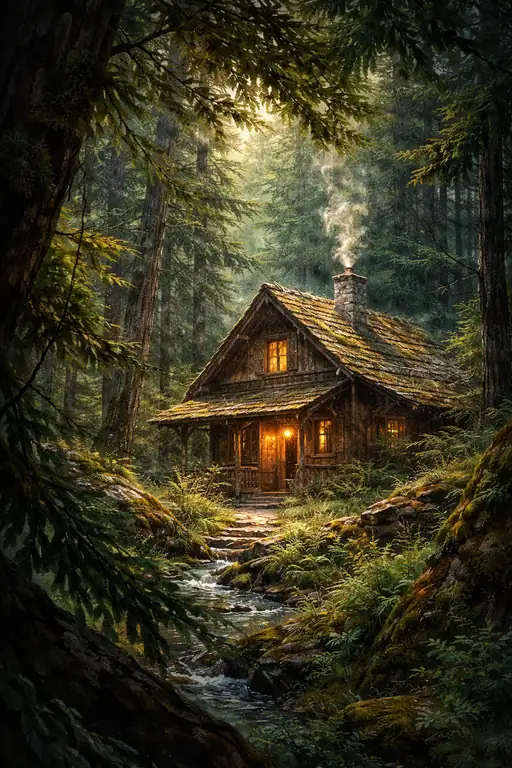 Sanctuary of the Whispering Woods
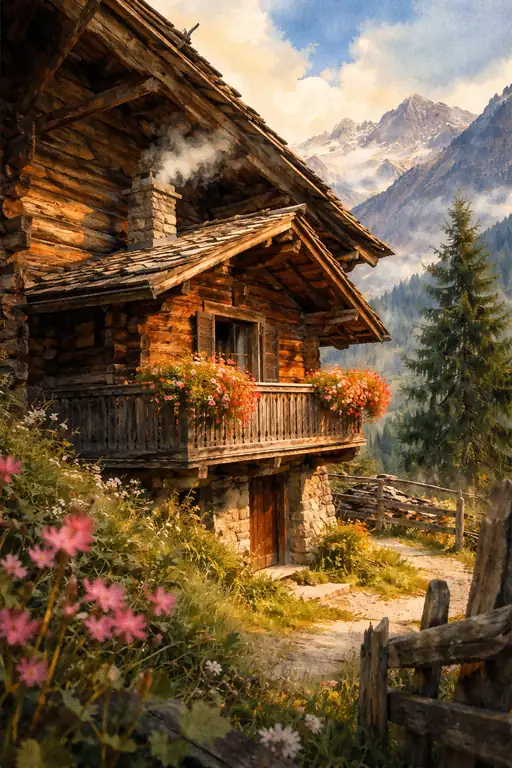 Embers in the Alpine Air
 A Beacon in the Silent Snow
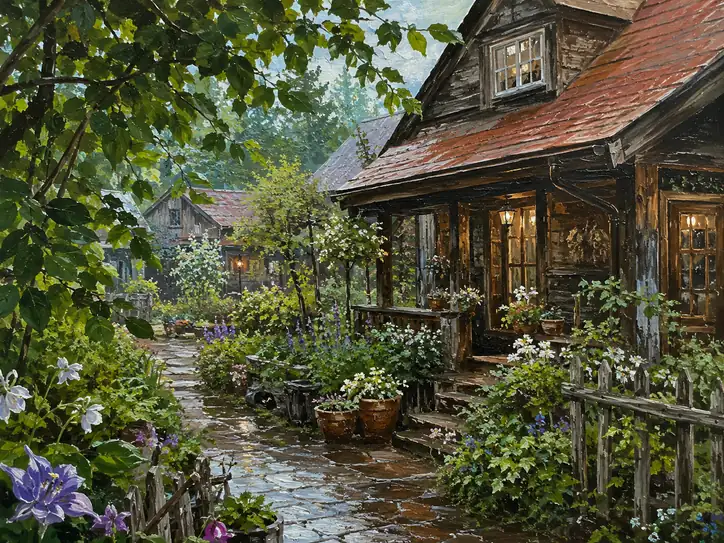 The Gentle Light of Home