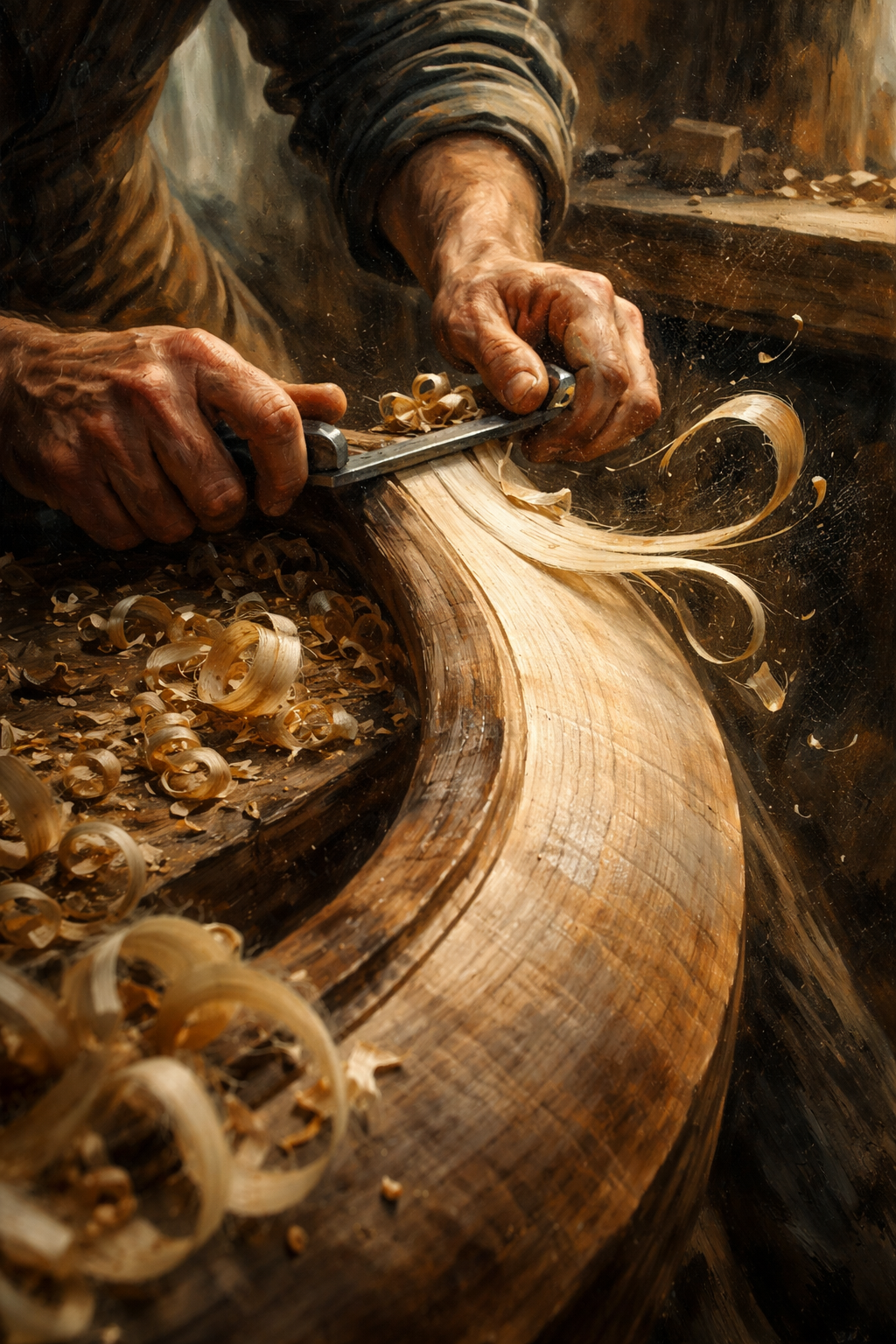
Whispers of the Wood
Critique
1. Introduction This oil painting presents a profound exploration of human craftsmanship, capturing a singular, focused moment within a traditional woodworking workshop. The composition centers on the intimate and intense interaction between a pair of experienced hands and a substantial, curved piece of timber. Through a masterful application of light and texture, the artist elevates a scene of manual labor into a meditative study of creation and material transformation. The work invites the viewer to witness the quiet dignity inherent in the tactile process of shaping the natural world. 2. Description The primary focus is a pair of rugged, weather-beaten hands, their skin deeply lined and stained by years of toil. These hands firmly grasp a metallic drawknife, which is currently peeling away a long, elegant curl of wood from a large, circular wooden structure. Fine wood shavings are scattered across the workbench, some caught in mid-air as if suspended by the energy of the craftsman's movement. The wood itself shows a rich, varied grain, transitionally smoothed from its raw state into a polished, intentional curve. In the background, the dim environment of the workshop is suggested by blurred tools and timber. 3. Analysis The artist employs a dramatic chiaroscuro technique, with a strong light source from above illuminating the hands and the point of contact with the wood. This lighting strategy creates deep shadows that emphasize the muscular structure of the arms and the intricate textures of the wood shavings. The composition follows a dynamic diagonal, leading the eye from the craftsman's grip down through the sweeping curve of the wooden object. There is a compelling contrast between the cold, hard surface of the metal tool and the organic, warm tones of the timber. 4. Interpretation and Evaluation This painting serves as a powerful testament to the enduring value of traditional manual skills in an increasingly industrialized world. The meticulous depiction of the hands suggests a deep respect for the physical labor and the accumulated wisdom required for such specialized work. The delicate, almost ethereal quality of the wood shavings provides a poetic counterpoint to the strength and grit of the workshop environment. Technically, the artist demonstrates exceptional skill in rendering varied surfaces, from the translucence of the shavings to the solid weight of the main timber. 5. Conclusion While the initial impression is one of simple physical exertion, a closer examination reveals a complex narrative of patience and precision. The work successfully bridges the gap between the mundane reality of a workshop and the elevated realm of artistic expression. It captures not just the act of woodworking, but the spiritual connection between the maker and the object being made. Ultimately, this painting stands as a timeless celebration of the human spirit's capacity to find beauty and purpose through dedicated craftsmanship and mastery.
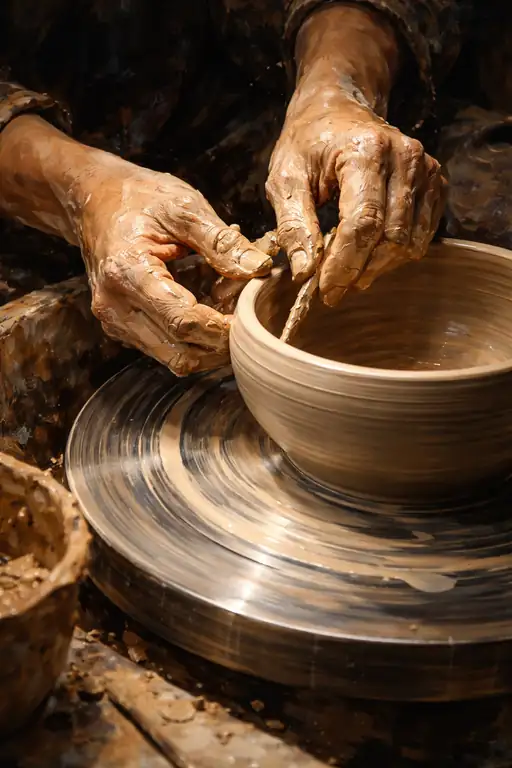 Earthly Genesis: Form from Formless Clay
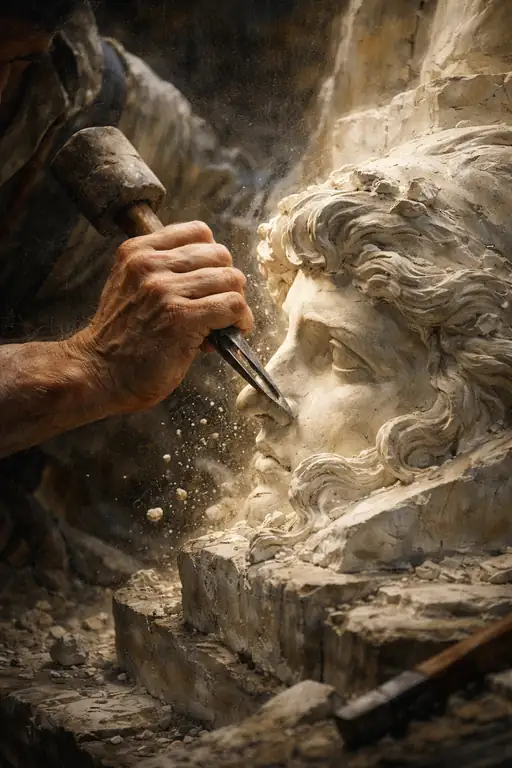 Awakening from Stone
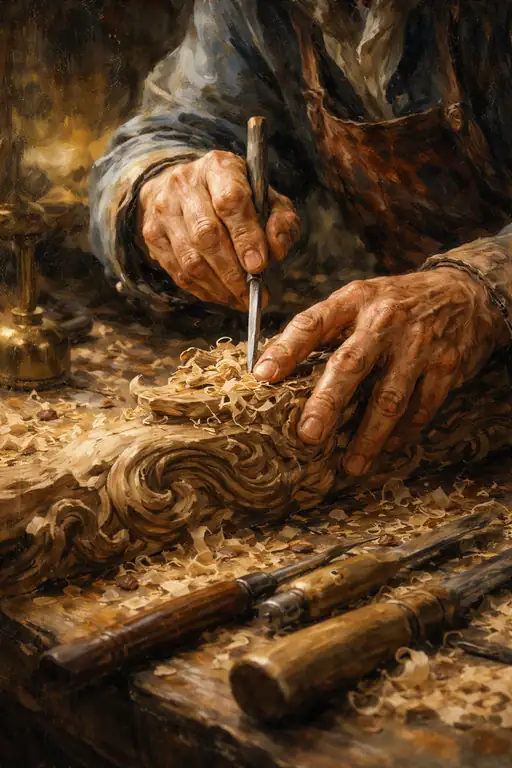 The Soul Carved in Wood
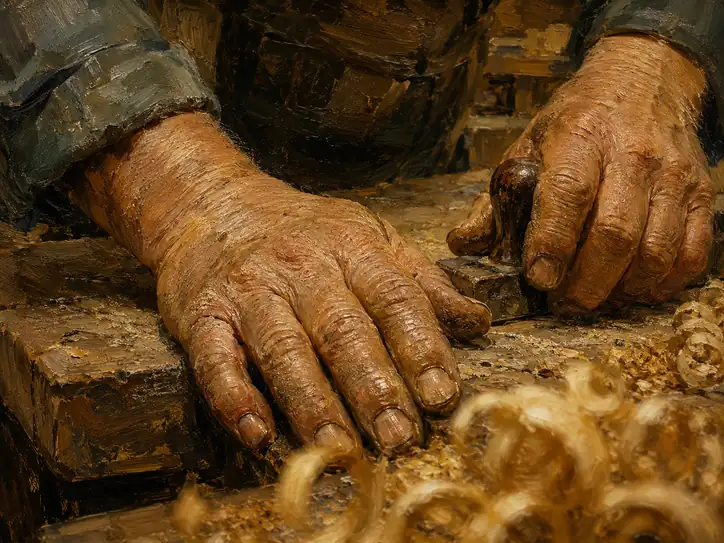 Prayer in the Grain
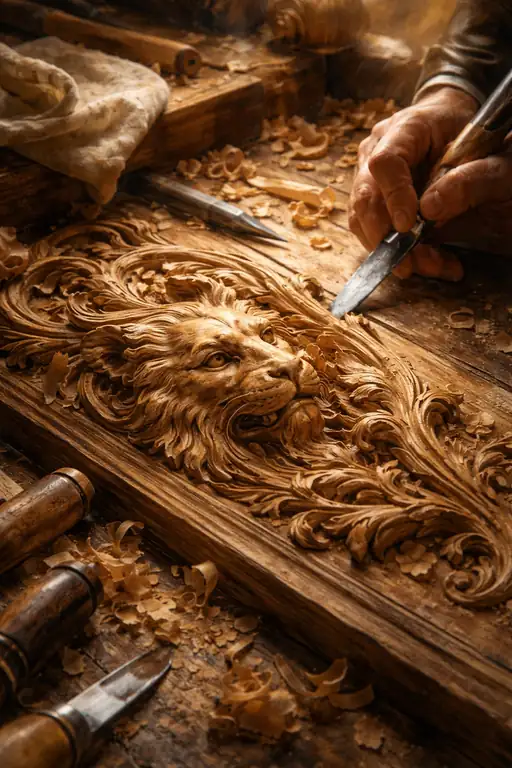 The Artisan's Devotion Etched in Wood
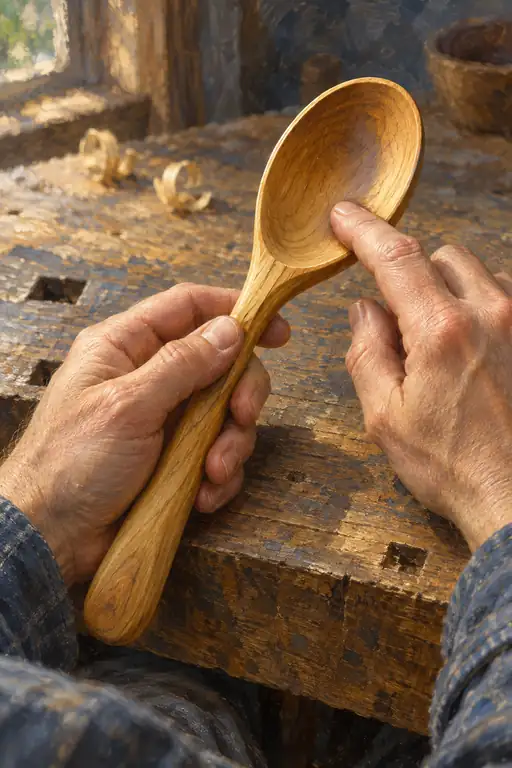 The Tree Still Speaks to My Fingers
 Sculpting the Sound
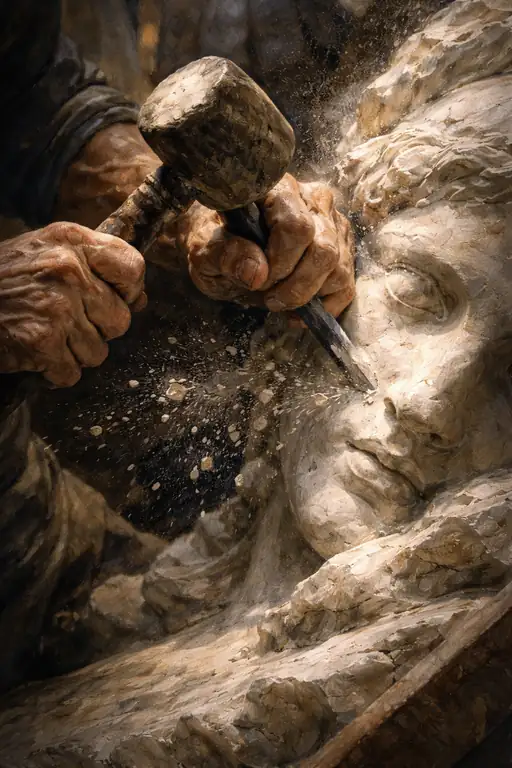 The Chisel's Climax: Birth from Stone
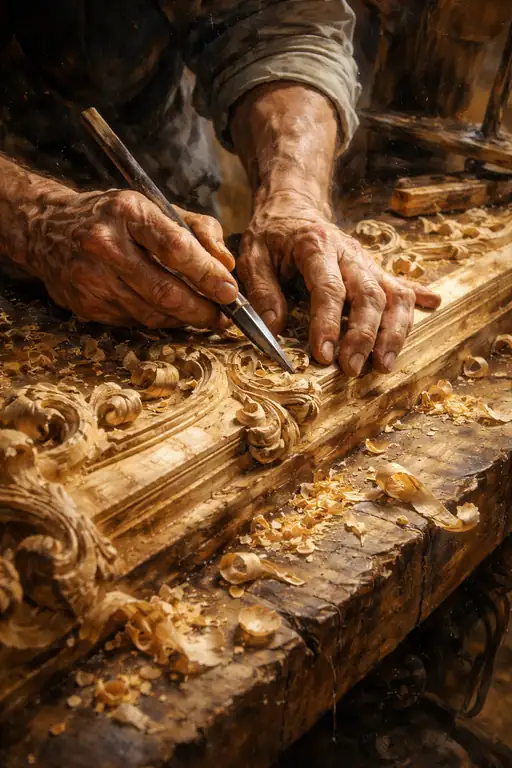 The Enduring Legacy of Woodcarving
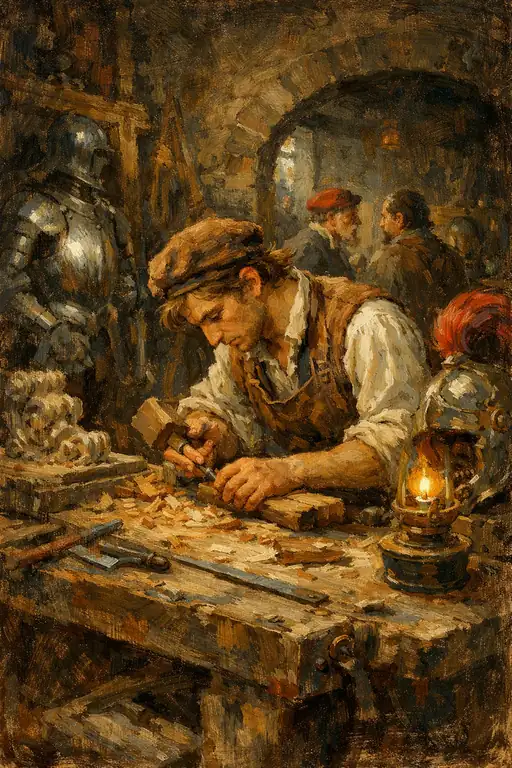 The Artisan's Light