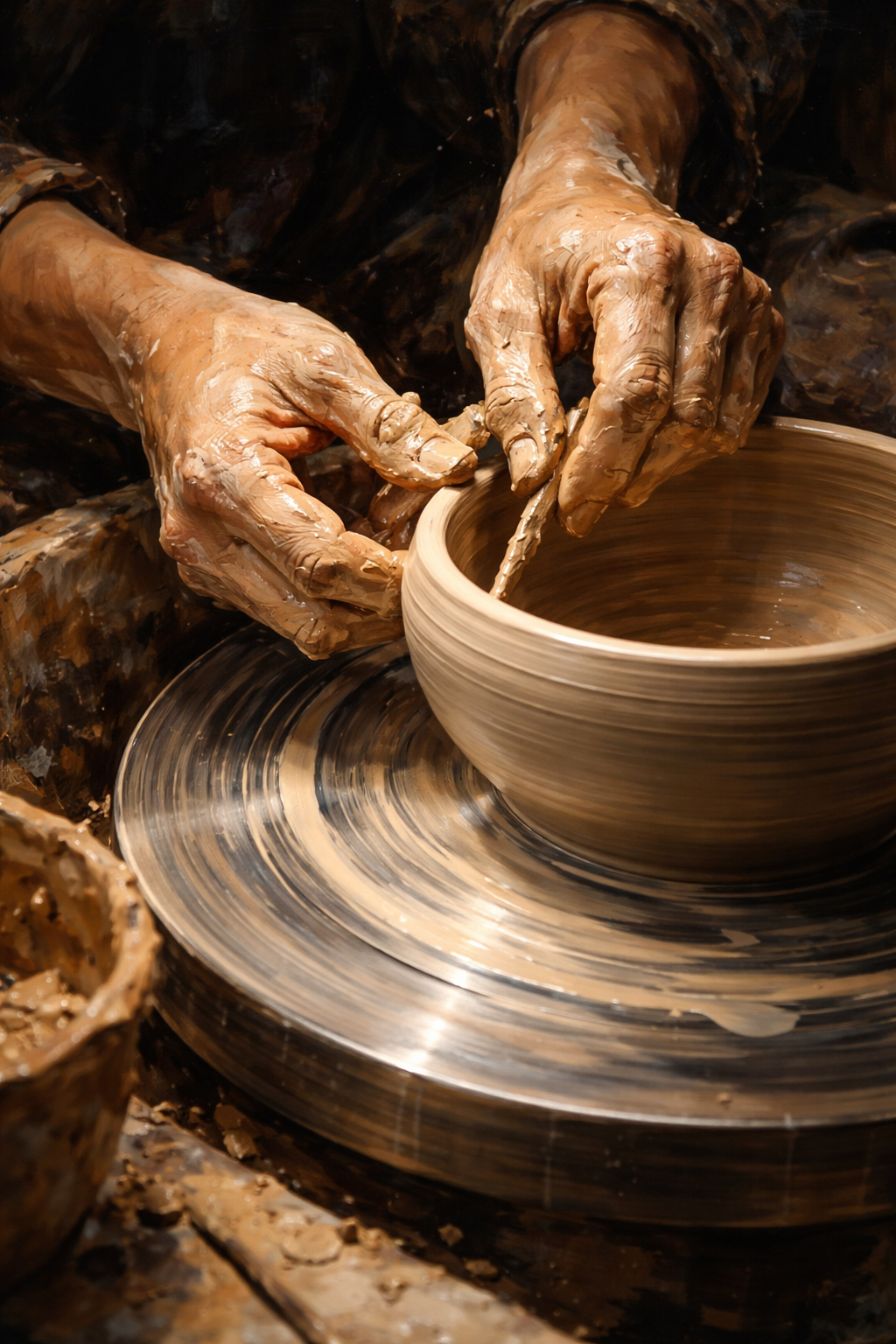
Earthly Genesis: Form from Formless Clay
Critique
1. Introduction The work is a realistic oil painting that captures the intimate and physical process of pottery making. It focuses on the hands of the artisan as they interact with the raw material of the earth, highlighting the profound connection between human skill and physical substance. The piece emphasizes the tactile nature of craftsmanship through a dramatic use of light and a detailed rendering of texture. 2. Description Two hands, heavily coated in wet, glistening clay, are shown in the center of the composition, meticulously shaping a bowl on a spinning pottery wheel. The bowl itself is smooth and perfectly circular, showing the concentric ridges formed by the fingers. The background is dark and obscured, while the potter's wheel and the surrounding area are covered in splatters and streaks of various shades of brown and ochre mud. 3. Analysis The artist utilizes a monochromatic earthy color palette, dominated by rich browns, tans, and deep shadows, which reinforces the primal connection to the soil. Strong, directional lighting creates high contrast, emphasizing the wrinkles in the skin and the wet sheen of the liquid clay. The composition is tightly cropped, which directs the viewer's entire attention to the focused action of the hands and the emerging form of the vessel. 4. Interpretation and Evaluation This painting can be interpreted as a celebration of manual labor and the transformative power of the human touch. By isolating the hands, the artist elevates the act of creation to a spiritual level, where formless mud is given structure and purpose. The technical skill is exceptional, particularly in the rendering of the different states of the clay, from the liquid slip on the hands to the solidifying walls of the bowl. 5. Conclusion In summary, the work effectively communicates the sensory richness and dedicated focus required in traditional craft. While the initial impression is one of raw, muddy labor, the precision of the resulting vessel reveals the underlying mastery and patience of the artisan. The final result is a powerful tribute to the enduring value of handmade objects and the timeless beauty of the creative process.
Same Subcategory
 The Soul's Imprint: A Breath in Black Ink
Similar Artworks
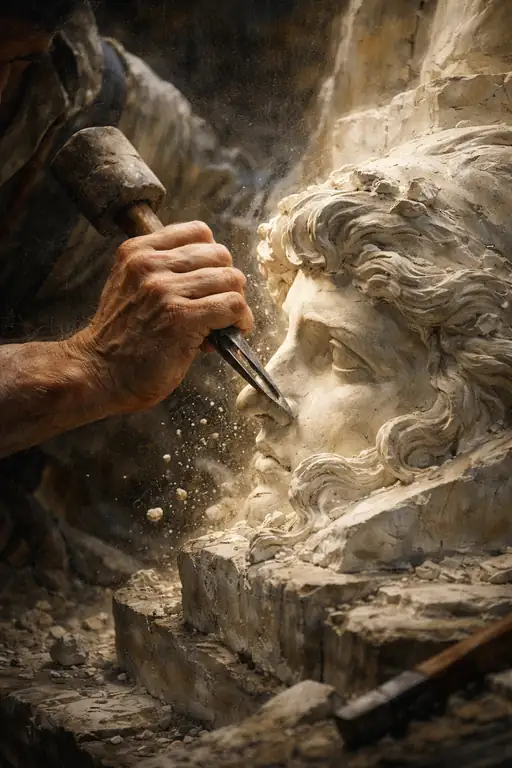 Awakening from Stone
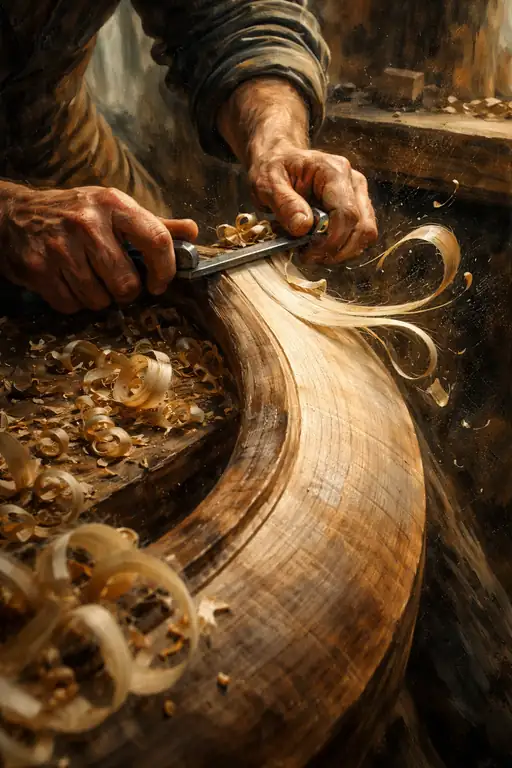 Whispers of the Wood
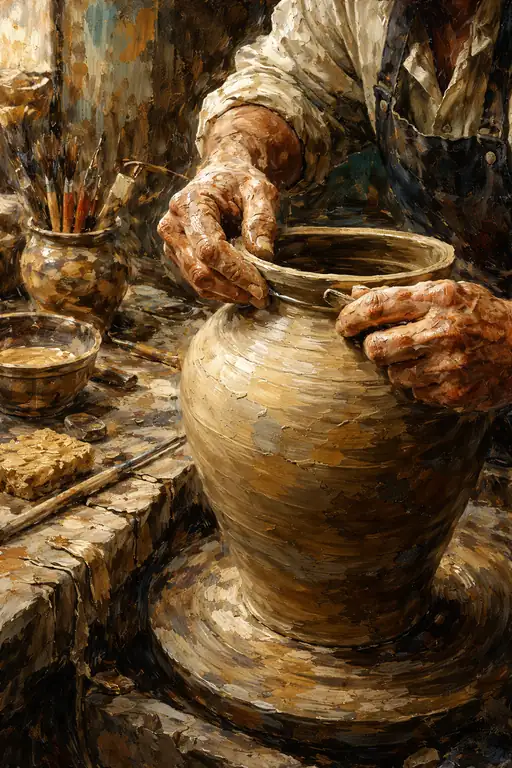 Hands of the Earth: A Silent Symphony of Clay
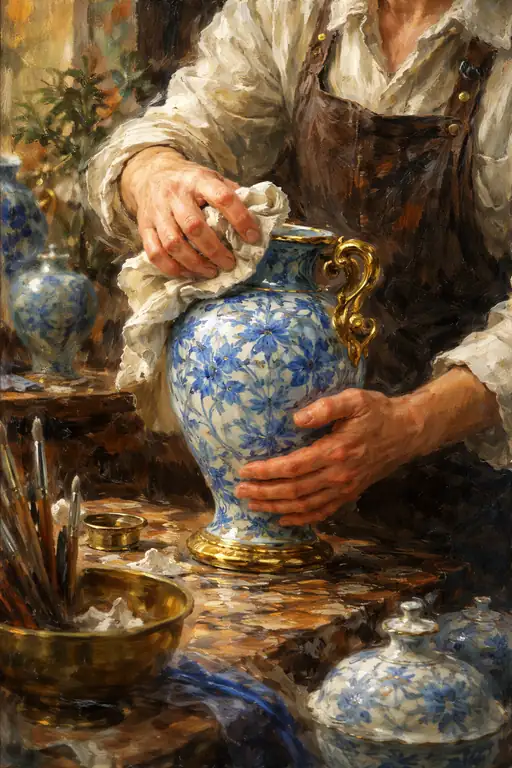 Gentle Hands of the Blue Heritage
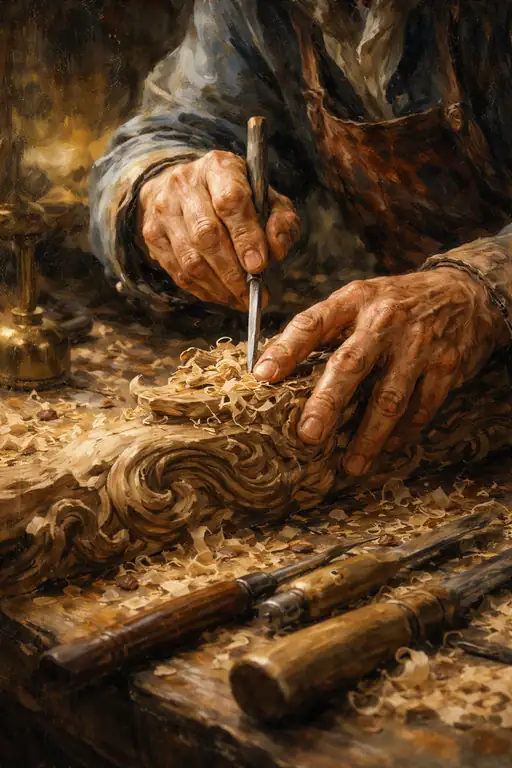 The Soul Carved in Wood
 Vibrant Vats: The Color Catcher
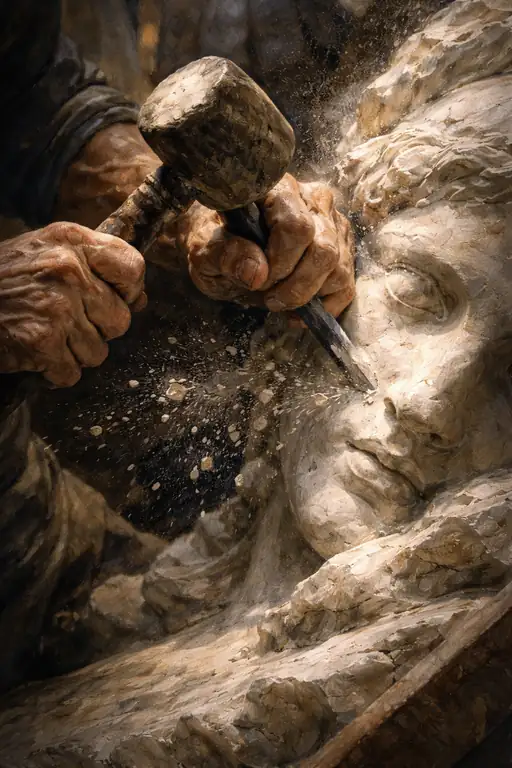 The Chisel's Climax: Birth from Stone
 Symphony of Threads
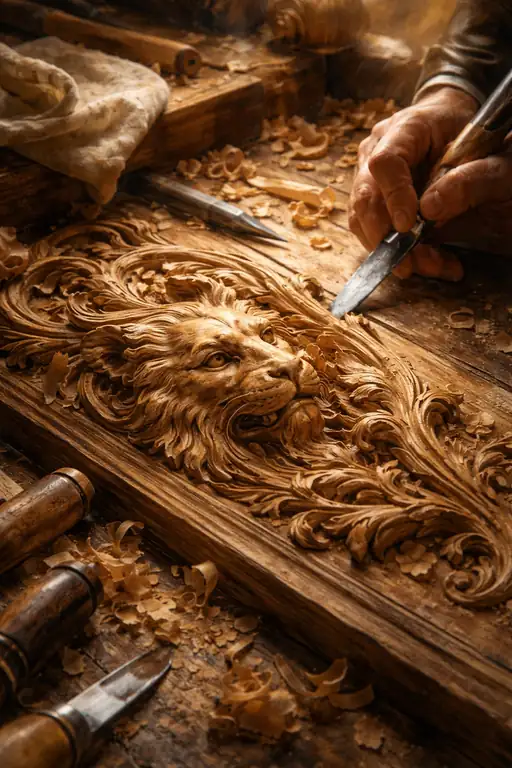 The Artisan's Devotion Etched in Wood
 The Devotion of an Artisan's Touch