The Silent Potential of Strings
Critique
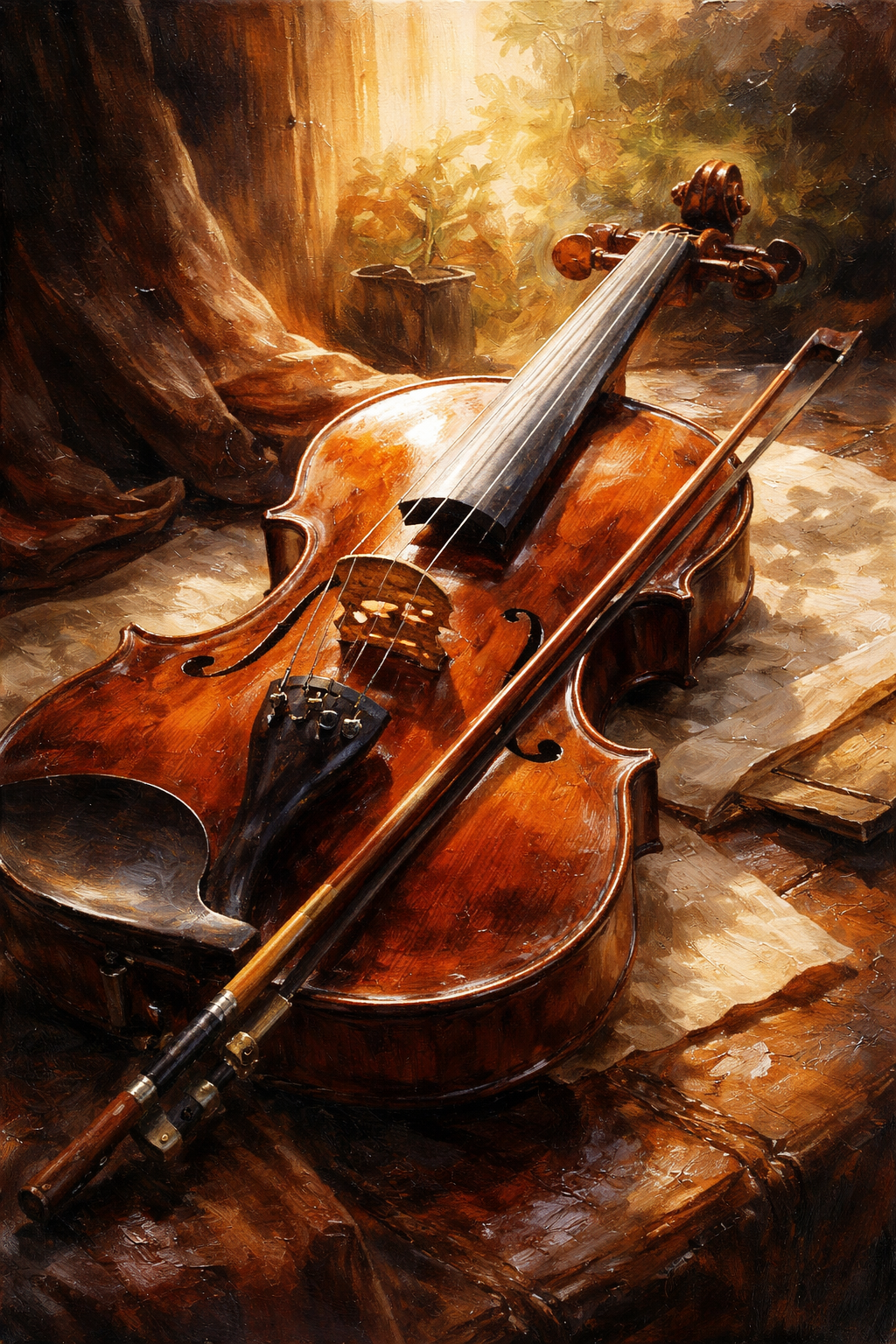
1. Introduction This painting presents a violin and its bow in a dramatic and highly textured still life. The work focuses on the physical beauty and historical resonance of a classical musical instrument, placed within an environment that suggests a moment of rest or intense rehearsal. By employing a rich, painterly style, the artist elevates a common object into a symbol of cultural tradition and emotional expression, inviting the viewer to consider the silent potential of the music contained within. 2. Description The central subject is a polished wooden violin, its body gleaming with deep amber and mahogany tones. It lies diagonally across the frame, resting on several sheets of scattered paper that appear to be musical scores. A wooden bow is placed across the violin's strings, its hair tight and ready for use. In the background, a strong light source from above illuminates a curtain and a hint of foliage, creating a warm, golden glow that spills over the instrument's curved surfaces. 3. Analysis The artist uses thick, expressive brushstrokes that give the surface a tangible, three-dimensional quality. The color palette is dominated by warm, earthy hues—burnt sienna, ochre, and deep umber—which contrast with the bright highlights on the violin's varnish. The lighting is theatrical, with deep shadows emphasizing the instrument's elegant contours and the delicate bridge. The composition relies on strong diagonal lines, particularly the bow, which guides the viewer's eye from the bottom left toward the violin's scroll. 4. Interpretation and Evaluation The vigorous application of paint suggests a passion that mirrors the intensity of a musical performance. The violin, though silent, seems to vibrate with energy due to the dynamic brushwork and the dramatic play of light. This work successfully conveys the tactile reality of the wood and the ephemeral nature of sound through a purely visual medium. The technical mastery of light and texture is impressive, creating a sense of history and gravitas that makes the instrument feel lived-in and significant. 5. Conclusion Through this focused study, the artist transforms a musical instrument into a profound meditation on craft and creativity. The interplay between the solid form of the violin and the fluid light creates a compelling visual harmony. This painting reminds us that even in silence, great instruments carry the echoes of the melodies they have played and those yet to come. The initial impression of a simple still life deepens into a rich appreciation for the enduring power of artistic tools and traditions.
 The Silent Song of Sunset
 The Majestic Silence of the Keys
 Resonant Silence
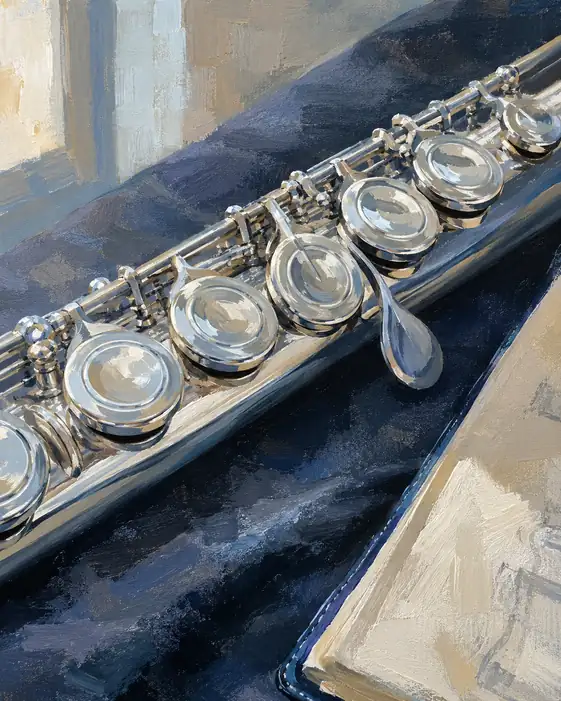 Reflections of a Silent Note
 Echoes of a Golden Melody
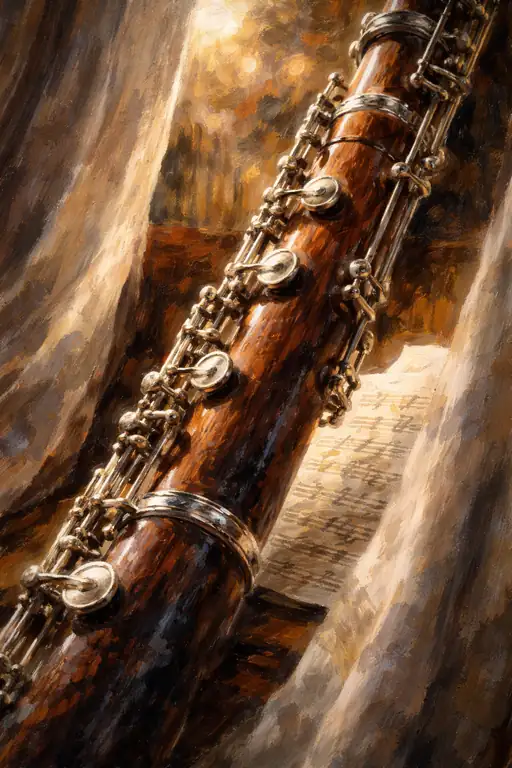 Breath of the Woodwind
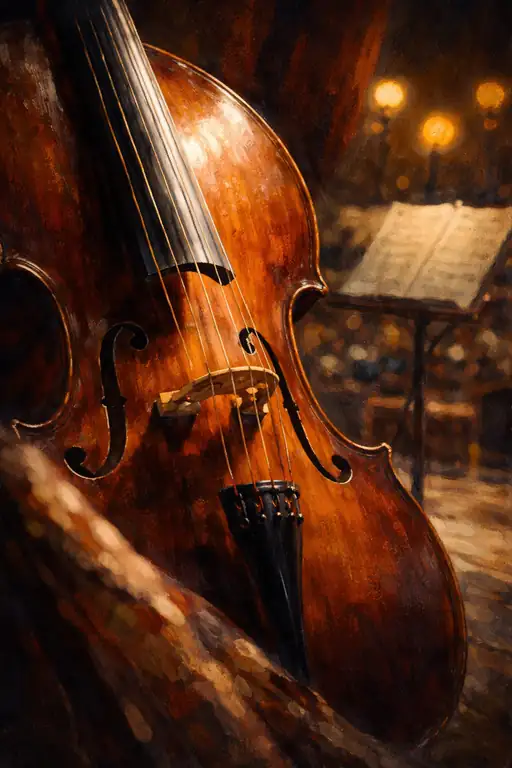 The Cello's Golden Silence
 Manuscript of Memories
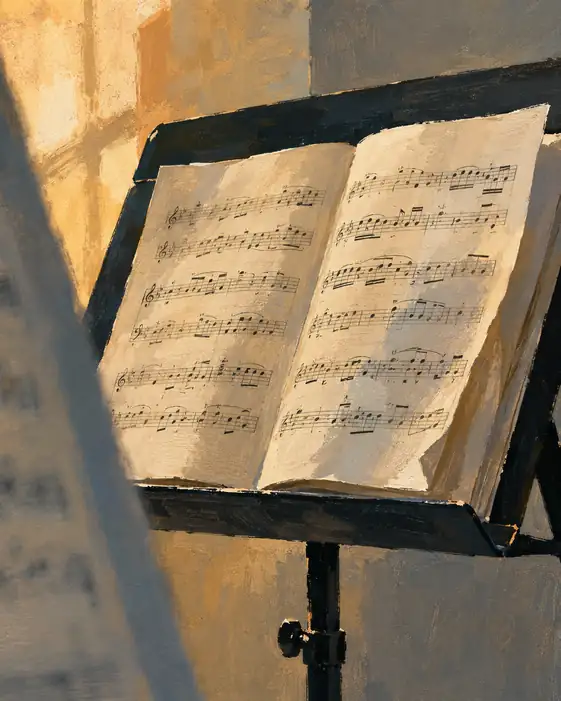 Golden Prelude
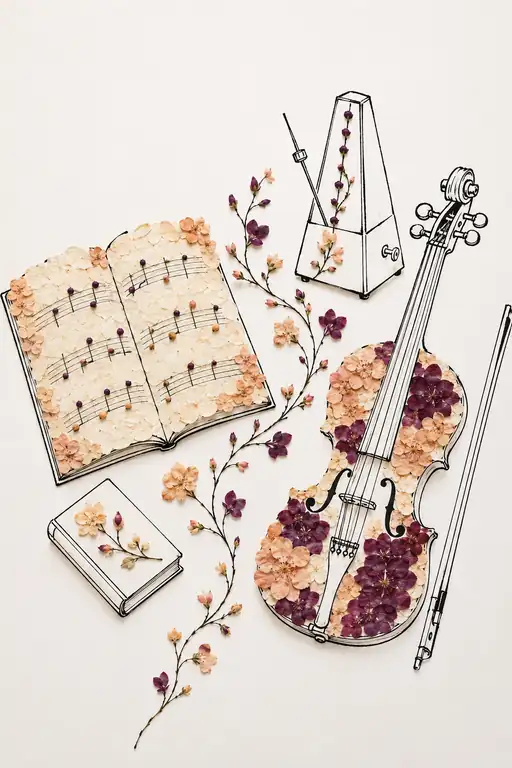 Violin of Petals and the Metronome of Beats