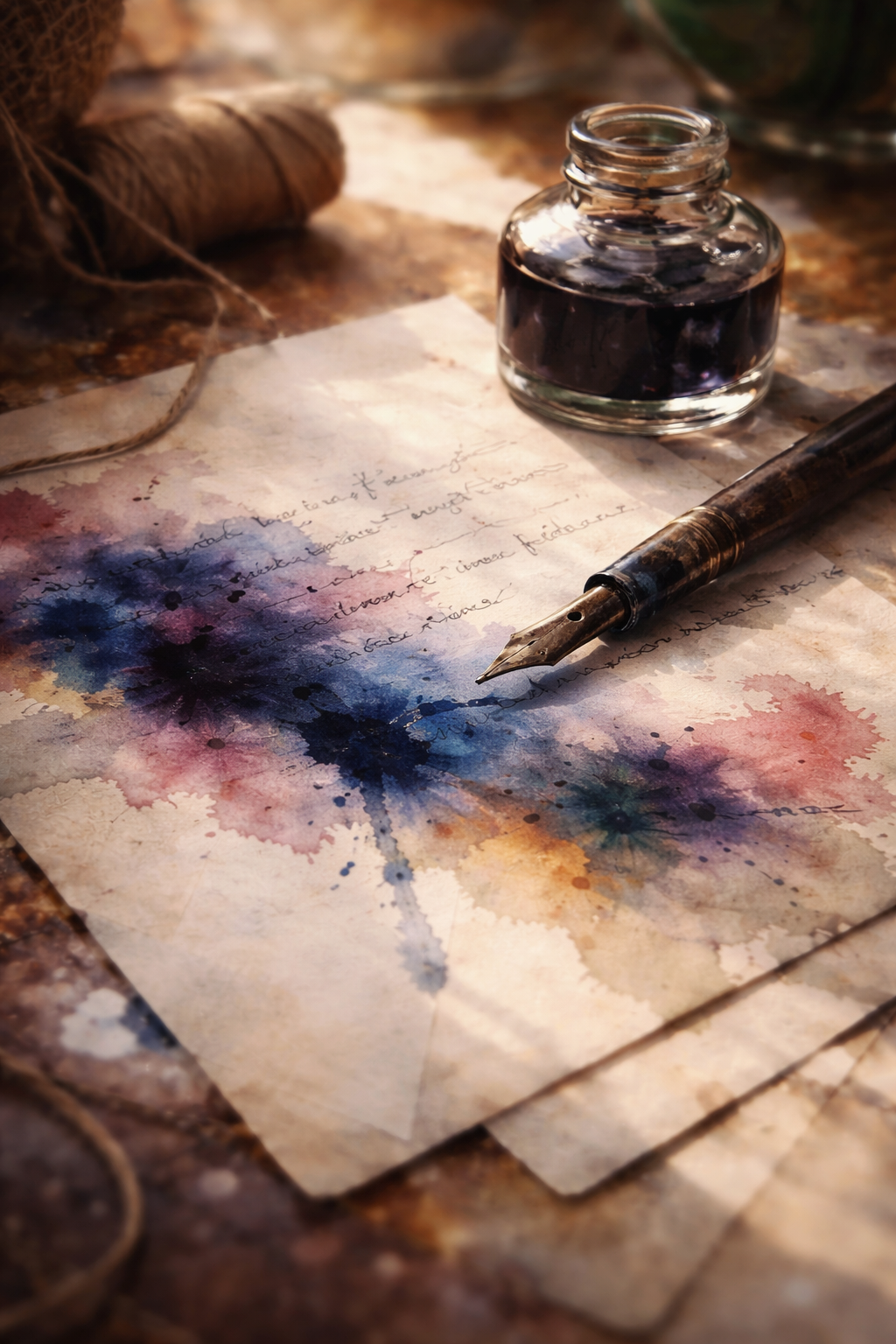
The Beautiful Mess of Creation
Critique
1. Introduction This still life painting captures the intimate and creative process of writing, presented through a focused view of a scholar's or artist's desk. The composition highlights the intersection of intellectual labor and spontaneous artistic expression. Set against a textured wooden backdrop, the arrangement of writing instruments and a partially stained manuscript invites the viewer to contemplate the moment an idea is translated into physical form through ink and paper. 2. Description The foreground is dominated by several sheets of aged, cream-colored paper covered in elegant, cursive script. A significant portion of the paper is marked by vibrant, starburst-like splatters of blue, violet, and crimson ink, which blend together like watercolors. A vintage dip pen with a tarnished metallic nib rests diagonally across the writing, its body showing signs of frequent use. In the upper right corner, a clear glass inkwell filled with dark, saturated ink stands prominently, its surface reflecting the surrounding warm light. 3. Analysis The artist utilizes a sophisticated interplay of light and shadow, with strong directional lighting creating a rhythmic pattern of highlights across the paper. The color palette is a harmonious blend of warm, earthy tones in the background and cool, vivid primary-adjacent hues within the ink splatters. A shallow depth of field is employed to keep the pen's nib and the central ink stains in sharp focus, while the inkwell and background elements transition into a soft, atmospheric blur. 4. Interpretation and Evaluation The dramatic ink splatters serve as a powerful metaphor for the unpredictability of the creative spirit, contrasting sharply with the disciplined structure of the written lines. This juxtaposition suggests that true expression often arises from a balance between control and chaos. The technical rendering of the glass and metal surfaces is exceptional, demonstrating a keen eye for material realism. Furthermore, the use of light to guide the viewer's eye across the diagonal axis of the pen provides the work with a dynamic sense of energy. 5. Conclusion Ultimately, the painting transcends a simple depiction of objects to become a celebration of the act of creation itself. The transformation of a writing error into a beautiful visual element reflects a deep understanding of artistic resilience. By focusing on these humble tools, the work reminds us of the profound human need to communicate and record our inner worlds. The initial observation of a workspace matures into a recognition of the messy yet beautiful nature of human thought.
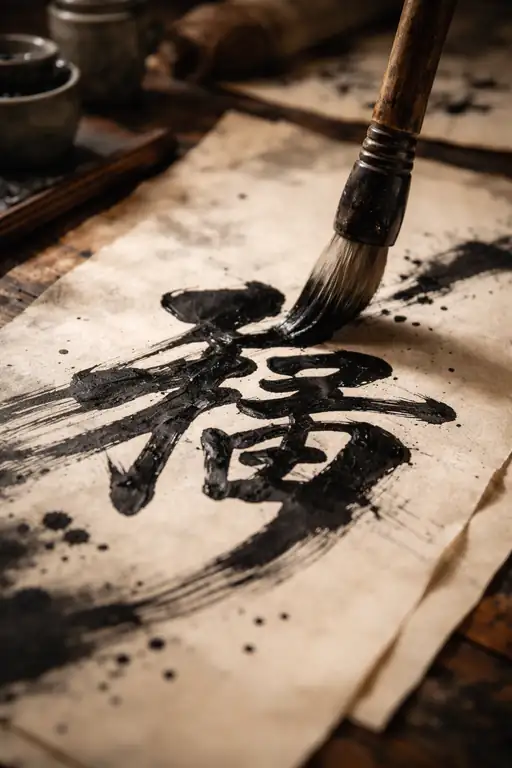 A Timeless Harmony in Monochrome
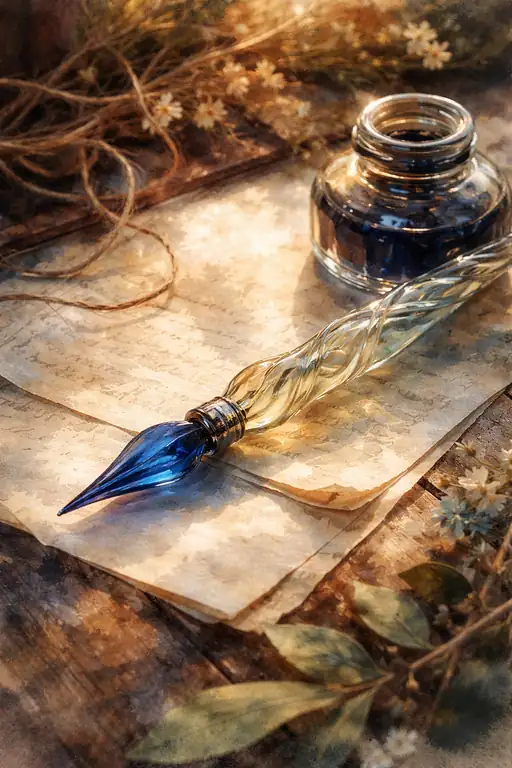 Azure Ink: Memories in Glass
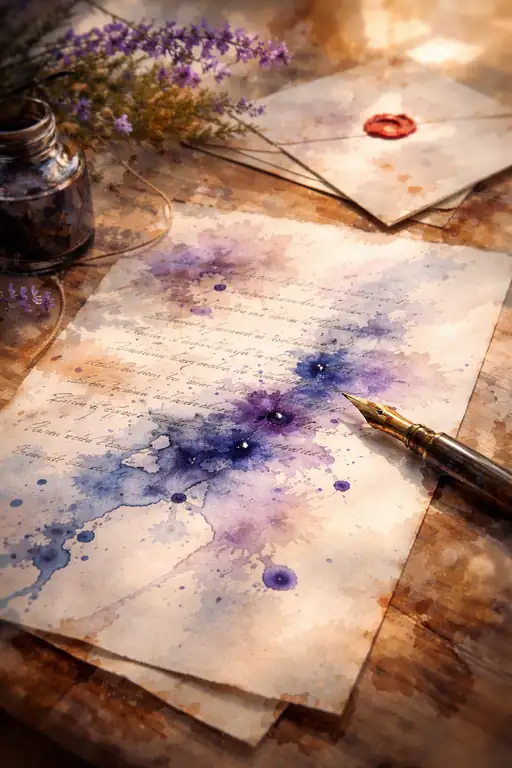 Overflow of Unspoken Words
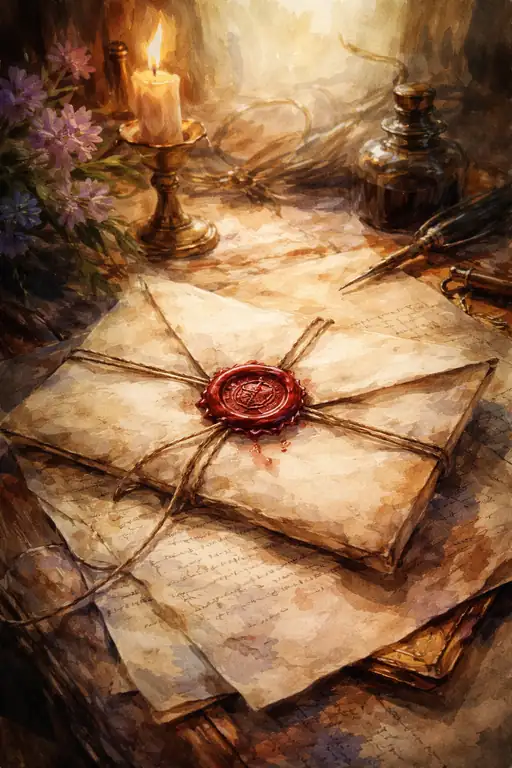 Sealed with a Silent Prayer
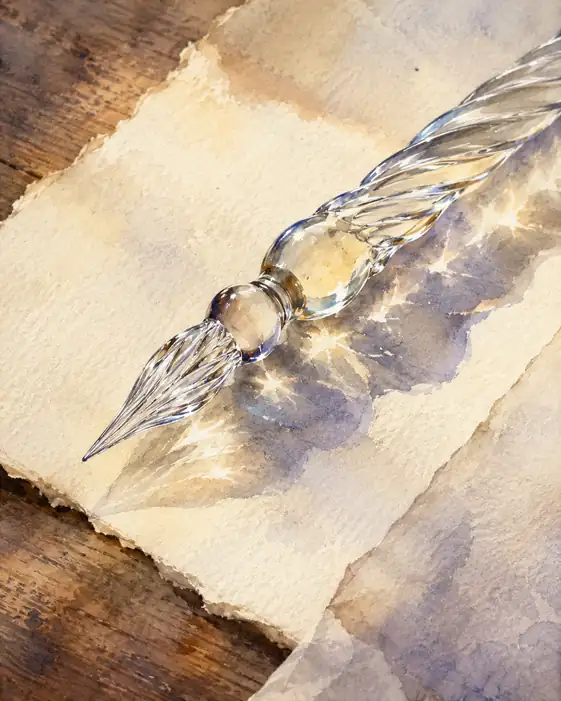 Transparency of a Fleeting Thought
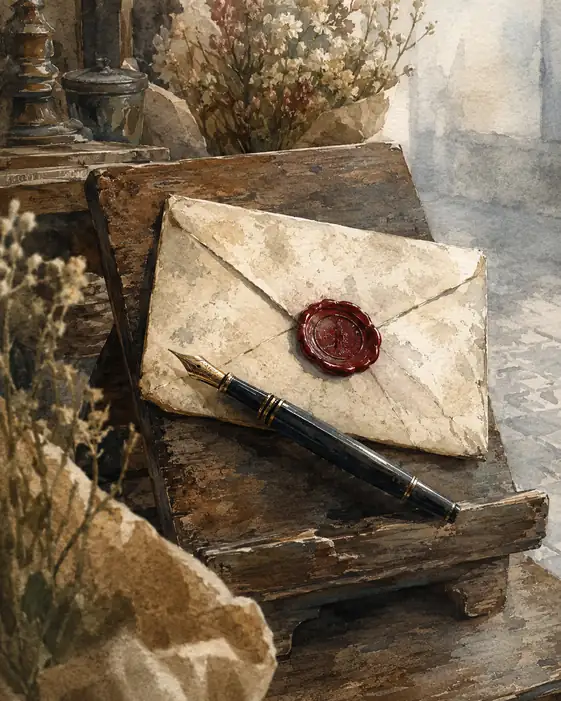 A Letter Still Warm Beneath the Seal
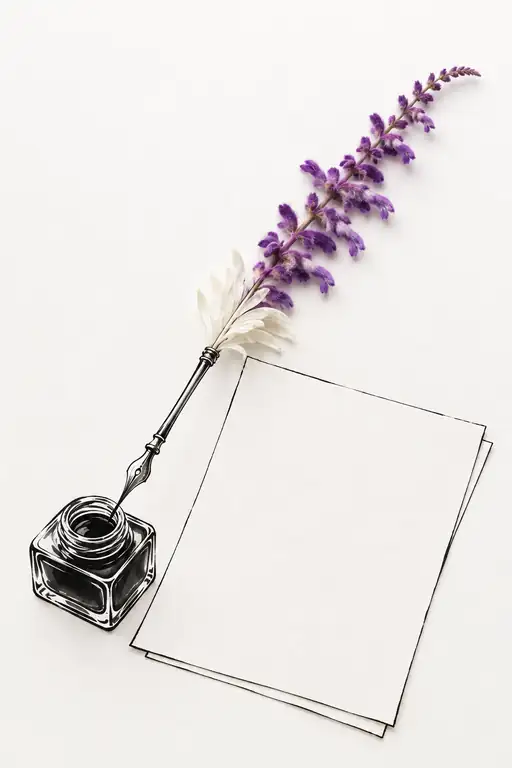 Before the First Word
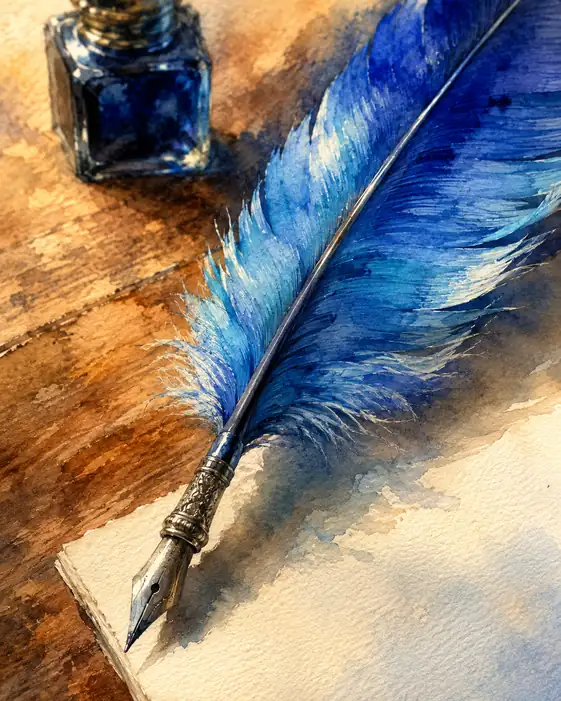 Whispers of the Cobalt Quill
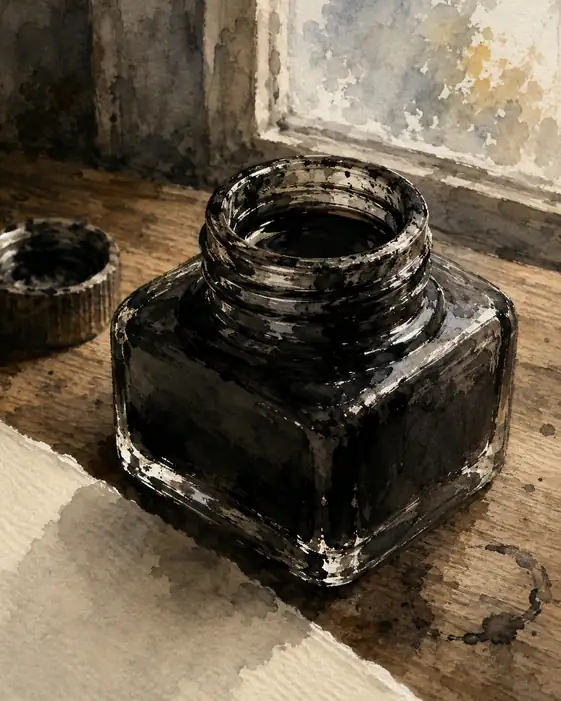 The Well of Unspoken Dreams
 Manuscript of Memories
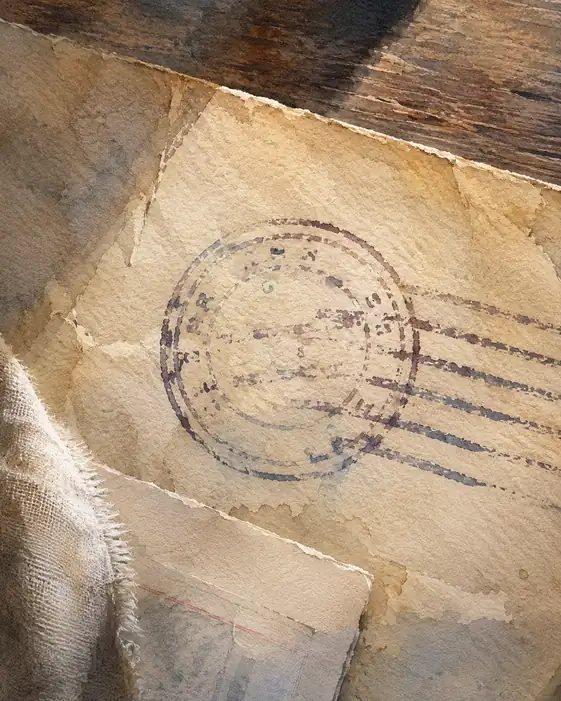 Echoes of a Forgotten Letter