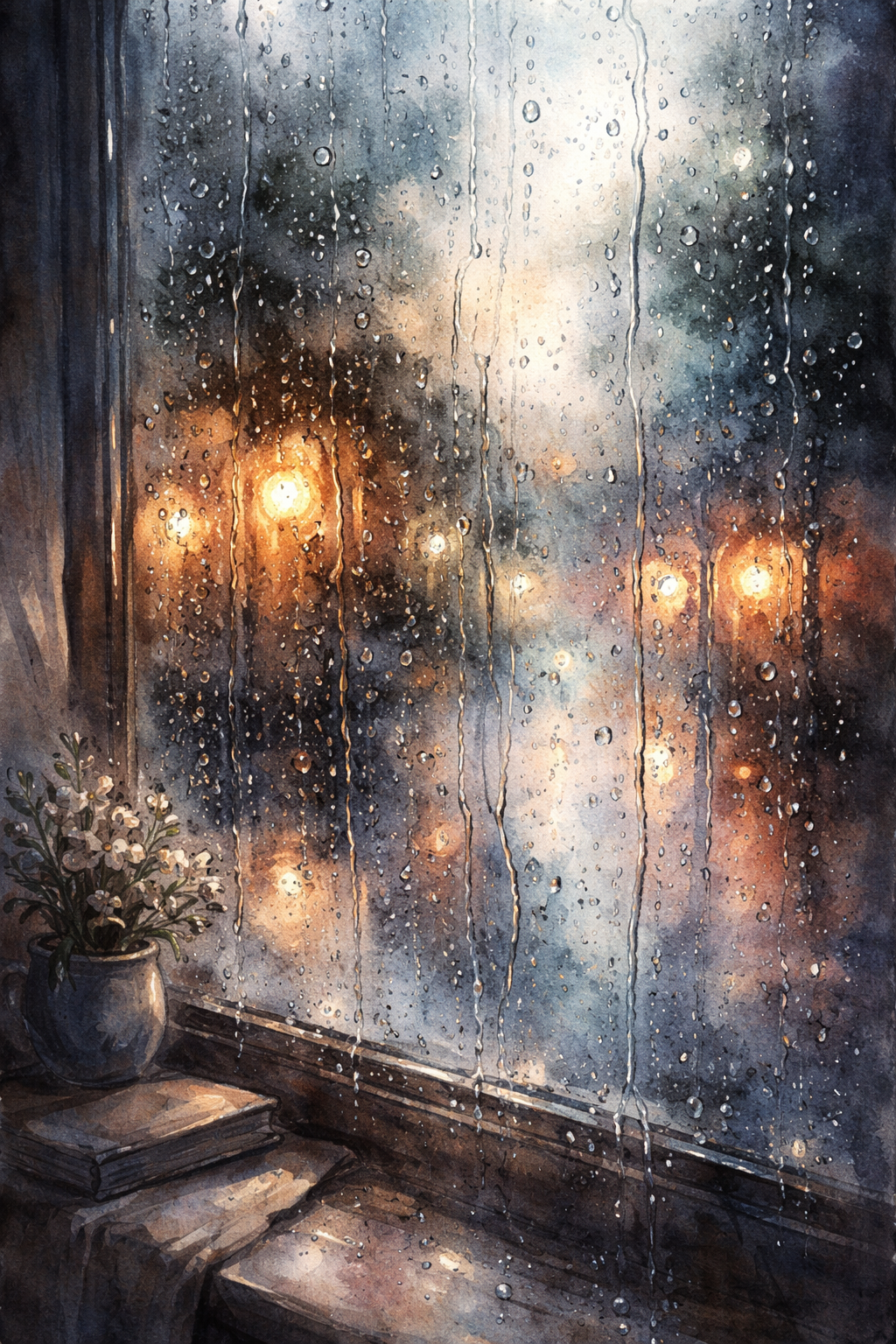
Whispers of a Rainy Evening
Critique
1. Introduction This watercolor painting presents a contemplative view of a rain-streaked window from an interior perspective. The work effectively captures a quiet, domestic moment where the boundary between the private sanctuary and the blurred external world is mediated by glass and water. Through a delicate application of the medium, the scene evokes a sense of introspective stillness and the transient beauty of a rainy evening. 2. Description The foreground features a windowsill where a small ceramic pot containing white flowers and a stack of books are placed. The window itself occupies the majority of the frame, covered with vertically dripping water droplets that distort the view. Beyond the glass, several warm, circular lights from street lamps or buildings appear as soft, diffused orbs of golden-orange against a deep, indigo sky. The lighting suggests an evening or nighttime setting, with the interior remaining relatively dark and shadowed. 3. Analysis The artist utilizes the inherent transparency of watercolor to mimic the fluid quality of rain and glass. The composition is structured by the vertical lines of the window frame and the dripping water, which are balanced by the horizontal line of the windowsill. A strong contrast exists between the sharp details of the interior elements and the soft-focus bokeh effect of the distant lights. The color palette is dominated by cool blues and purples, punctuated by the warm, vibrant yellows of the artificial lights. 4. Interpretation and Evaluation The work succeeds in translating a sensory experience into a visual representation of atmospheric depth and emotional resonance. The blurred lights and rain-streaked glass symbolize the distortion of perception and the feeling of being removed from the external environment. The inclusion of flowers and books adds a layer of domestic comfort, contrasting with the cold, damp conditions suggested by the rain. The technical execution of the watercolor washes demonstrates a refined control over pigment and moisture to create realistic textures. 5. Conclusion While the subject matter is a common artistic trope, the execution provides a fresh perspective on the interplay between light and reflection. The initial impression of a simple rainy scene evolves into a deeper appreciation of the work's technical sophistication and atmospheric power. Overall, the painting serves as a successful study of mood, utilizing light and texture to convey a profound sense of quietude.
 Sanctuary of Light
 Tears of the Windowpane
 Tears on the City Window
 Tears on the City Window
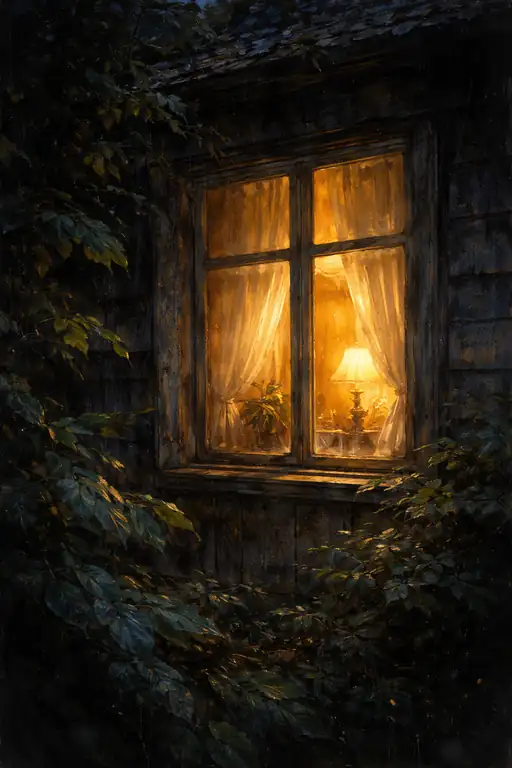 Welcome Home to the Night
 Melancholy Tears on the Cafe Window
 Celebration at the Rain-Veiled Window
 The Song of the Night Breeze
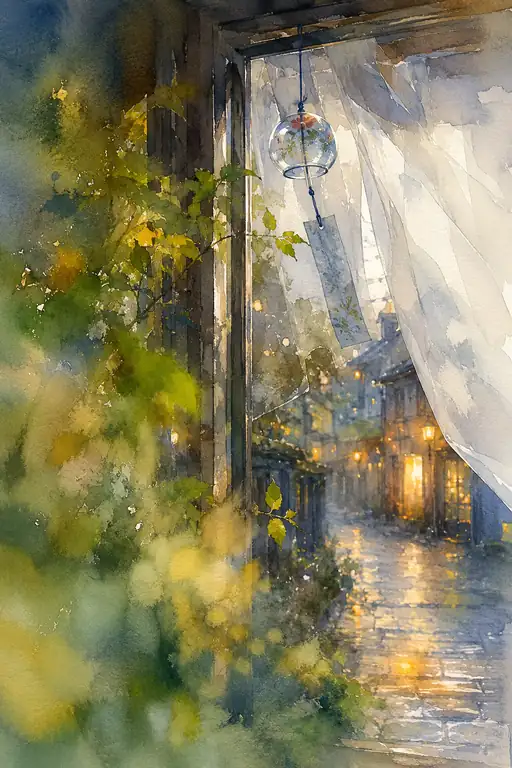 Echoes of a Summer Sunset
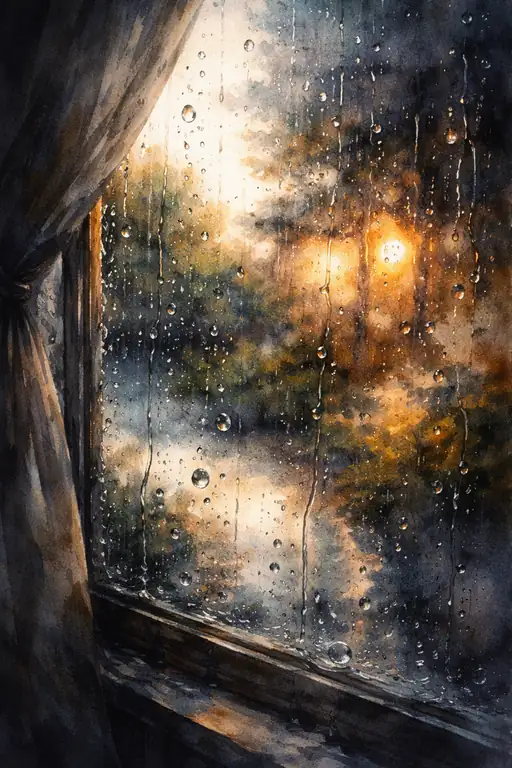 Tears of a Golden Evening
 Golden Hour Sanctuary