
Ephemeral Spark
Critique
1. Introduction This painting depicts a solitary sparkler burning against a dark, atmospheric backdrop. The artist captures a fleeting moment of light and energy, focusing on the intricate patterns formed by the chemical reaction. The work invites the viewer to contemplate the transient nature of celebration and light in the darkness. 2. Description In the center of the composition, a thin wire extends downward, supporting a vibrant, radiating sparkler. The sparks are rendered in brilliant yellow and orange, shooting out in fine, linear trajectories. Below the firework, blades of grass are visible, illuminated by the warm glow and covered in what appears to be morning dew or evening frost. The background consists of dark, smoky tones with soft bokeh effects suggesting distant lights or embers. 3. Analysis The composition relies on a strong vertical axis established by the wire, which is countered by the radial symmetry of the sparks. A warm-cold color contrast is central to the work, as the fiery oranges of the sparkler clash with the muted purples and grays of the background. The use of light is highly dramatic, creating a strong focal point that draws the eye immediately to the center. Texture is also a key element, with the sharpness of the sparks contrasting against the soft, blurred background and the organic forms of the grass. 4. Interpretation and Evaluation This piece successfully conveys a sense of wonder and temporal fragility. The juxtaposition of the burning sparkler and the quiet grass suggests a dialogue between human-made brilliance and the enduring natural world. The technical execution of the light effects is commendable, providing a realistic yet poetic representation of fire. The overall atmosphere is one of quiet intensity, making the work both visually striking and emotionally resonant. 5. Conclusion Through the depiction of a simple firework, the artist transforms a mundane object into a symbol of ephemeral beauty. The initial impression of a mere technical exercise gives way to a deeper appreciation of the interplay between light and shadow. The painting stands as a testament to the power of observation in capturing the most temporary of visual phenomena.
 Ephemeral Ignition
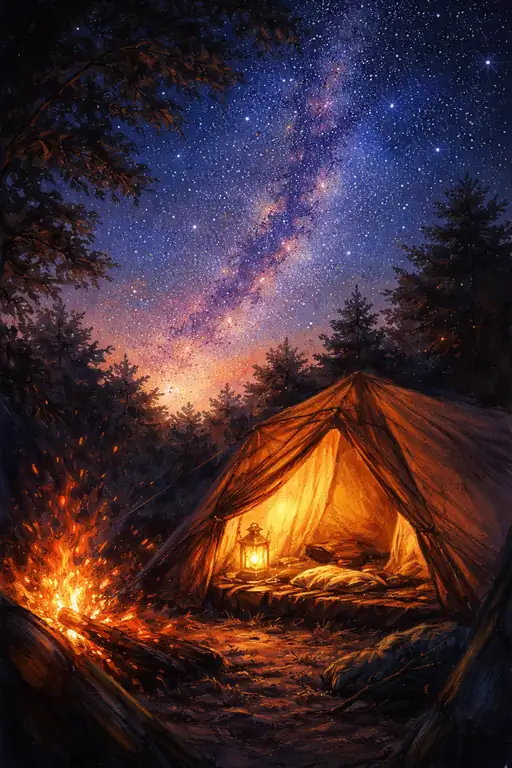 Starlight Sanctuary in the Whispering Woods
 Constellation of the Twilight Garden
 A Solitary Spark in the Whispering Woods
 The River Wears a Golden Veil
 Nostalgic Sparkler Light
 Beneath the Falling Constellation
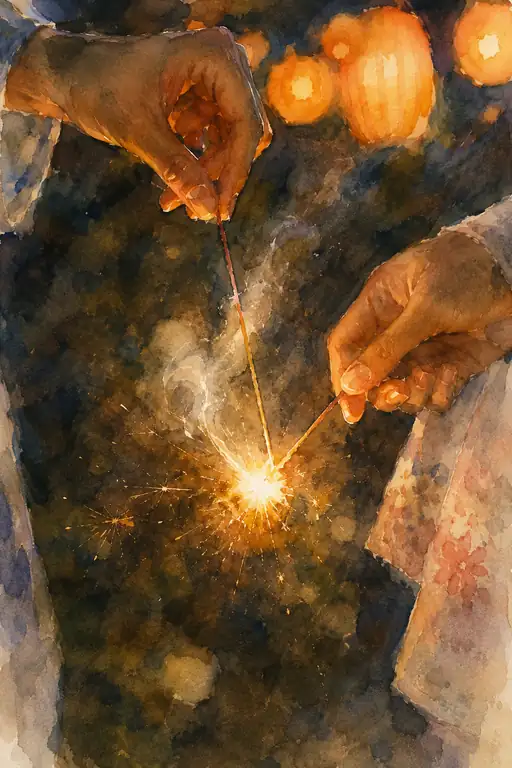 Sparks of a Shared Moment
 Night Garden Golden Lantern
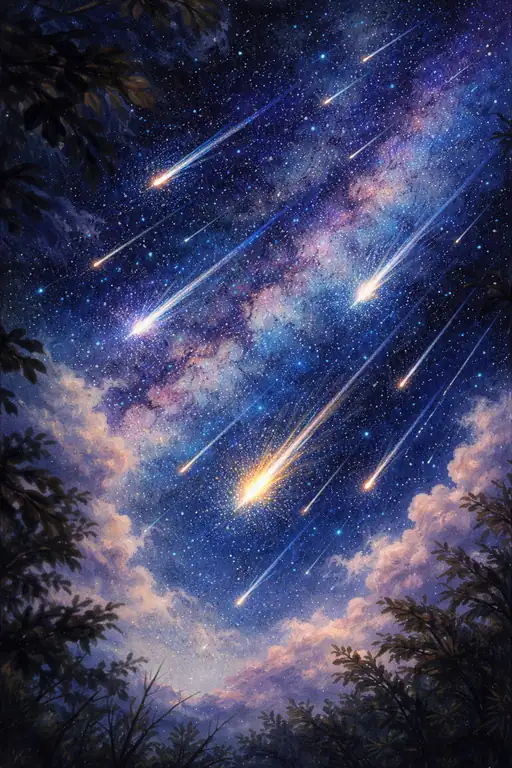 Tears of the Starry Expanse
 Silent Vigil in the Waxen Dark