
Golden Flakes in the Morning Light
Critique
1. Introduction This work is a detailed still life depicting a freshly baked croissant as its central subject. The painting captures the intricate textures and warm tones of the pastry with remarkable precision. It serves as an exploration of light and materiality through a common culinary object, presented with a sense of quiet intensity. 2. Description A large, golden-brown croissant occupies the foreground, resting on a piece of greaseproof paper atop a dark, weathered wooden surface. In the background, another croissant is partially visible, softened by a shallow depth of field that creates a sense of space. Wisps of steam rise from the pastries, suggesting they are fresh from the oven and still warm. Fine crumbs are scattered around the base, and a delicate dusting of powdered sugar is visible on the surface, while a metallic container sits blurred in the upper right corner. 3. Analysis The composition uses a strong diagonal line created by the main croissant to guide the viewer’s eye across the frame. High-contrast lighting from the upper left illuminates the flaky layers, creating deep shadows that emphasize the pastry's physical volume and internal structure. The color palette is dominated by warm ochre, burnt sienna, and golden yellow, which contrast effectively with the cool, dark tones of the wooden table. The use of sharp focus on the foreground elements creates a tactile quality that invites close inspection. 4. Interpretation and Evaluation The work celebrates the sensory experience of food through its meticulous attention to detail and atmosphere. The artist demonstrates exceptional technical skill in rendering the translucency of the thin pastry layers and the complex play of light on the textured wooden surface. The presence of steam adds a temporal dimension, capturing a fleeting moment of warmth and aroma within a static image. This piece elevates a simple, everyday object into a subject worthy of profound artistic observation, showing mastery in both composition and execution. 5. Conclusion Through its masterful use of light and texture, this painting transforms a common pastry into a compelling study of form and atmosphere. The viewer's initial perception of a simple still life evolves into a deeper appreciation for the beauty found in mundane details. It remains a testament to the power of realism in evoking sensory memories and highlighting the extraordinary within the ordinary.
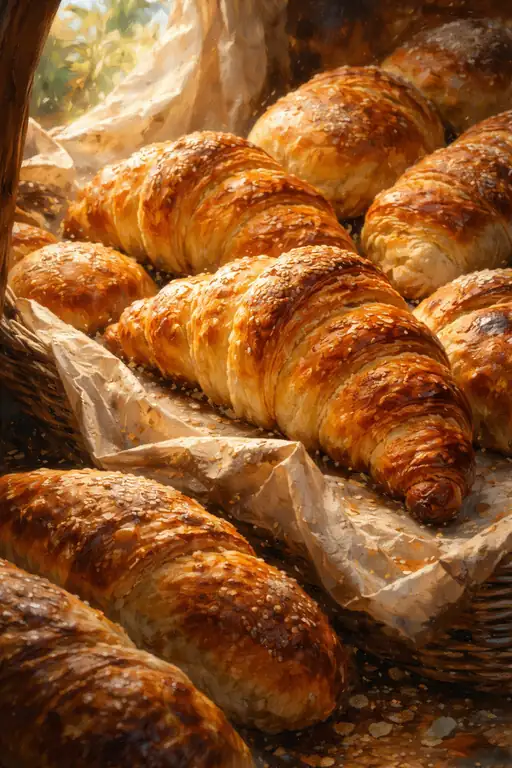 Morning Gold: The Flaky Temptation
 The Baker's Warm Embrace
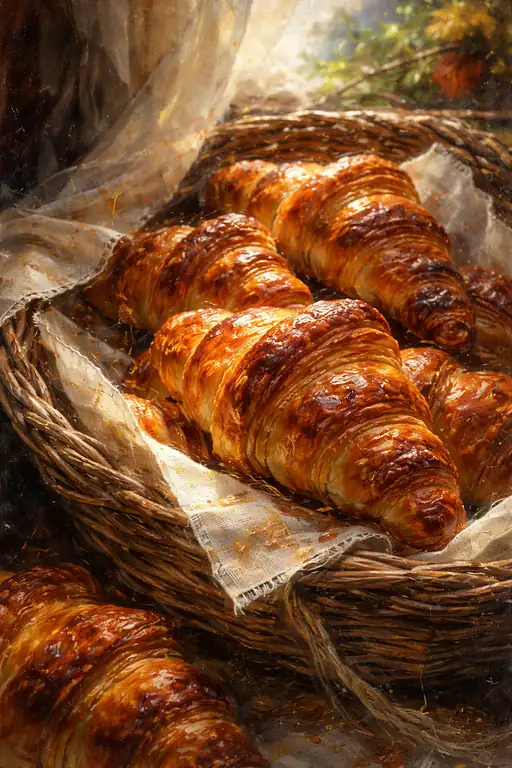 Awakening with Fresh Pastries
 Golden Warmth of the Morning
 Morning Blessing on Crisp Toast
 Sweet Morning Baked with Love
 A Veil of Sweetness
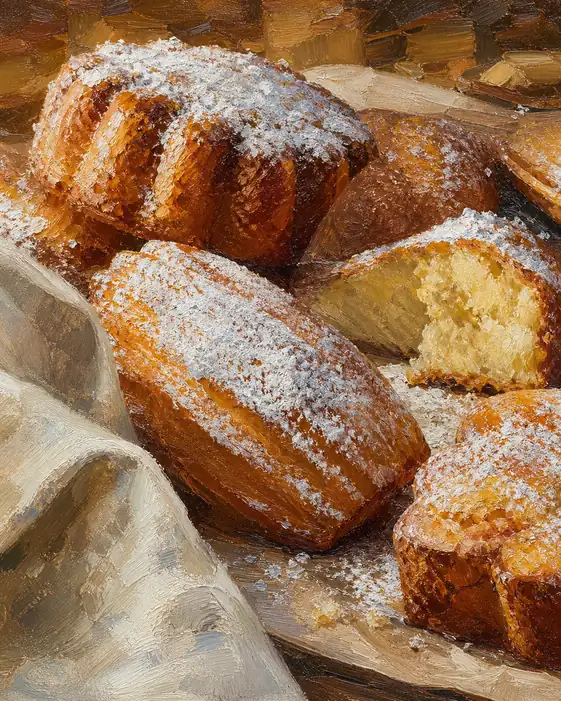 Benediction of the Golden Crust
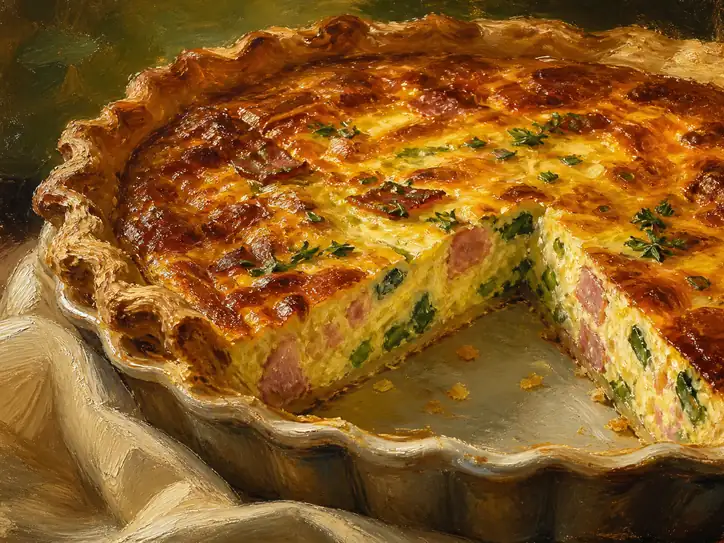 Eternal Warmth on a White Plate
 Whispers of Warmth