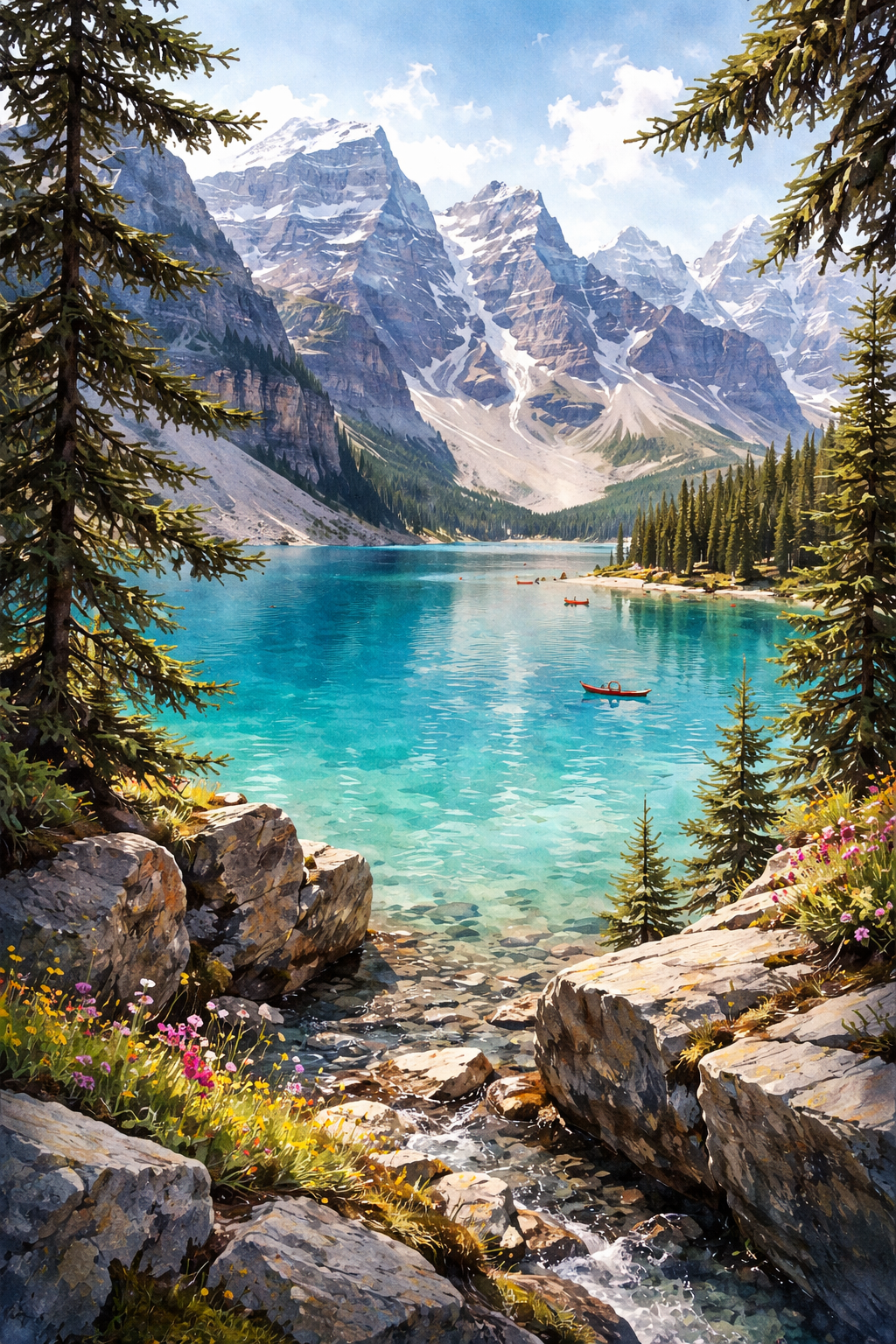
The Azure Sanctuary of Moraine
Critique
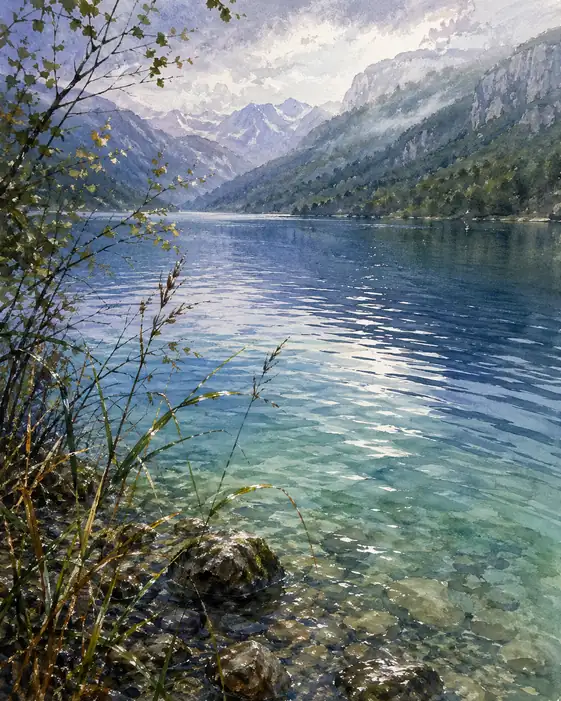
1. Introduction This painting presents a breathtaking vista of a glacial lake surrounded by snow-capped mountains, exemplifying alpine beauty. The composition leads from rocky outcrops and wildflowers to expansive, turquoise waters. Small red canoes provide a sense of scale and human presence. This work captures the serene yet powerful atmosphere of a high-altitude environment. 2. Description In the immediate foreground, large gray boulders are interspersed with vibrant wildflowers, creating a colorful entry point. The crystal-clear shore reveals pebbles before transitioning into luminous turquoise. On the right bank, a dense forest of dark evergreens lines the water. The background features jagged mountain peaks rising sharply into a blue sky. 3. Analysis The artist employs a vertical orientation emphasizing the height of the mountains and depth of the valley. A balanced use of color shows cool blues and whites contrasting with warm earth tones. Lighting from a high sun highlights the rugged textures of the rock. Atmospheric blurring of distant peaks enhances the sense of scale. 4. Interpretation and Evaluation The painting celebrates the enduring majesty of nature and its capacity to inspire awe. By including tiny canoes, the artist highlights the fragility of human endeavors compared to timeless mountains. Rendering of water transparency and reflections is particularly successful. The composition is effective, although the framing by trees is conventional. It is masterfully executed. 5. Conclusion Initial impact is one of grand spectacle, but closer looks reveal delicate flowers and intricate rock patterns. The painting balances macro and micro elements to create a comprehensive portrait of the alpine landscape. It effectively communicates the stillness of the air. This work reminds us of the importance of preserving pristine spaces.
Same Subcategory
 Symphony of the Shimmering Mirror
Similar Artworks
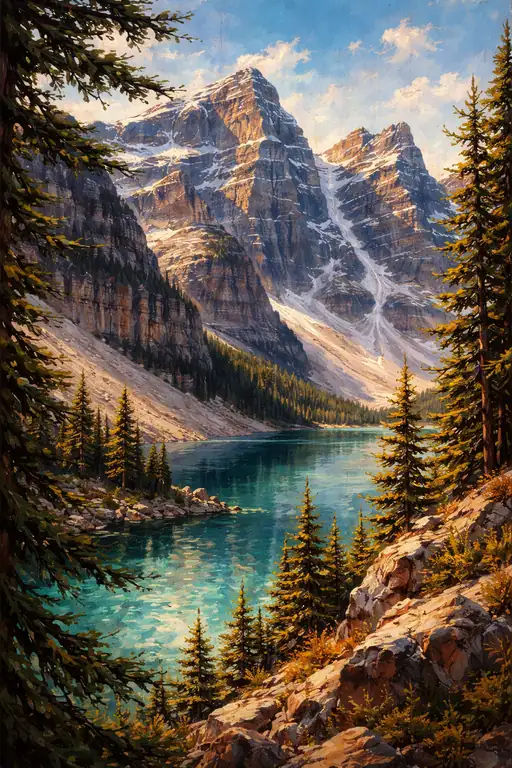 Lullaby for the Wandering Soul
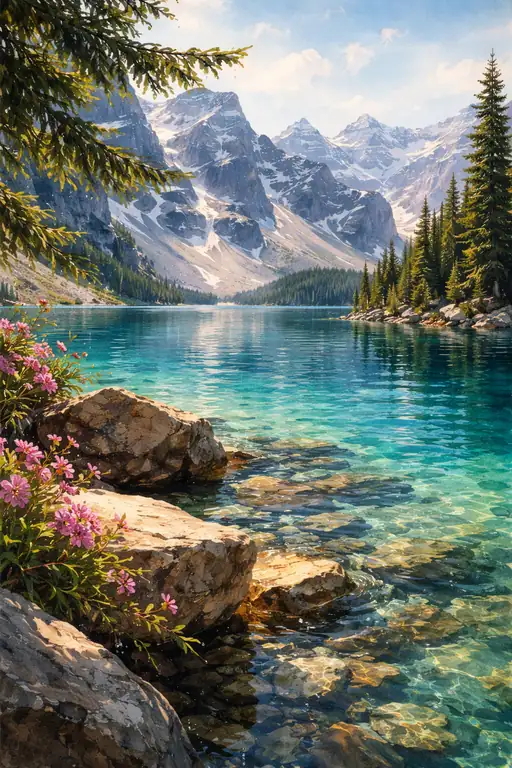 The Forgotten Symphony of Autumn
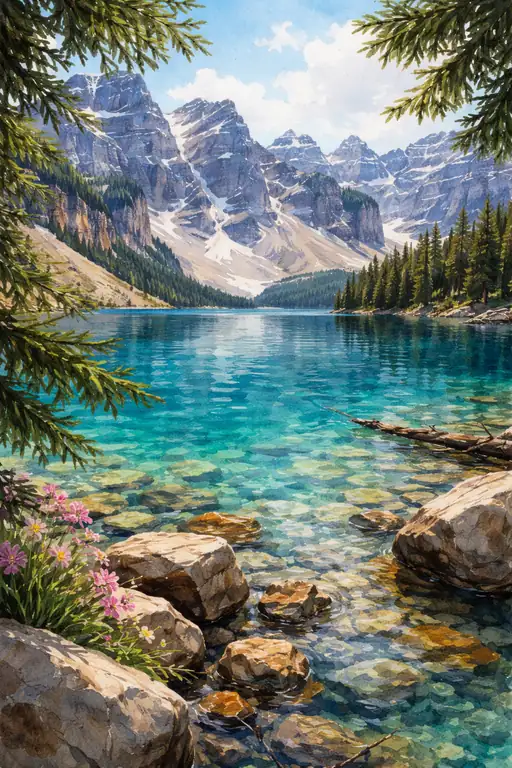 Serenity at Moraine Lake
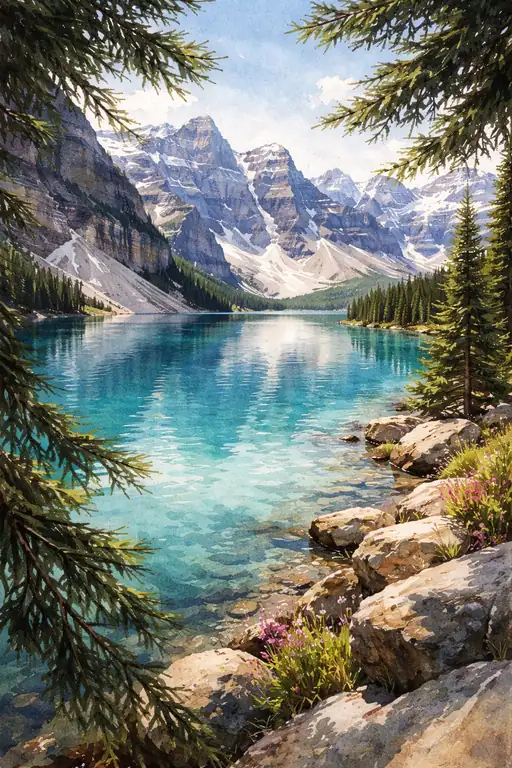 Tranquil Moraine Lake in the Rockies
 Echoes from the Turquoise Sanctuary
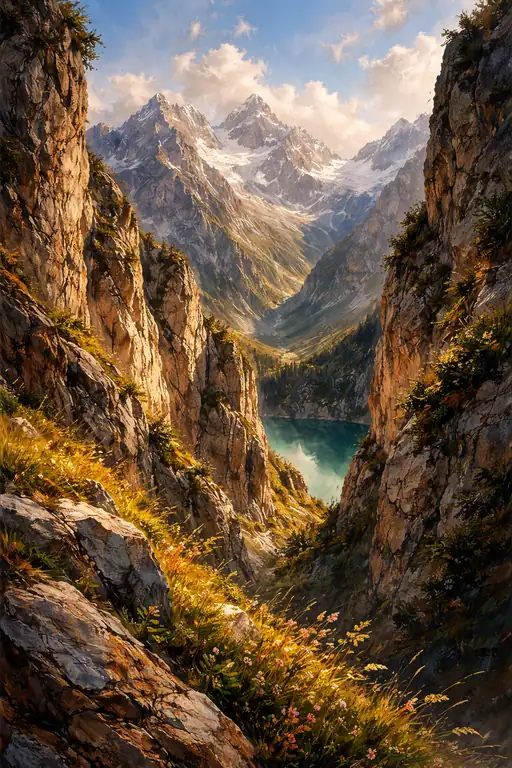 Ethereal Glow Over the Turquoise Valley
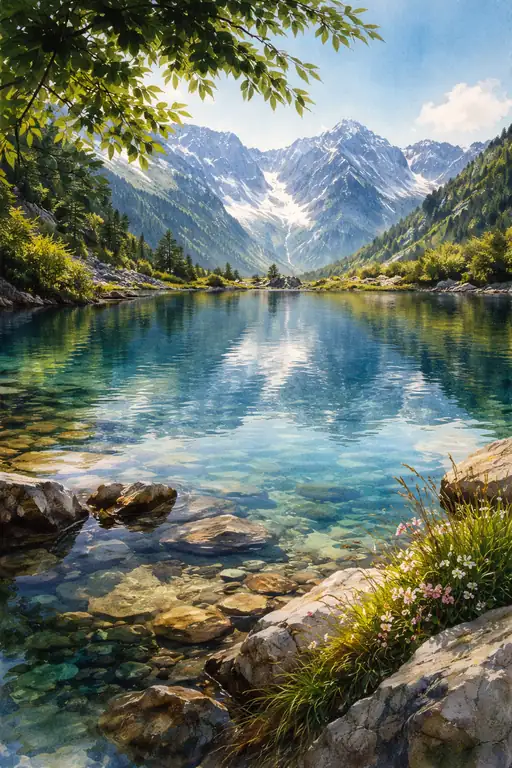 Mirror of the Silent Peaks
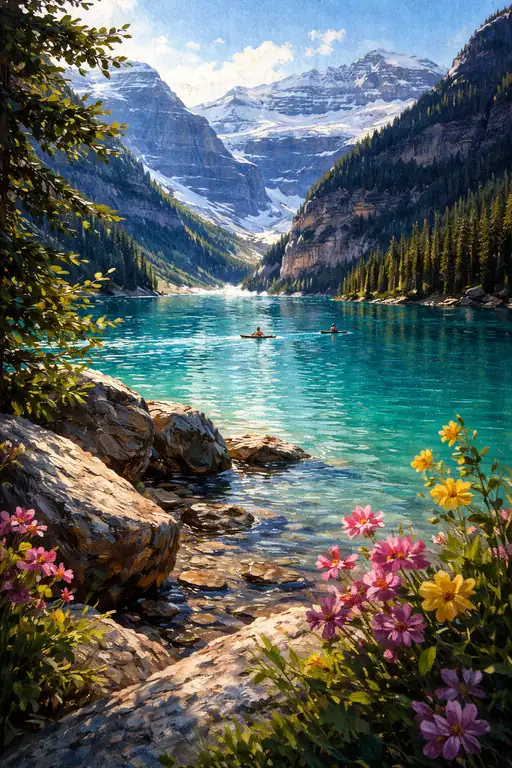 Serene Glacial Stillness
 Azure Light in the Alpine Silence
 Clear Lake Reflection