The Geometry of Elegance
Critique
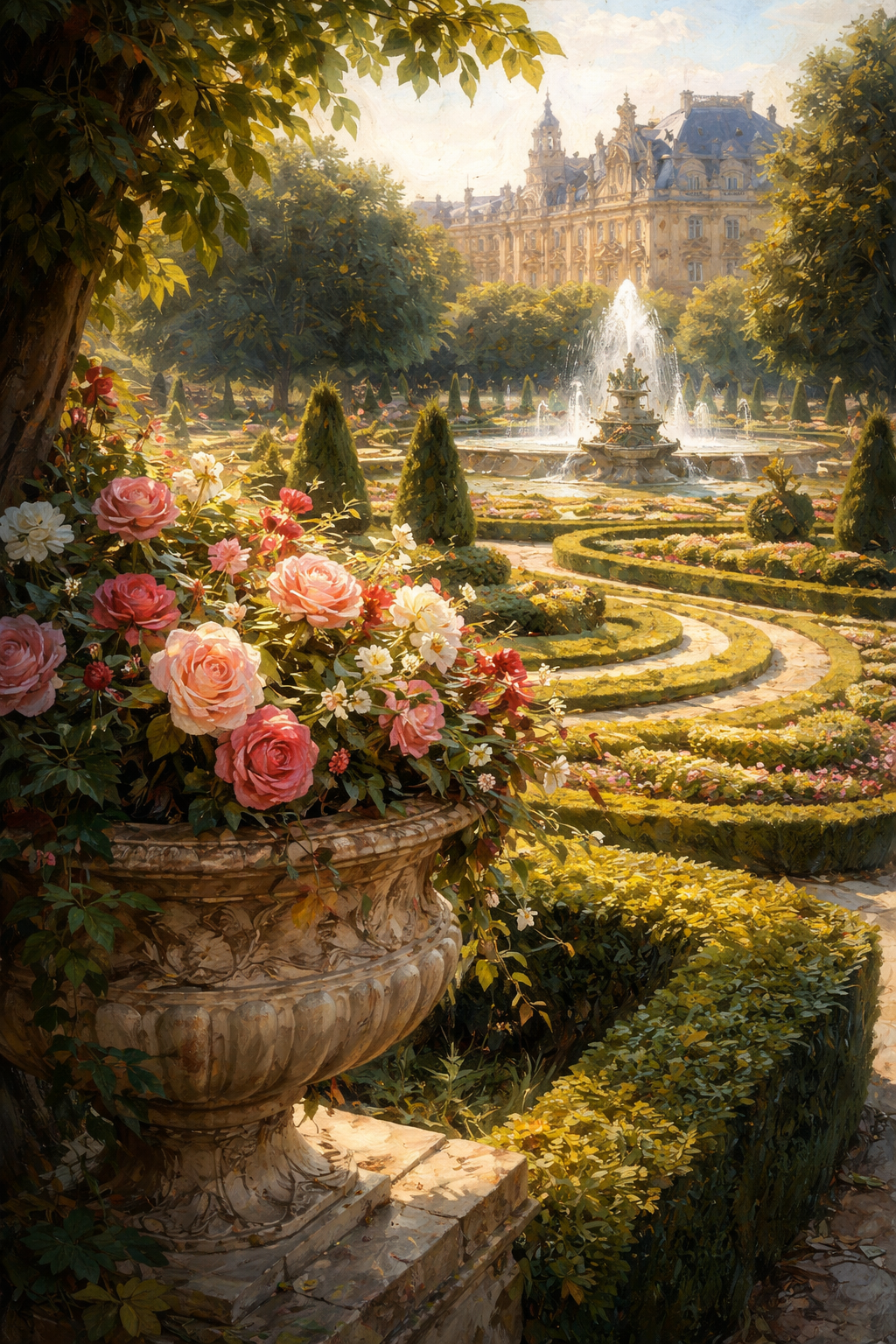
1. Introduction This oil painting depicts an expansive formal garden, characterized by rigorous symmetry and classical elegance. The composition emphasizes the depth of the estate, leading from a detailed foreground to a monumental architectural backdrop. This work highlights the tradition of European landscape design, where nature is meticulously sculpted into geometric harmony. 2. Description In the immediate foreground, an intricately carved stone urn overflows with pink and white roses. The urn sits on a weathered plinth, partially shaded by overhanging branches. Beyond this, the garden unfolds into concentric, manicured boxwood hedges that frame a central tiered fountain. In the distance, a multi-storied palace with ornate features dominates the horizon under a warm sky. 3. Analysis The artist employs linear perspective, with the circular hedge patterns and central fountain drawing the viewer’s gaze toward the palace. The color palette is rich, utilizing golden yellows and deep greens to convey late afternoon sunlight. The contrast between sharp foreground roses and the hazy distant architecture enhances the sense of vast atmospheric space and depth. 4. Interpretation and Evaluation The painting can be interpreted as a tribute to the desire for order and grandeur. The technical execution is exceptional, particularly in rendering textures from the rough stone urn to the delicate petals. The balance between organic flower forms and rigid geometry creates a compelling tension, reflecting the sophistication of formal garden aesthetics and classical heritage. 5. Conclusion Overall, the work succeeds in capturing the majesty of a grand estate through masterful composition. The initial impression of scale eventually settles into an appreciation for fine details in both natural and man-made elements. This piece serves as a significant example of how landscape painting can evoke a sense of timeless beauty and architectural heritage.
 Serenade of the Classical Garden
 Serenity Within the Sunlit Archways
 Secret Path to the Rose Citadel
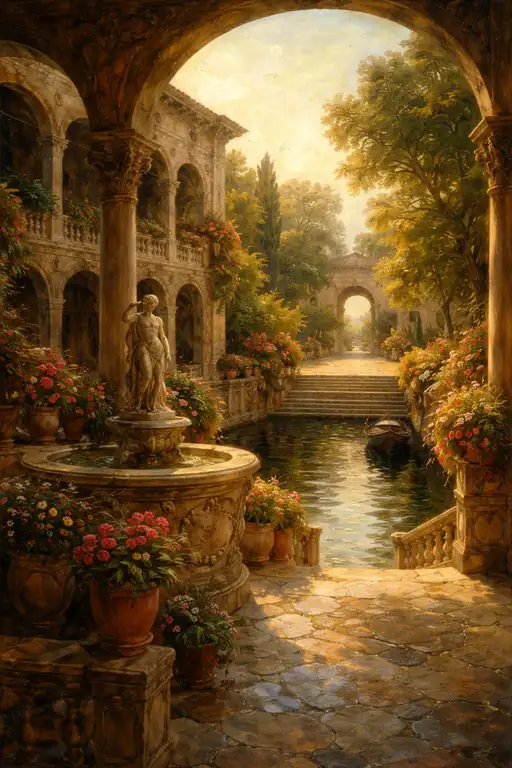 Secrets of the Ancient Stones
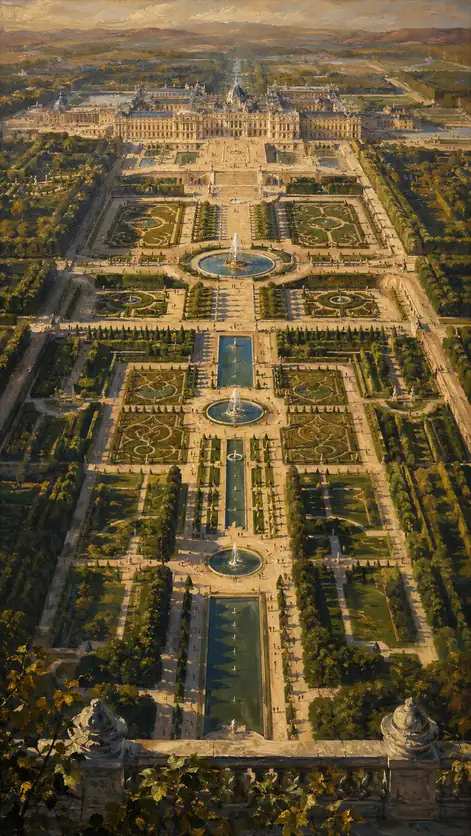 A Pathway to Infinity
 Silent Muse of the Secret Labyrinth
 Symmetry and Passion
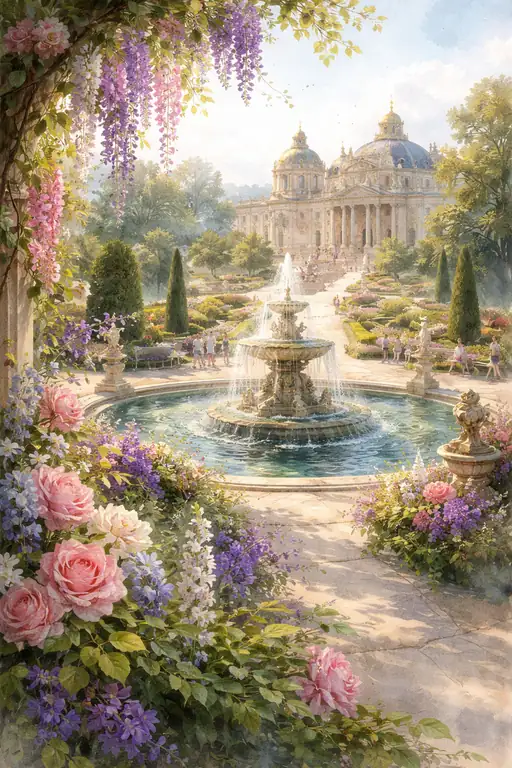 A Royal Bloom
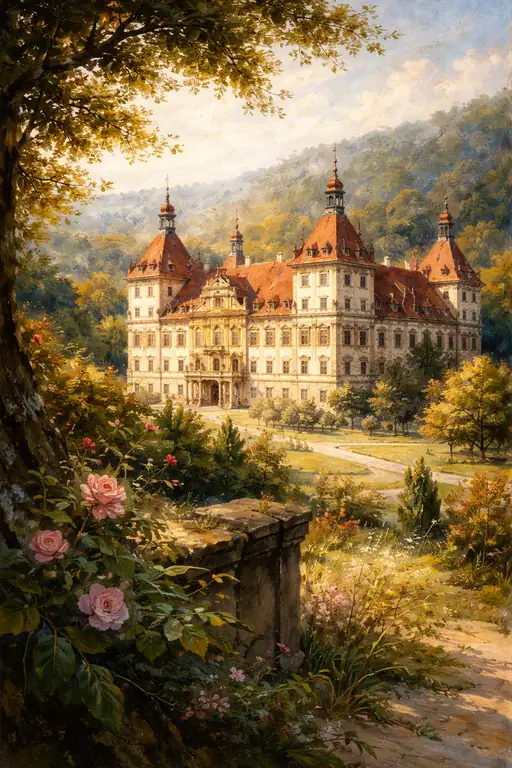 The Majestic Manor's Blooming Secrets
 Serenade of the Twilight Garden