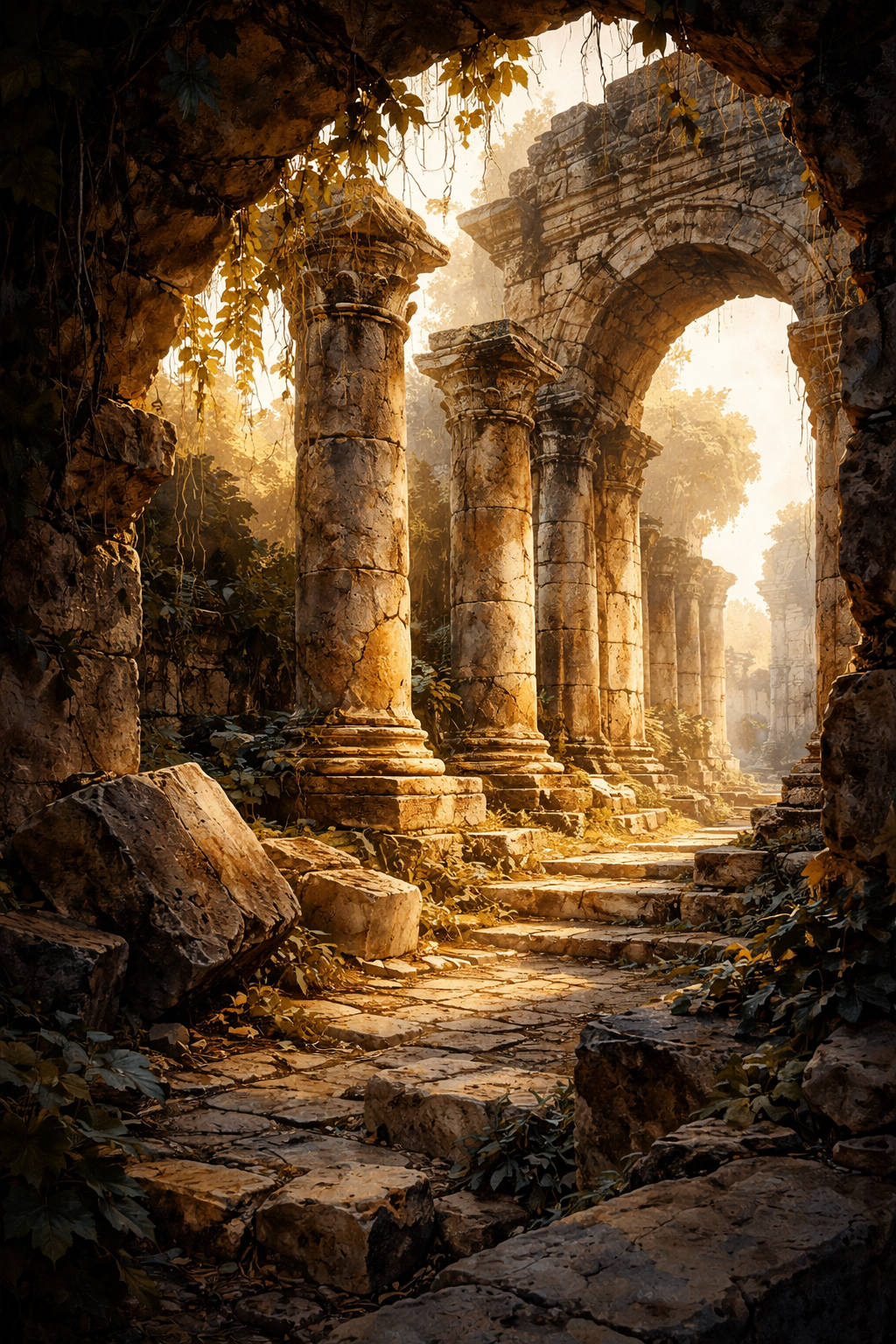
Nature's Reclamation: Echoes of Antiquity
Critique
1. Introduction This painting depicts the remnants of an ancient stone structure, possibly a Greek or Roman colonnade, reclaimed by nature. The scene is characterized by weathered columns and crumbling arches, all bathed in a warm, ethereal sunlight that filters through overhanging vines. The work evokes a sense of timelessness and the quiet grandeur of ruins within a vertical composition. 2. Description The foreground shows a rough stone path leading into the heart of the ruins. On the left, massive stone blocks lie scattered, partially covered by creeping ivy. A series of fluted columns, marked by cracks and decay, stand as silent sentinels on both sides of the path. In the background, an arched gateway remains partially intact, revealing a hazy, luminous distance. The color palette is composed of warm ochres, deep ambers, and earthy browns, punctuated by the dark greens of the foliage. 3. Analysis The artist utilizes a strong chiaroscuro effect, with deep shadows in the foreground contrasting sharply against the brilliantly lit background. This technique creates a dramatic sense of depth and leads the viewer’s eye along the central path toward the light. The vertical format emphasizes the height of the remaining pillars and the downward reach of the vines. The meticulous rendering of the stone’s texture—its pits, cracks, and weathered surfaces—adds to the tactile reality of the scene. 4. Interpretation and Evaluation This piece successfully captures the "memento mori" quality of ruins, highlighting the transience of human achievement compared to the enduring power of nature. The integration of organic plant life with the rigid geometric forms of the architecture creates a balanced and harmonious composition. The technical skill in handling light and shadow is particularly impressive, as it gives the ruins a mystical, almost sacred quality. The painting is a sophisticated exploration of history, decay, and atmospheric light. 5. Conclusion Initial observation reveals a beautiful landscape, but further study highlights the complex narrative of nature’s reclamation. The contrast between the solid stone and the delicate light serves to elevate the subject beyond a mere historical study. Ultimately, the work stands as a poignant reflection on the passage of time and the beauty found in disintegration.
Same Subcategory
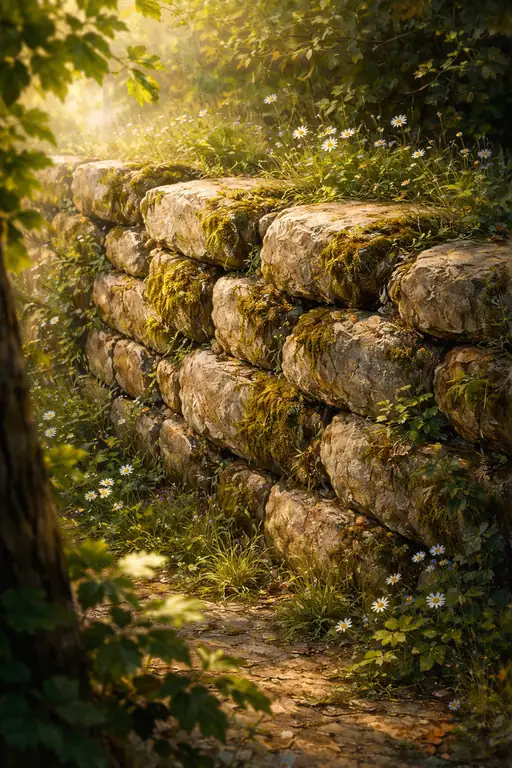 Breath of the Ancient Stones
Similar Artworks
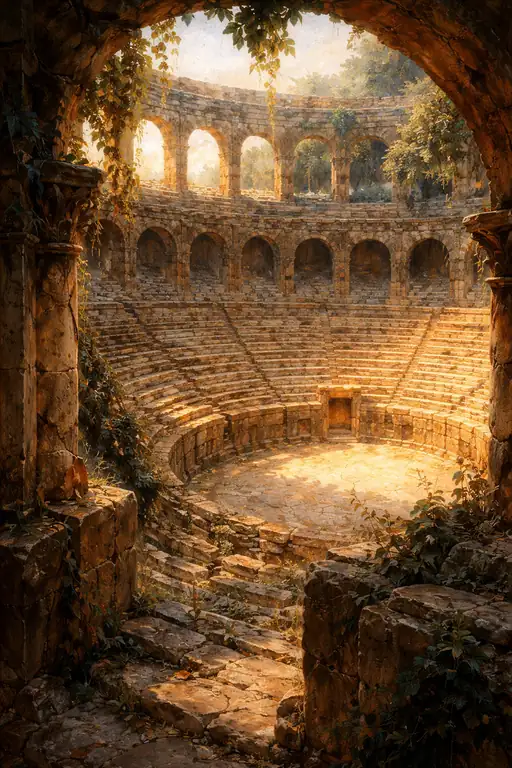 Whispers of the Ancient Arena
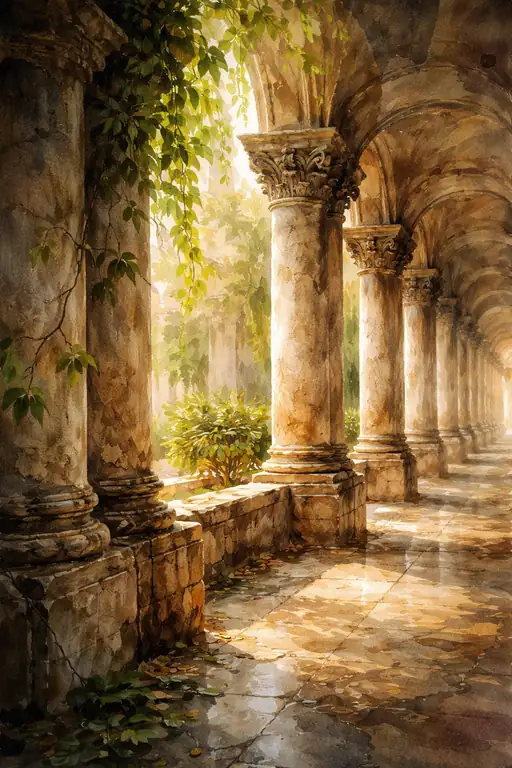 Sunlit Echoes in the Corridor
 Reclaimed by the Emerald Jungle
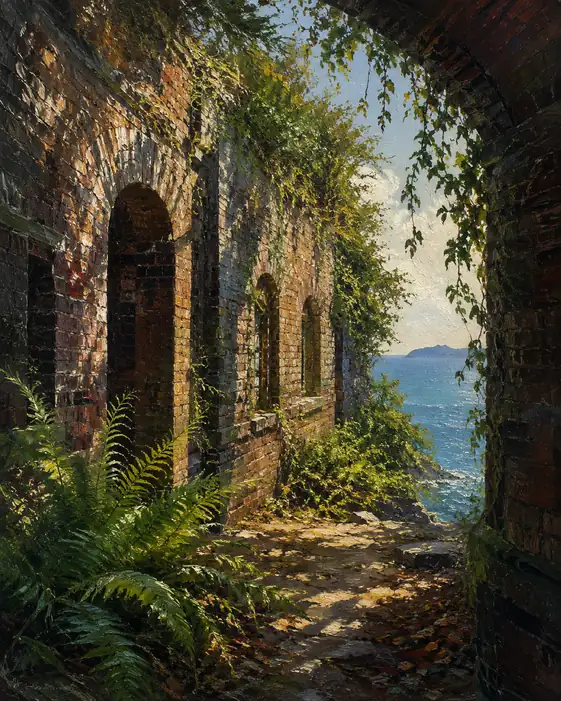 The Golden Echoes of the Ruins
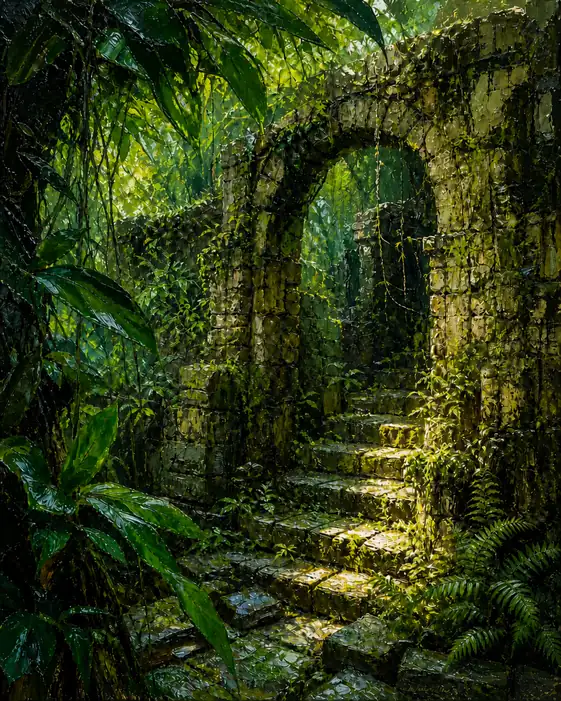 Threshold of the Emerald Silence
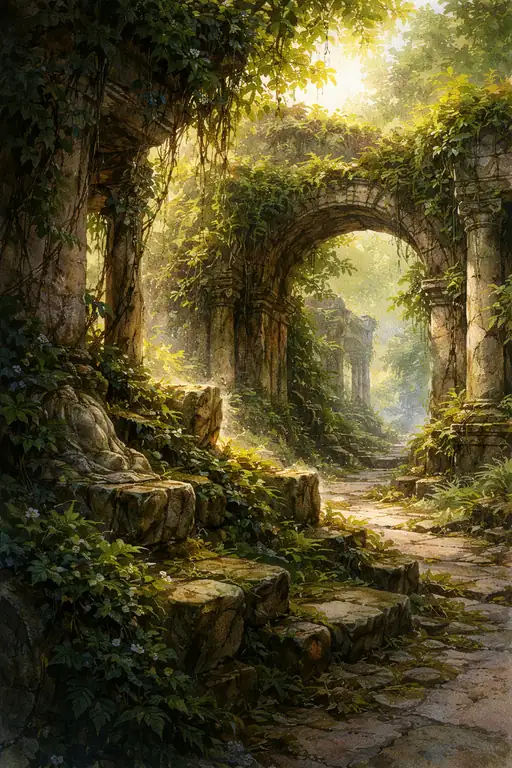 Nature's Reclaimed Archway
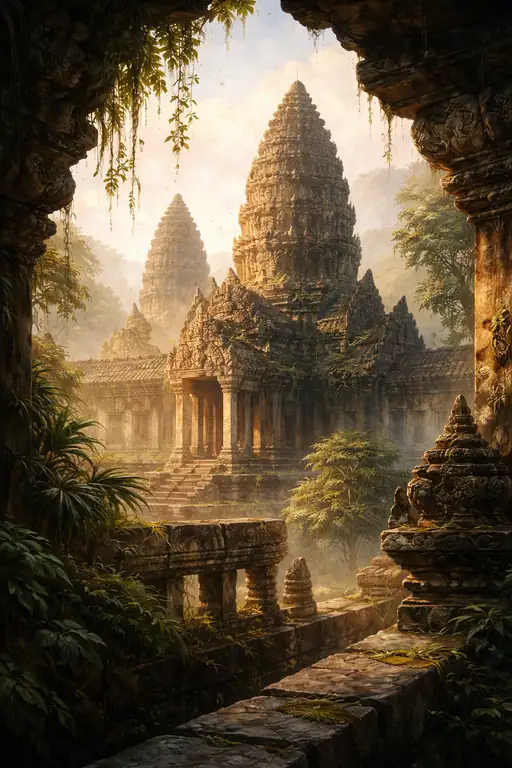 Breath of the Forgotten Sanctuary
 Where Glory Rests in Gold
 Sanctuary of the Forgotten Sun
 The Silent Dignity of Time