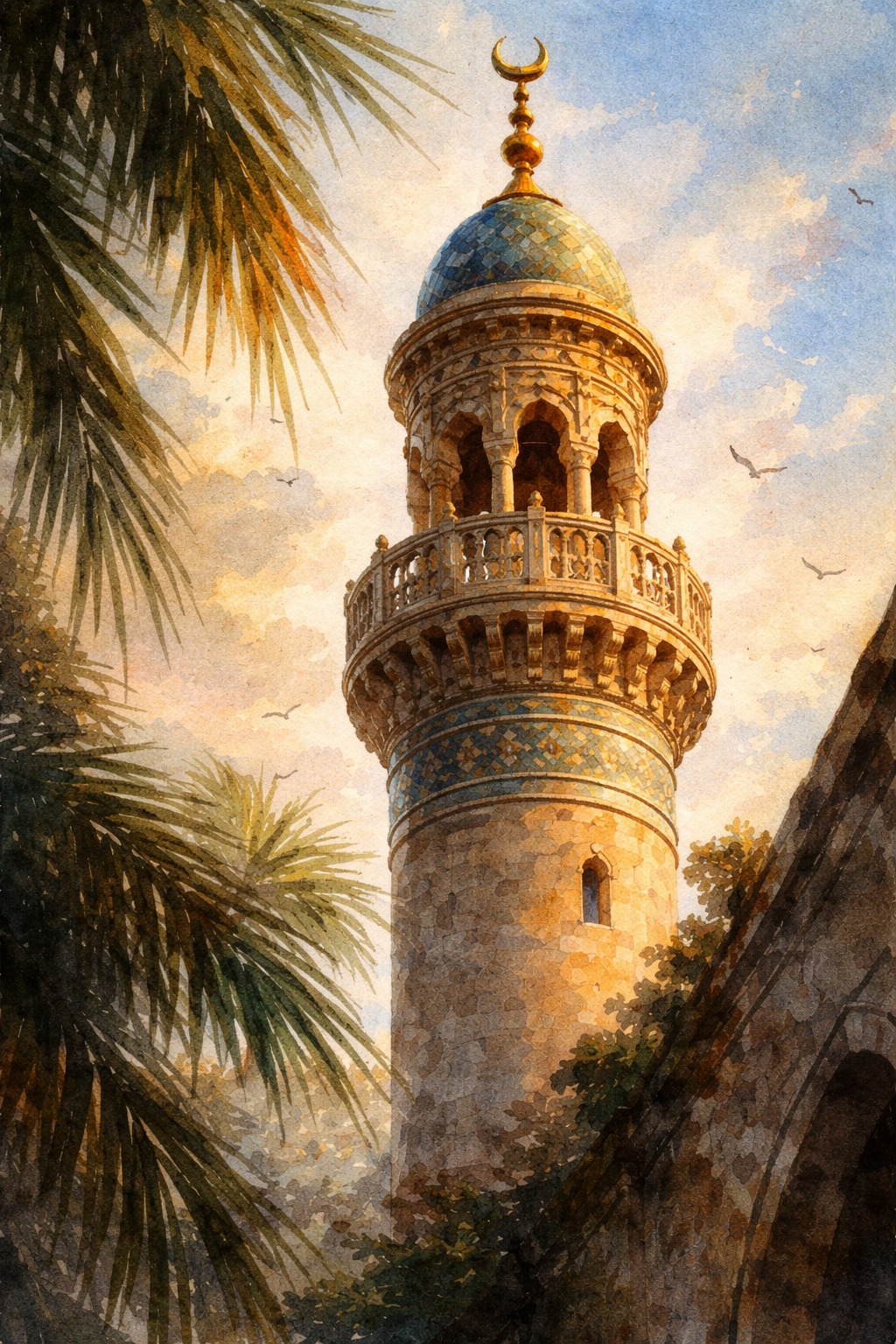
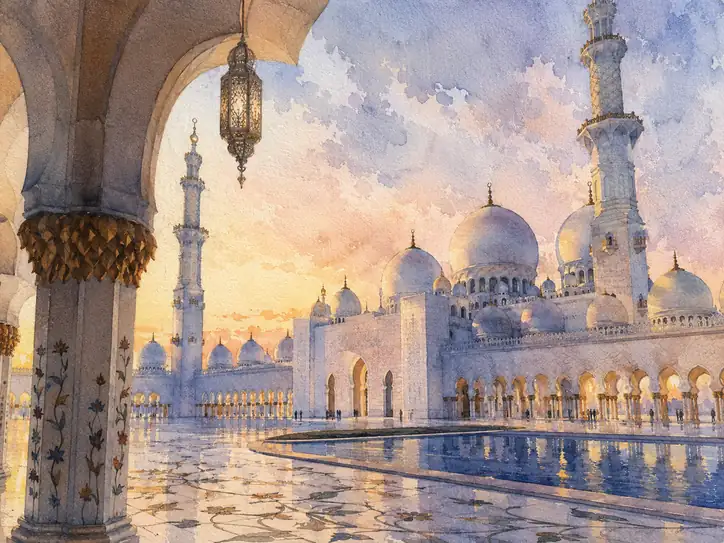
Golden Hour at the Minaret
Critique
1. Introduction This watercolor painting depicts an ornate minaret standing tall against a vast, atmospheric sky. The composition captures the architectural grandeur of Islamic design, focusing on the interplay between the structure and its natural surroundings. The scene is imbued with a sense of tranquility and timelessness, suggesting a moment of reflection during the golden hour of sunset. 2. Description The central subject is a highly detailed minaret, characterized by its cylindrical base, arched balconies, and a turquoise-tiled dome topped with a golden crescent. The tower is rendered with delicate brushstrokes, showcasing intricate masonry and decorative patterns. In the foreground, large palm fronds frame the left side of the piece, their dark, sharp leaves contrasting with the soft sky. A few birds soar in the background, adding a sense of movement to the otherwise still landscape. 3. Analysis The artist employs a warm color palette dominated by earthy ochres, soft oranges, and hints of cool blue in the sky and tilework. Lighting is a crucial element, with the warm glow of the setting sun casting long shadows and highlighting the texture of the stone. The verticality of the minaret is balanced by the diagonal sweep of the palm leaves and the low-angle perspective, which enhances the tower's imposing presence. 4. Interpretation and Evaluation The work demonstrates exceptional technical skill in watercolor, particularly in the rendering of light and architectural detail. The use of negative space in the sky creates a breathing room that emphasizes the spiritual and monumental nature of the minaret. The composition successfully integrates natural and man-made elements, evoking a harmonious relationship between the divine and the earthly. It is a culturally rich piece that combines precision with a lyrical, painterly quality. 5. Conclusion Initially, the eye is drawn to the intricate details of the dome, but a deeper gaze reveals the subtle balance of the entire landscape. The painting serves as a testament to the enduring beauty of traditional architecture and its ability to inspire awe. Overall, the piece is a refined and evocative study of light, form, and cultural heritage.
Same Subcategory
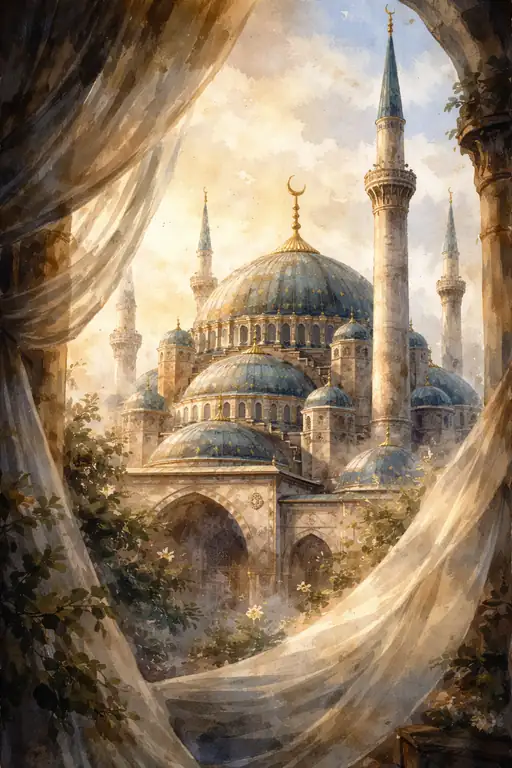 Azure Grandeur: The Mosque Beyond the Veil
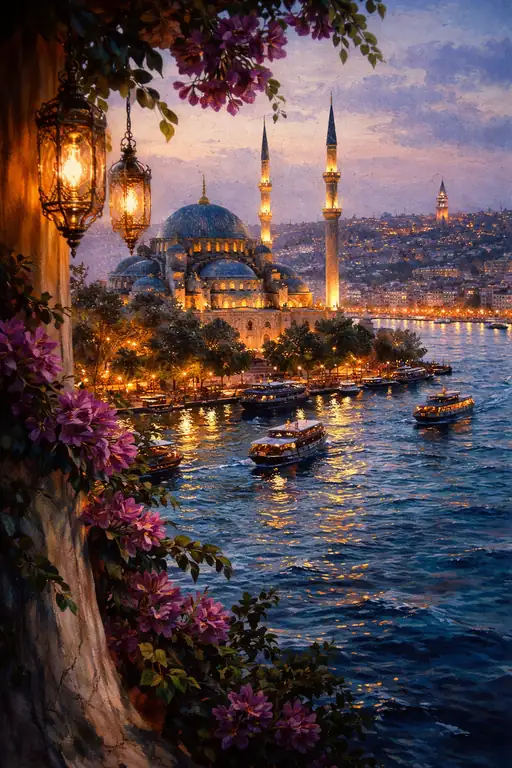 Twilight's Embrace Over Bosphorus
Similar Artworks
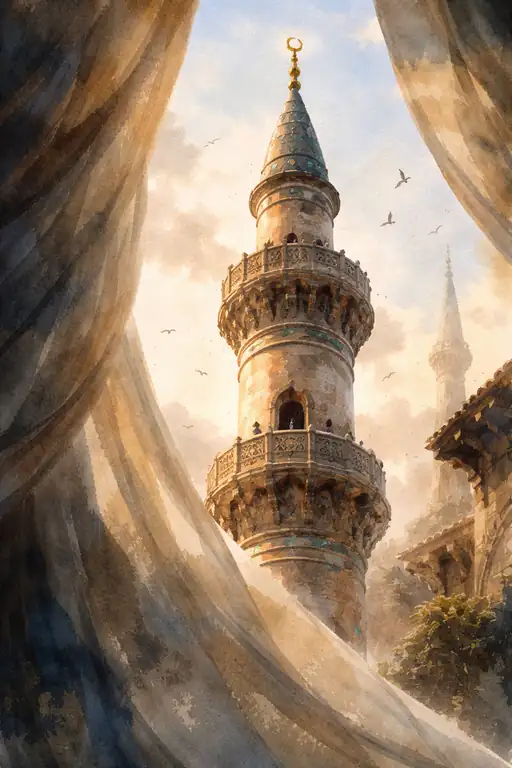 Minaret Beyond the Veiled Arch
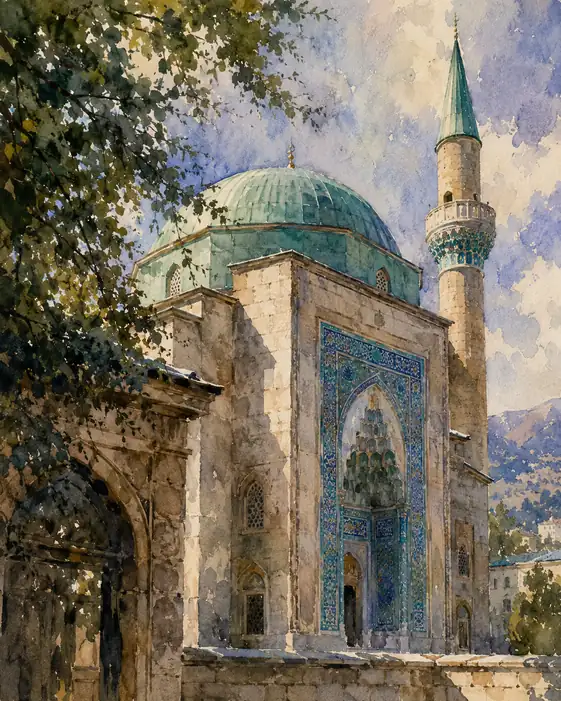 Sanctuary of the Emerald Dome
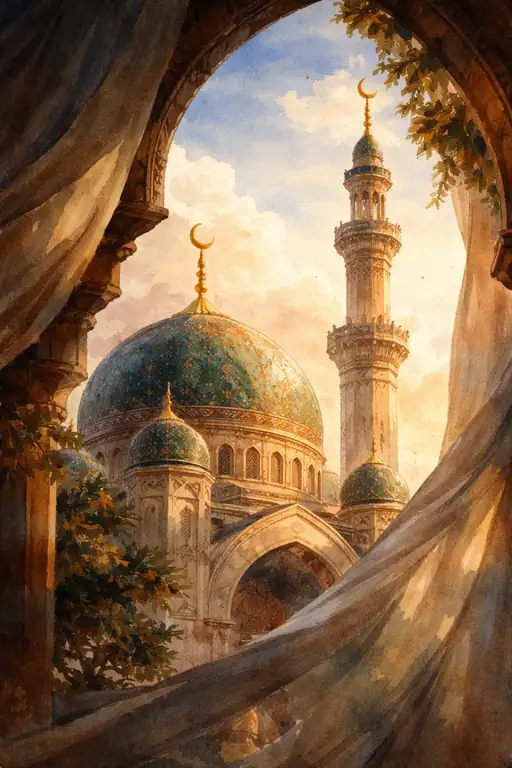 Emerald Dome of the Setting Sun
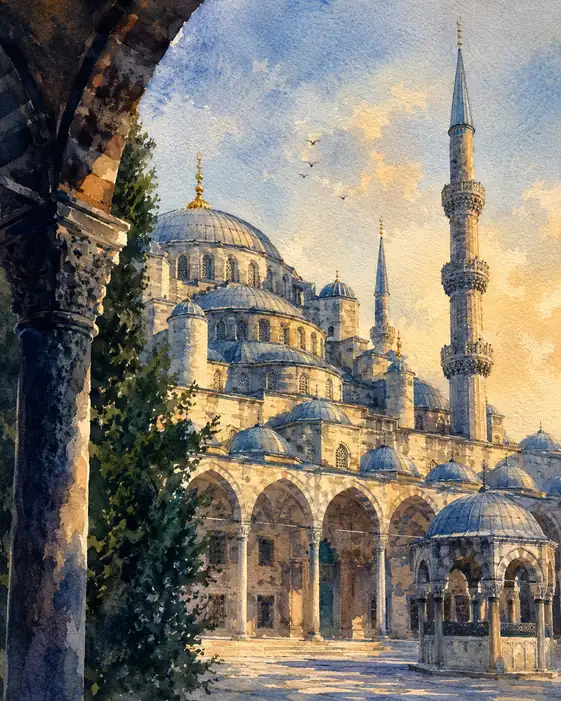 Whispers of the Golden Dome
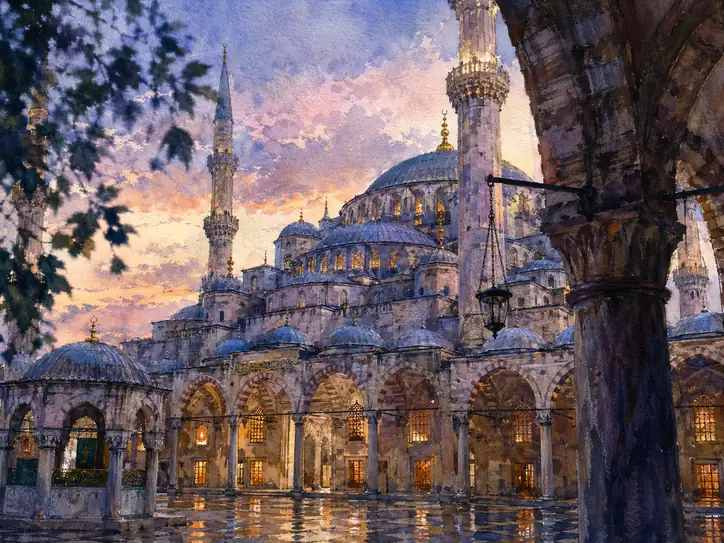 Twilight Prayer: When the Sacred Sky Whispers
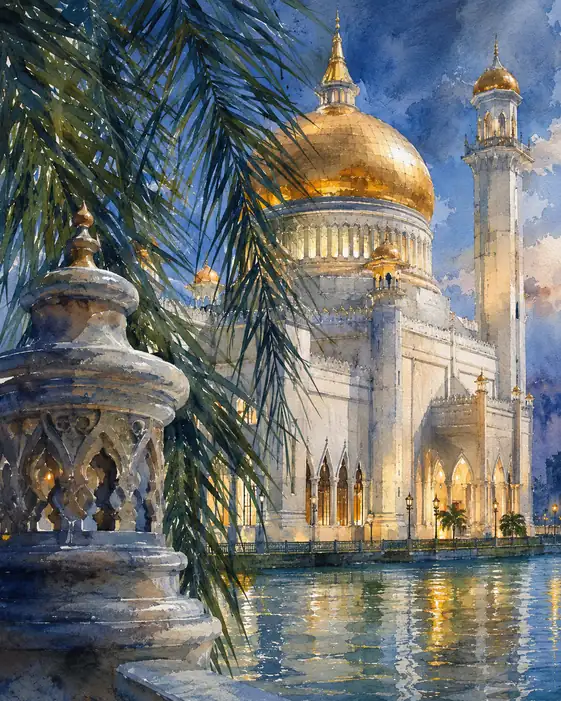 Mirrored Devotion
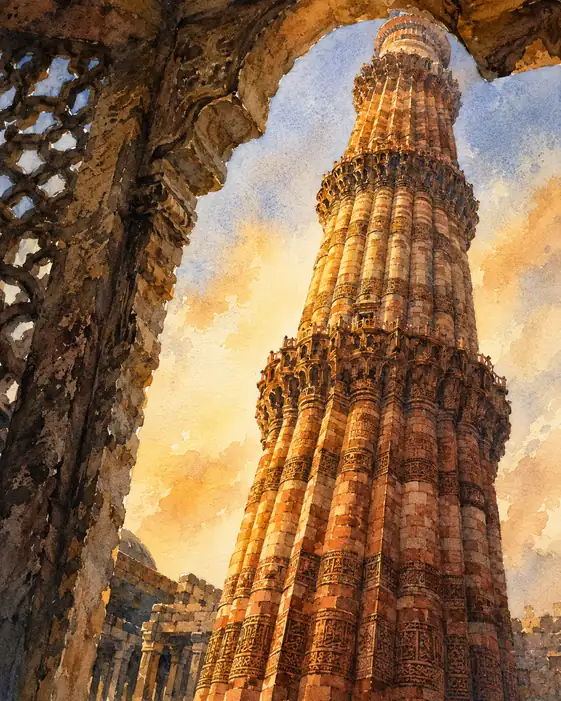 Reach for the Golden Heavens
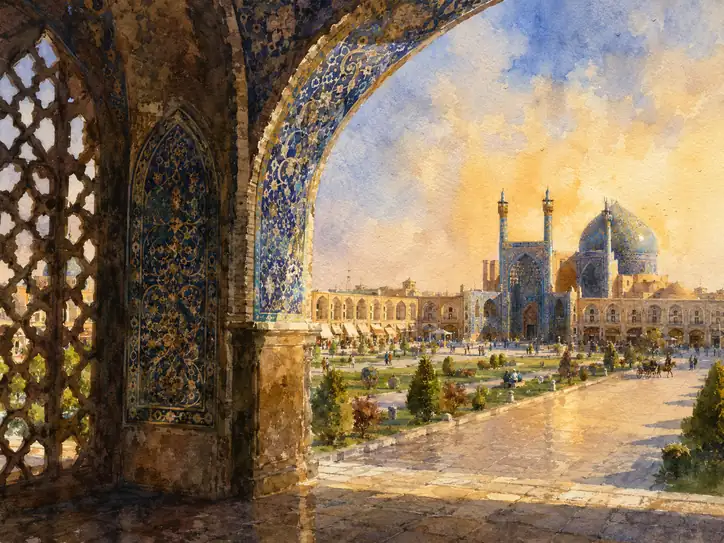 Eternity Beyond the Lattice
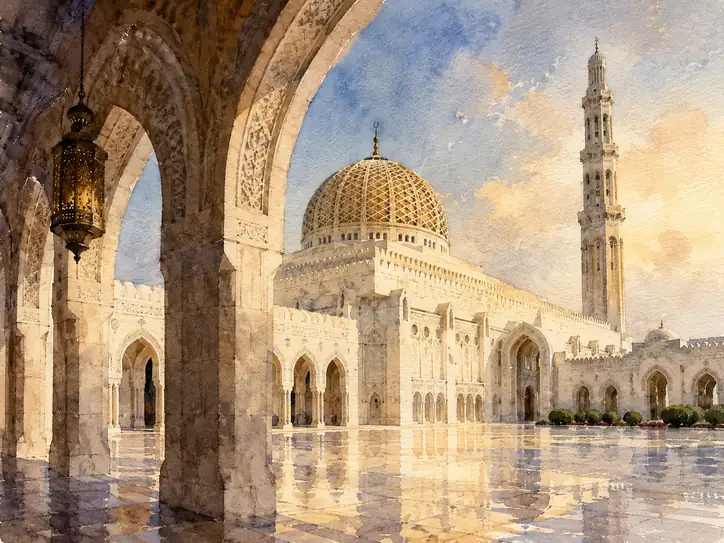 Reflections of Heavenly Silence
 Tranquility in the Golden Dusk