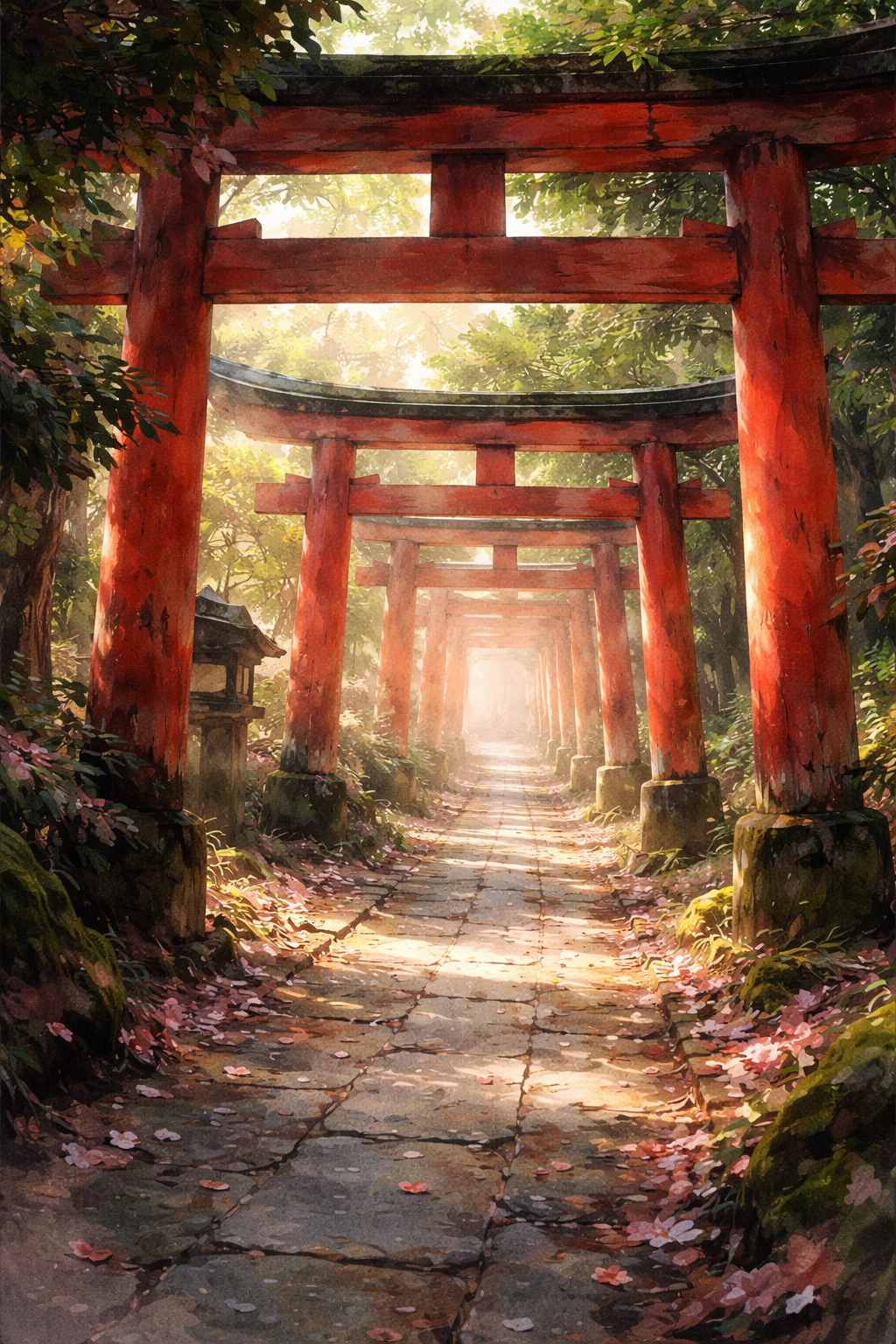
The Radiant Path of a Thousand Gates
Critique
1. Introduction This watercolor work portrays a striking path of vermillion torii gates, creating a rhythmic and immersive tunnel leading through a sacred forest. The composition emphasizes the repetitive structure of the gates, which recede into a luminous distance, evoking a sense of spiritual journey and transition. Through a masterful handling of light and translucent washes, the painting captures the quiet majesty of a traditional Japanese sanctuary. The overall atmosphere is one of profound peace and ethereal beauty. 2. Description The primary focus is a long sequence of bright red torii gates that line a stone-paved path, which is scattered with delicate pink petals or fallen leaves. A traditional stone lantern stands to the left, nestled among mossy rocks and lush greenery that frames the foreground. Sunlight streams through the dense canopy of trees in the background, filling the far end of the path with a brilliant, soft glow. The weathered texture of the wooden gates and the uneven surfaces of the stone path are rendered with fine detail. 3. Analysis The artist utilizes a vibrant color palette, where the bold red of the gates provides a powerful contrast against the cool greens and deep shadows of the forest. Linear perspective is expertly employed to create a strong sense of depth, drawing the viewer’s eye deep into the center of the composition. The interplay of light is critical, with the glowing background acting as a source of radiance that illuminates the path and the inner surfaces of the gates. Dappled shadows on the stone ground add a sense of movement and natural variation to the scene. 4. Interpretation and Evaluation The repetition of the torii gates symbolizes a passage from the mundane to the sacred, a theme deeply rooted in Japanese spiritual traditions. The contrast between the solid architectural forms and the transient beauty of the scattered petals reflects a poignant awareness of the passage of time. Technically, the work shows a high level of control over the watercolor medium, particularly in maintaining the clarity of the red pigment while suggesting complex lighting. The balance between detailed foreground elements and the atmospheric, soft-focus background is particularly commendable. 5. Conclusion In conclusion, this painting provides a compelling and poetic vision of a sacred space, rendered with both technical precision and artistic sensitivity. The initial impression of a structural repetition is transformed into an appreciation for the subtle shifts in light and the evocative power of the path. Through this work, the artist has successfully captured the timeless appeal of traditional motifs and their ability to inspire wonder. Ultimately, it is a balanced and spiritually resonant composition that leaves a lasting impression on the viewer.
Same Subcategory
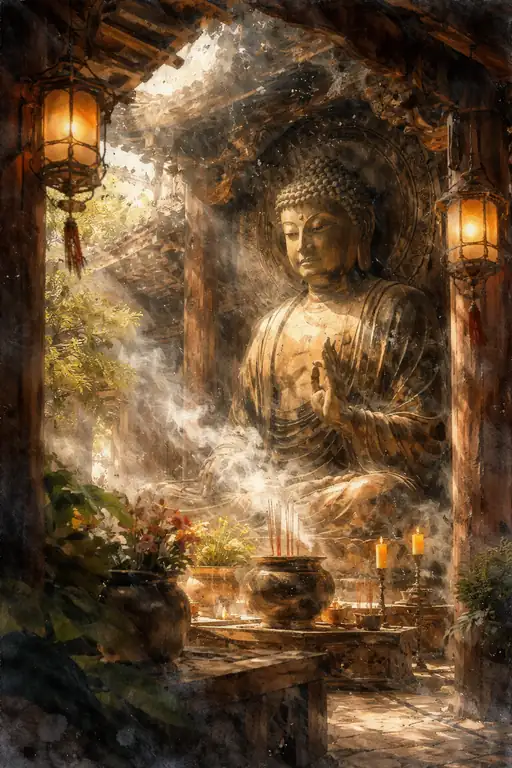 Incense and the Ray of Divine Light
Similar Artworks
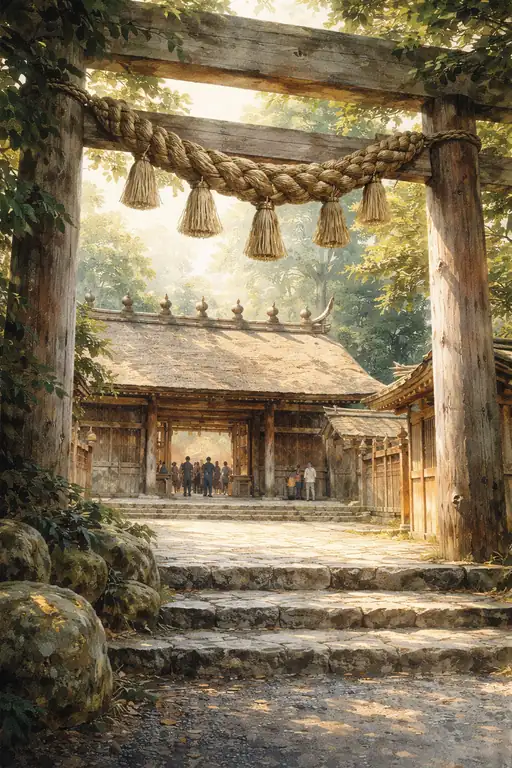 Awakening the Sacred Path
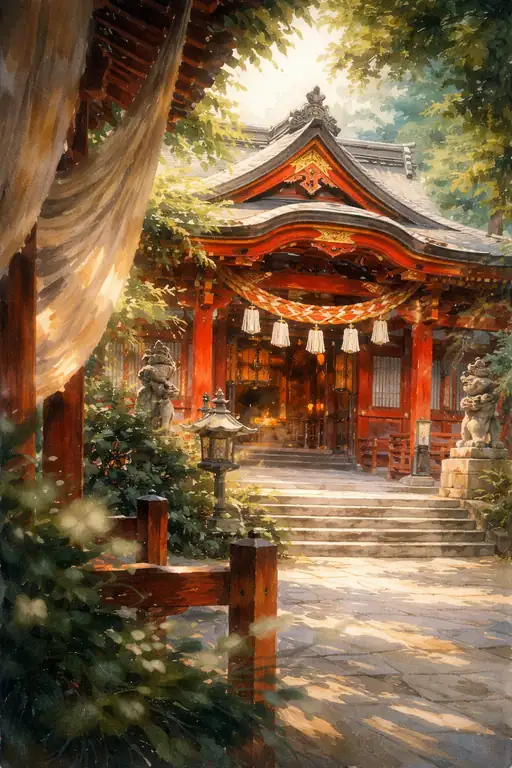 Sunlight Upon the Vermilion Pillars
 Silent Steps through the Sacred Forest
 Sanctuary of the Silent Forest
 Where Crimson Meets the Emerald Wilds
 Sanctuary of the Ancient Cedars
 Golden Glow in the Maple Shadows
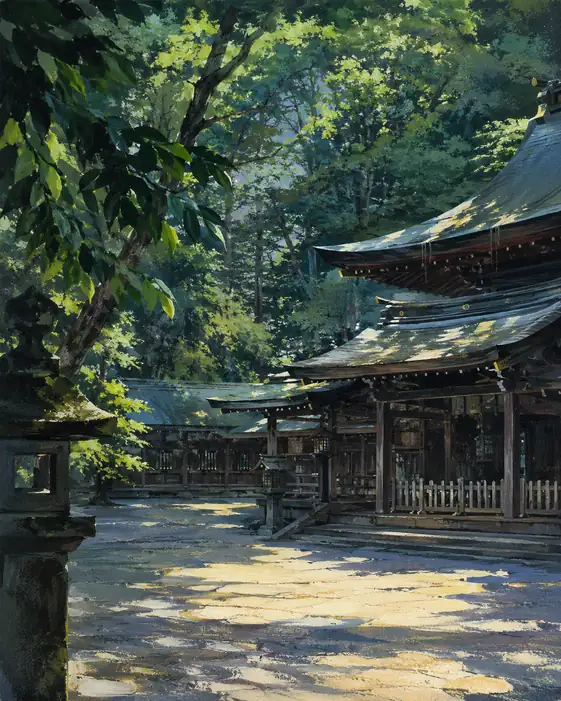 Whispers of the Sunlit Sanctuary
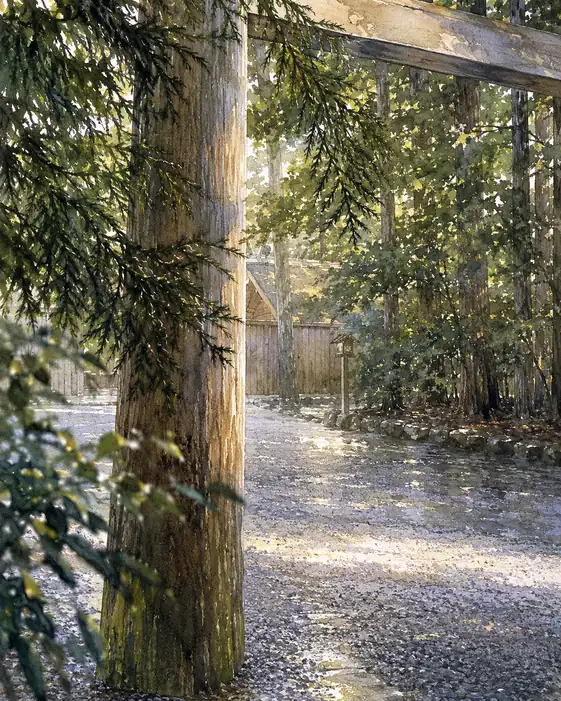 Sunbeams Dancing on the Path of Gods
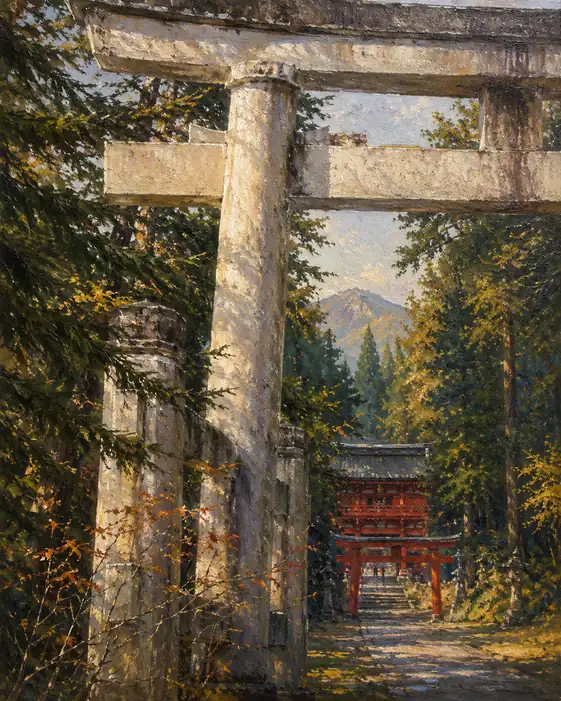 Passage Through the Sacred Shadows