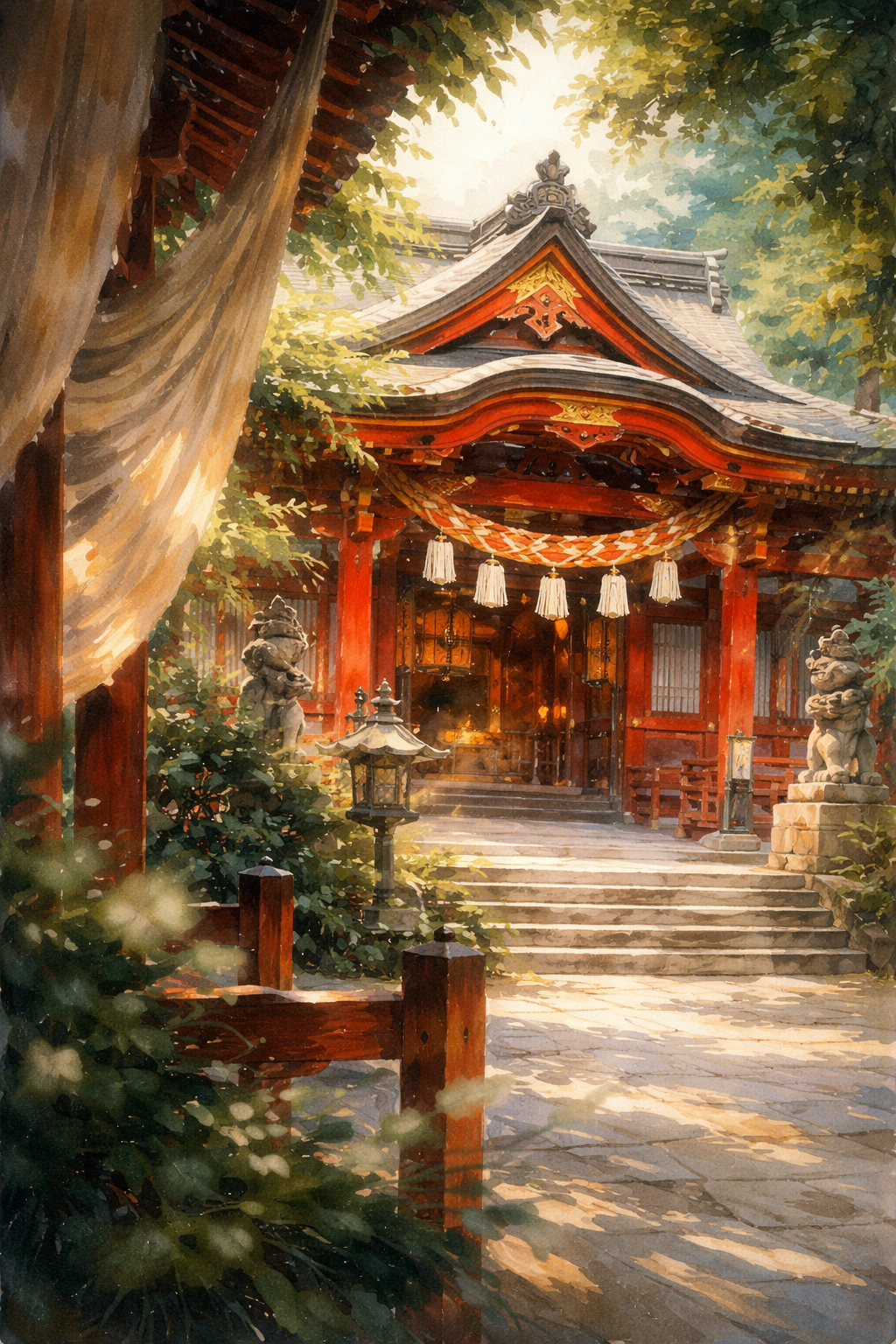
Sunlight Upon the Vermilion Pillars
Critique
1. Introduction This watercolor work depicts a traditional Japanese Shinto shrine, capturing the serene and spiritual atmosphere of a sacred forest. The composition is centered on the vibrant vermillion architecture of the shrine building, which stands as a focal point amidst the surrounding natural elements. Through the delicate use of light and color, the painting conveys a sense of timelessness and the peaceful coexistence of human devotion and nature. The overall mood is one of quiet reverence and aesthetic harmony. 2. Description The main structure features a classic thatched roof and bright red pillars, decorated with a thick shimenawa rope and white shide streamers. Stone guardian lions, known as komainu, flank the entrance, while traditional stone lanterns and a wooden fence lead the viewer’s eye toward the sanctuary. Sunlight filters through the dense canopy of trees, creating a dappled pattern of light and shadow on the stone-paved path. Lush green foliage frames the scene, with soft, out-of-focus leaves in the foreground adding depth to the composition. 3. Analysis The artist utilizes a rich color palette dominated by the brilliant red of the shrine, which contrasts sharply with the deep greens and earthy browns of the forest. The use of light is particularly effective, with bright highlights suggesting the intensity of the sun breaking through the branches. Dappled shadows are rendered with soft, translucent washes that mimic the natural effect of sunlight on stone and wood. The perspective is slightly low, looking up at the shrine, which enhances its stature and gives the viewer a feeling of approaching a holy site. 4. Interpretation and Evaluation The interplay between the man-made shrine and the organic forest reflects the core Shinto belief in the divinity of nature. The meticulous detail in the shimenawa and architectural ornaments demonstrates a high level of technical skill and cultural sensitivity. The balance of the composition is excellent, with the foreground elements grounding the scene and the background light providing a sense of openness and spiritual elevation. This work is a successful example of how traditional motifs can be rendered with a modern, expressive watercolor technique to evoke deep emotional resonance. 5. Conclusion In conclusion, the painting offers a captivating glimpse into the spiritual landscape of Japan, rendered with exceptional clarity and warmth. The initial impression of a colorful building is deepened by an appreciation for the complex light effects and the serene atmosphere it portrays. The artist has skillfully transformed a familiar scene into a poetic meditation on light and sanctity. Ultimately, this work stands as a testament to the enduring beauty of traditional architecture and its harmonious relationship with the natural world.
Same Subcategory
Similar Artworks
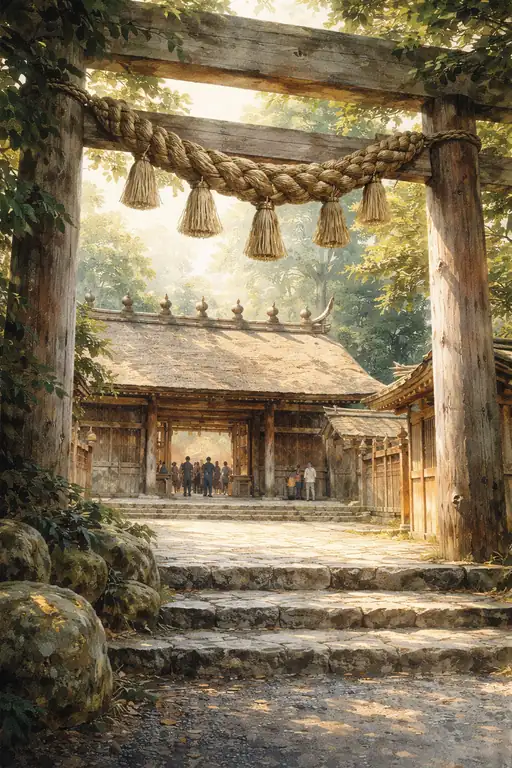 Awakening the Sacred Path
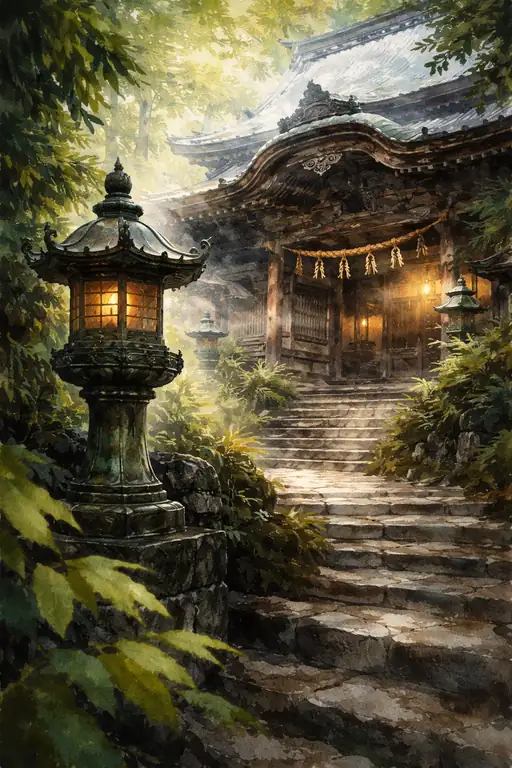 Sanctuary of the Silent Forest
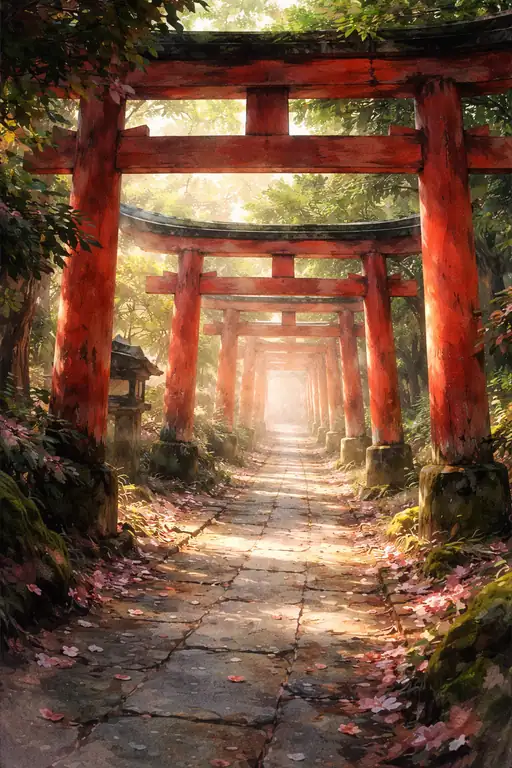 The Radiant Path of a Thousand Gates
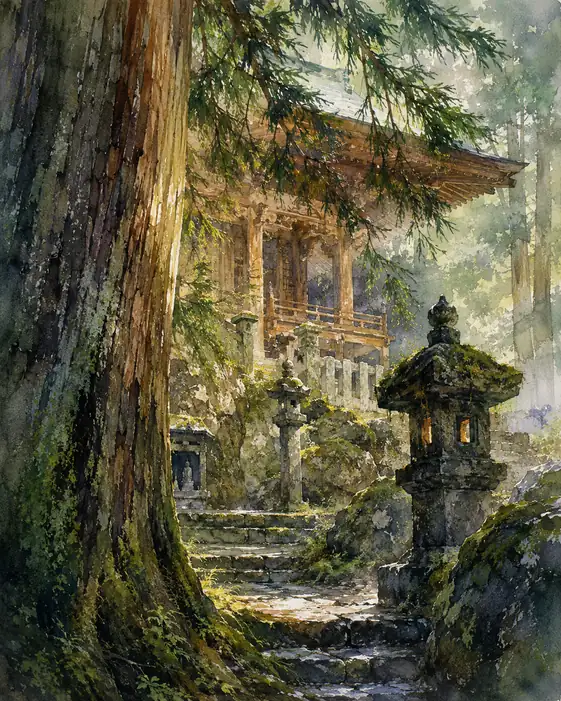 Sanctuary of the Ancient Cedars
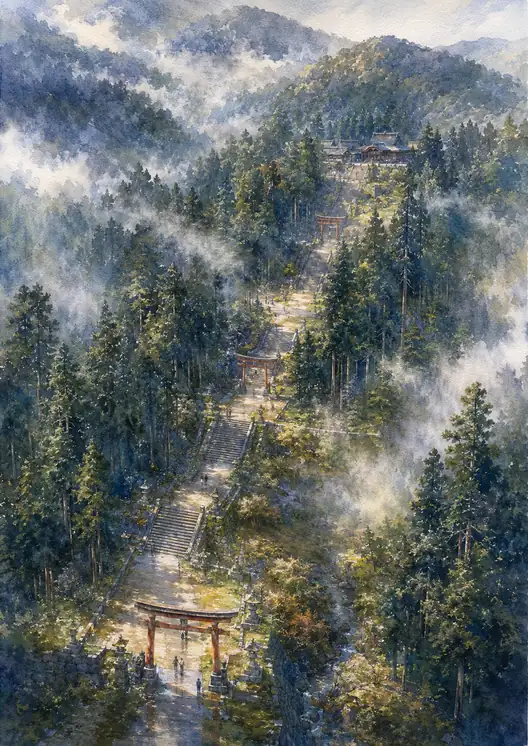 Silent Steps through the Sacred Forest
 Where Crimson Meets the Emerald Wilds
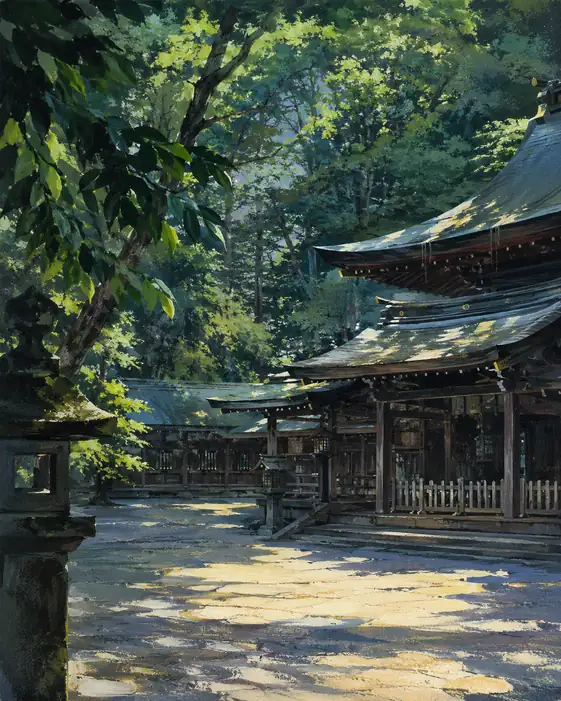 Whispers of the Sunlit Sanctuary
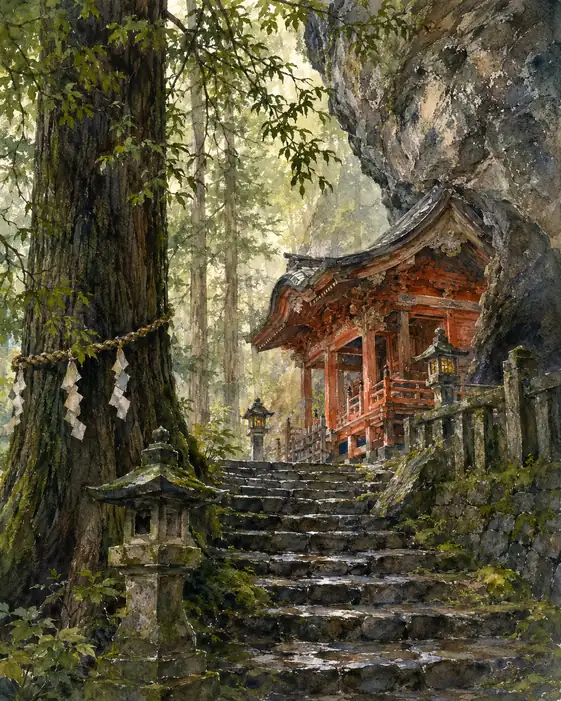 The Ancient Spirit’s Sanctuary
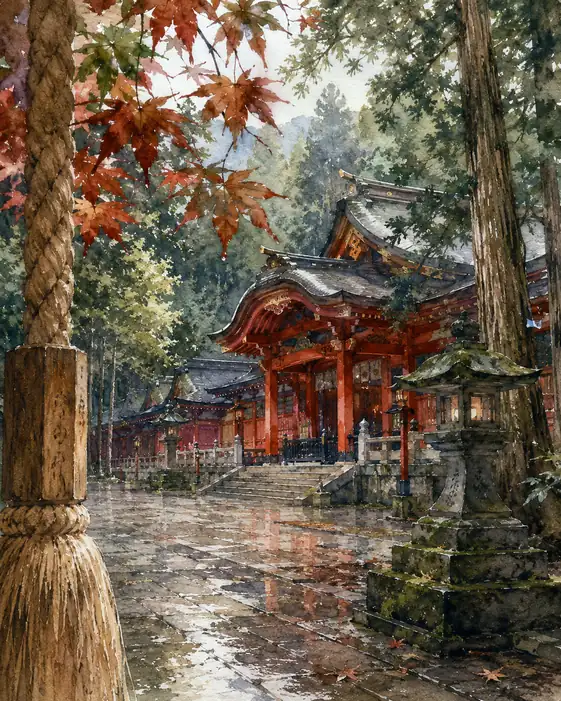 Serenity in the Autumn Rain
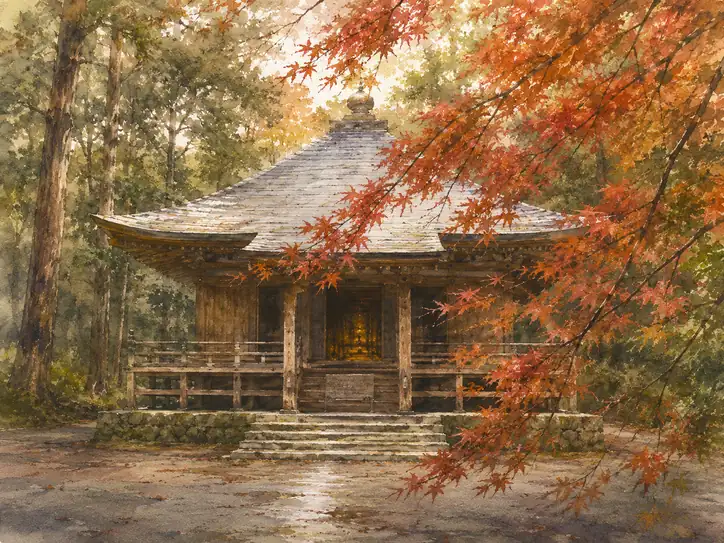 Golden Glow in the Maple Shadows