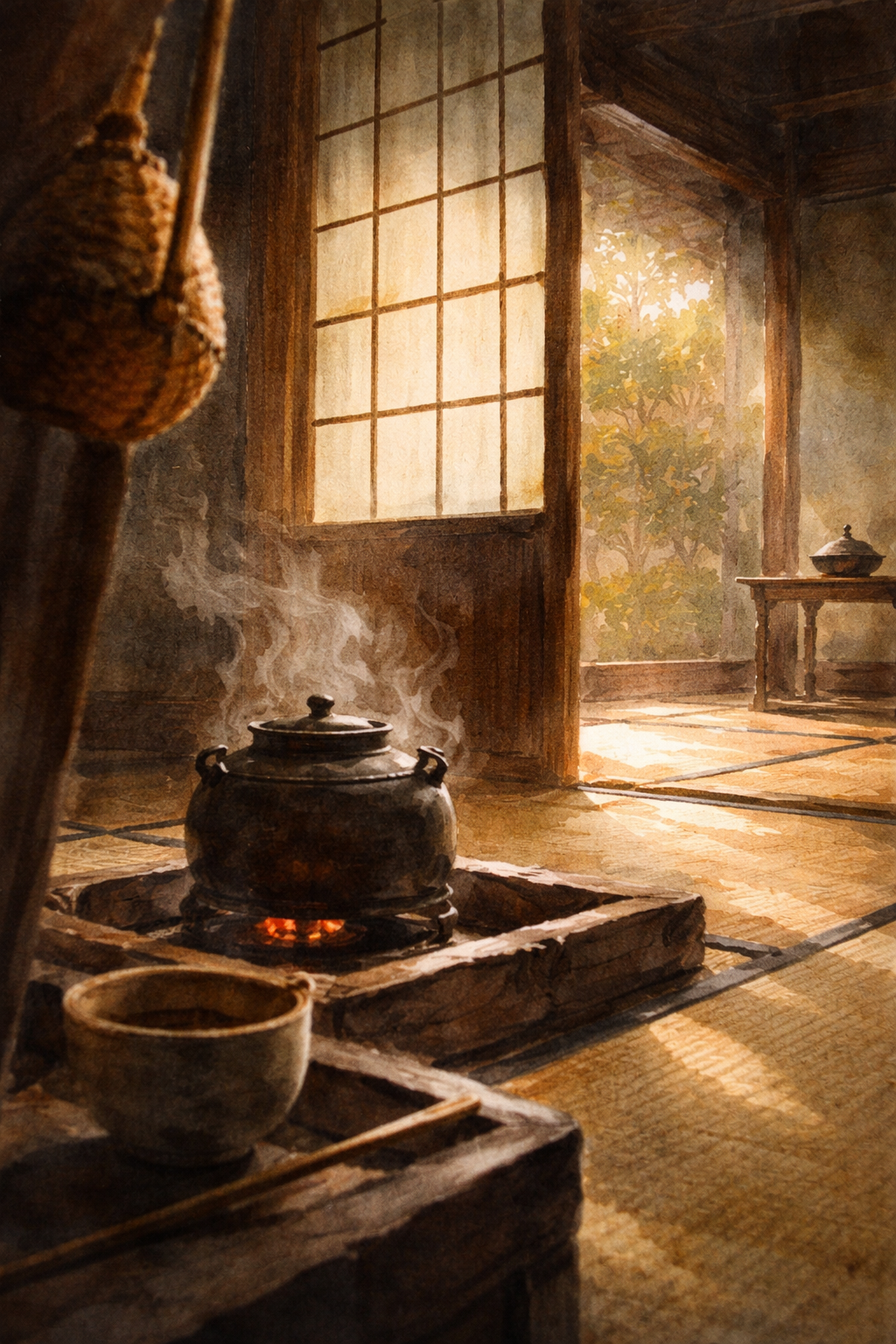
Warmth of the Irori Hearth
Critique
1. Introduction This watercolor painting depicts a tranquil moment within a traditional Japanese architectural setting. It captures a scene of daily life centered around a sunken hearth, evoking a sense of stillness and historical continuity. The work invites the viewer to appreciate the subtle beauty found in domestic rituals and the architectural heritage of a bygone era. 2. Description In the foreground, a dark metal kettle sits atop an open fire in an irori, with wisps of white steam rising steadily toward the ceiling. To the lower left, a ceramic bowl and chopsticks are placed on a wooden tray, suggesting a meal in progress. The middle ground shows a tatami-matted floor bathed in golden sunlight streaming from the right. A shoji screen door stands partially open, revealing a glimpse of lush green foliage in the background. 3. Analysis The composition utilizes strong diagonal lines formed by the sunbeams to guide the viewer's eye towards the central kettle. The use of watercolor allows for soft transitions between the warm interiors and the bright, diffused light from outside. The palette is dominated by ochre, brown, and charcoal, creating a harmonious and grounded atmosphere. These造形要素 are carefully balanced to reinforce the theme of domestic tranquility and structural stability. 4. Interpretation and Evaluation This work successfully conveys the warmth and simplicity of traditional living through its masterfully handled light and shadow. The contrast between the cool, dark kettle and the radiant sunbeams highlights the elemental importance of fire and light in a home. The artist demonstrates strong technique in representing diverse textures, from the woven tatami mats to the delicate, ephemeral steam. The original approach to lighting results in a cohesive and evocative piece that transcends mere documentation. 5. Conclusion Initially, the painting appears as a simple domestic study, but deeper observation reveals a sophisticated exploration of light and atmosphere. The artist effectively captures a fleeting moment of peace, grounding the viewer in a serene and timeless environment. Ultimately, the work serves as a poignant reflection on the harmony between human habitation and the natural world.
Same Subcategory
 The Hearth's Resonant Heartbeat
Similar Artworks
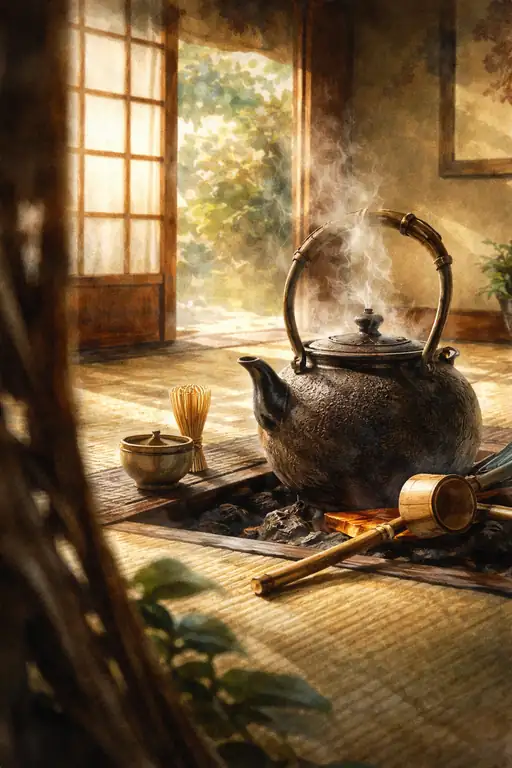 Whispers of the Boiling Kettle
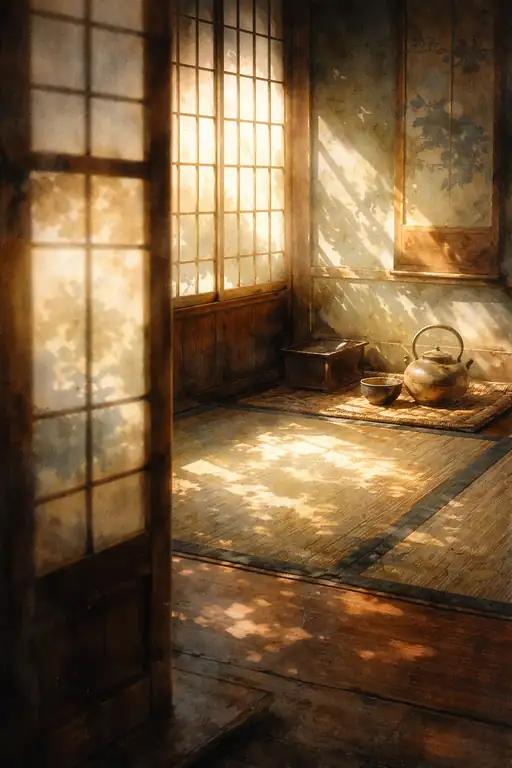 Shadows Dancing on Tatami
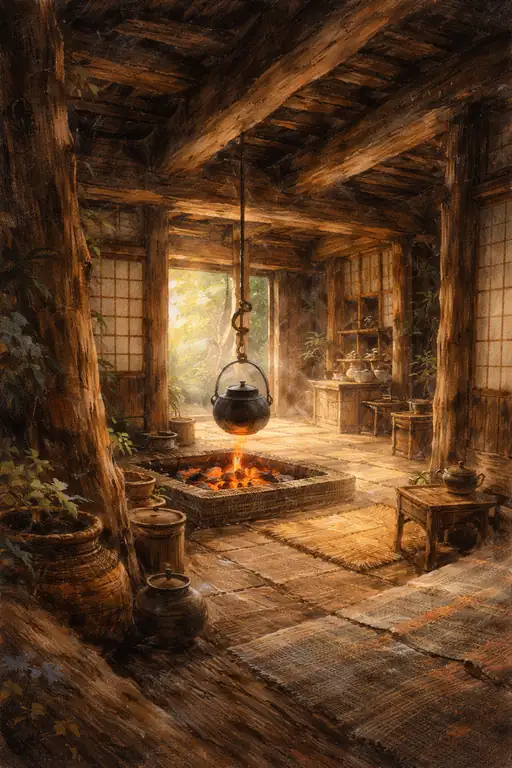 Ancestral Flames and Timber Shadows
 Morning Light Through Shoji
 Stillness of the Tea Room
 Traces of Time
 Sunlight Spilling Through Time
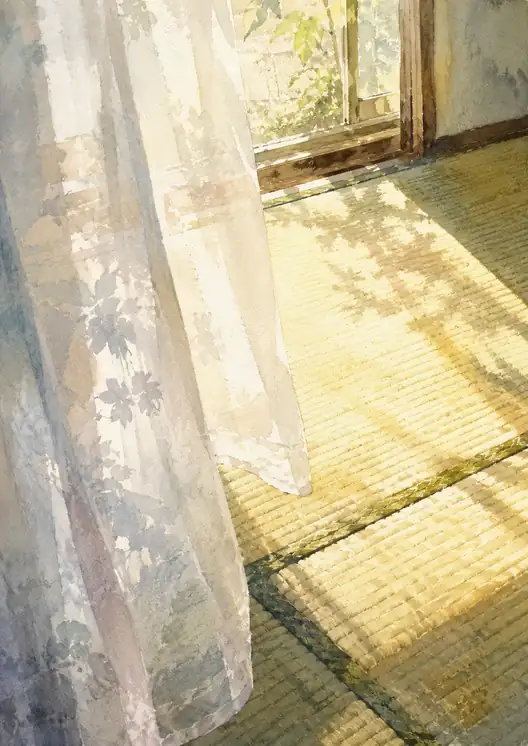 Whispers of the Leaf Shadows
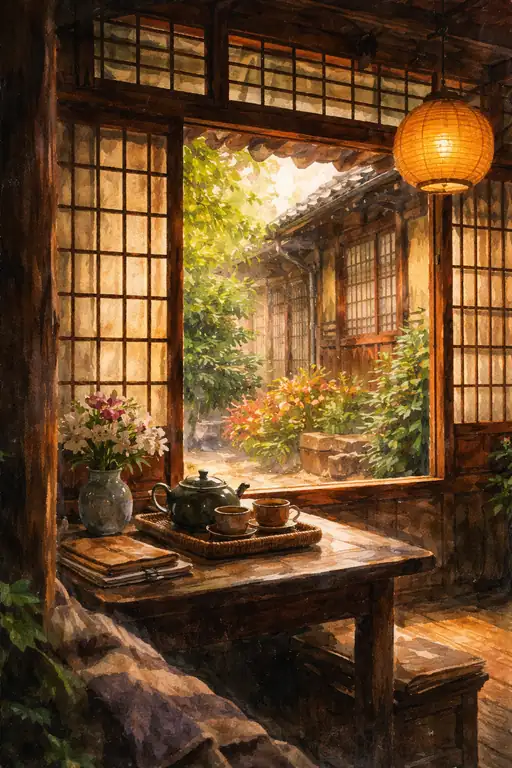 The Soft Glow of Peace in a Paper Lantern
 Morning Steam Beside the Gilded Petals