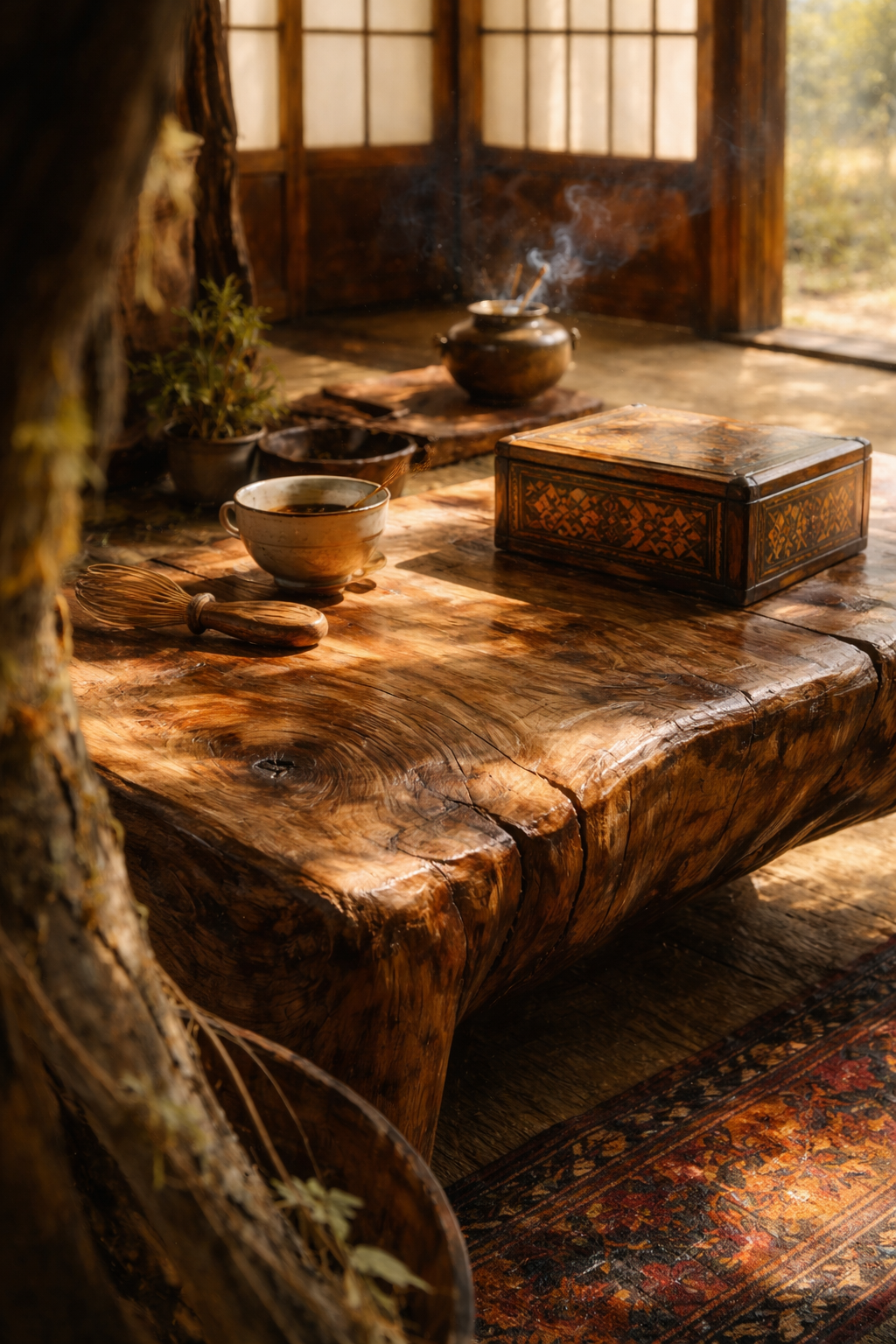
Whispers of Wabi-Sabi
Critique
1. Introduction This work captures a moment of profound stillness and spiritual depth within a space dedicated to the traditional tea ceremony. The composition is centered on a massive, naturally weathered wooden slab that serves as a low table, upon which several ritualistic objects are carefully placed. Background elements, including shoji screens and rising incense smoke, contribute to an atmosphere of Zen-like simplicity and mindfulness. The overall mood is one of quietude, inviting the viewer to appreciate the beauty found in organic forms and deliberate actions. 2. Description On the rugged surface of the wooden table, a simple ceramic tea bowl sits beside a traditional bamboo whisk. A rectangular Yosegi-style parquetry box is positioned to the right, its intricate geometric patterns providing a sharp contrast to the raw, knotty grain of the wood beneath. In the background, a bronze pot or incense burner emits a thin, swirling trail of smoke that catches the warm sunlight. The room is enclosed by classic paper screens, which diffuse the external light and maintain the soft, interior glow of the setting. 3. Analysis The artist effectively employs the principles of Wabi-sabi, emphasizing the beauty of imperfection and the passage of time through the heavy texture of the wooden slab. The contrast between the rough, unrefined wood and the delicate, precise patterns of the parquetry box creates a dynamic visual tension. Lighting plays a crucial role, with strong diagonal beams of sunlight highlighting the physical relief of the wood grain while casting deep, evocative shadows. This interplay of light and dark reinforces the sense of a secluded, contemplative environment. 4. Interpretation and Evaluation The depiction of the tea ceremony setting serves as a meditation on the harmony between nature and human artistry. Each object is treated with a level of respect that suggests its importance in a broader cultural and spiritual context. Technically, the rendering of the organic textures—the cracked wood, the smooth ceramic, and the ethereal smoke—is masterful. The work succeeds in conveying the essence of a meditative practice through purely visual means, demonstrating a high degree of sensitivity toward material and atmosphere. 5. Conclusion A detailed examination of the piece reveals a sophisticated understanding of balance and the evocative power of light. The initial impression of a rustic interior is transformed into an appreciation for the profound silence and cultural heritage embedded in the scene. This work successfully harmonizes the raw energy of nature with the refined discipline of tradition. Ultimately, the piece stands as a powerful and visually poetic celebration of the spiritual tranquility found in the simple act of preparing tea.
Same Subcategory
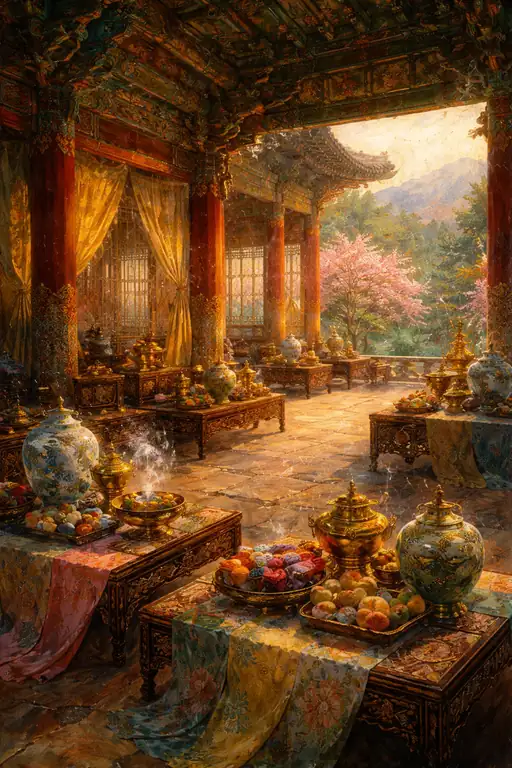 Crimson Canopy of Memories
Similar Artworks
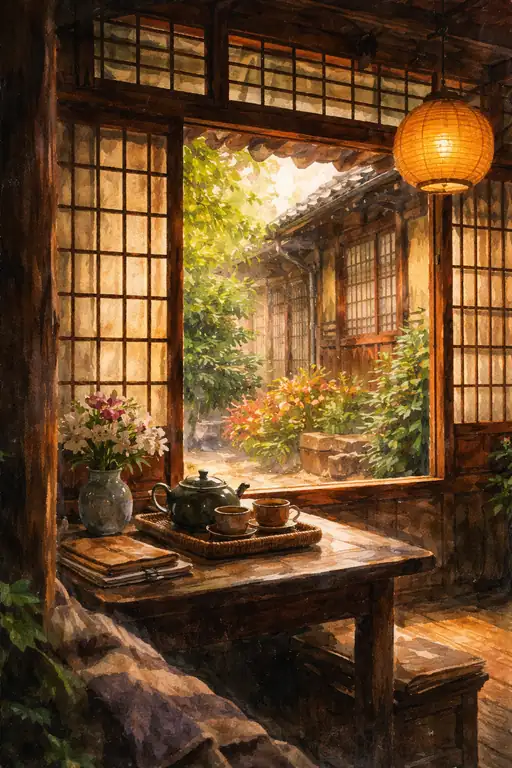 The Soft Glow of Peace in a Paper Lantern
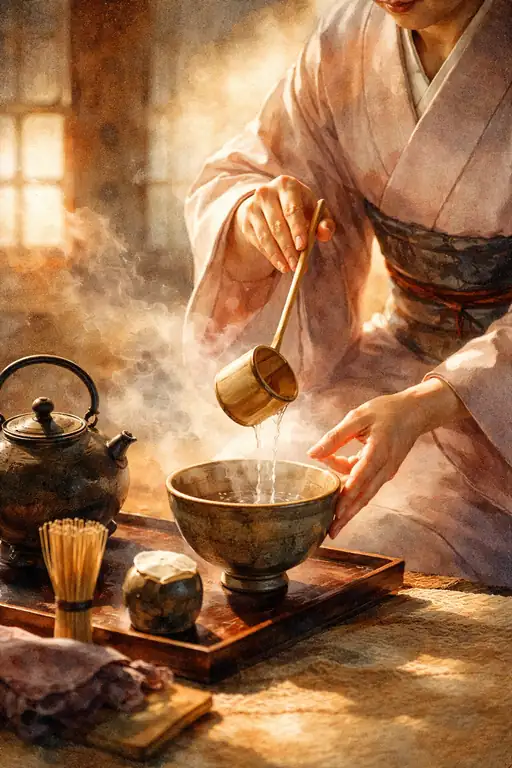 Fleeting Elegance: A Sip of Golden Serenity
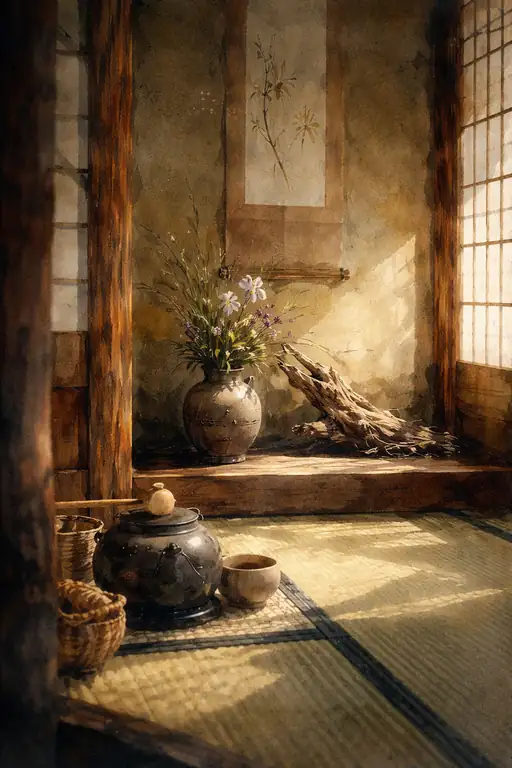 Stillness of the Tea Room
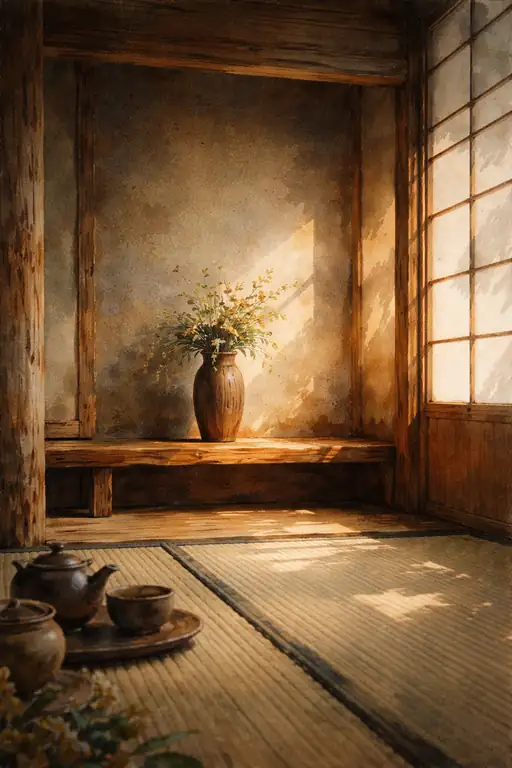 Morning Light Through Shoji
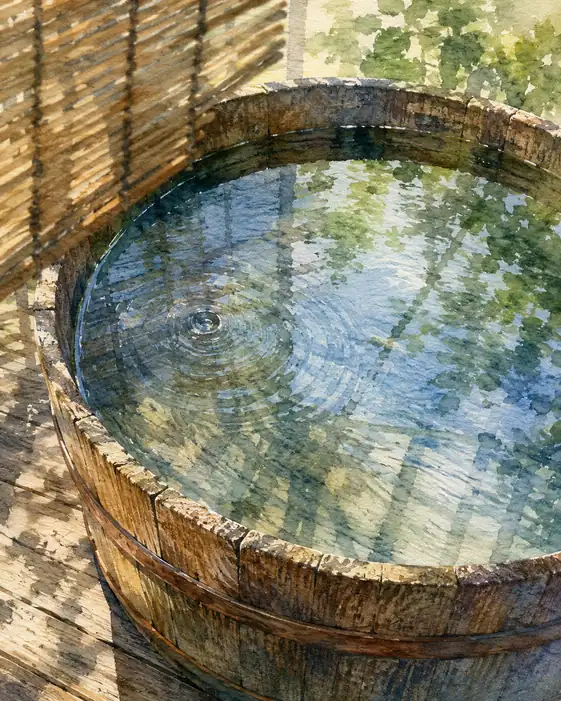 The Mirror of Summer Stillness
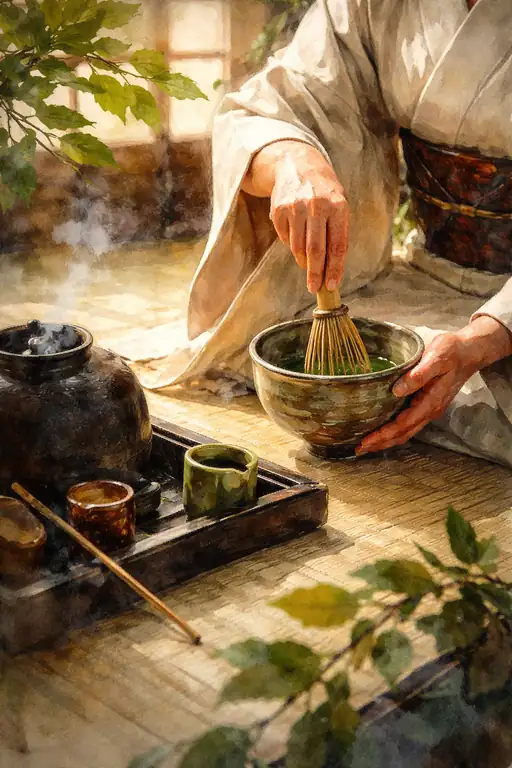 The Meditative Flow of Matcha
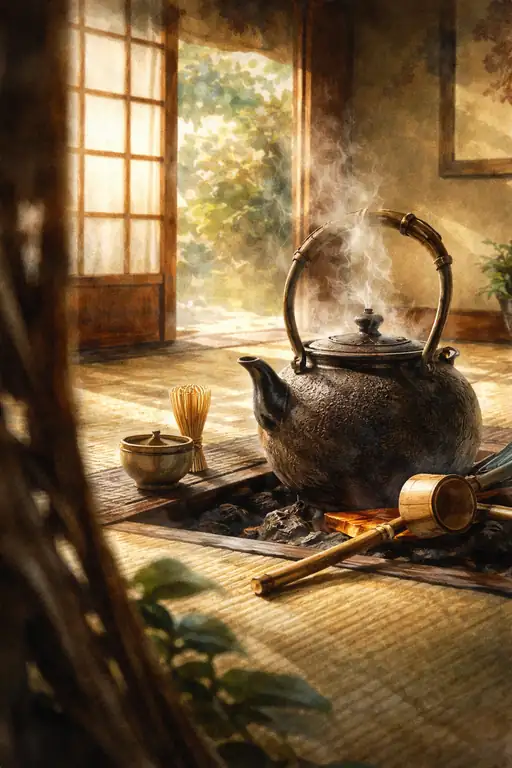 Whispers of the Boiling Kettle
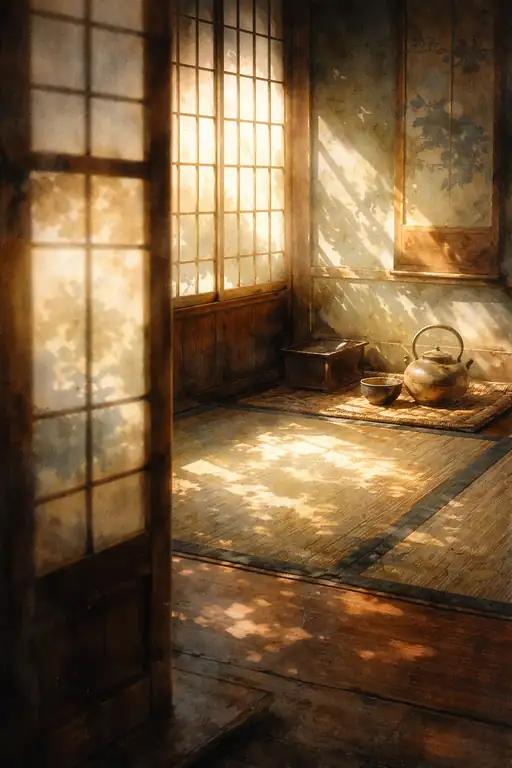 Shadows Dancing on Tatami
 Morning Light on the Wooden Table
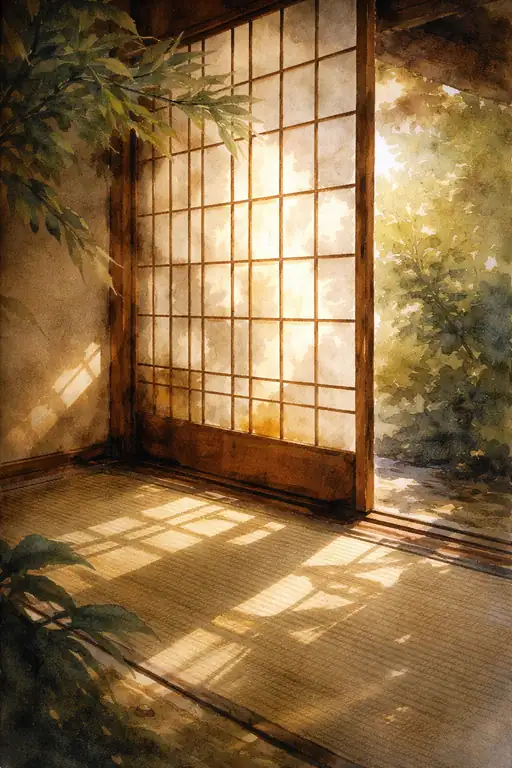 Sunlight Spilling Through Time