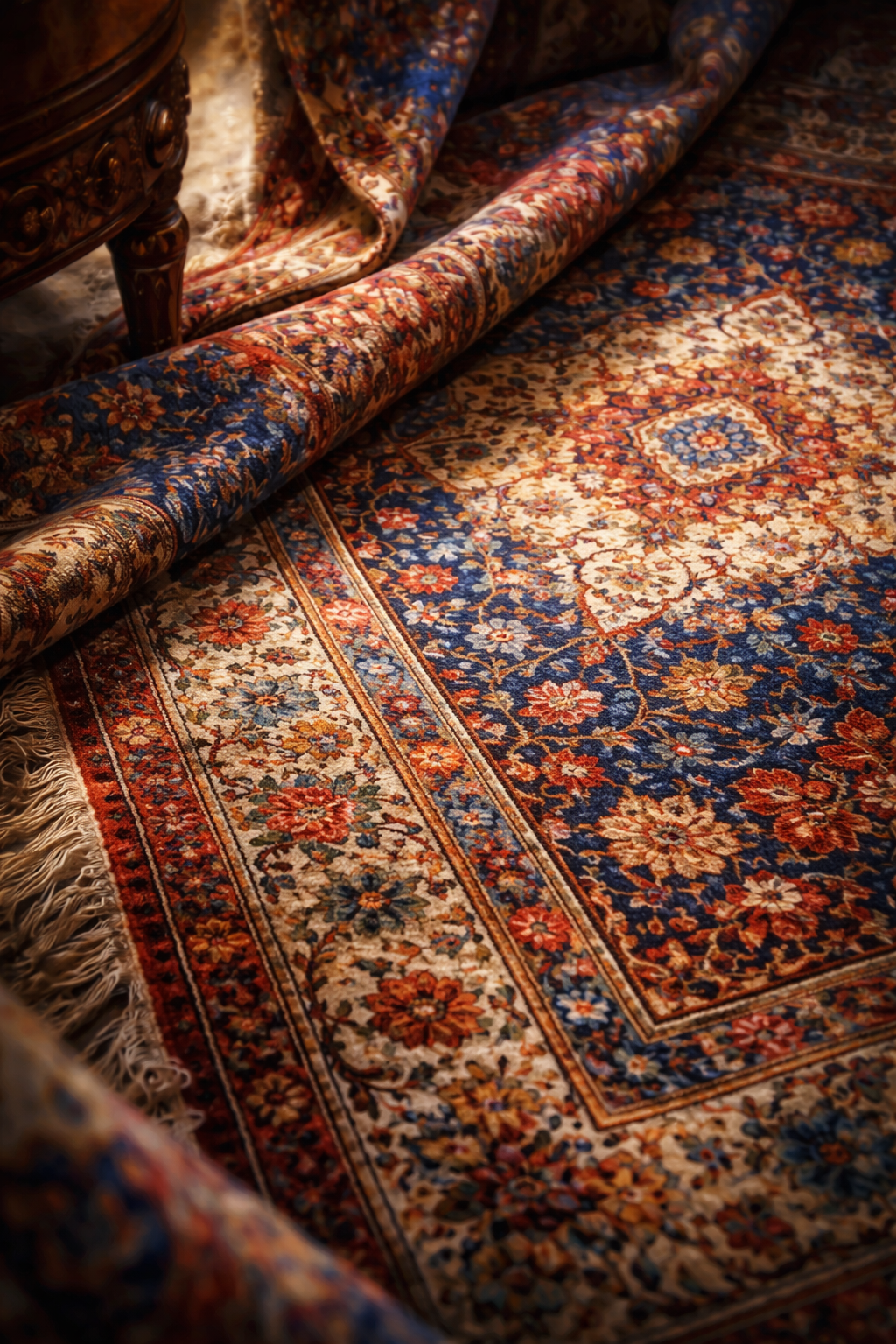
Warm Echoes in the Weave
Critique
1. Introduction This artwork captures the quiet elegance of an interior scene, focusing on the intricate beauty of a traditional hand-woven rug. By depicting the rug partially rolled and interacting with a piece of furniture, the painting creates a sense of lived-in reality and tactile presence. It serves as a study of craftsmanship, pattern, and the warm atmosphere of a well-appointed domestic space. 2. Description The painting features a large carpet with complex floral and geometric patterns, predominantly in shades of deep indigo, burnt orange, and soft cream. On the left side, the edge of the rug is rolled over, revealing its fibrous underside and the delicate fringe of light-colored threads. In the upper left corner, the intricately carved leg of a dark wooden table or chair rests firmly on the ornate surface. 3. Analysis The composition is built on strong diagonal lines formed by the edge of the rolled rug, which directs the viewer's eye into the depth of the scene. Warm, directional lighting comes from the upper left, casting soft shadows that emphasize the texture of the weave and the wood. The color palette is rich and earthy, with the vibrant orange motifs providing a lively contrast to the deep blue background. 4. Interpretation and Evaluation The depiction of the partially rolled rug suggests a moment of transition or maintenance, adding a narrative layer to the static subject. The artist exhibits remarkable skill in rendering the repetitive but unique details of the woven pattern, maintaining clarity without becoming overly mechanical. This work successfully evokes a feeling of comfort and heritage, celebrating the enduring appeal of traditional domestic objects. 5. Conclusion While the initial focus was on the complexity of the rug's design, the final impression is one of harmonious stillness and warmth. The painting demonstrates a masterful ability to translate the tactile qualities of textile and wood into a compelling visual narrative of home and history.
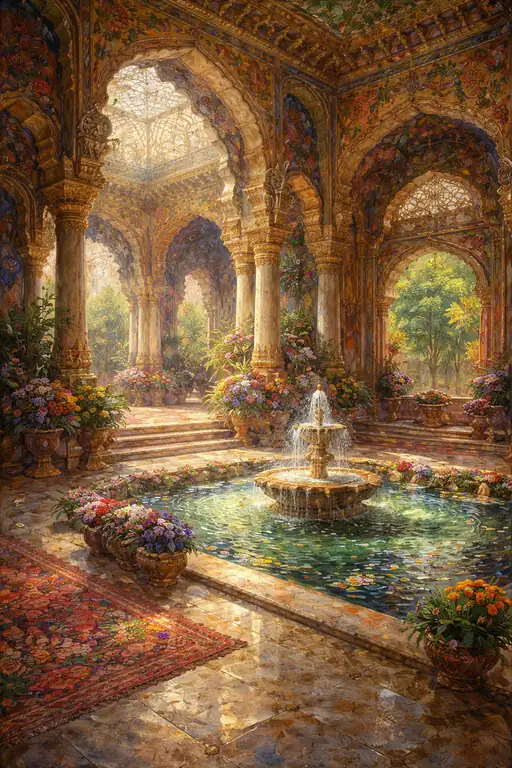 Whispers of the Sunlit Oasis
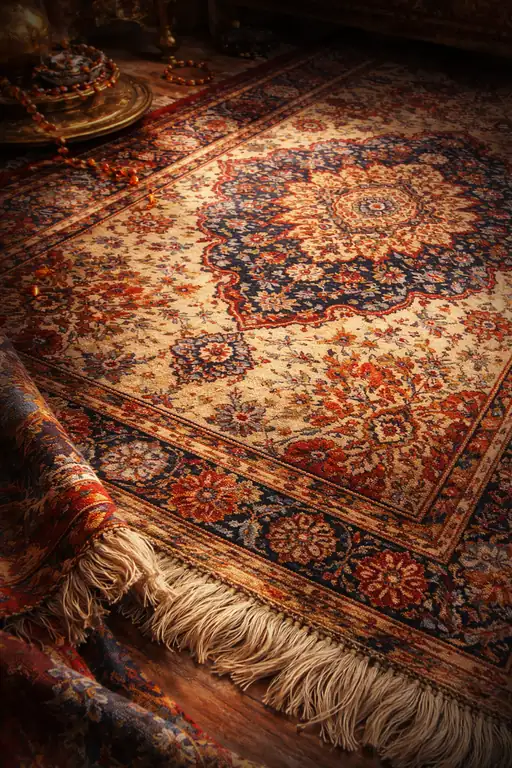 Silent Threads of Time
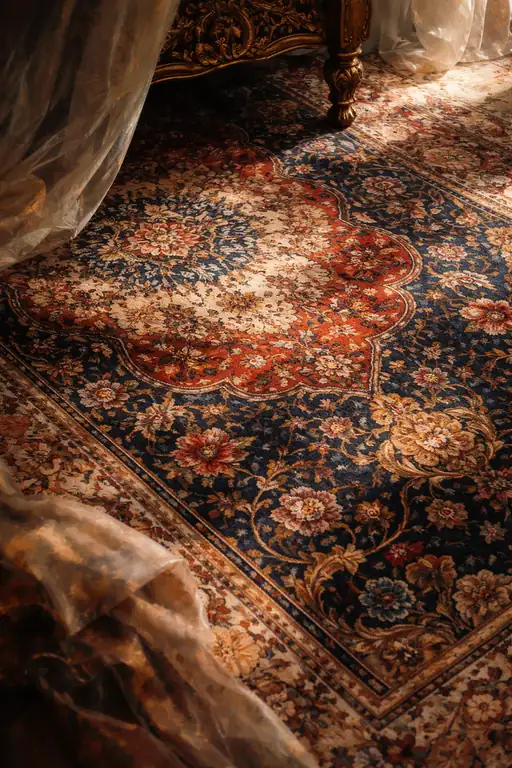 Veiled Echoes of Grandeur
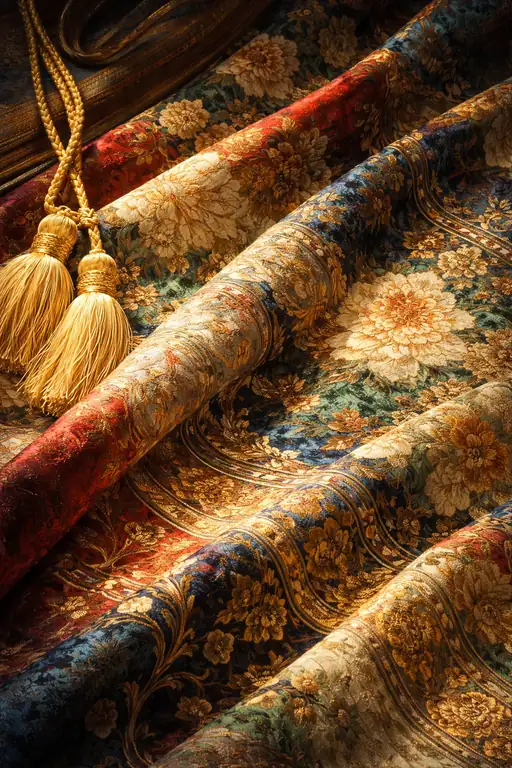 Opulent Threads of Time
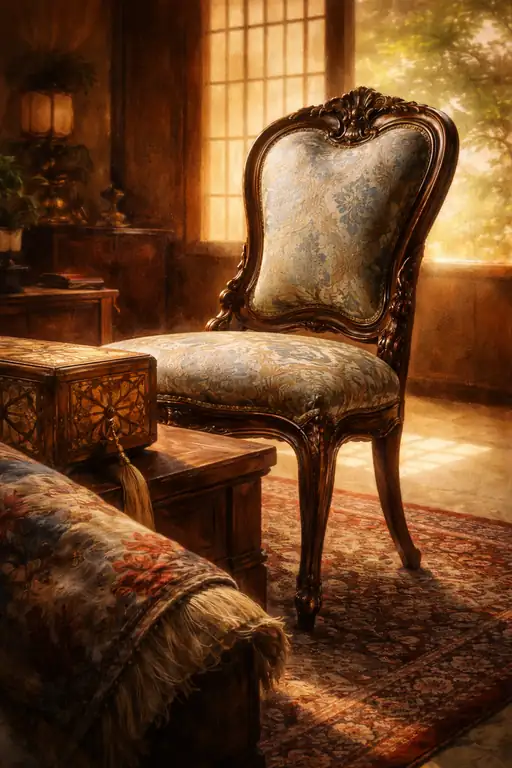 Sanctuary of Light
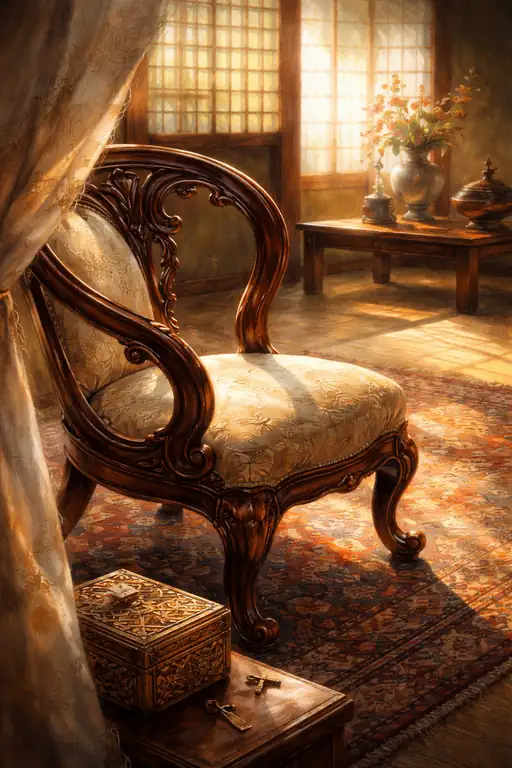 Sunlight on the Empty Chair
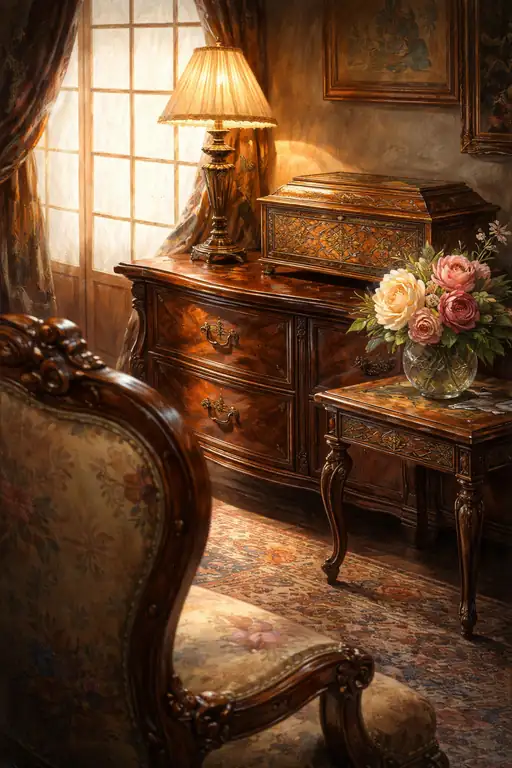 Elegance in the Shadows
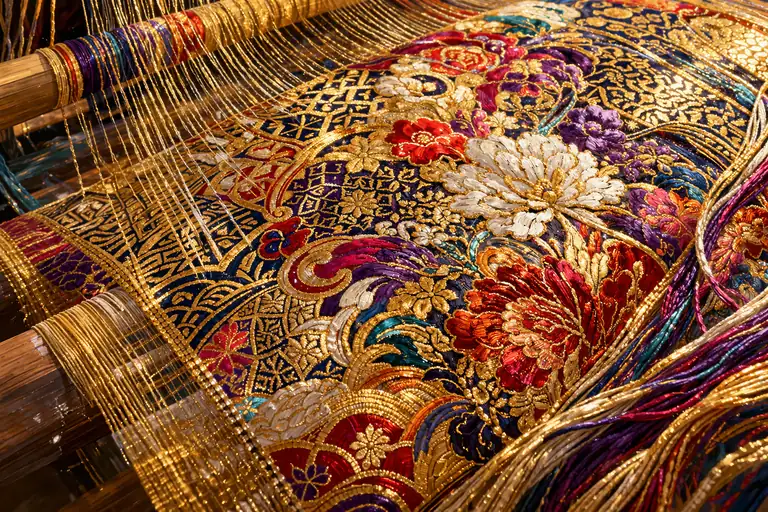 Threads of Timeless Devotion
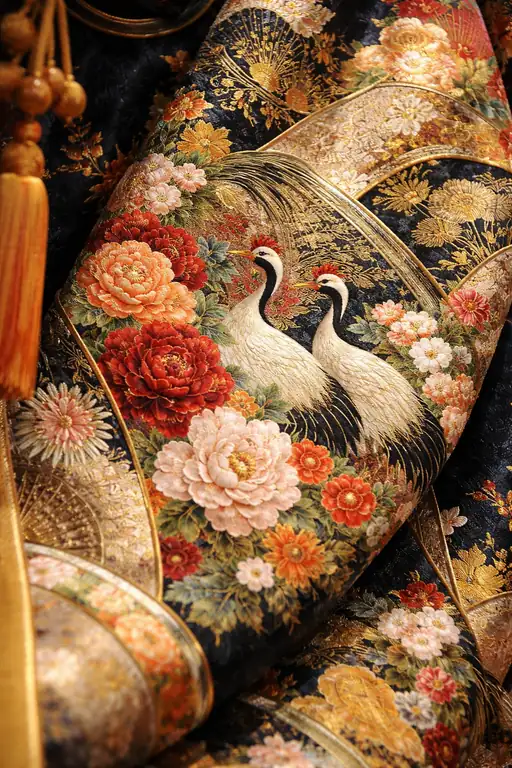 With Every Stitch, Ever After
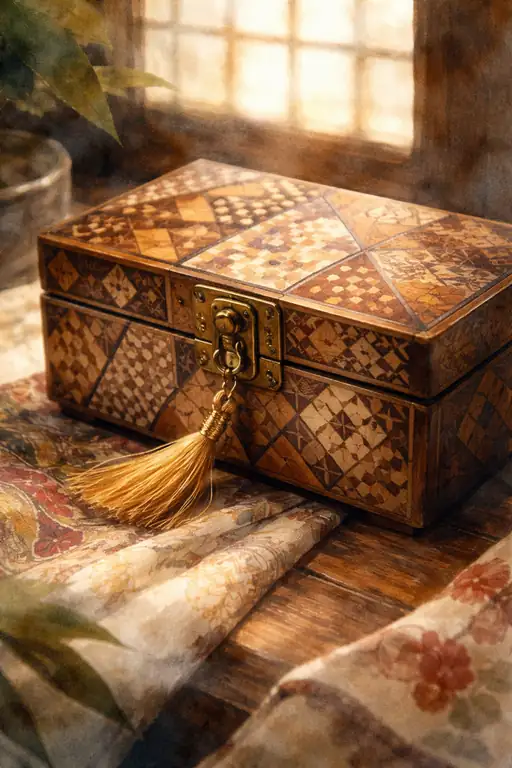 The Artisan's Secret