With Every Stitch, Ever After
Critique
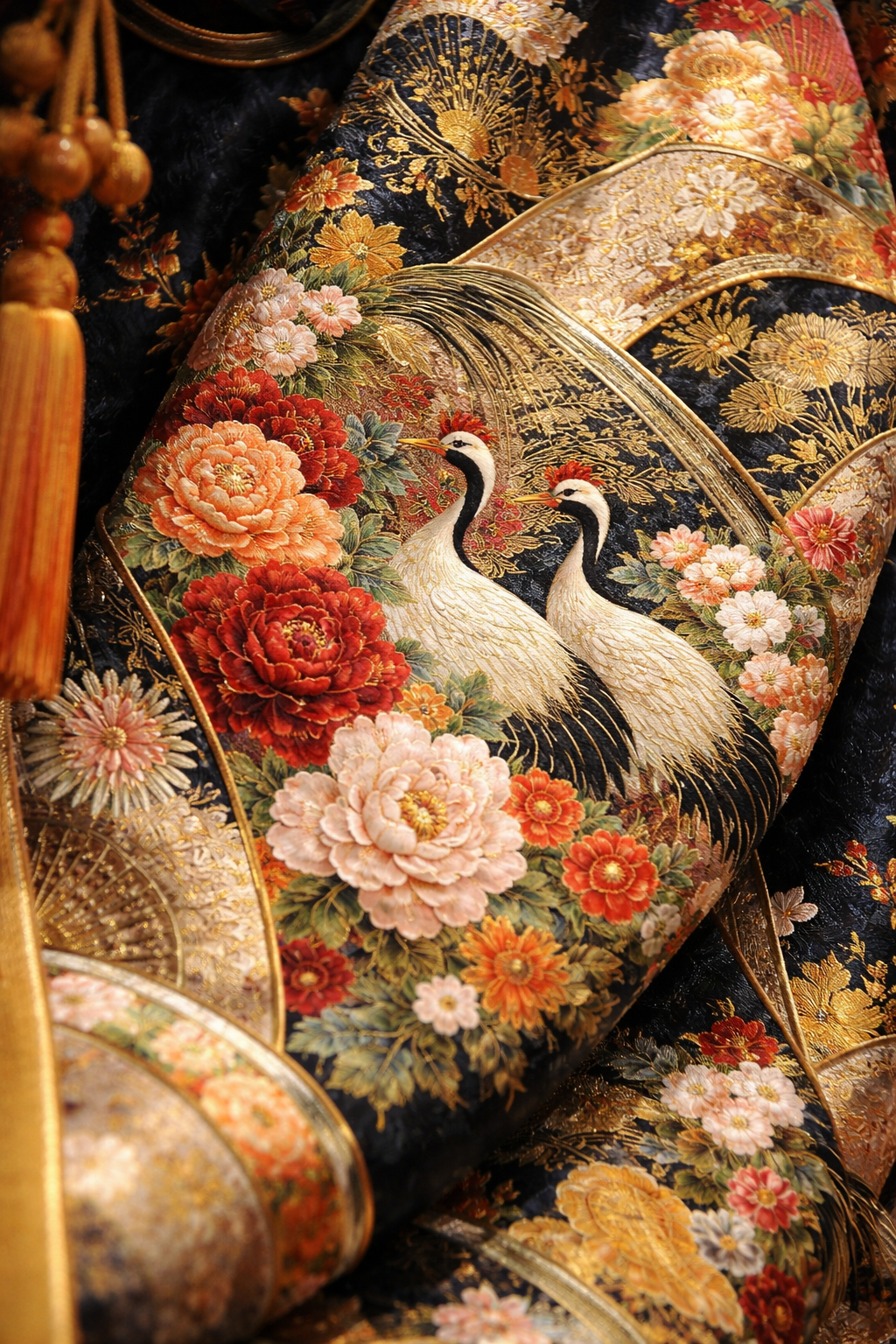
1. Introduction This work is a meticulous study of traditional textile art, focusing on the intricate embroidery of a Japanese kimono. The composition is a dynamic close-up that highlights a pair of cranes surrounded by lush peonies, set against a dark, textured silk background. By isolating these specific motifs, the artist emphasizes the tactile qualities of the threads and the masterful craftsmanship inherent in the garment's design. 2. Description The central focus of the piece consists of two white cranes with black and red accents on their heads, depicted in a poised stance. They are encircled by large, layered peonies in shades of deep red, peach, and cream, alongside smaller orange and white floral patterns. To the left, a large golden tassel with multiple strands adds a sense of weight and physical presence to the scene. The embroidery is executed with fine, metallic gold threads that catch the light, creating a sense of opulence. 3. Analysis The artist employs a strong diagonal composition, following the natural folds of the fabric to create a sense of depth and movement. The color palette is characterized by a dramatic contrast between the somber black background and the vibrant, multi-colored floral and avian motifs. Light is used effectively to define the individual stitches and the varied textures of the silk, from the smooth surface of the feathers to the raised embroidery of the petals. The balanced arrangement of shapes ensures a rhythmic visual experience. 4. Interpretation and Evaluation This piece can be interpreted as an homage to the enduring beauty of traditional craft and the symbolic power of its motifs, where the crane represents longevity and the peony signifies wealth and honor. The technical precision is extraordinary, successfully mimicking the appearance of complex embroidery through digital means. The composition’s strength lies in its ability to transform a functional object into a subject of pure aesthetic contemplation. Overall, the work is a testament to the artist's ability to capture the nuance of physical materials. 5. Conclusion The study serves as a refined exploration of texture, color, and cultural symbolism within a single frame. Through the careful rendering of the kimono's surface, the artist invites a deeper appreciation for the artistry involved in textile production. My initial perception of the work as a simple fabric sample evolved into an understanding of it as a complex landscape of thread and meaning. This piece remains a highly accomplished example of how digital painting can document and celebrate traditional artistic techniques.
 Stitches of Delicate Grace
 Ephemeral Dewdrops on Woven Silk
 Threads of Timeless Devotion
 Opulent Threads of Time
 Silent Reverie in Golden Threads
 Intricate Lace in Shadow
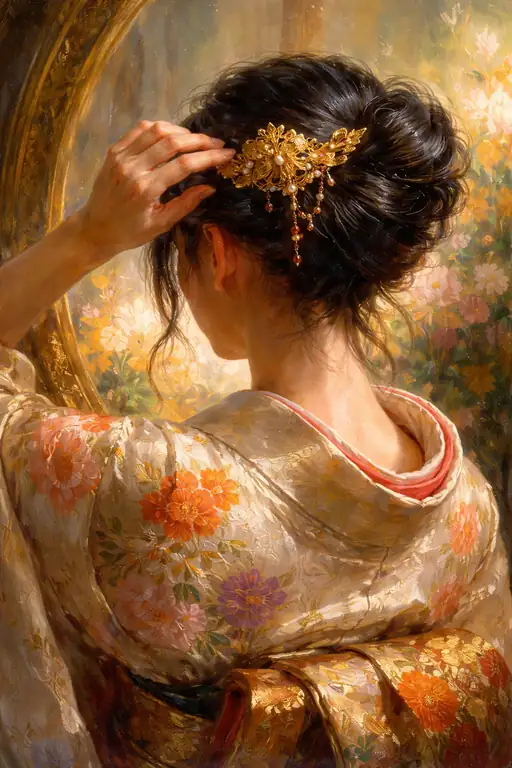 Golden Hairpin Glimmering in the Mirror
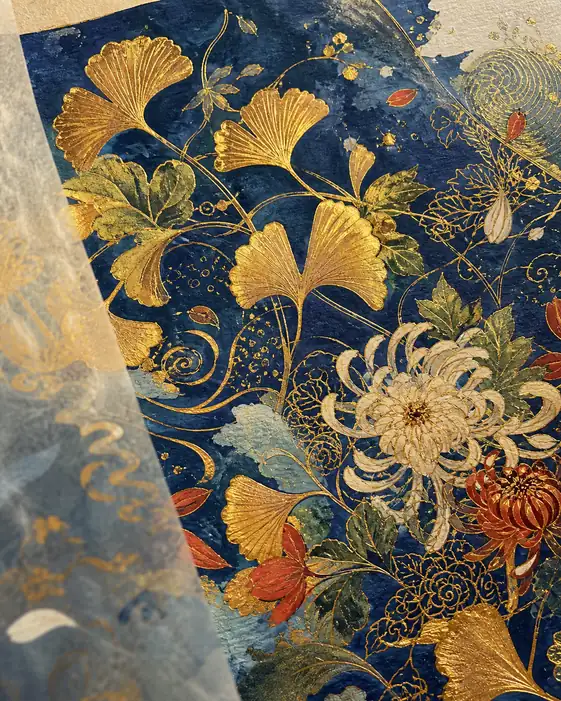 Symphony of the Golden Ginkgo
 Veiled Echoes of Grandeur
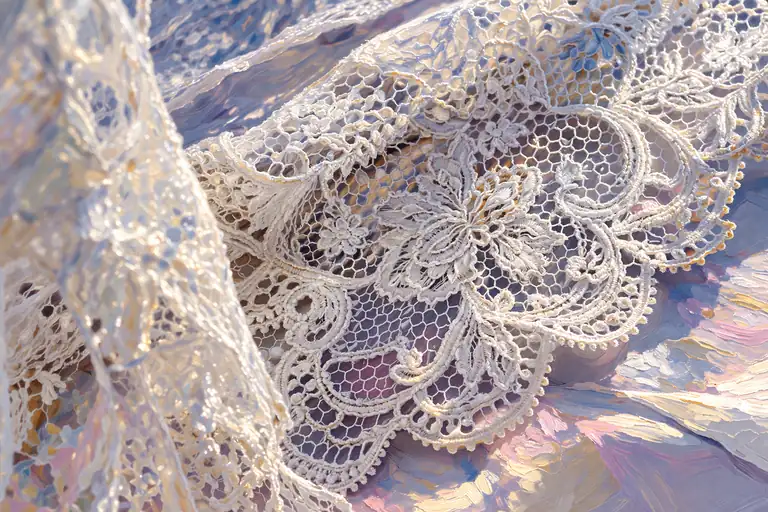 Sculptural White Lace