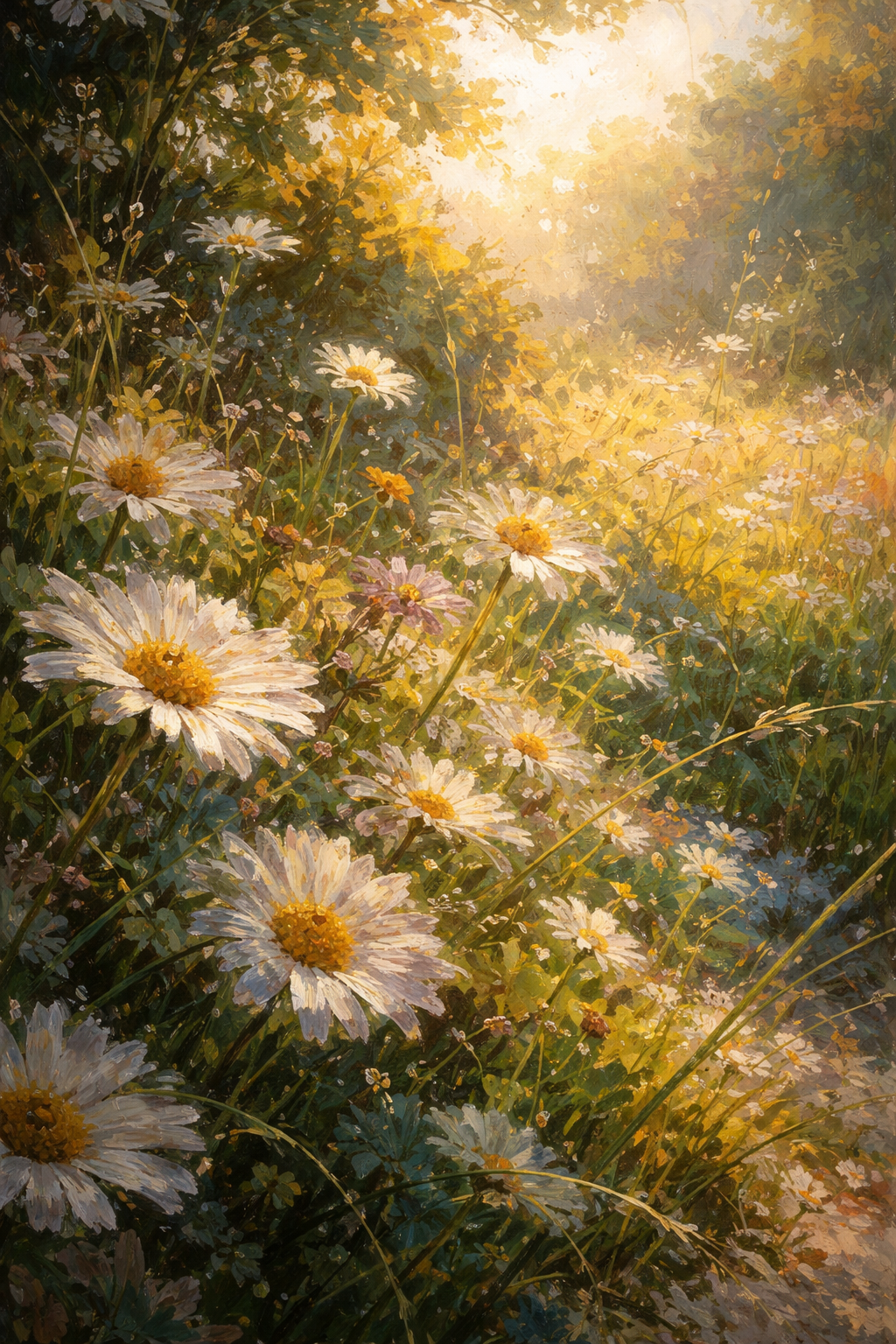
Golden Symphony: The Meadow's Glow
Critique
1. Introduction This vertical landscape depicts a lush meadow of daisies bathed in intense, golden sunlight. The composition is characterized by its low-angle perspective, which places the viewer amongst the tall stalks of grass and vibrant blossoms. Utilizing a classic impressionist approach, the artwork focuses on the interplay of light and shadow, capturing the shimmering quality of a sun-drenched afternoon. The result is a highly atmospheric scene that celebrates the simple beauty and vitality of the natural world. 2. Description The foreground is filled with large, multi-petaled daisies, their white petals rendered with thick, expressive brushstrokes that suggest both texture and movement. These flowers are dispersed across a dense backdrop of green grass and smaller yellow wildflowers. In the upper portion of the frame, brilliant sunlight filters through a canopy of trees, creating a hazy, overexposed effect that dissolves some of the background foliage into a luminous amber glow. 3. Analysis The artist employs a warm color palette dominated by shades of cadmium yellow, creamy white, and deep forest green. The composition uses a diagonal flow, with the primary daisies reaching upward from the bottom left toward the source of light in the top center. This arrangement creates a sense of growth and optimism. The contrast between the crisper, brightly lit petals in the center and the cooler, shadowed vegetation in the lower left adds depth and visual interest to the meadow. 4. Interpretation and Evaluation The painting can be interpreted as an exploration of the transformative power of light, turning an ordinary patch of wildflowers into a radiant, almost sacred space. The visible, loose brushwork adds a sense of spontaneity and life, avoiding the stiffness of traditional botanical illustration. This expressive technique successfully conveys the sensation of a gentle breeze and the warmth of the sun on one's skin, demonstrating a high degree of emotional and technical sensitivity. 5. Conclusion This impressionist study of a daisy field is a masterful example of how light can be used to define both form and atmosphere. Its vertical orientation and low viewpoint provide an immersive experience, inviting the viewer to lose themselves in the radiant depths of the meadow. The painting captures a fleeting moment of natural brilliance with remarkable skill, leaving a lasting impression of peace and the enduring beauty of the summer season.
Same Subcategory
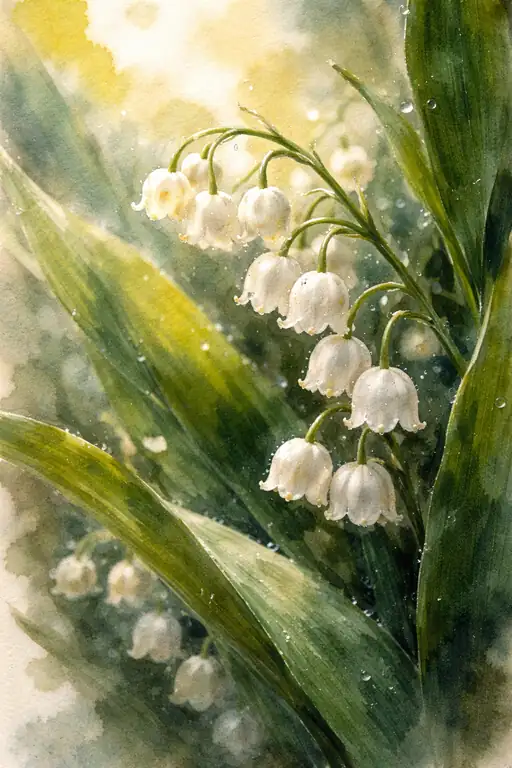 Quiet Elegance of the Forest Bells
Similar Artworks
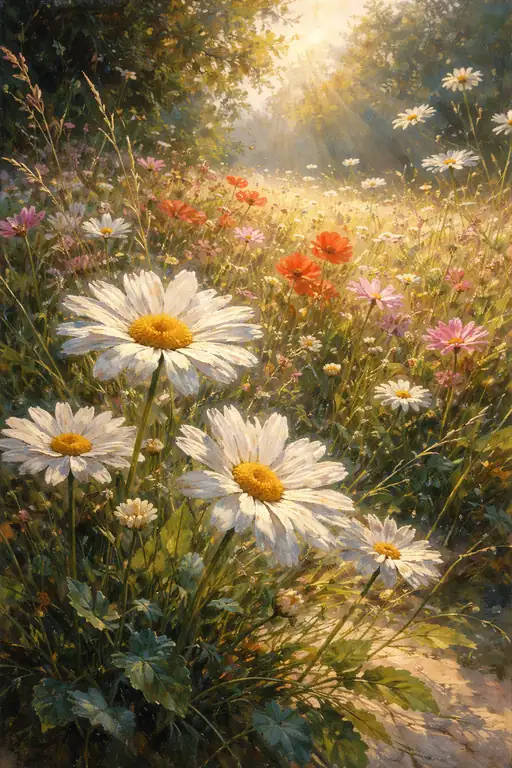 Resilience in the Mist
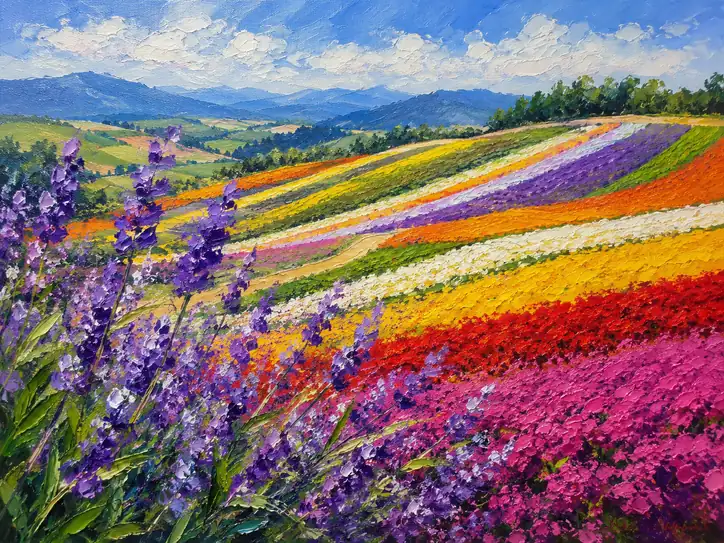 A Rainbow Journey to the Horizon
 Golden Whispers of the Cosmos Field
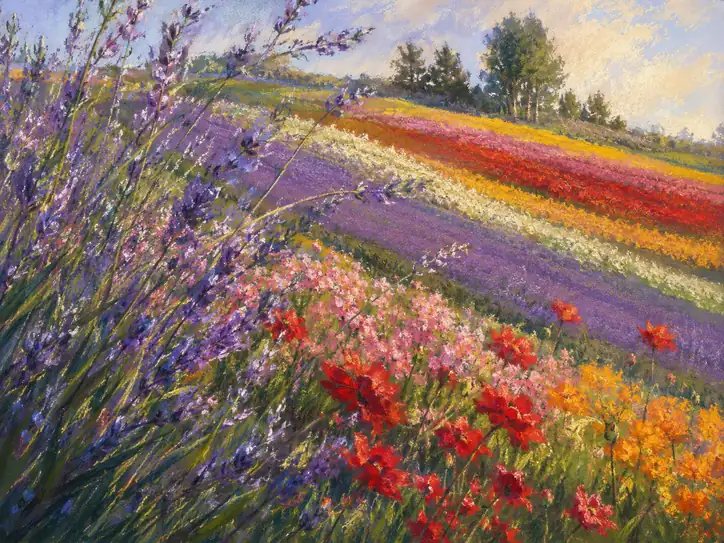 A Gradient of Summer Dreams
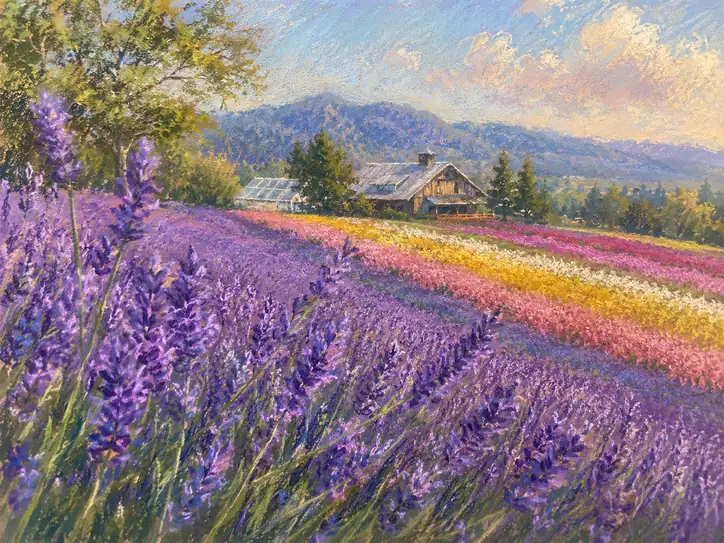 The Earth's Melodic Bloom
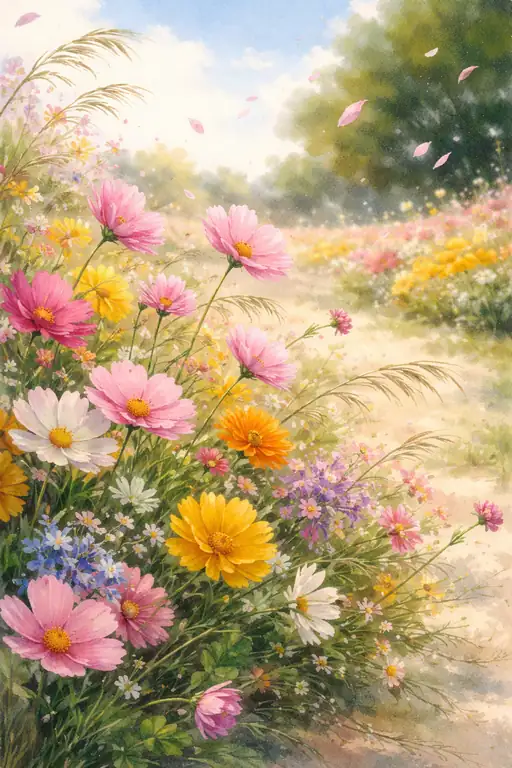 Dancing Petals in the Summer Breeze
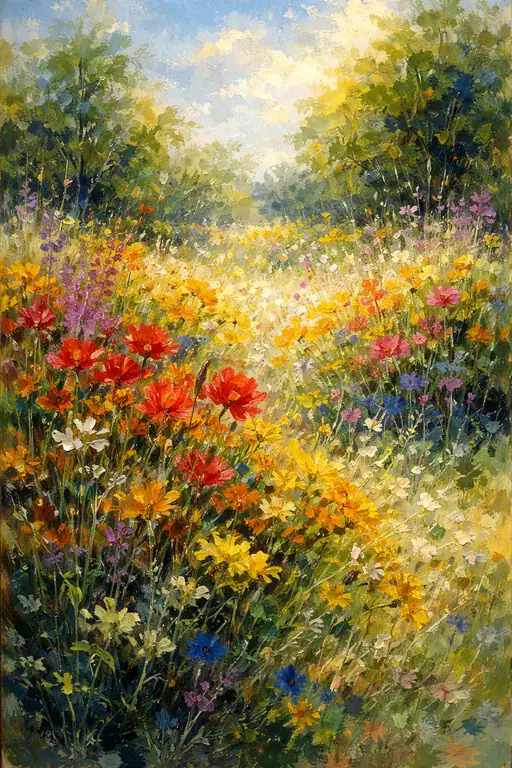 Impressions of a Fleeting Morning
 Pampas Field under Blue Sky and Golden Maiden Flowers
 Solar Crown
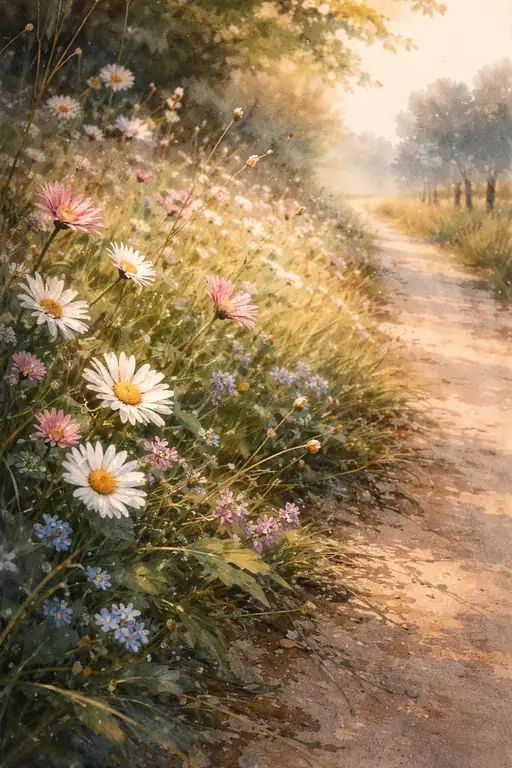 Path of Wildflowers