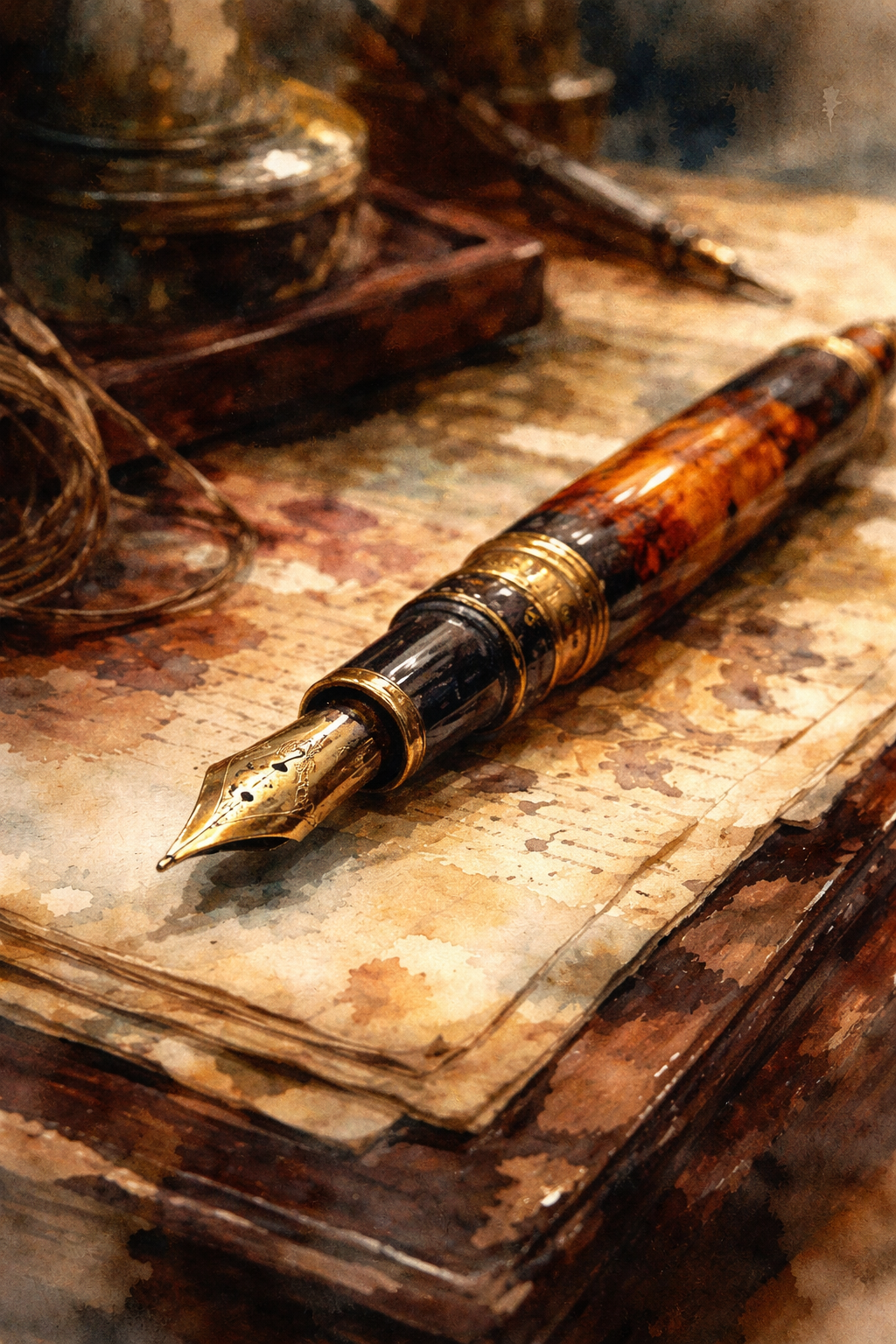
The Elegant Legacy of Recorded Thoughts
Critique
1. Introduction The artwork presents an intimate, close-up study of a vintage fountain pen resting upon a collection of aged, ink-stained parchments. The composition celebrates the tactile beauty of traditional writing instruments and the evocative nature of old paper. Through a rich, painterly style, the piece captures the quiet elegance of classical correspondence and the passage of time reflected in well-used scholarly tools. 2. Description The primary focus is a large fountain pen featuring a barrel crafted from warm, amber-toned burl wood, accented by polished gold rings. Its gold nib points toward the lower left, resting on weathered papers that show signs of wear and multiple ink splatters. In the soft-focus background, a dark wooden desk organizer add context to the scholarly setting, while a coiled wire lies to the left. 3. Analysis The artist employs a warm, golden lighting that emphasizes the rich grain of the wood and the reflective metallic nib. The composition uses a shallow depth of field, keeping the pen tip in sharp focus while allowing the background to dissolve into an atmospheric blur. The color palette is a harmonious array of sepia and deep sienna, creating a nostalgic mood. Subtle watercolor effects are visible in the ink stains, adding a sense of fluidity. 4. Interpretation and Evaluation The work can be interpreted as a meditation on the permanence of recorded thought versus the fragility of materials. The juxtaposition of the sturdy pen and the fragile, stained paper highlights a contrast between the tool and its medium. Technically, the rendering of the polished surfaces and the complex textures is exceptional. The artist demonstrates a sophisticated ability to convey a sense of history through a few carefully chosen objects. 5. Conclusion Through its masterful handling of light and texture, the painting elevates a simple writing tool into a symbol of intellectual legacy. The initial impression of a still-life object quickly transitions into an appreciation for the artist's ability to imbue inanimate objects with personality and history. It stands as a refined example of contemporary realism that honors the enduring appeal of the handwritten word and the beauty found in the tools of creation.
Same Subcategory
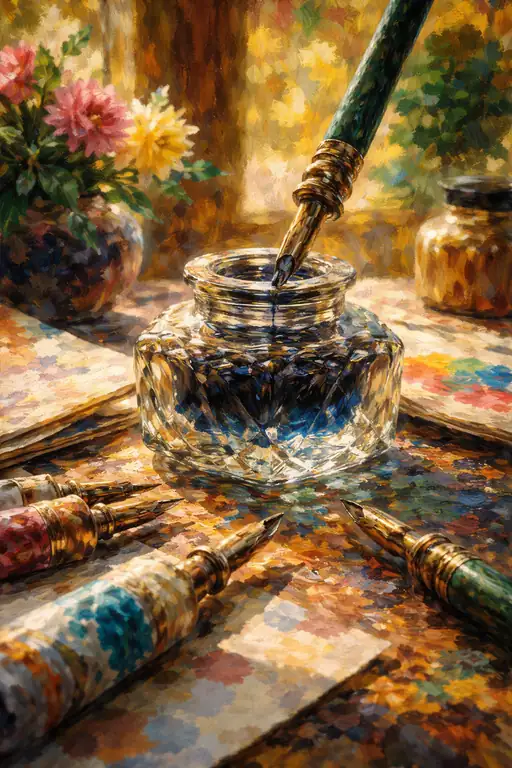 Words Unspoken in the Inkwell
Similar Artworks
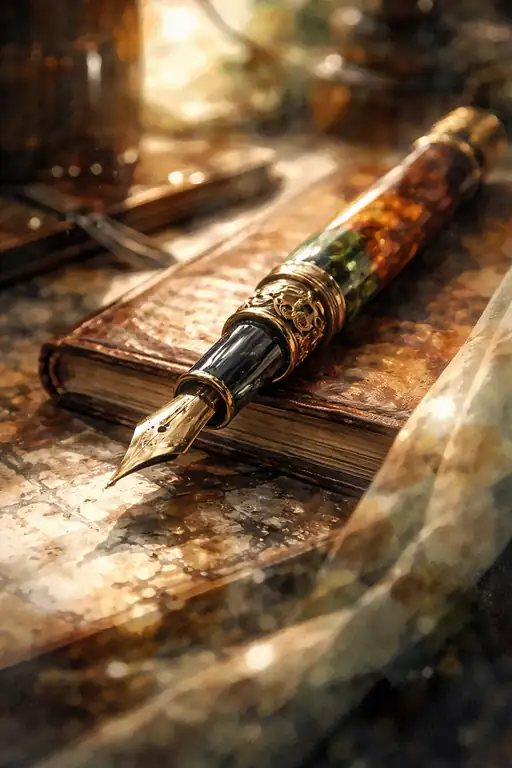 The Silent Scribe
 The Master's Vision Captured in Color
 The Unfinished Symphony of Silence
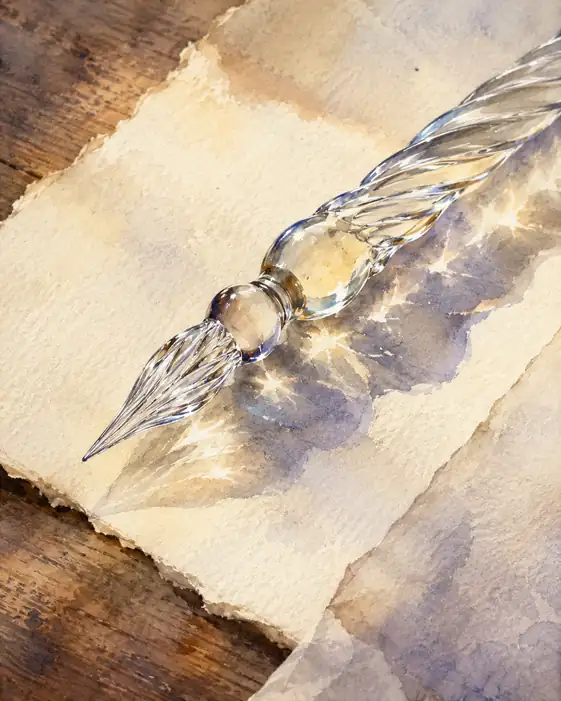 Transparency of a Fleeting Thought
 The Quiet Sanctity of Ancient Wisdom
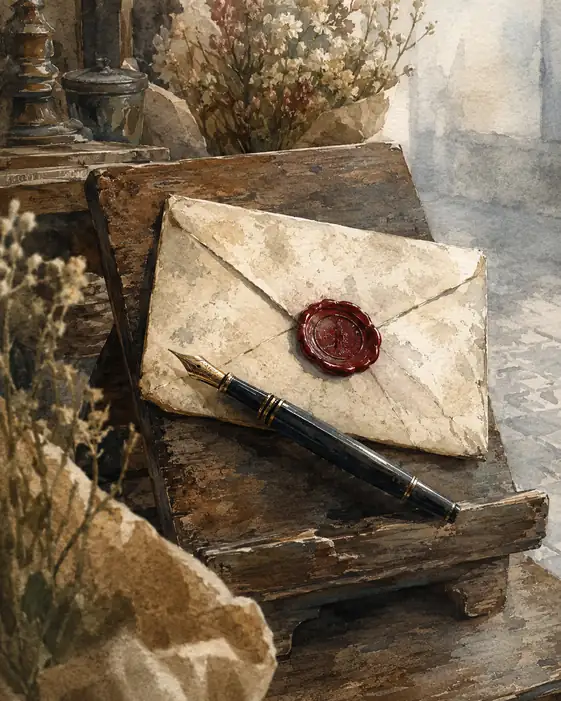 A Letter Still Warm Beneath the Seal
 Manuscript of Memories
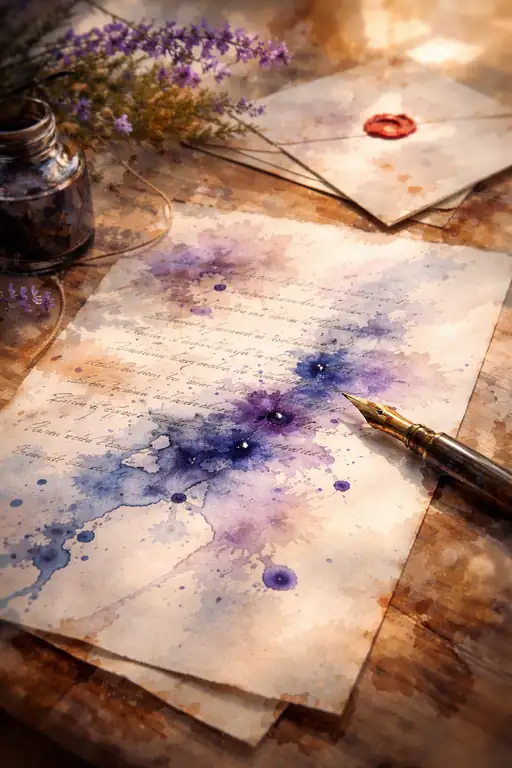 Overflow of Unspoken Words
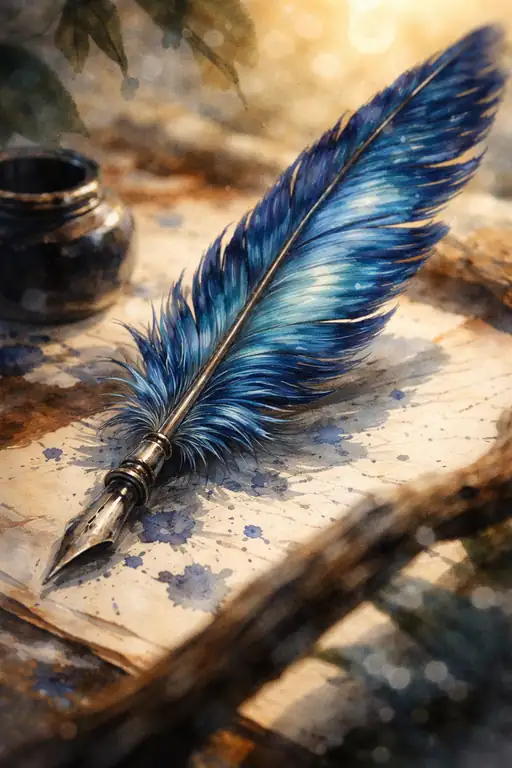 The Writer's Still Reflections
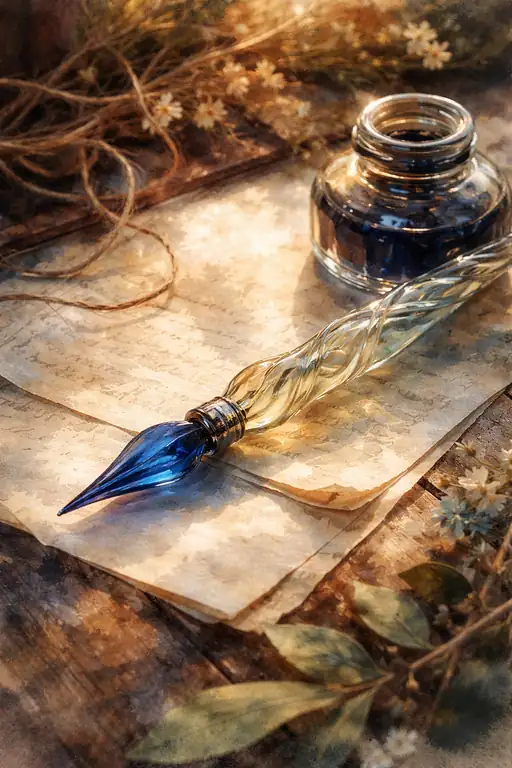 Azure Ink: Memories in Glass