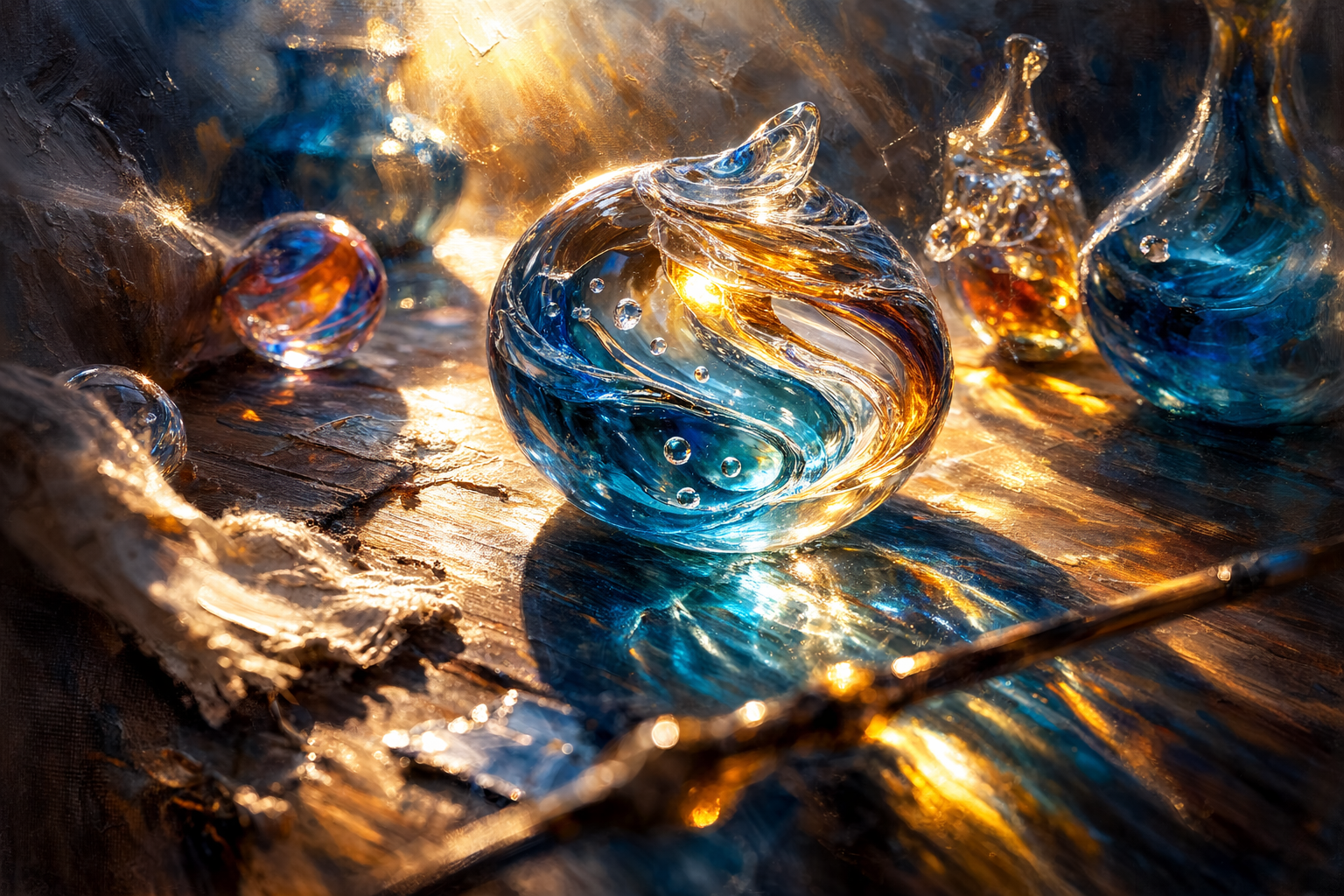
Nature's Embrace
Critique
1. Introduction This painting presents a still life study of glass vessels and orbs resting on a rustic wooden surface, illuminated by a dramatic shaft of sunlight. The artwork captures the ephemeral beauty of light as it passes through translucent materials and reflects onto surrounding textures. By focusing on the interplay between the ethereal quality of glass and the solid presence of wood, the piece creates a narrative of illumination. It serves as a visual exploration of transparency, refraction, and atmospheric lighting. 2. Description The central subject is a large, spherical glass ornament with swirling blue and amber patterns, containing small air bubbles. It sits on a weathered wooden table that is deeply scarred and textured. To the right, two fluted glass bottles—one blue and one amber—are visible, while a smaller marbled sphere rests to the left. A bright beam of light enters from the upper left, casting a brilliant highlight on the central sphere and creating a long, spectral reflection on the wood. A thin, dark rod or brush lies diagonally across the foreground, leading the viewer's eye into the scene. 3. Analysis The artist employs a high-contrast lighting scheme to define the volumes and surface qualities of the objects. The transition from the brilliant, white-hot highlights of the direct light to the deep, velvety shadows in the background creates a strong sense of three-dimensionality. Brushwork varies from the smooth, blended strokes within the glass to the heavy, impasto-like textures of the wooden surface and the fabric at the lower left. The color palette is built on the complementary relationship between warm ambers and cool blues, which is amplified by the intense golden light. 4. Interpretation and Evaluation The work can be seen as a meditation on the clarity of vision and the transformative power of light. The way the light "activates" the glass spheres, revealing their internal structures, suggests a theme of discovery and hidden beauty. Technically, the rendering of the caustic patterns on the wooden table is a highlight, demonstrating a sophisticated understanding of optical physics. The contrast between the fragile glass and the rugged wood adds a layer of material tension that enhances the overall composition. The atmospheric quality is both intimate and grand. 5. Conclusion This painting masterfully translates a moment of ordinary light into an extraordinary visual display. The balance between detailed observation and expressive brushwork results in a work that is both realistic and poetic. The initial focus on the brilliant light eventually leads to an appreciation of the subtle textures and colors hidden in the shadows. Ultimately, the piece succeeds in capturing the magic of light, making it the true protagonist of the scene. It is a refined example of how light can elevate a simple still life into a profound study of form.
Same Subcategory
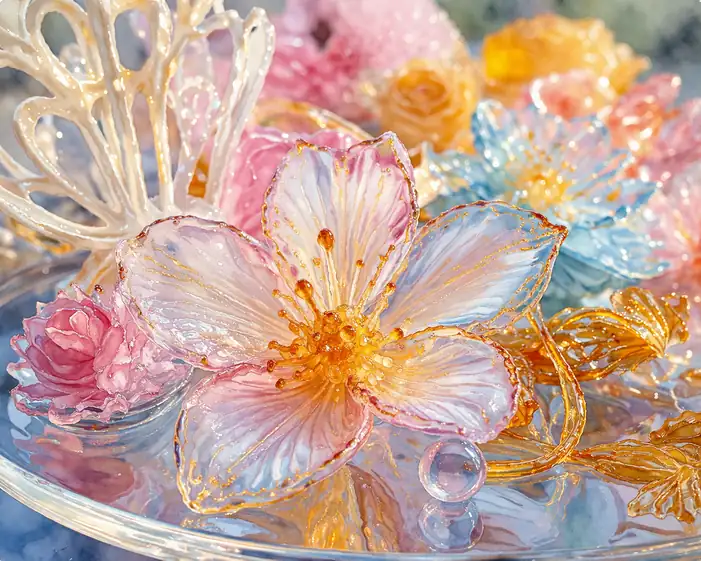 The Shimmering Petals of Light and Glass
Similar Artworks
 Wisdom of Centuries
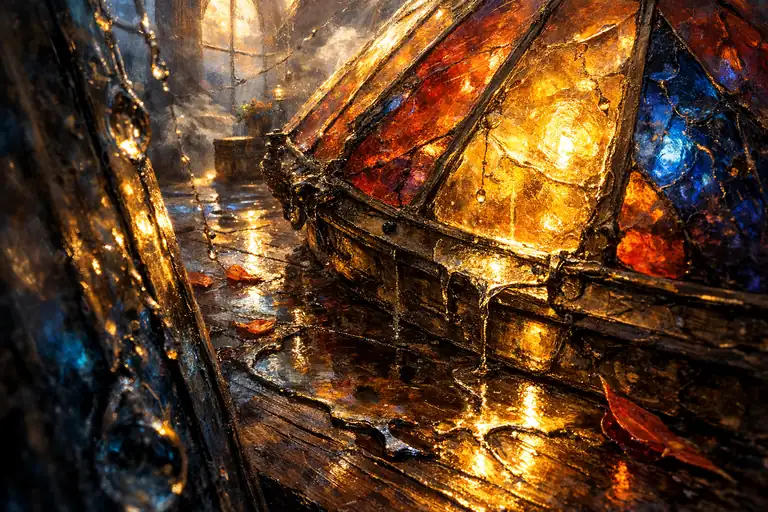 Embers of Autumn Under Glass
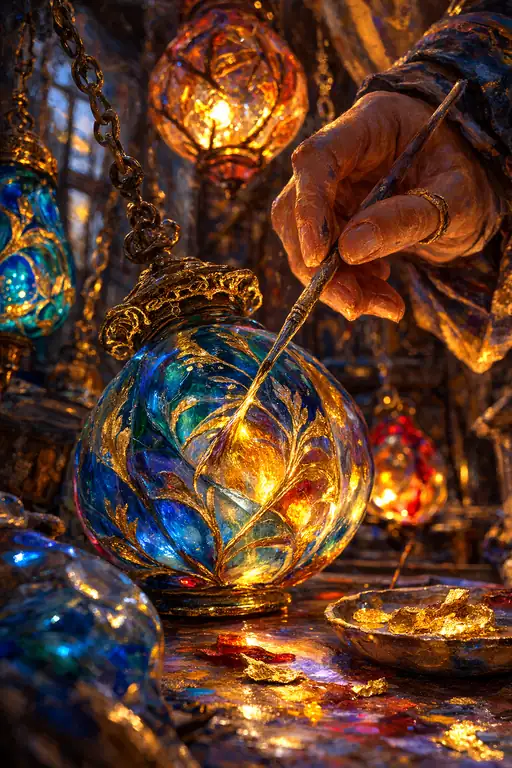 The Artisan's Spell Enclosed in Glass
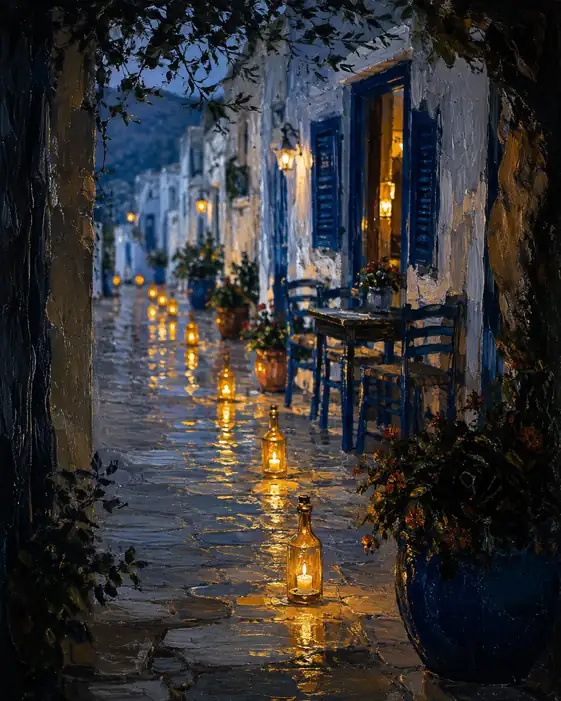 Trail of Small Flames Guided Home
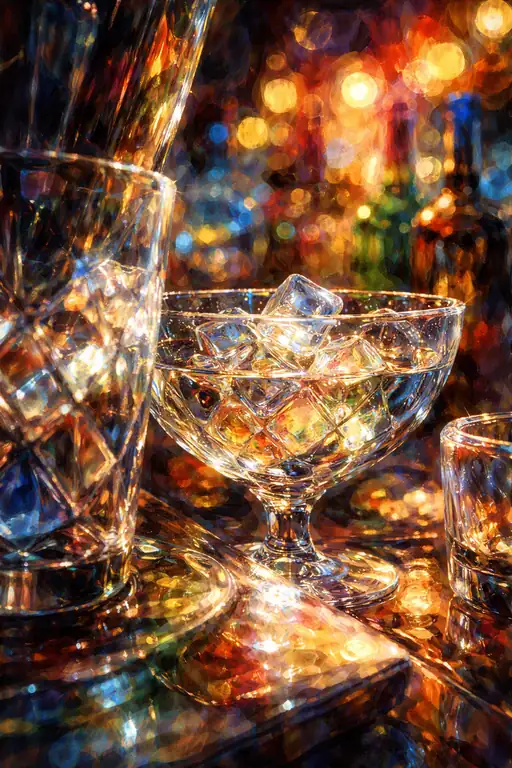 Refracted Celebrations: Amber and Azure
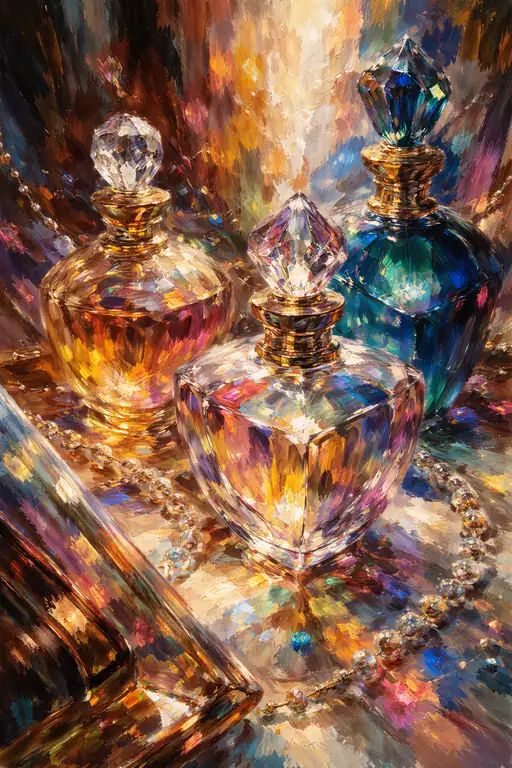 Reflections of Elegance
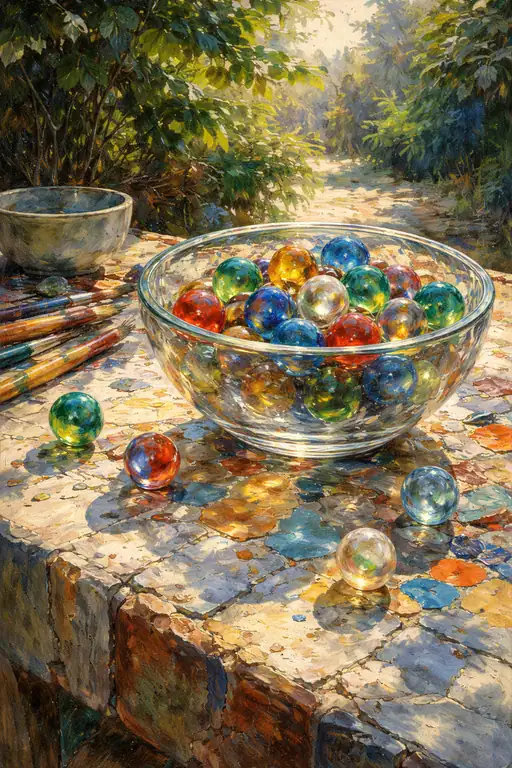 Nostalgic Sparkles in the Summer Sun
 The Astrologer's Crystal Dream
 Sanctuary of Light and Glass
 Sunlit Faceted Glass Sphere in a Garden