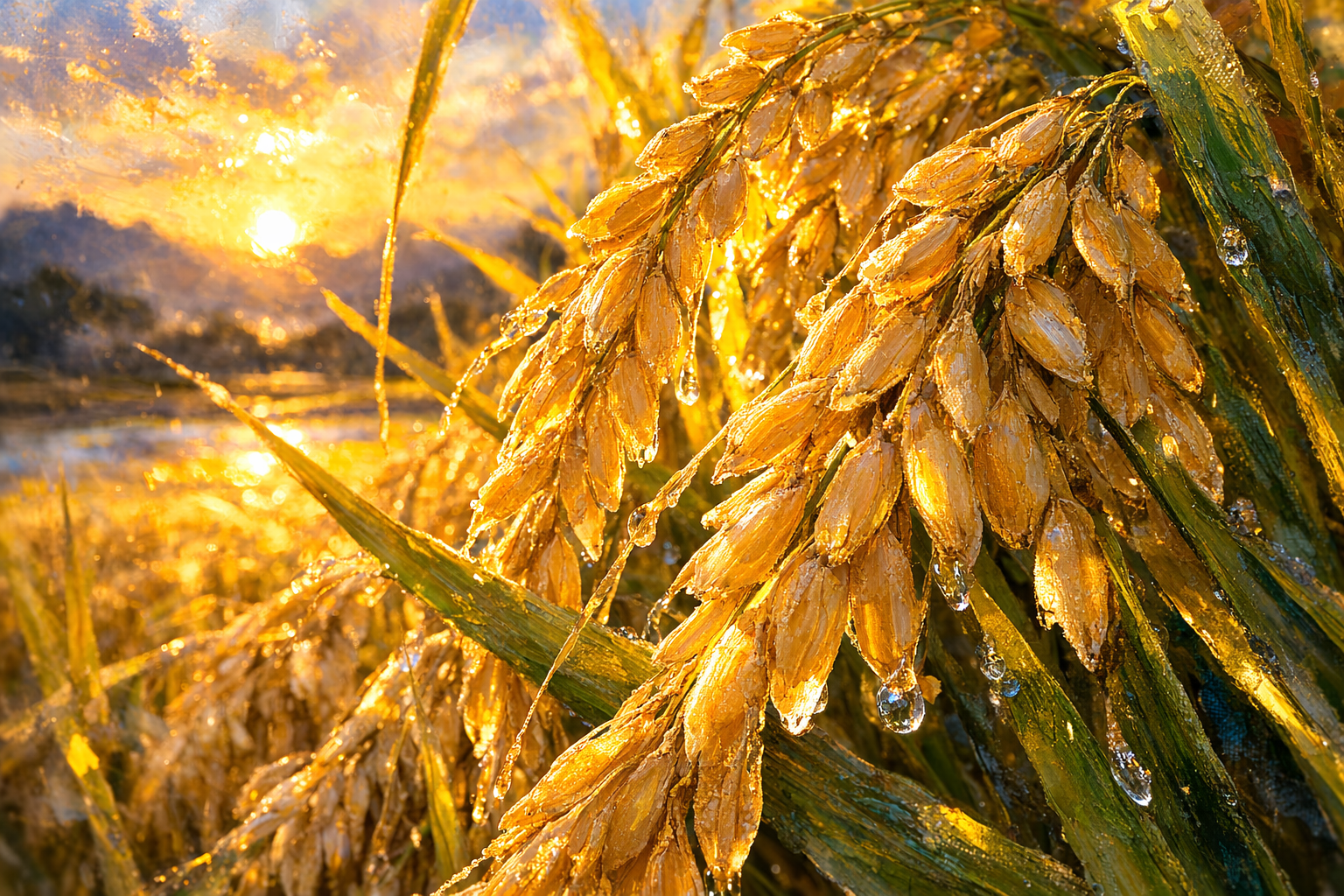
Jewels of the Morning Harvest
Critique
1. Introduction This work captures a moment of natural brilliance, focusing on a cluster of ripe rice stalks during the harvest season. The composition centers on the interaction between organic forms and the radiant energy of the sun. It explores the themes of agricultural abundance and the fleeting beauty of morning light or evening glow. 2. Description The foreground is dominated by heavily laden ears of rice, their golden husks wet with translucent droplets of water. These ears lean diagonally toward the lower right, suggesting the weight of a successful yield. In the upper left background, a bright sun shines through a hazy sky, casting a brilliant flare across the landscape. The background features blurred silhouettes of distant trees and fields reflected in water. 3. Analysis The artist utilizes strong backlighting to create a luminous effect, making the water droplets glisten like crystal. The color palette is dominated by rich ambers and golds, contrasted with the deep, saturated greens of the remaining leaves. Sharp detail is maintained in the textures of the rice husks and the refractive quality of the water. The shallow depth of field ensures that the viewer’s focus remains strictly on the central subjects. 4. Interpretation and Evaluation This piece symbolizes the vitality of nature and the rewards of cyclical growth. The technical rendering of the water droplets shows a sophisticated understanding of light and transparency. The composition successfully balances the warmth of the sun with the cool, refreshing presence of moisture. It evokes a sense of peace and gratitude for the earth’s bounty, demonstrating high proficiency in realistic texture mapping. 5. Conclusion Ultimately, the work succeeds in elevating a common agricultural scene into a profound visual experience through masterly light management. The initial focus on the physical grains shifts toward an appreciation of the atmospheric harmony presented. It remains a testament to the quiet dignity found in the moments of nature’s perfection.
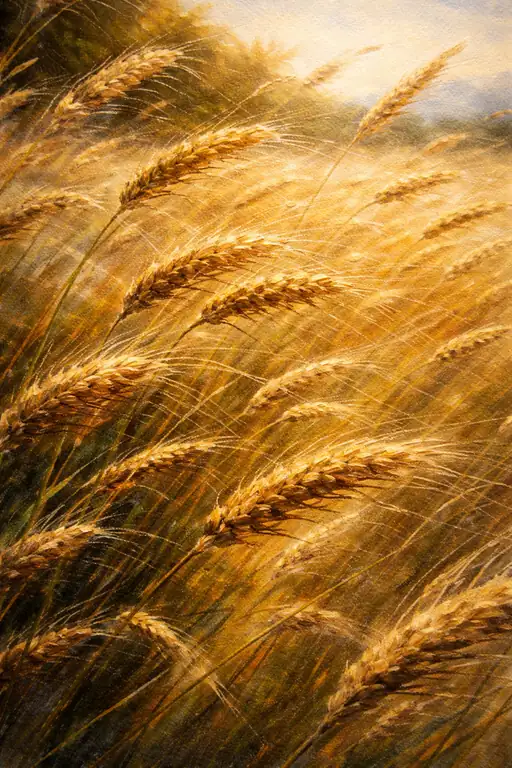 The Earth's Golden Blessing
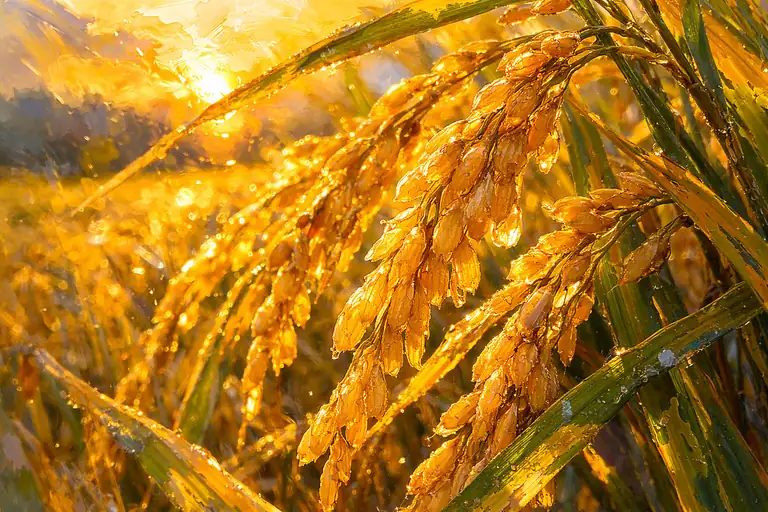 Shimmering Fields of Gold
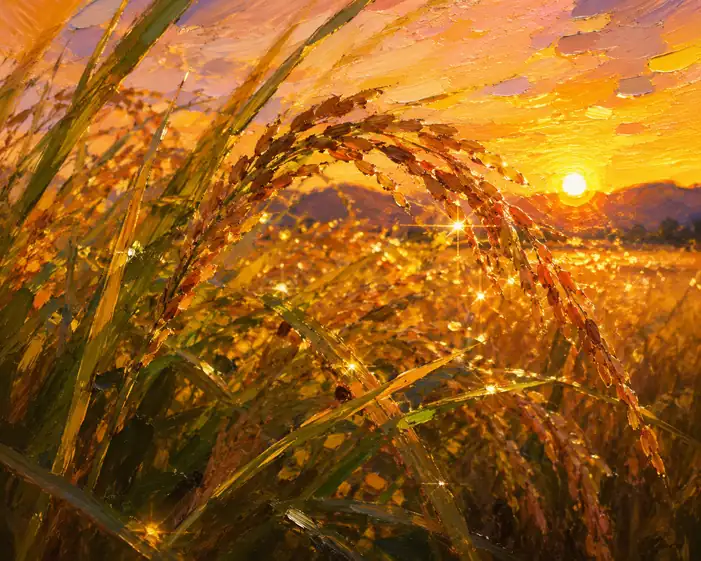 The Golden Whisper of Autumn
 Morning Mirror by the Golden Paddy
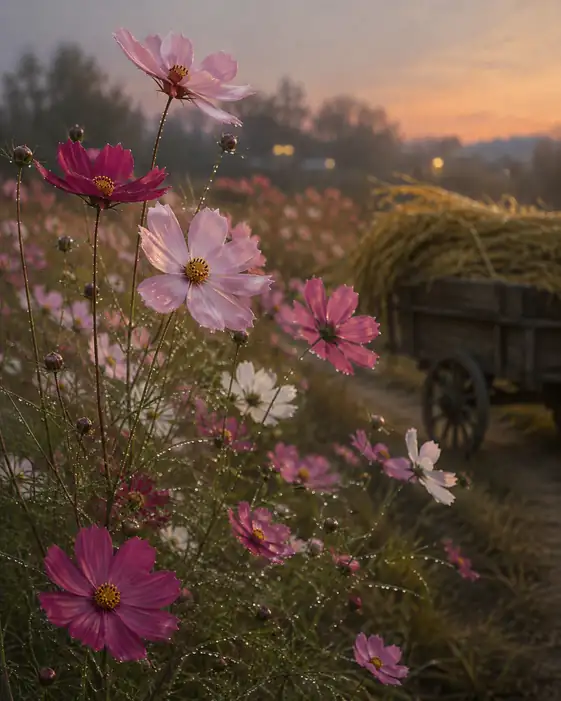 Autumn Cosmos and the Harvest Wagon
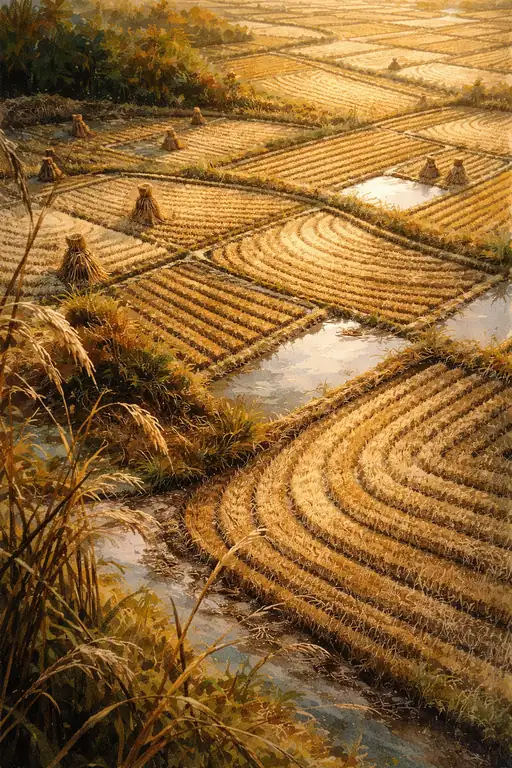 Golden Echoes of the Autumn Harvest
 Pathways of the Golden Harvest
 Golden Dawn's Reflection
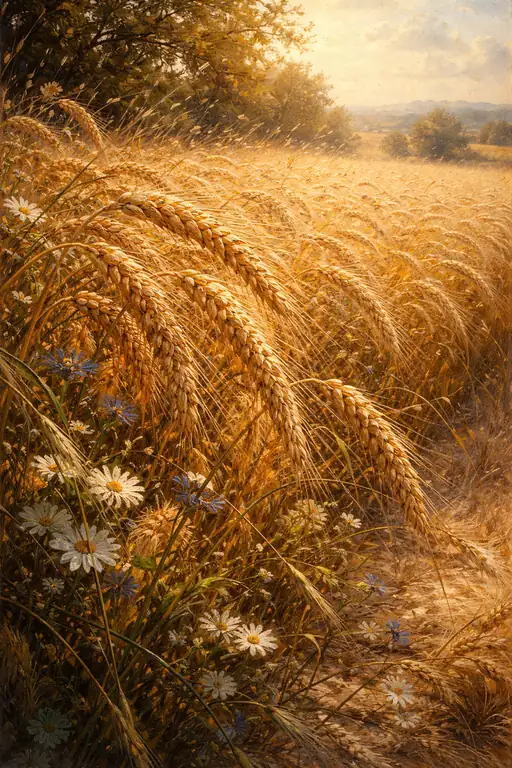 Amber Harvest
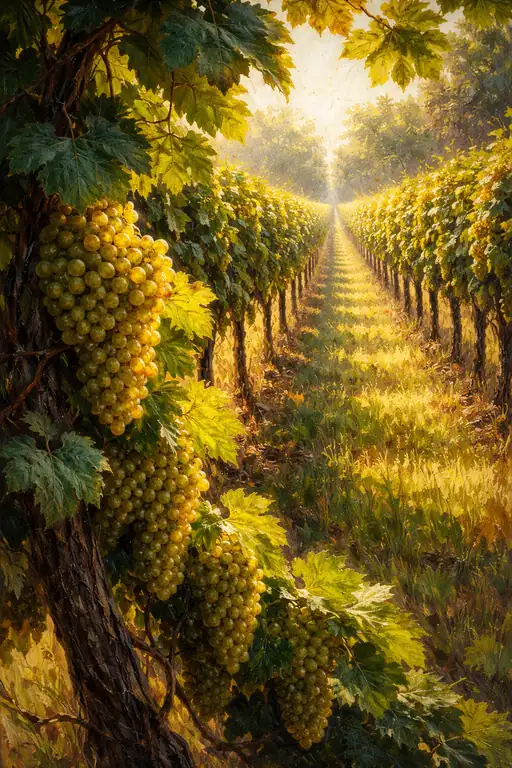 Bountiful Grace of the Golden Vines