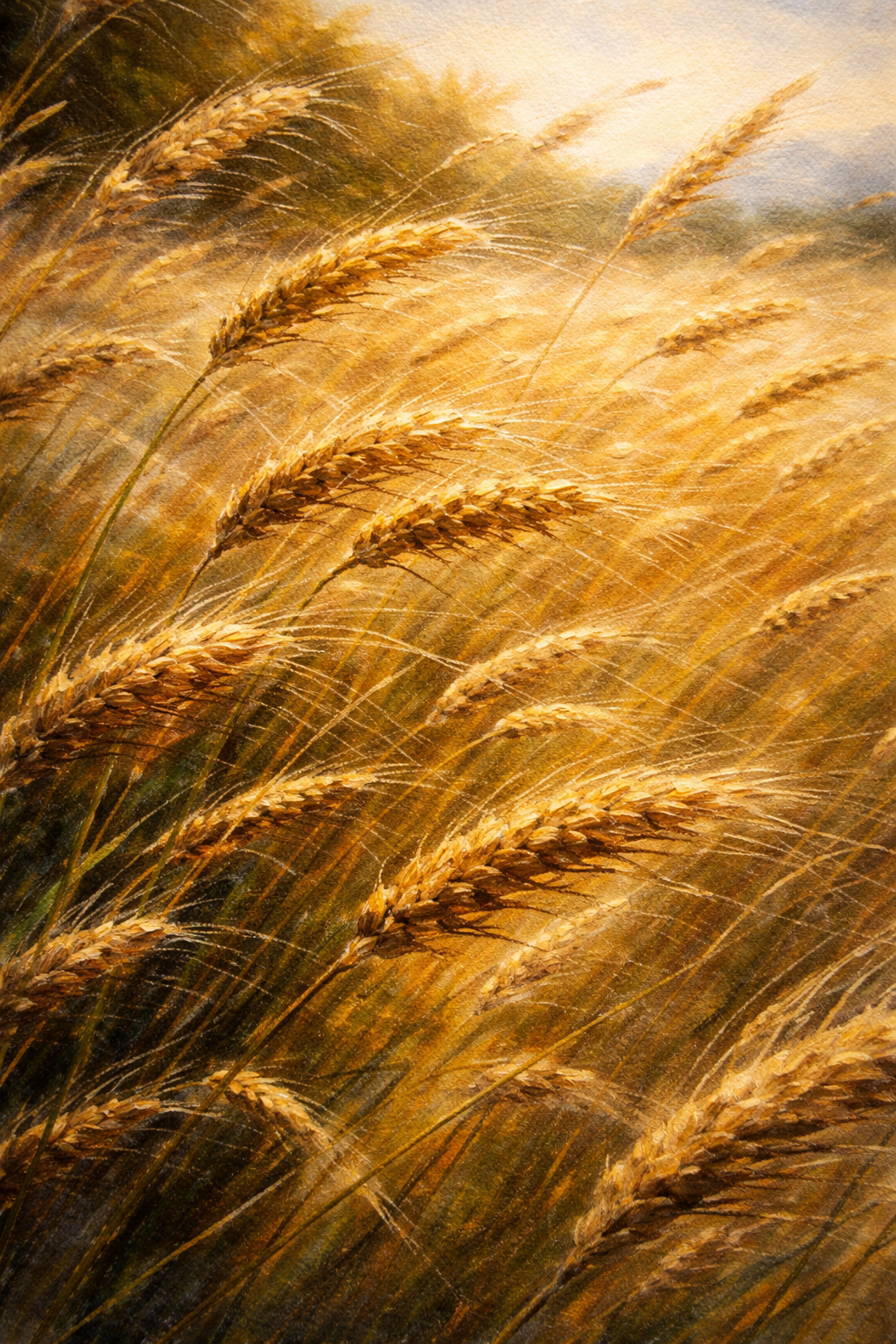
The Earth's Golden Blessing
Critique
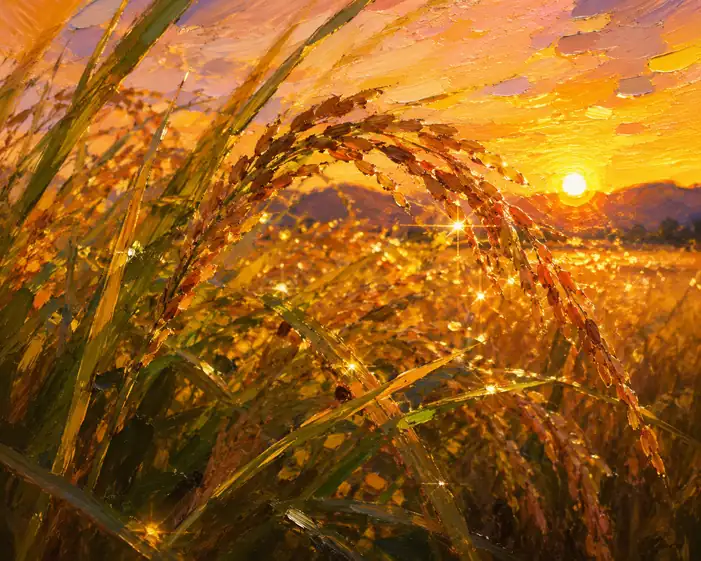
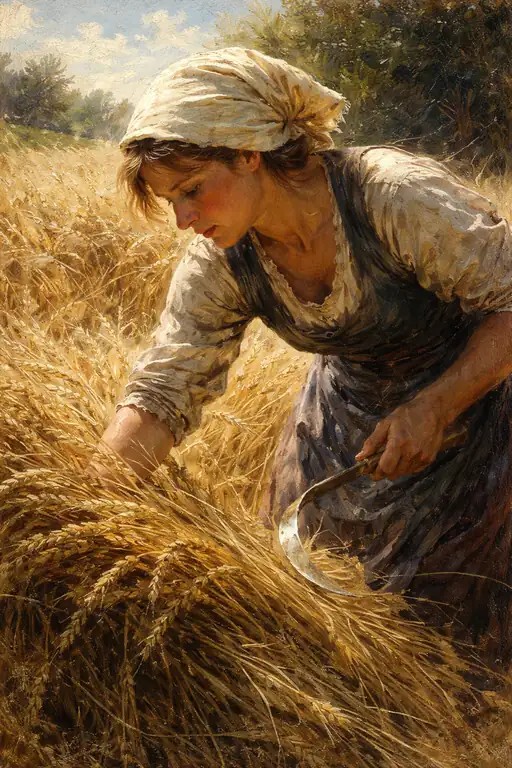
1. Introduction This painting depicts a close-up view of a wheat field during the harvest season, bathed in a rich, warm light. The work focuses on the individual grains and the rhythm of the crop, capturing a sense of abundance. It serves as an exploration of the textures and colors associated with agricultural fertility and the summer sun. 2. Description The composition is filled with laden wheat ears that lean diagonally across the frame. Each ear is rendered with tactile brushstrokes that emphasize the sharp awns and rounded kernels. The background is a hazy blend of golden and earthy tones, suggesting a vast expanse of crops. A strong light source from the top right casts long shadows, creating a dramatic sense of volume. 3. Analysis A dynamic diagonal arrangement creates movement within the subject matter. The color palette is composed of shades of gold, bronze, and burnt sienna, balanced by deep browns in the shadows. The technique involves a layering of paint, where highlights are applied with impasto to catch the light. The contrast between sharp details and the soft background enhances spatial depth. 4. Interpretation and Evaluation This work successfully conveys the tactile experience of a summer field through its bold use of texture. Focusing on individual ears highlights the structural beauty of the plant. The technical execution is highly effective, demonstrating a mastery of light that gives the work a monumental quality. It is a powerful representation of the earth's bounty. 5. Conclusion Initially, the viewer is drawn to the vibrant golden tones, but they soon become absorbed in the complex rhythm of the wheat stalks. The balance between detail and collective movement creates a cohesive and emotionally resonant image. This painting stands as a skillful celebration of the life force found within the fundamental elements of the natural landscape.
Same Subcategory
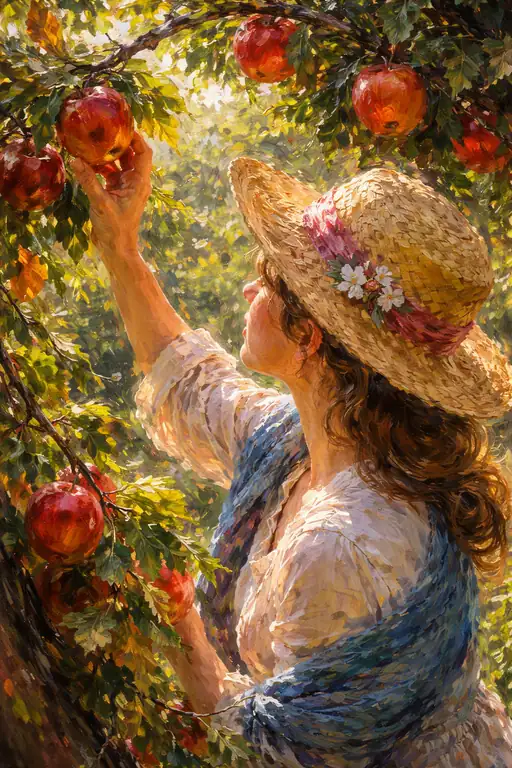 Joy of Life Ripened in Sunlight, Season of Grace
Similar Artworks
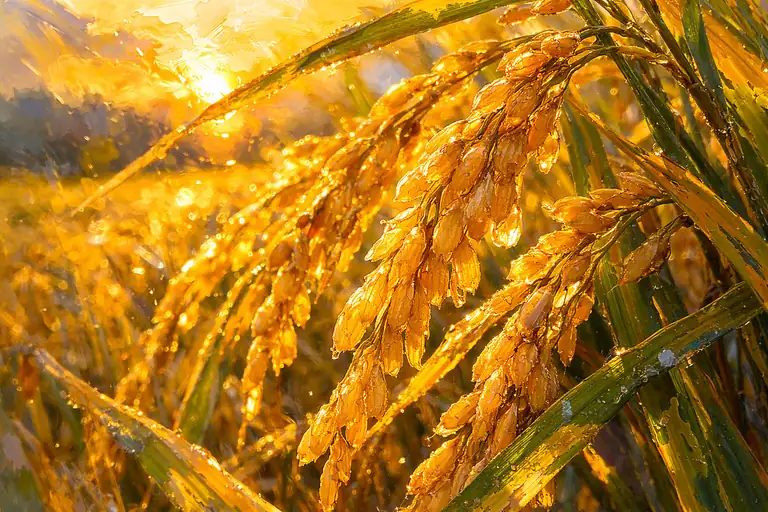 Shimmering Fields of Gold
 Swaying in the Light of Memory
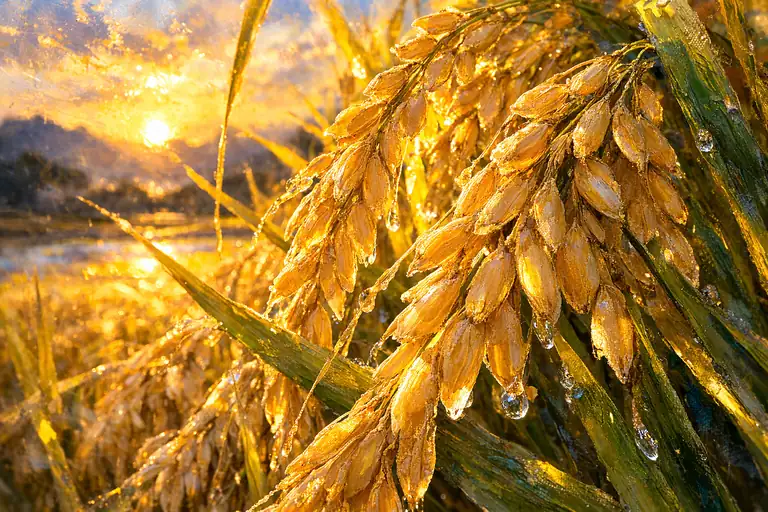 Jewels of the Morning Harvest
 The Golden Whisper of Autumn
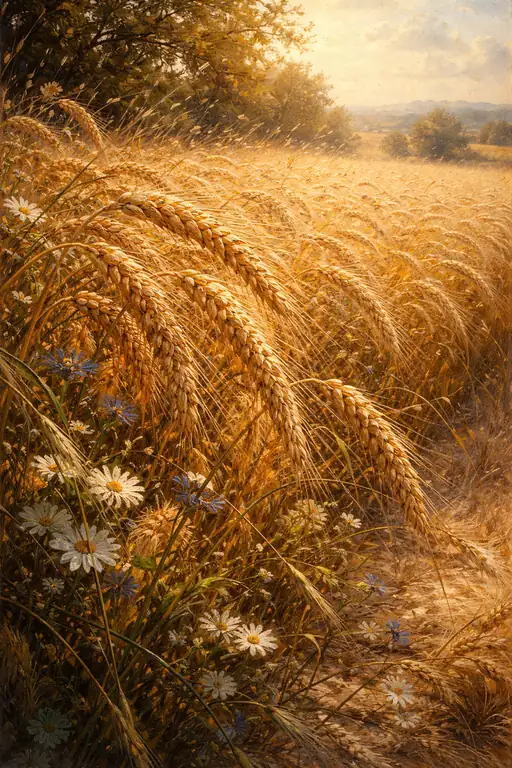 Amber Harvest
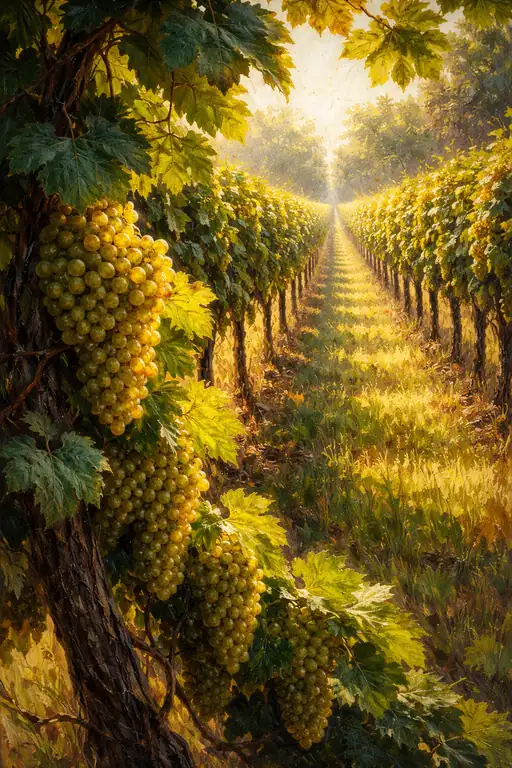 Bountiful Grace of the Golden Vines
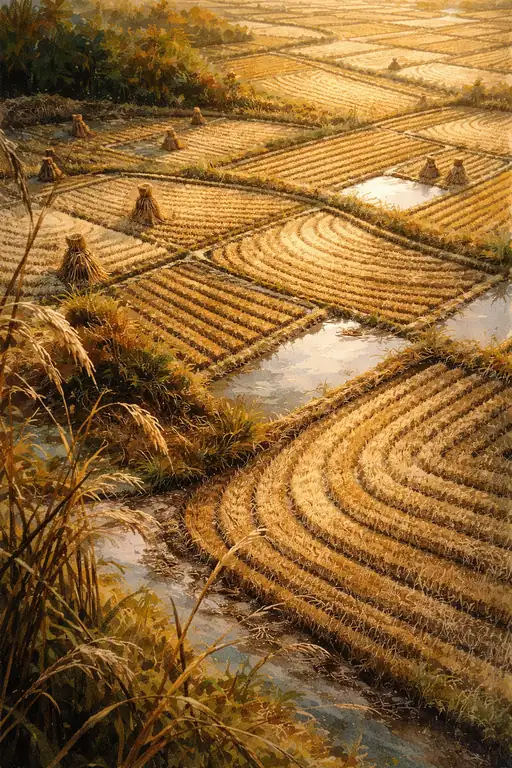 Golden Echoes of the Autumn Harvest
 Pathways of the Golden Harvest
 Golden Whispers in the Autumn Breeze
 The Golden Dignity of the Harvest Sweat