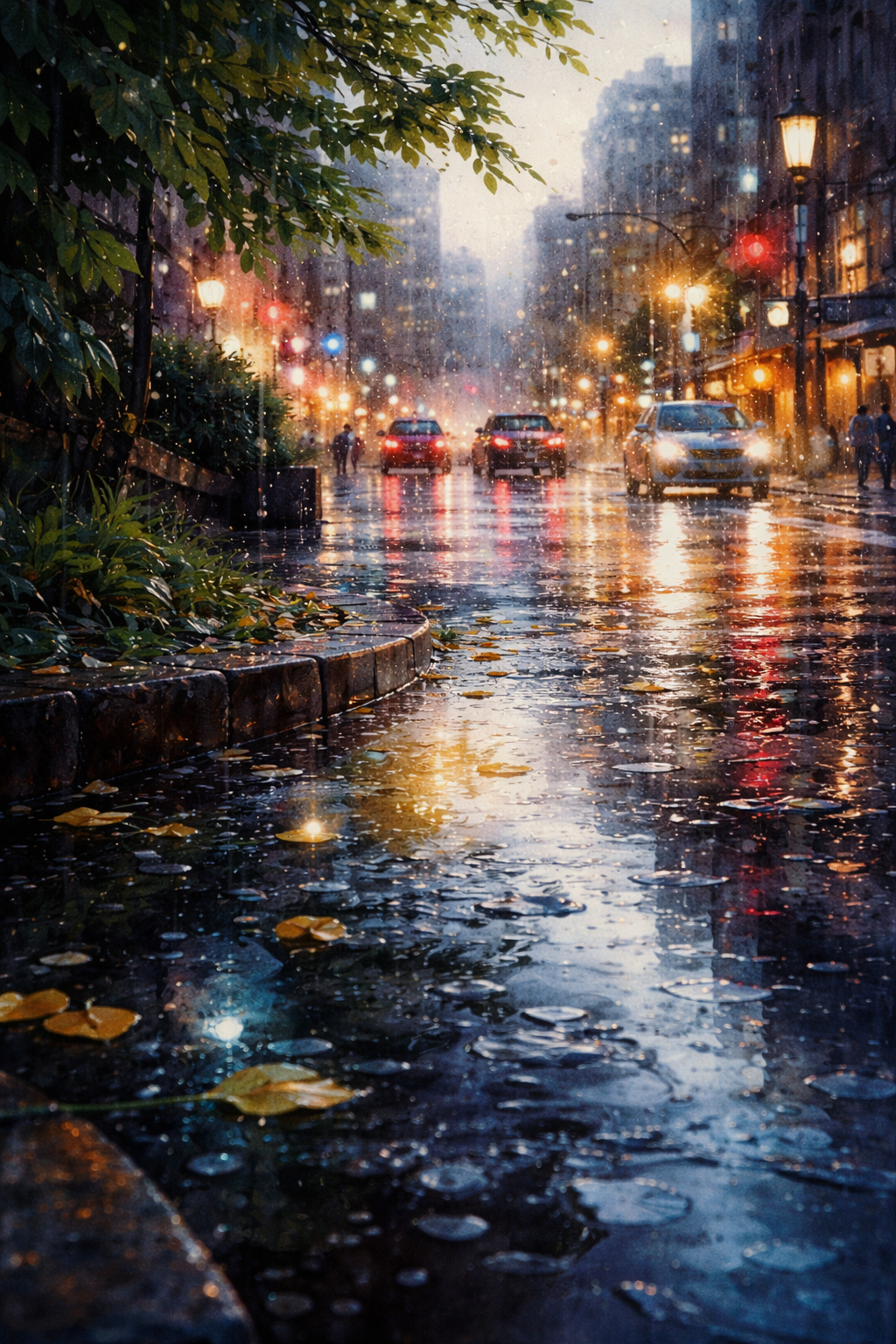
The City's Glimmering Solitude
Critique
1. Introduction This vertical painting presents an impressionistic view of a rainy city street at dusk. The work captures the interplay between the cool, damp atmosphere of a late afternoon shower and the warm, inviting glow of urban lights. By focusing on reflections and blurred forms, the artist evokes a sense of nostalgia and the quiet beauty found within a busy metropolitan environment. The piece serves as a poetic documentation of city life during a transition of weather and time. 2. Description The foreground is dominated by wet asphalt and deep puddles, where several fallen yellow leaves float on the surface. These puddles mirror the vibrant oranges, reds, and whites of the surrounding city lights. In the middle ground, a stone curb borders a small green area with overhanging tree branches. Cars with glowing headlights and taillights are visible on the street, accompanied by the shadowy figures of pedestrians. In the background, tall buildings disappear into a misty, rain-filled haze under a darkening sky. 3. Analysis The artist uses a rich color palette that contrasts the deep blues and greys of the rainy pavement with the luminous ambers and reds of the streetlights and vehicles. The composition utilizes the curved line of the curb to lead the viewer's eye from the detailed foreground into the bustling street. Soft, blended brushwork is used to create the effect of rain-streaked glass or a misty atmosphere, which successfully obscures sharp edges and enhances the overall mood. The handling of light is masterful, particularly in the way it bleeds into the wet surfaces. 4. Interpretation and Evaluation This work excels at capturing the sensory experience of a city after rain. The fallen leaves act as a poignant reminder of the season, adding a touch of natural transience to the man-made landscape. The technical execution of the reflections is highly effective, providing the painting with a sense of depth and luminosity. While the scene depicts a common urban occurrence, the artist elevates it through a sophisticated understanding of light and atmosphere. The balance between detail and abstraction is handled with great sensitivity. 5. Conclusion Ultimately, the painting is a masterful exploration of urban solitude and beauty. The initial impression of a dreary rainy day gradually shifts into an appreciation for the vibrant life reflected in the wet pavement. The piece stands as a refined example of contemporary impressionism, successfully capturing the soul of the city through its focus on light, shadow, and moisture. It leaves the viewer with a sense of calm and a renewed perspective on the everyday urban landscape.
Same Subcategory
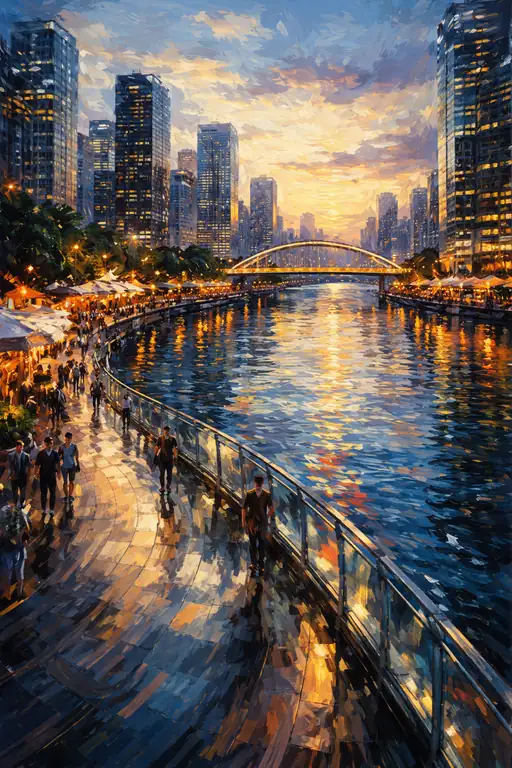 Riverside Metropolis Gleaming
 Between Moonbeams and City Lights
Similar Artworks
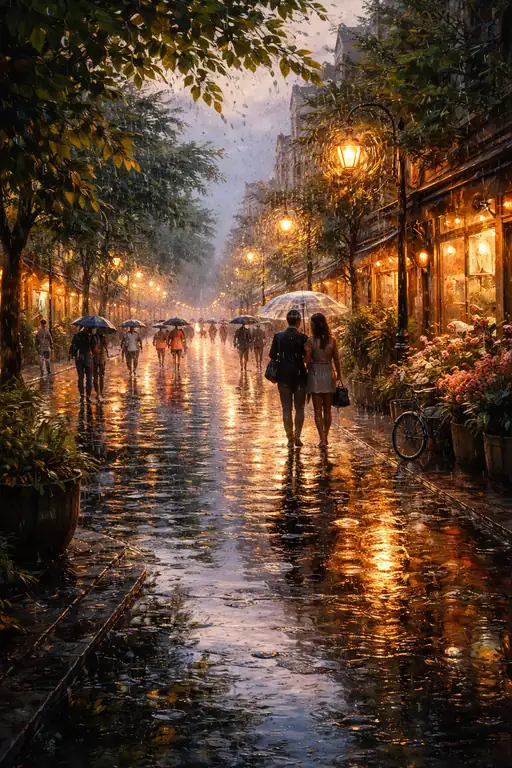 Echoes of Warmth in the Urban Downpour
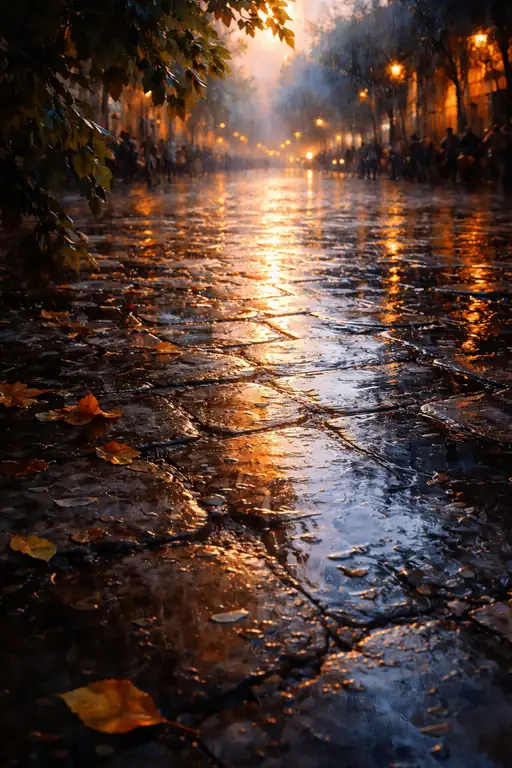 The Silent Rhythm of the Rain
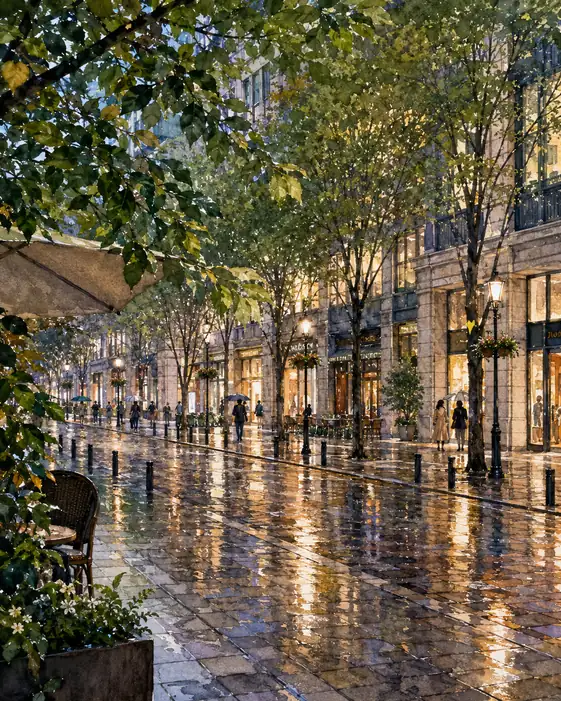 Reflections of Gold: A Stroll Through the Evening Rain
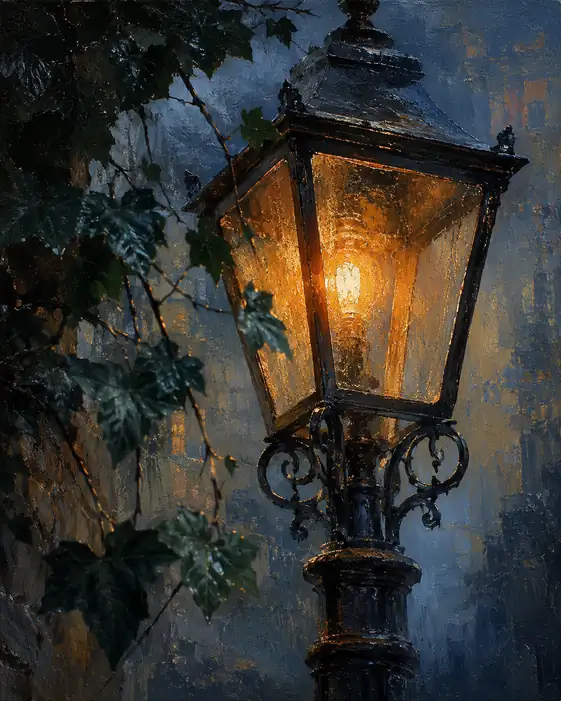 The Night's Warm Heart
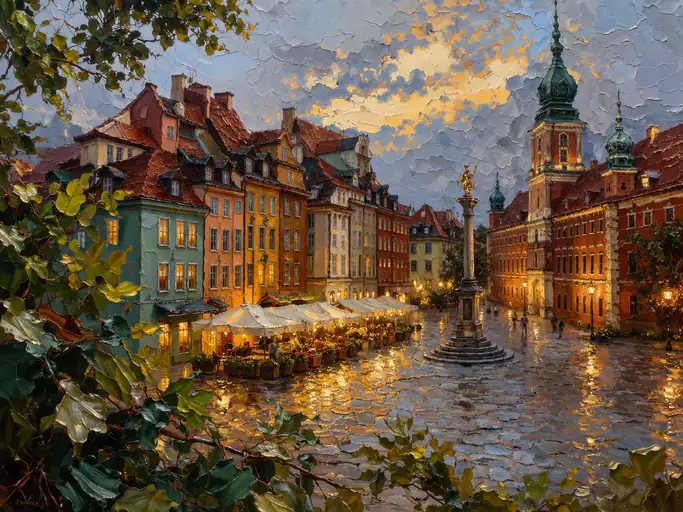 Twilight Reflections: The City's Golden Glow
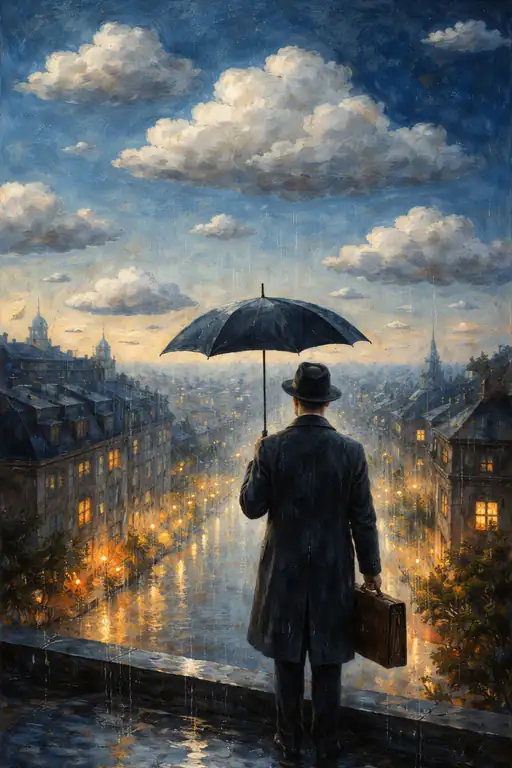 Tears of the City, Solace of the Clouds
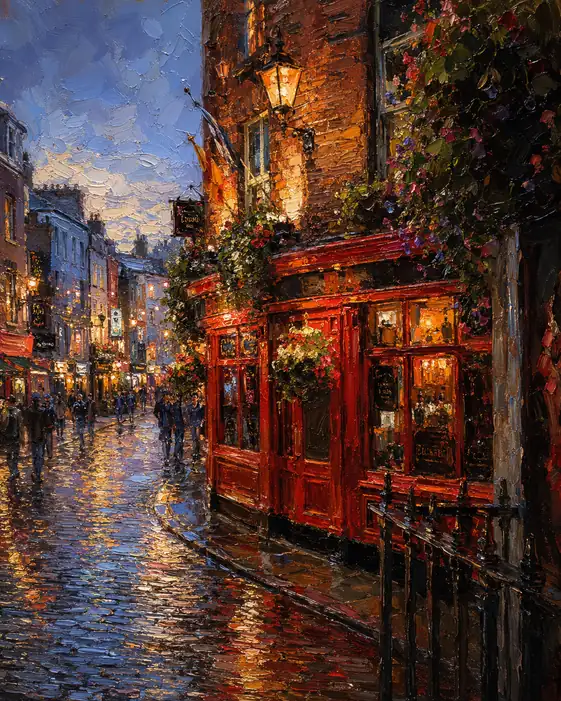 The Glow of Twilight: Warmth on a Rainy Street
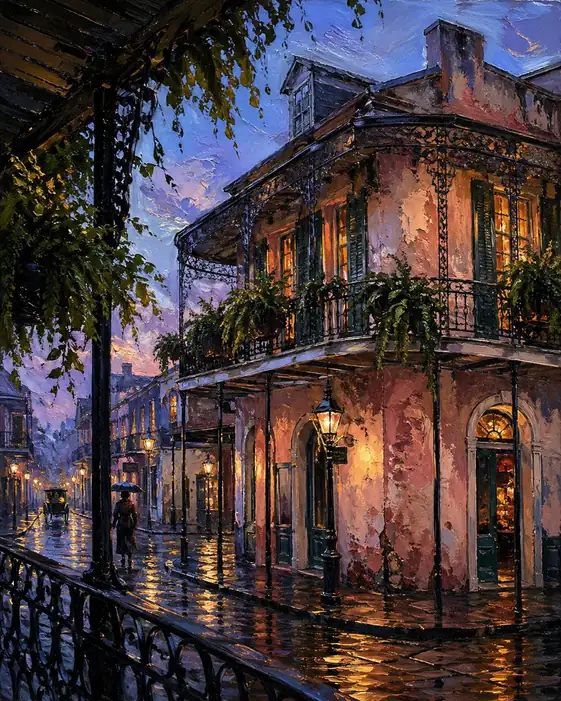 Rhythm of the Rain-Slicked Night
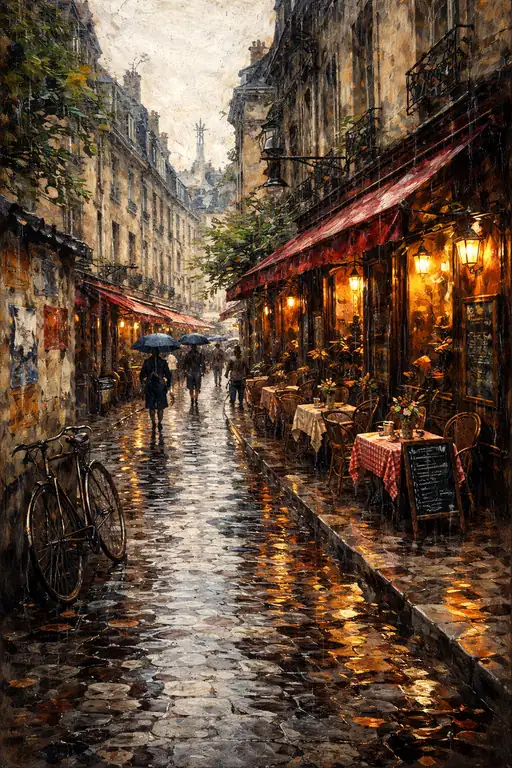 Tears of the Prismatic Night
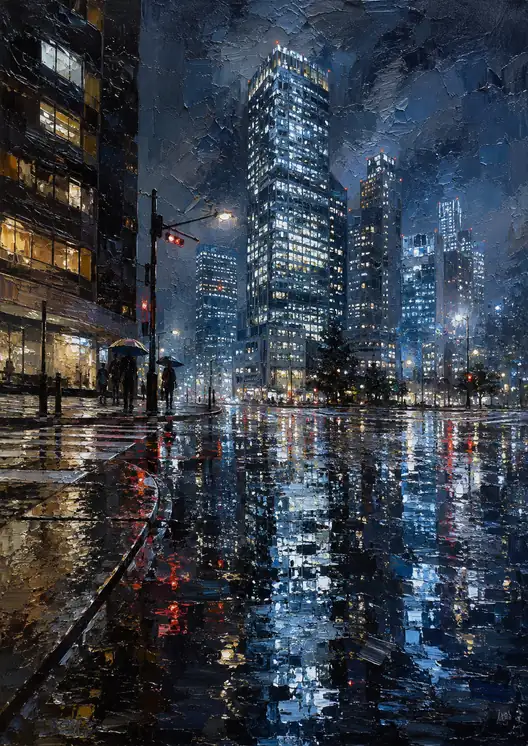 Warmth Scattered on Cold Asphalt