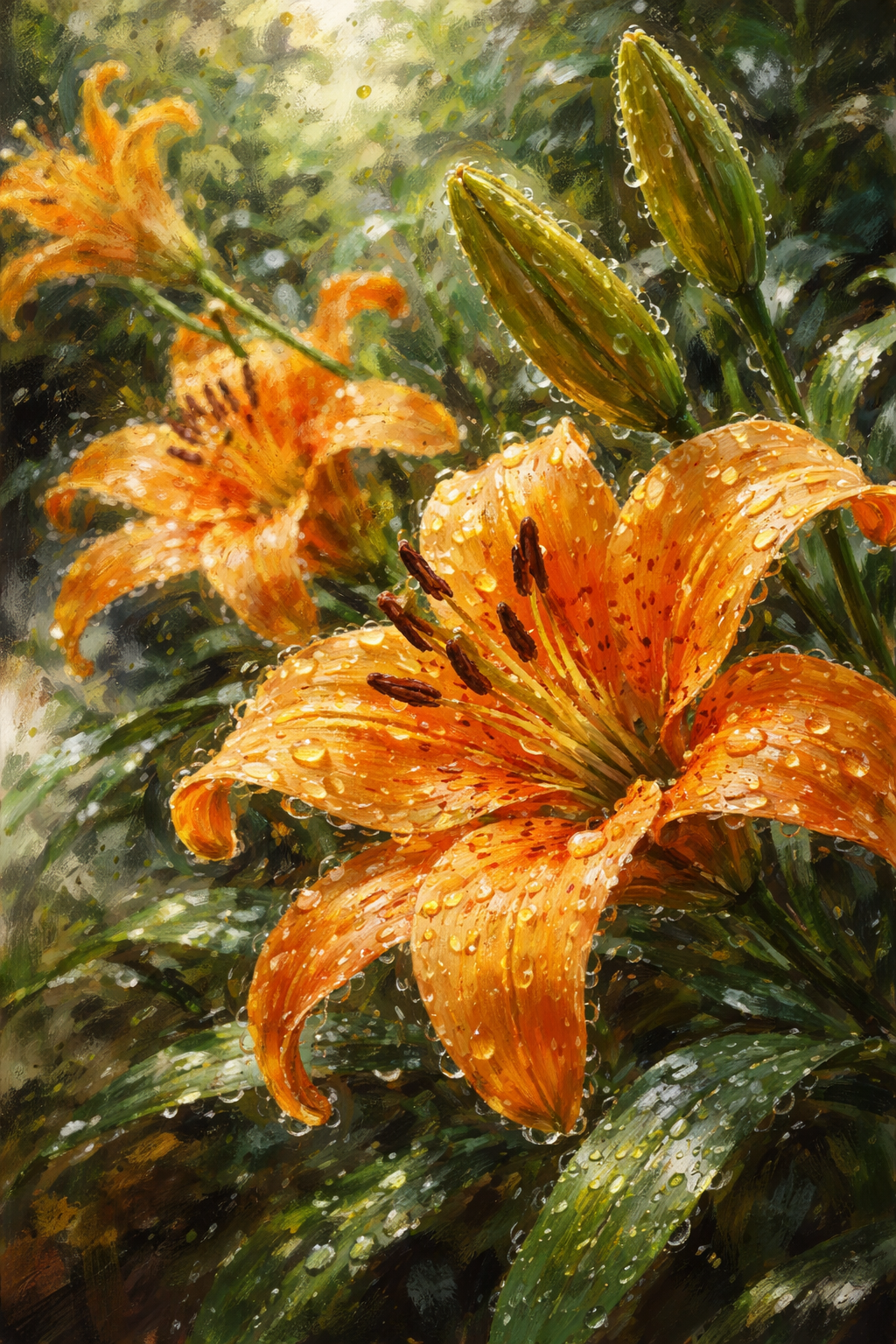
The Sun's Glimmer in a Single Drop
Critique
1. Introduction This botanical painting features vibrant orange lilies, captured in a moment of freshness with detailed water droplets. The work utilizes a dynamic, painterly style that emphasizes the vitality of the natural subject within a lush environment. 2. Description The focal point is a large, open tiger lily in the foreground, showing its speckled orange petals and dark stamens. Behind it, another bloom and several closed green buds are visible, all covered in glistening droplets of water. The surrounding foliage consists of deep green leaves, rendered with broad and energetic brushstrokes that create a sense of dense growth. 3. Analysis The artist employs a high-contrast color scheme, with the brilliant orange of the flowers standing out sharply against the cool, dark greens of the background. The lighting is bright and direct, perhaps representing sunlight after a rain shower, which makes the water droplets sparkle. The composition is diagonal, leading the eye from the lower left to the upper right through the arrangement of the flowers and buds. 4. Interpretation and Evaluation The painting is highly successful in its rendering of light and moisture, particularly the translucent quality of the water droplets on the petals. The energetic brushwork gives the scene a sense of immediacy and organic movement. While the style is expressive, the anatomical details of the lilies are maintained, demonstrating a balance between artistic freedom and botanical observation. 5. Conclusion This work is a vivid celebration of floral beauty, using color and texture to evoke a strong sensory experience. Its harmonious composition and technical proficiency make it a standout example of modern botanical art.
Same Subcategory
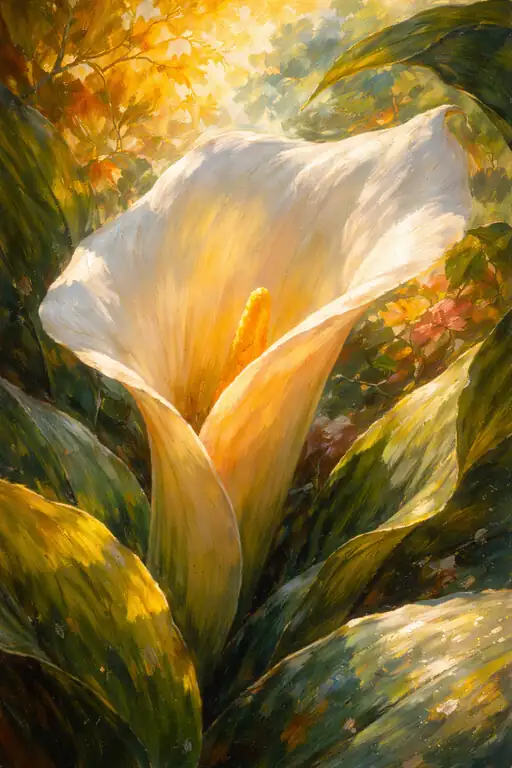 Golden Embrace of the Morning Calla
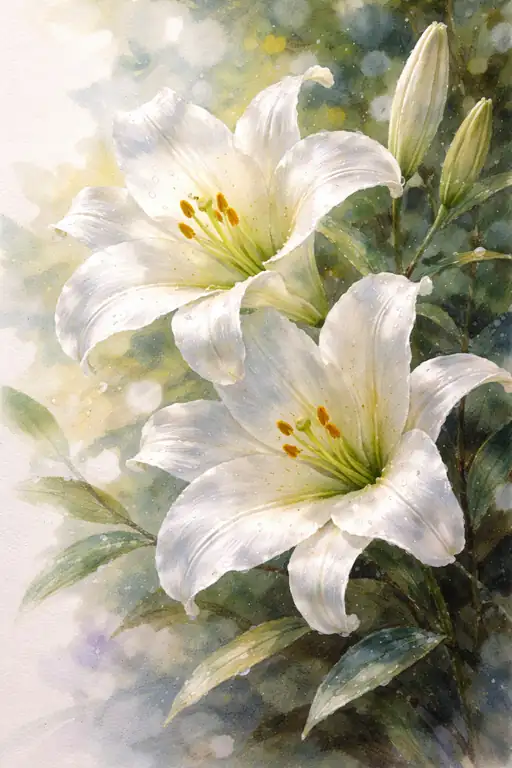 Tears of Purity on White Petals
Similar Artworks
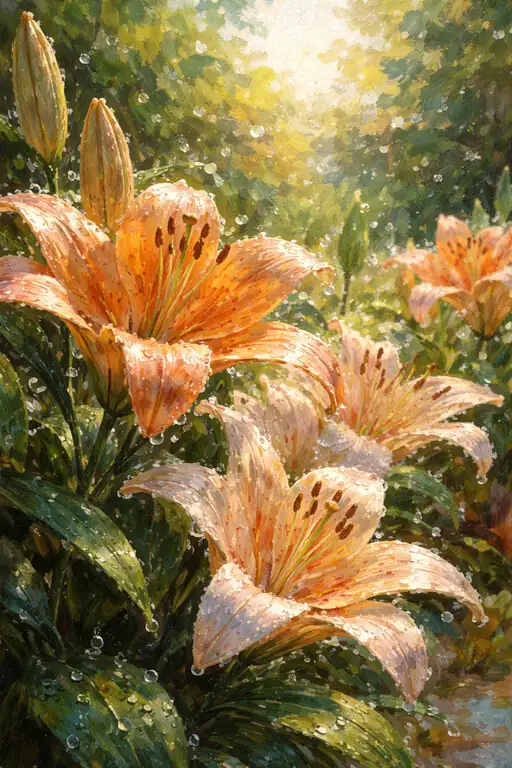 Jewels of the Morning Sun
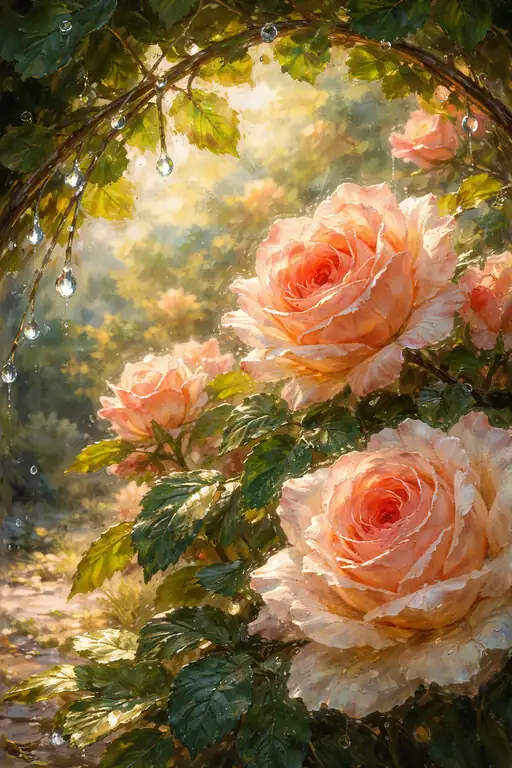 Tears of Dawn on Petals
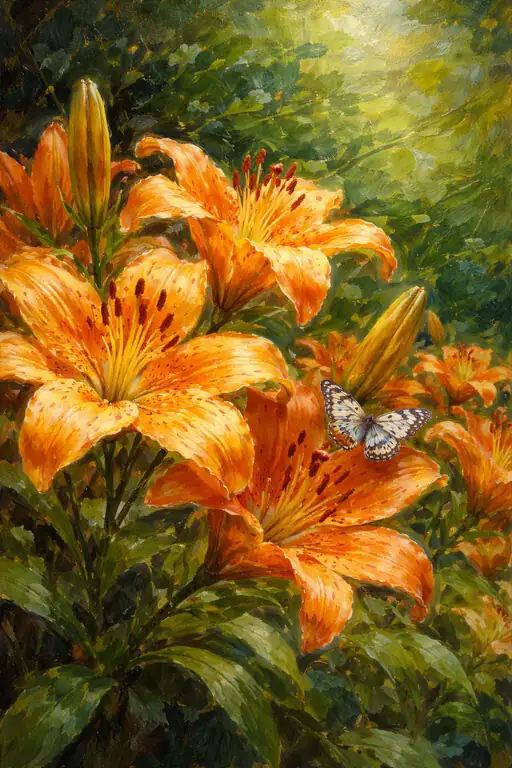 Luminous Breath of the Tiger Lily
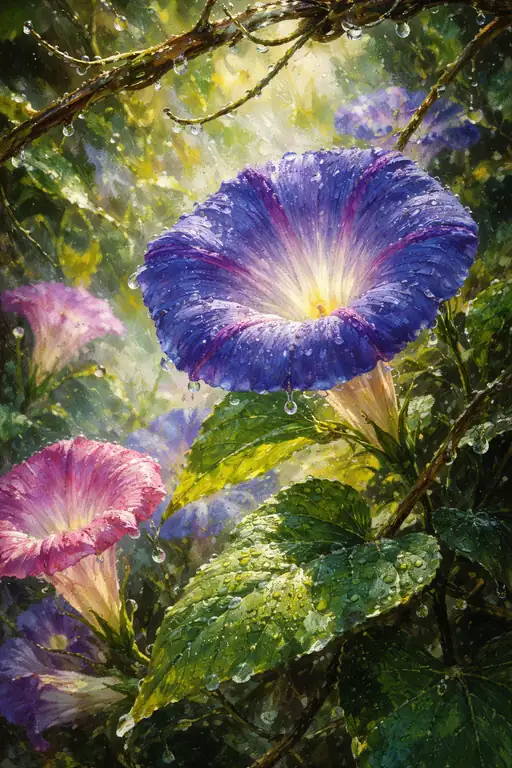 Morning Glories Weeping Dew
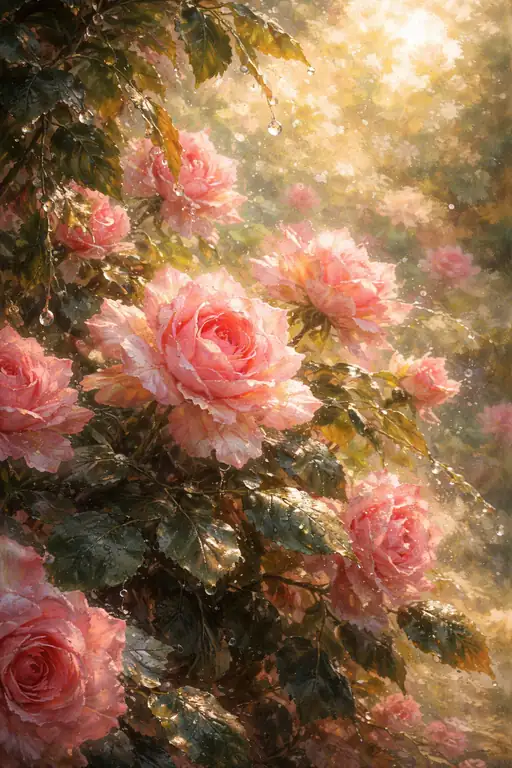 The Shimmering Breath of a Sunlit Rain
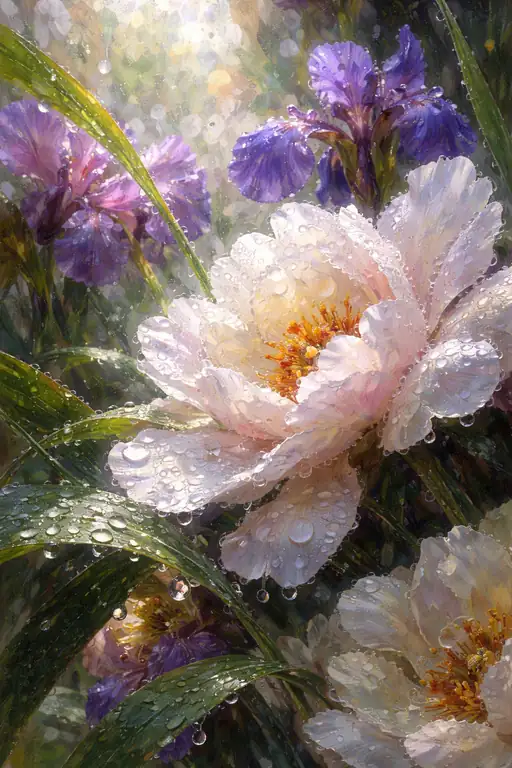 The Luminous Aftermath
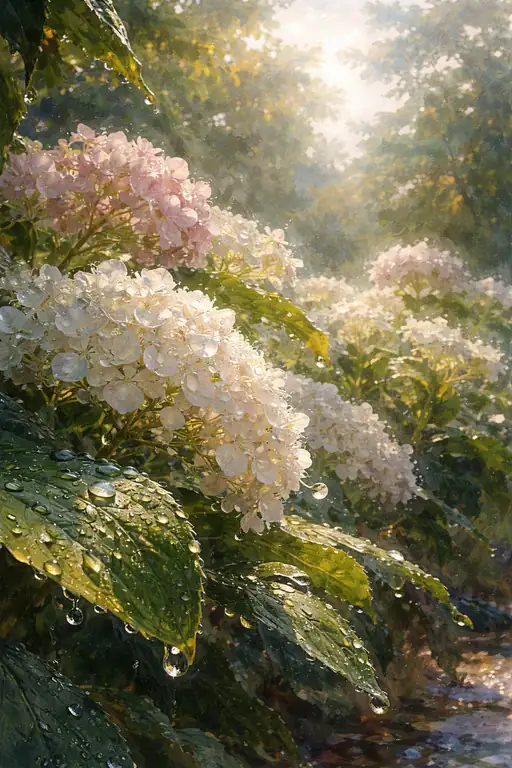 Pearls of Rain on Soft Petals
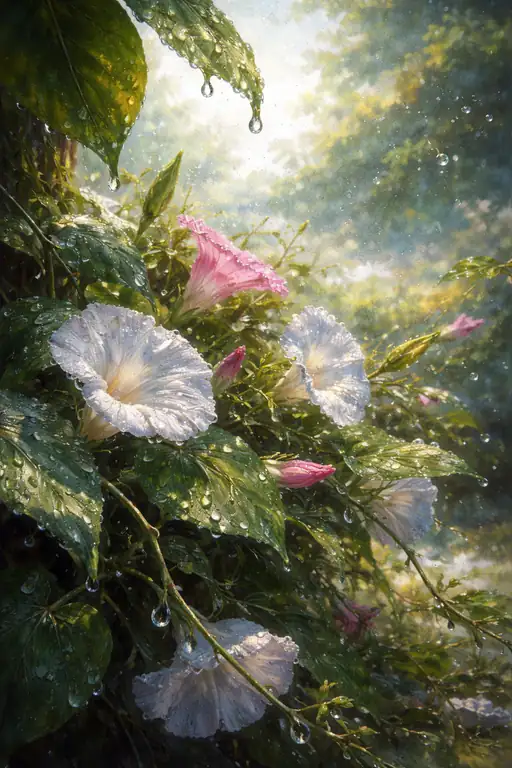 Morning Glory Glistening with Rain
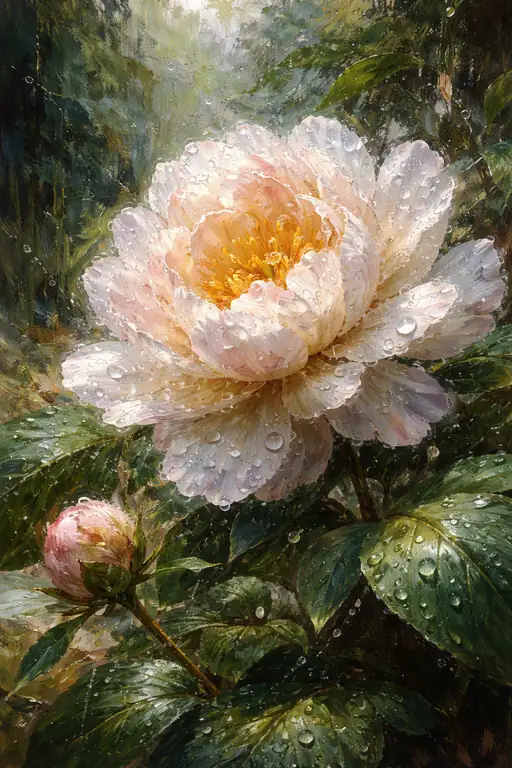 The Breath of Spring After the Rain
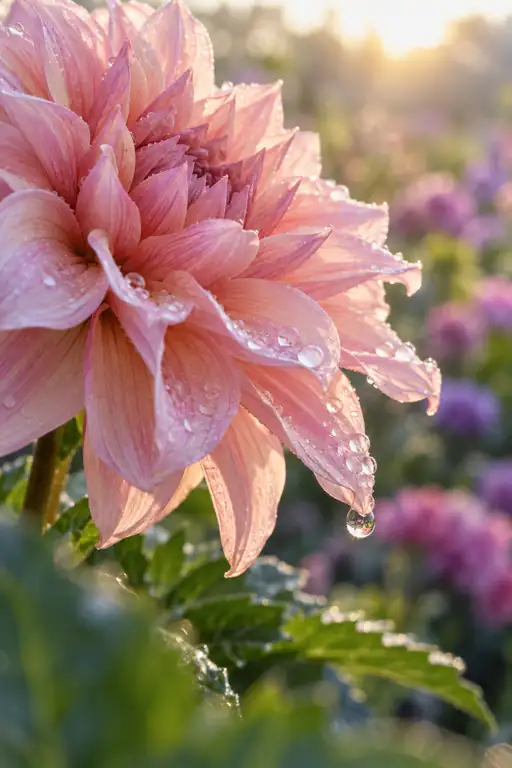 Morning Dew on Dahlia Petals