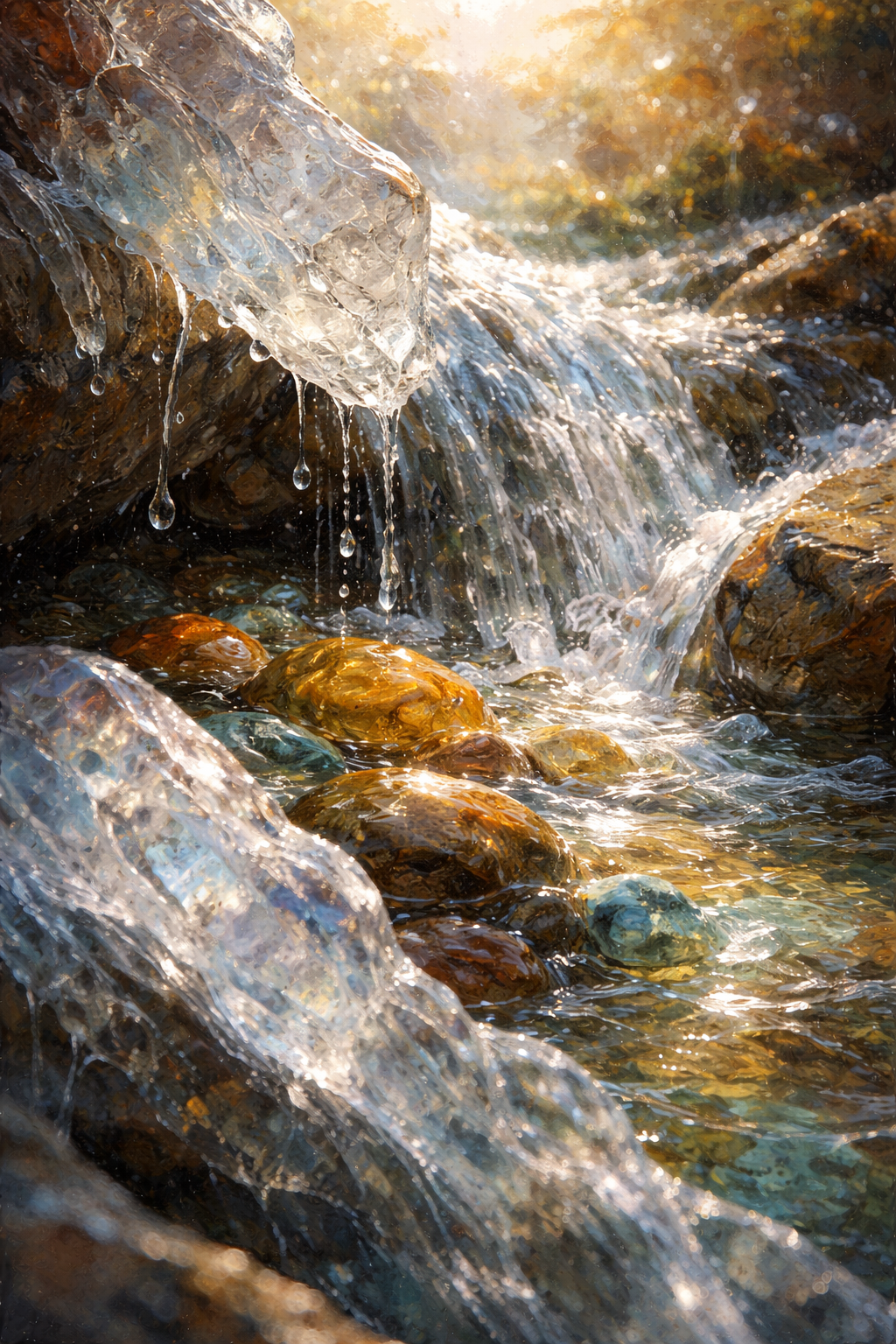
Crystal Tears of the Awakening Spring
Critique
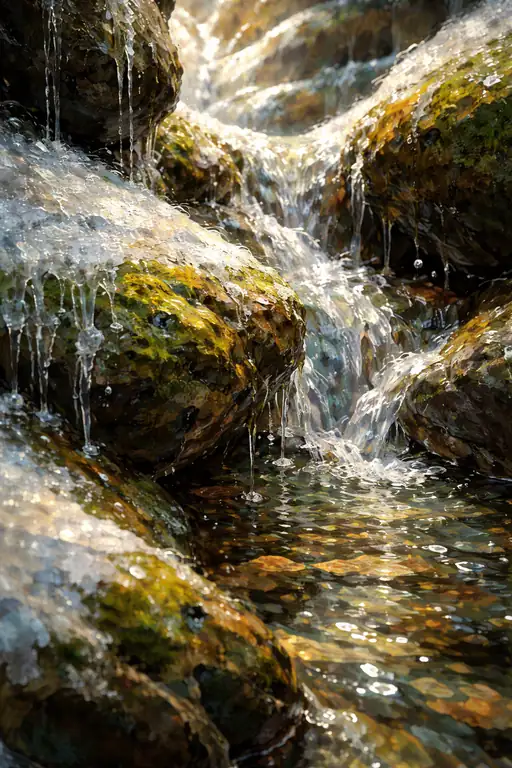
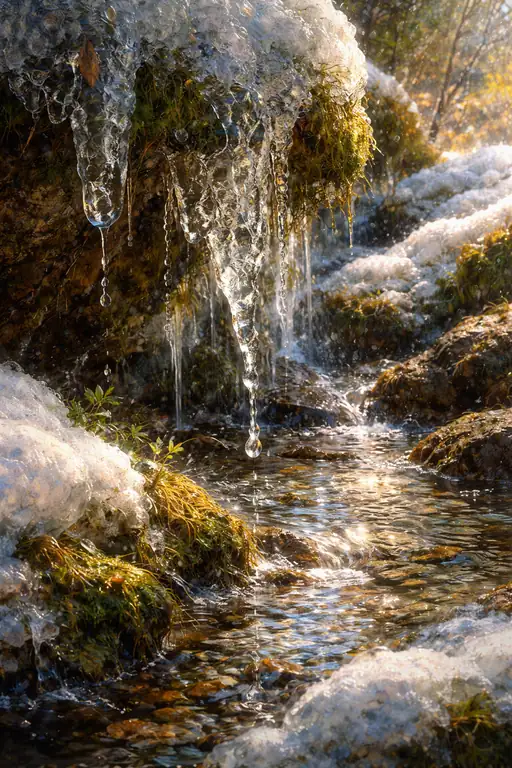
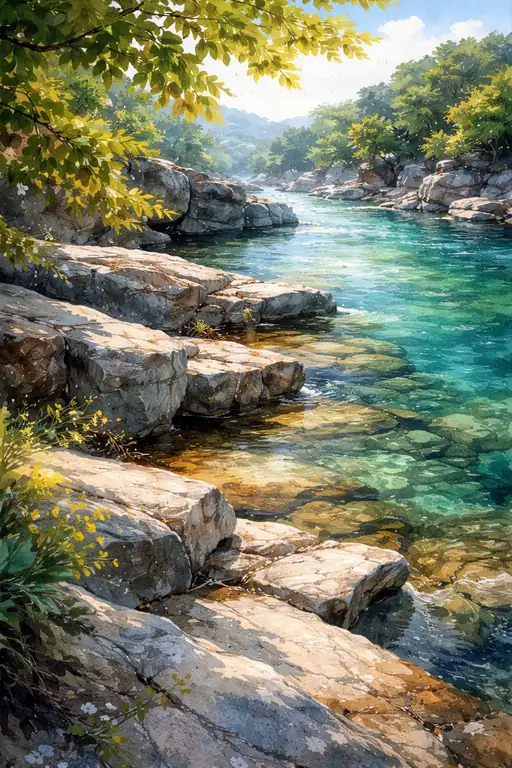
1. Introduction This piece presents a dynamic close-up study of water and ice over a rocky streambed. The composition tightly frames the cascading water, emphasizing fluid movement and the textures of frozen elements. The viewer is drawn to the refractive qualities of sunlight hitting the wet surfaces. 2. Description Water rushes over smooth river stones, forming delicate icicles on overhanging rocks. Submerged stones reveal warm amber and cool blue hues beneath the surface. Droplets are suspended in mid-air, capturing a fleeting moment of motion. A diffused golden light bathes the background, illuminating the fine mist. 3. Analysis The creator utilizes a realistic approach to render the varying states of water. Sharp brushstrokes define the brittle edges of the ice, contrasting with the softer application used for the flowing stream. The palette relies on the relationship between warm light and translucent blues. This handling of light and texture produces a profound sense of depth. 4. Interpretation and Evaluation The work explores transitional states of nature, specifically the boundary between liquid and solid forms. The suspension of droplets suggests the quiet passage of time in a harsh environment. By focusing closely on elemental interactions, the piece invites contemplation of natural complexities. It succeeds as a rigorous exercise in depicting reflection and refraction. 5. Conclusion In summary, this painting offers a compelling observation of a freezing stream. The careful rendering of ice and smooth stones demonstrates a sophisticated understanding of light. The focused composition transforms a natural occurrence into an engaging visual study. It remains a strong example of observational landscape painting.
Same Subcategory
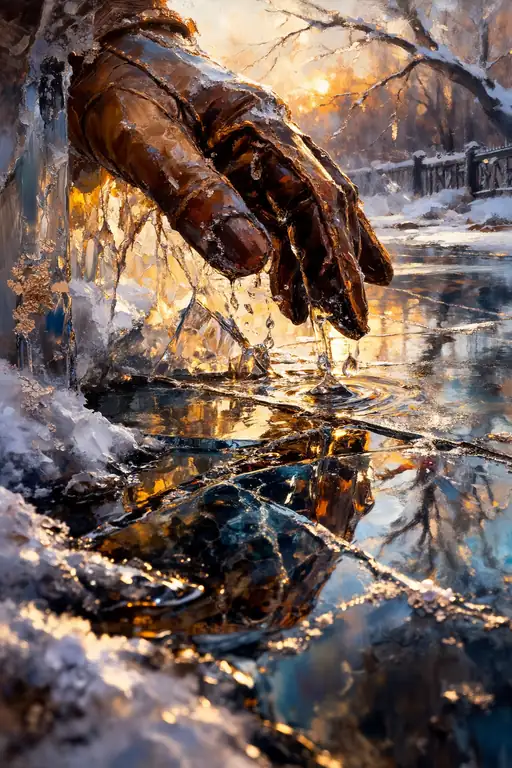 A Fleeting Touch Upon the Frozen World
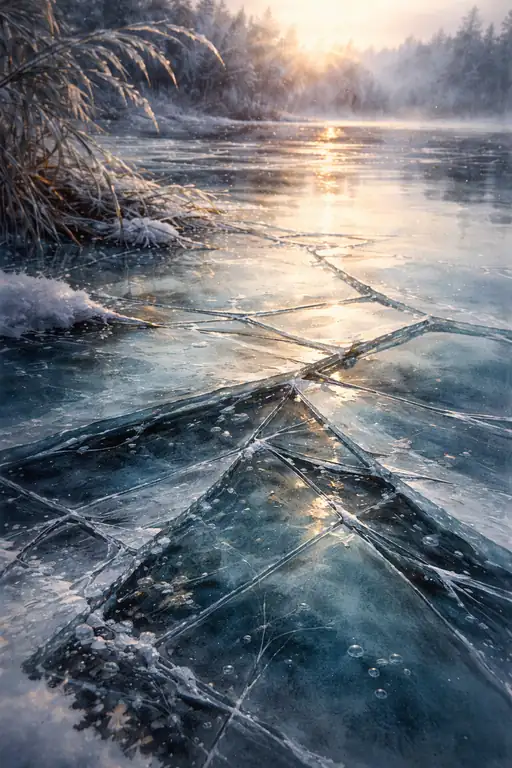 A Mirror Cracked by Time
Similar Artworks
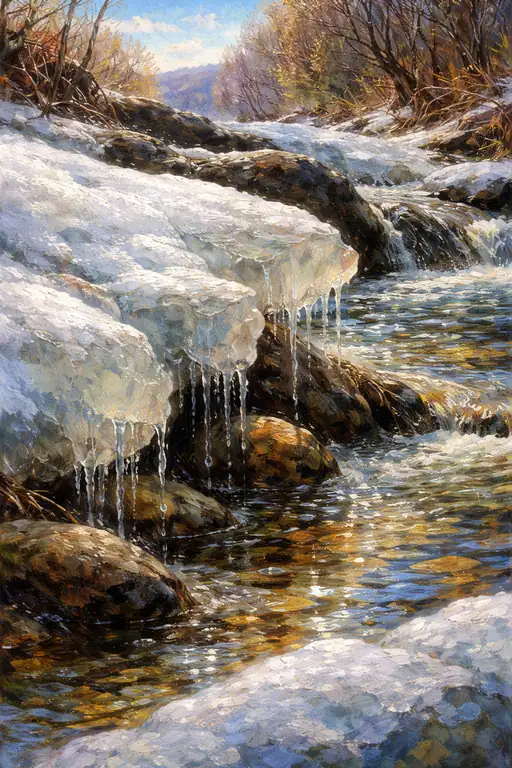 Tears of Ice Awakening the Spring Stream
 The Song of the Mossy Stream
 Awakening Whispers of the Thaw
 Sunlight Dancing on the Mossy Stream
 Whispers of the Crystal Stream
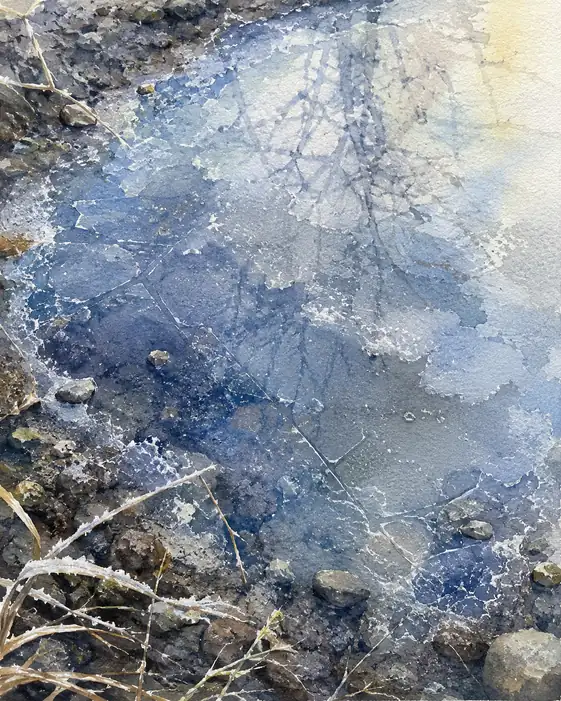 Crystalline Memories of a Winter Morning
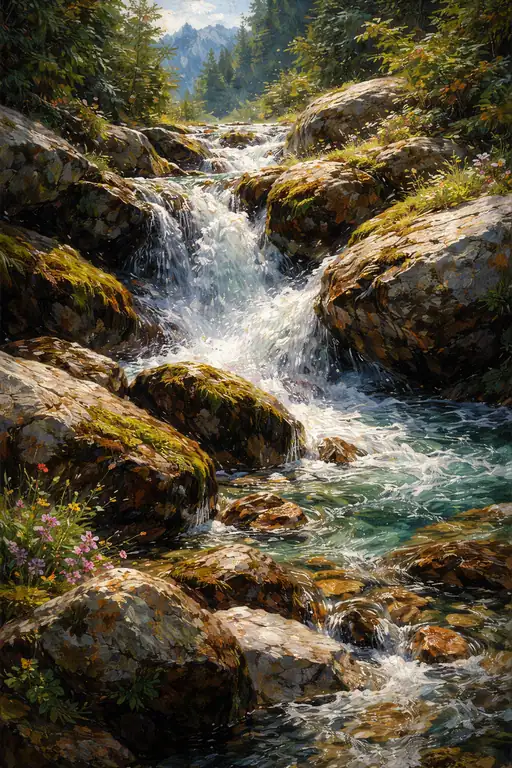 The Cascade's Joyful Song Among the Mossy Stones
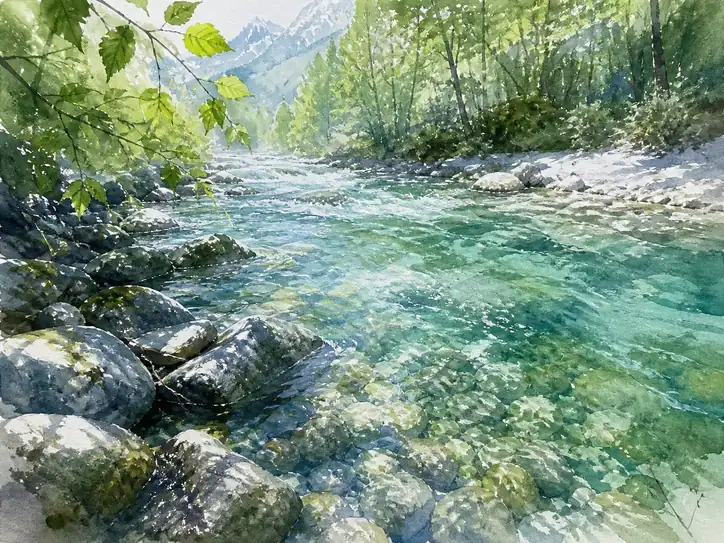 The Crystalline Lyric of the Sunlit Stream
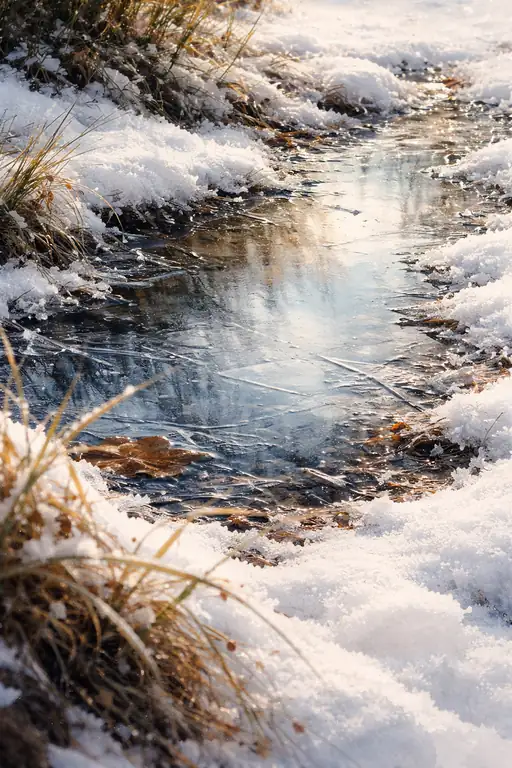 Slumbering Vitality Beneath the Frost
 Whispers of the Crystal Current