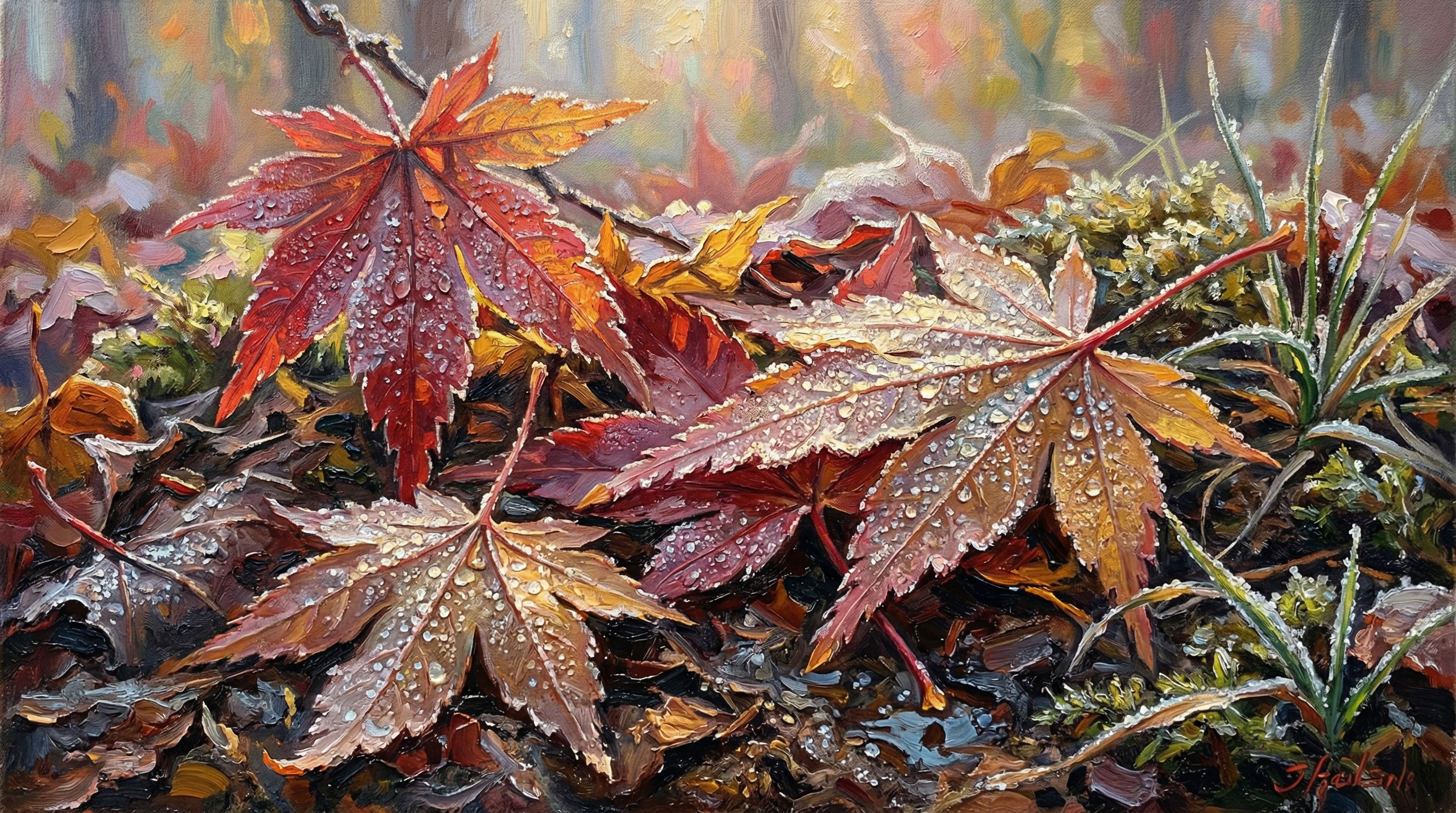
Tears of the Autumn Morning
Critique
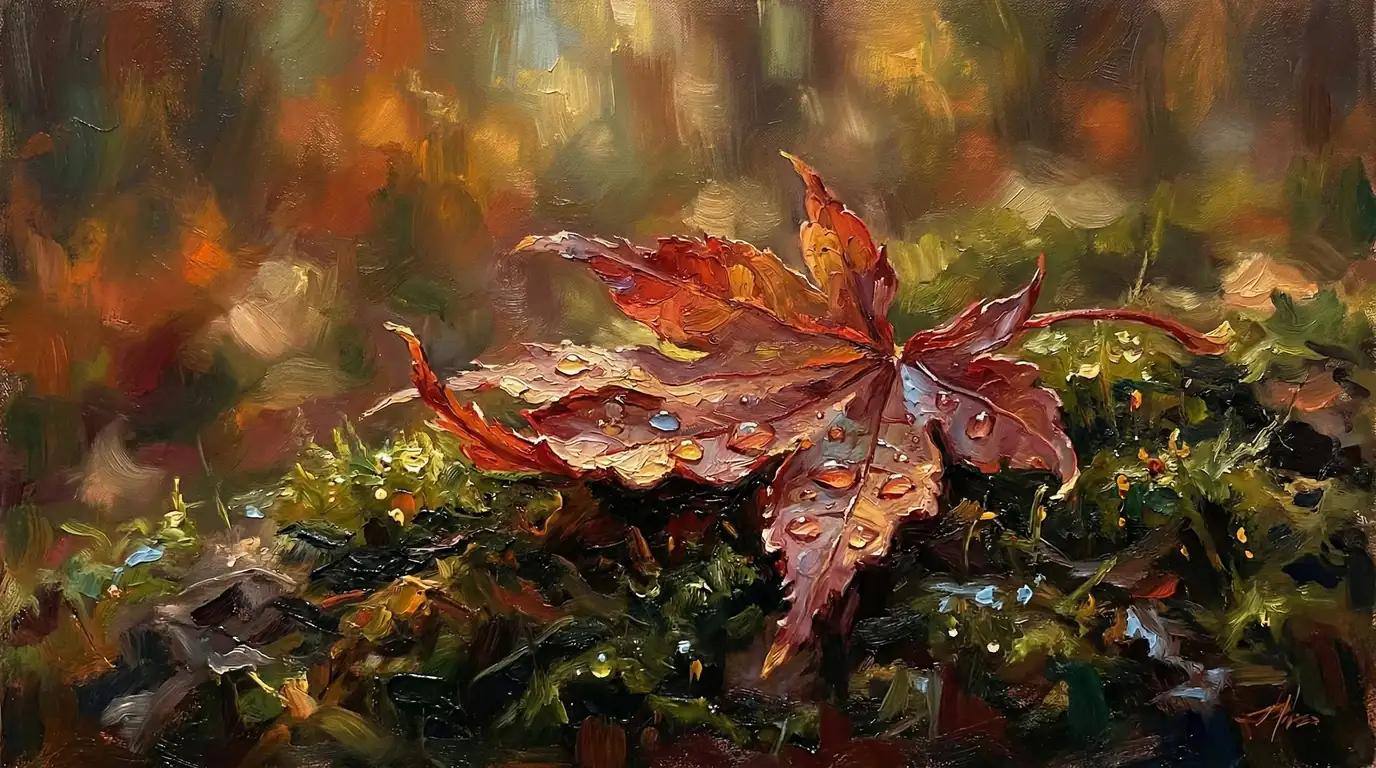
1. Introduction The present oil painting offers a close-up view of fallen maple leaves resting on a forest floor, capturing a poignant moment of seasonal transition. This work focuses on the delicate beauty of autumn's end, where the vibrant colors of the leaves meet the cool touch of morning moisture. Through its rich texture and evocative use of light, the painting invites an appreciation for the ephemeral details of the natural world. 2. Description The composition features several maple leaves in varying stages of decay, ranging in color from deep crimson to golden ochre and muted brown. Each leaf is detailed with glistening droplets of dew or frost that sparkle under a soft, diffused light. In the foreground, the leaves are piled irregularly over dark, damp earth and patches of mossy green, while the background dissolves into a warm, out-of-focus blur of autumnal tones. 3. Analysis Technically, the artist employs a bold impasto technique, using thick, expressive brushstrokes to create a tangible sense of volume and texture. The highlights on the water droplets are rendered with sharp, bright accents that contrast effectively against the velvety surface of the leaves. The color palette is dominated by warm earth tones, balanced by the cool, silvery reflections of the dew, which guides the viewer across the foliage. 4. Interpretation and Evaluation This painting serves as a meditation on the cycle of life and the quiet dignity found in decay. The juxtaposition of the brilliant red leaves with the cold moisture suggests the arrival of winter, heightening the emotional resonance of the scene. The work displays skill in capturing the interplay of light and moisture, transforming a natural occurrence into a compelling visual narrative that celebrates the beauty of the overlooked. 5. Conclusion In conclusion, the work is an exploration of texture and light that successfully conveys the essence of a late autumn morning. The initial focus on the vibrant colors gradually shifts to an admiration for the complex rendering of the dew-laden surfaces. Ultimately, the painting achieves a harmonious balance between realism and expressive technique, leaving a lasting impression of the quiet majesty inherent in nature's seasonal shifts.
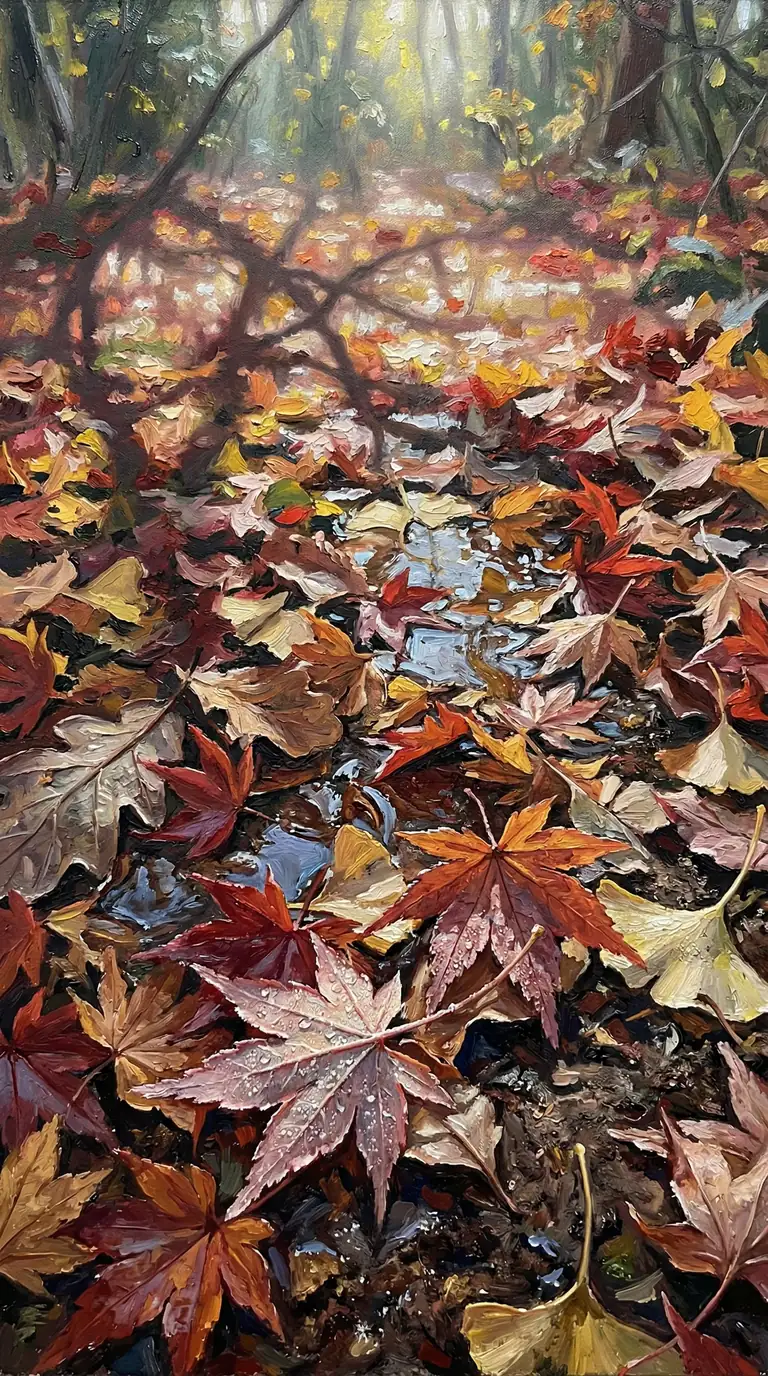 Fallen Embers of the Forest Floor
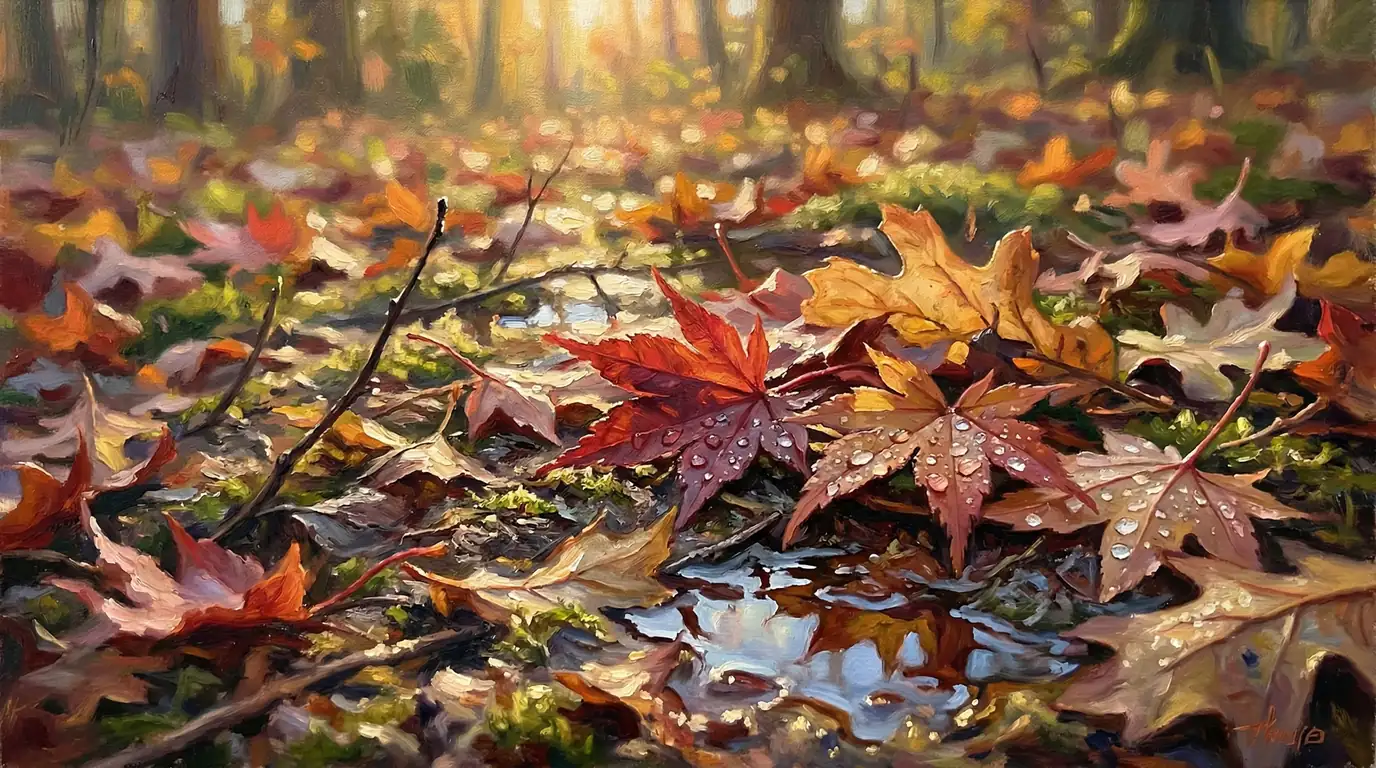 Tears of the Fallen Maple
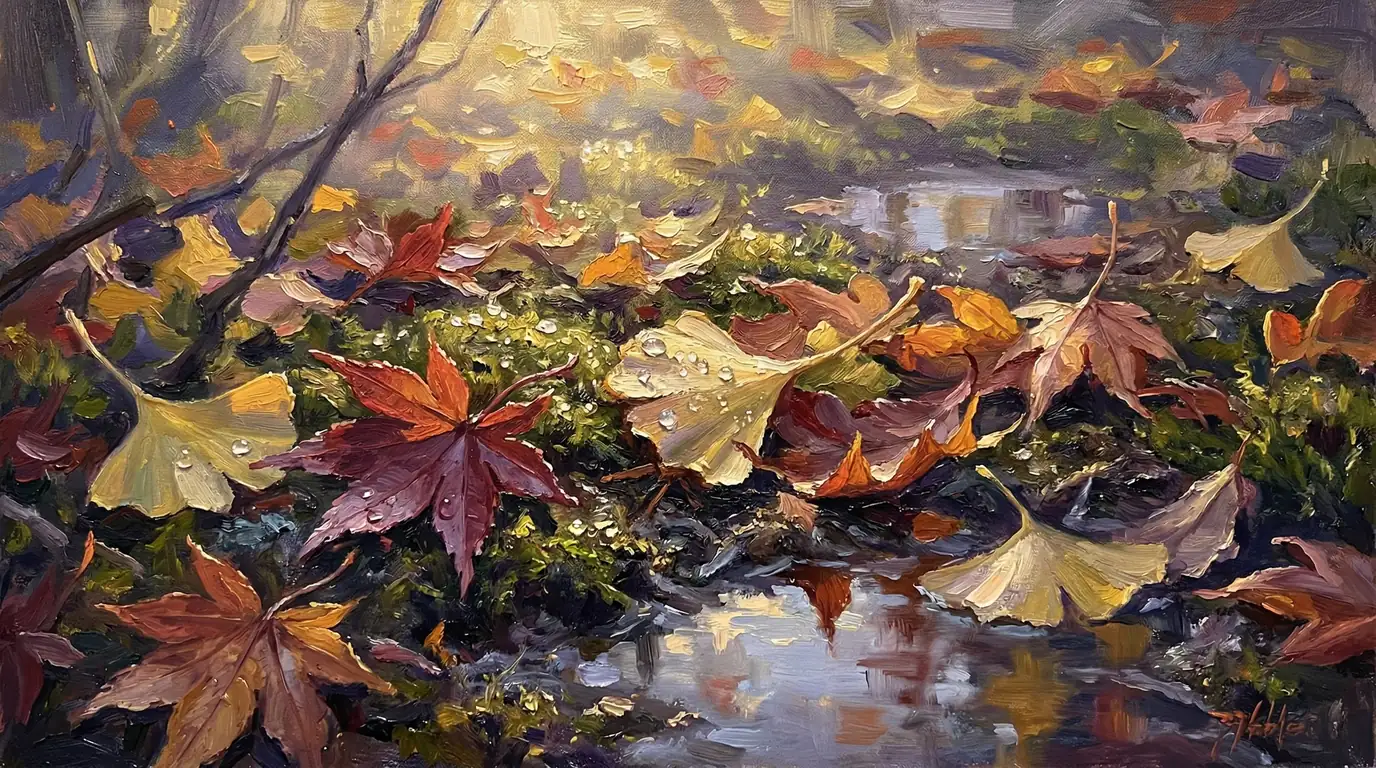 Golden Whispers on a Damp Canvas
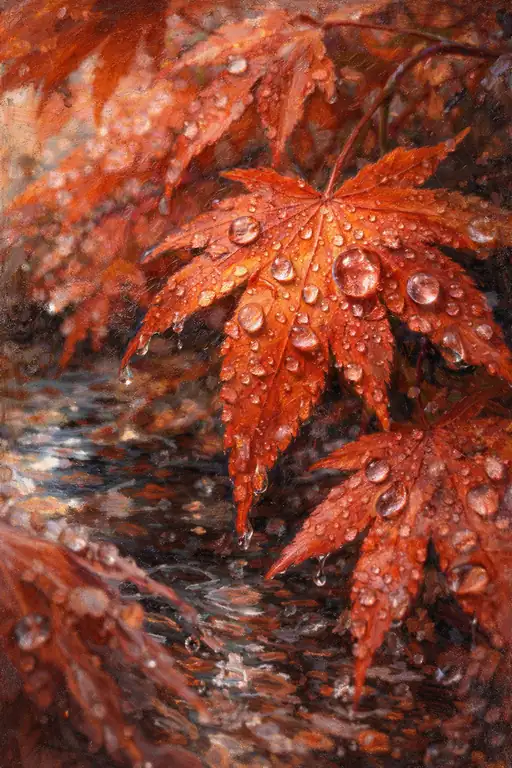 Glistening Embers of Fall
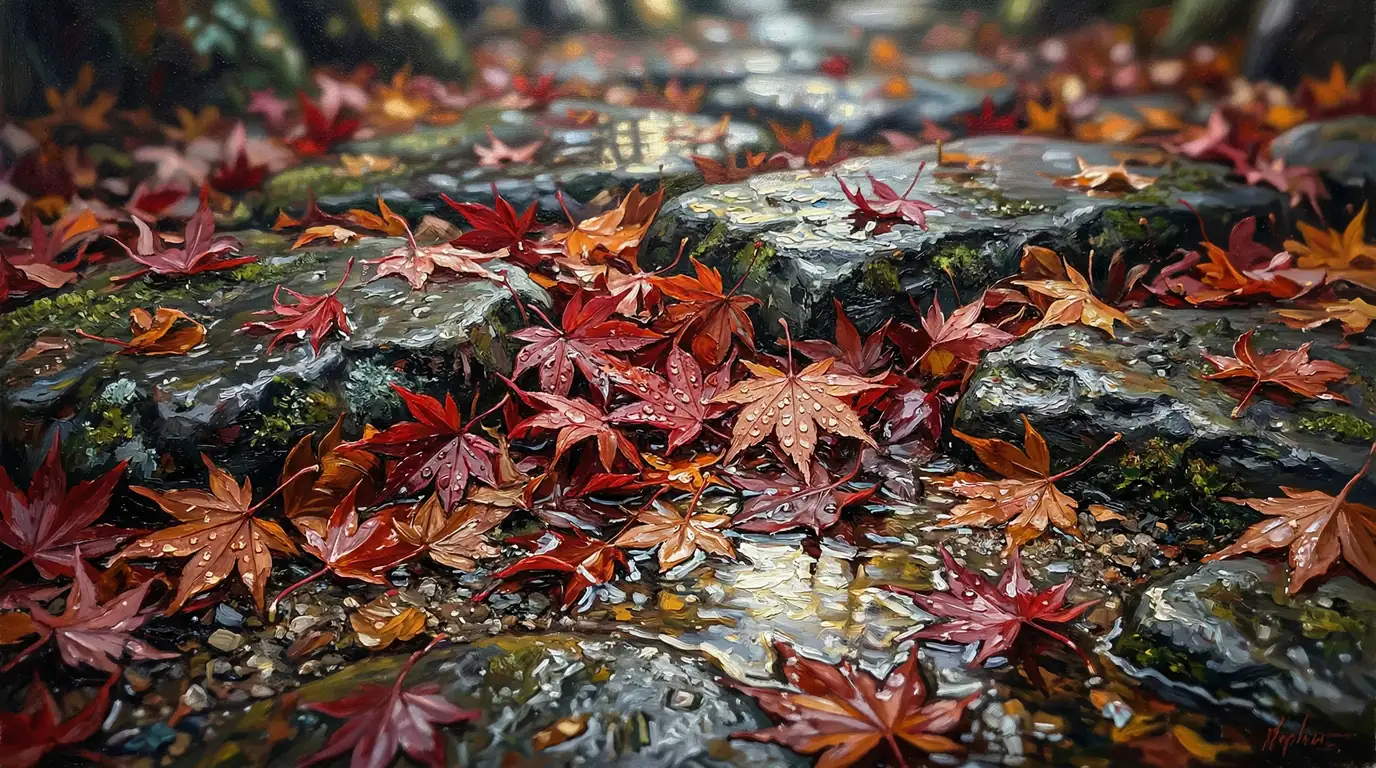 Crimson Tears on the Wet Earth
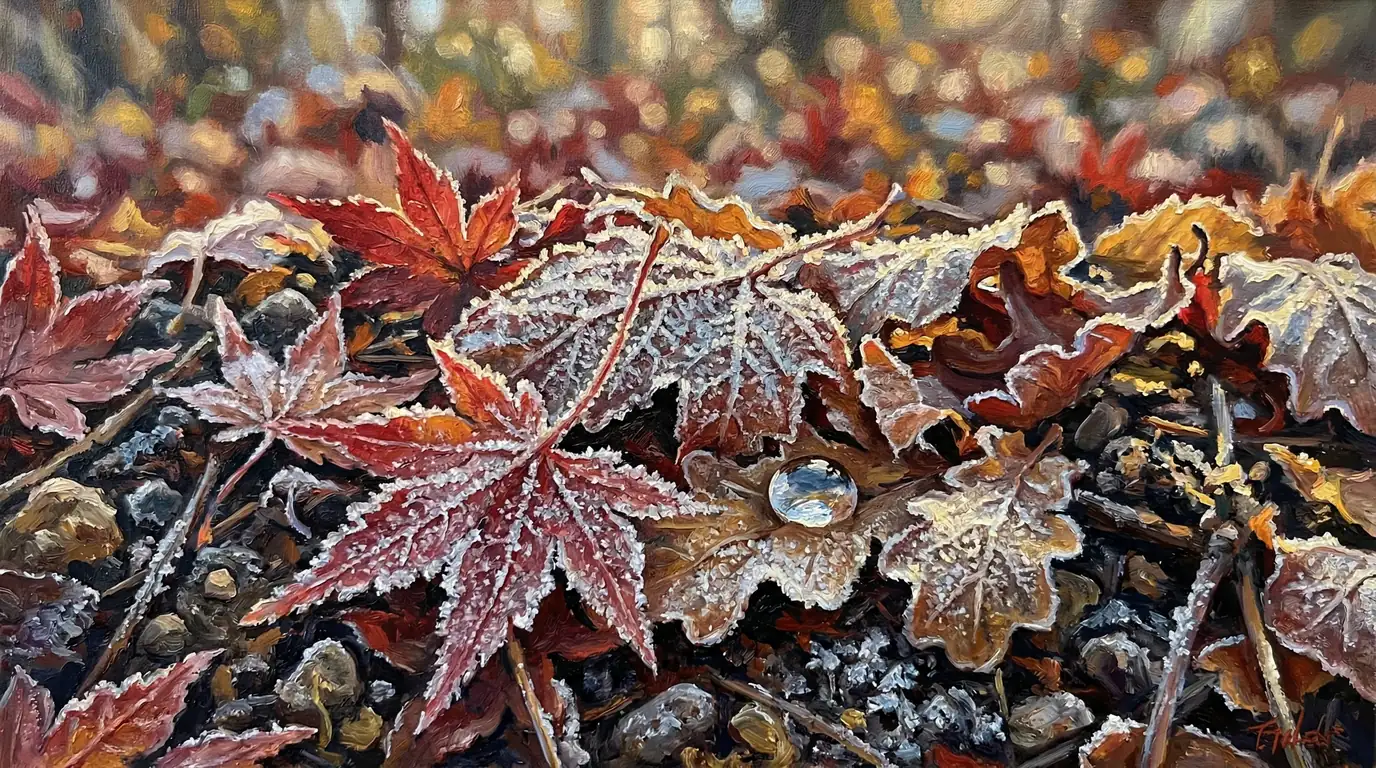 Frost's Cold Kiss on Autumn Fire
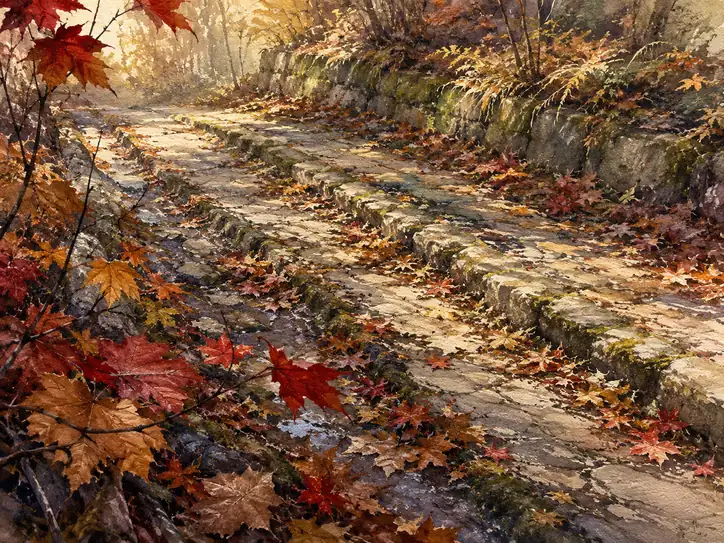 The Soft Footsteps of Autumn
 Solitary Flame in the Autumn Chill
 Whispers of the Wet Woods
 Whispers of the Autumn Dew