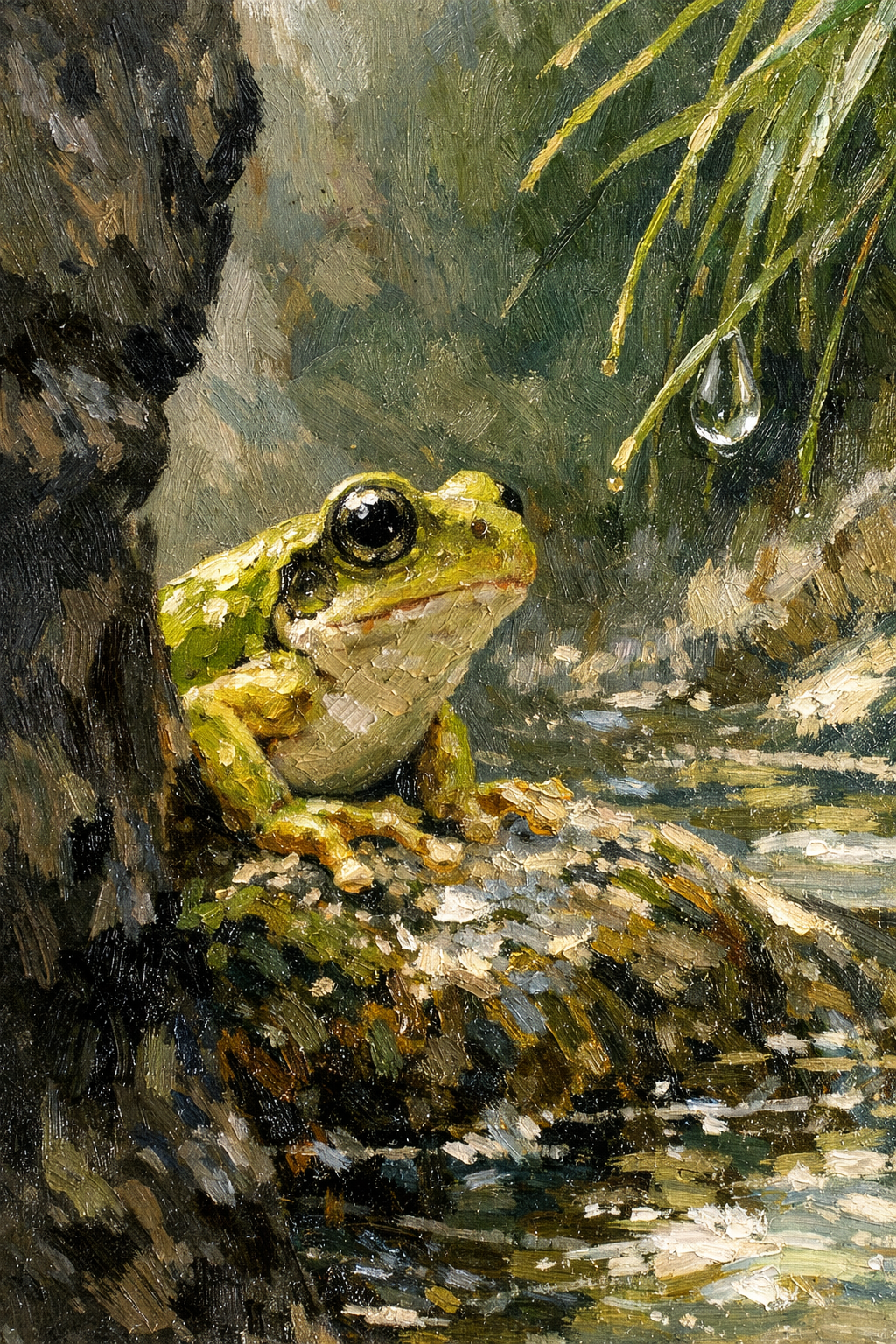
Emerald Guardian
Critique
1. Introduction This oil painting presents a captivating and textured depiction of a small green frog perched upon a mossy surface. The composition is characterized by a high degree of intimacy, focusing closely on the amphibian as it observes its surroundings within a damp, wooded environment. Through the use of vigorous brushwork and a rich, earthy color palette, the artist captures a fleeting moment of stillness in the natural world. This work exemplifies the beauty found in small, often overlooked creatures and their immediate habitats. 2. Description The central subject is a vibrant green frog with large, expressive dark eyes, positioned slightly to the left of the center. It rests on a textured, multi-colored rock or tree trunk covered in patches of moss and damp earth. In the upper right corner, thin, drooping leaves or blades of grass are visible, with a single, large water droplet hanging precariously from the tip of one. The background is a blurred and atmospheric blend of dark greens, greys, and browns, suggesting a moist and shadowed forest floor. 3. Analysis The artist employs a strong impasto technique, where thick applications of paint create a physical topography on the canvas that mirrors the rugged textures of the moss and the frog's skin. The color palette is dominated by various shades of green, yellow-ochre, and deep browns, which reinforces the organic theme of the piece. Light is handled with care, highlighting the wet surface of the frog and the transparency of the water droplet. The contrast between the sharp focus on the frog and the loose, gestural background adds depth and guides the viewer's attention. 4. Interpretation and Evaluation This painting can be interpreted as a study of resilience and quiet alertness in nature. The frog's steady gaze and the impending fall of the water droplet create a sense of silent anticipation. Technically, the work is highly successful in its ability to convey tactile qualities through purely visual means. The artist demonstrates a masterful control over light and shadow, particularly in the rendering of the amphibian's moist skin and the reflective properties of the droplet. The composition is well-balanced, with the vertical elements on the left providing a sturdy anchor for the scene. 5. Conclusion A close examination of this work reveals a profound appreciation for the intricate details of the natural environment. The initial attraction to the frog's charming appearance gives way to a deeper interest in the complex interplay of light and texture across the entire canvas. This painting stands as a technically proficient and emotionally resonant tribute to the small-scale wonders of the forest.
Same Subcategory
Similar Artworks
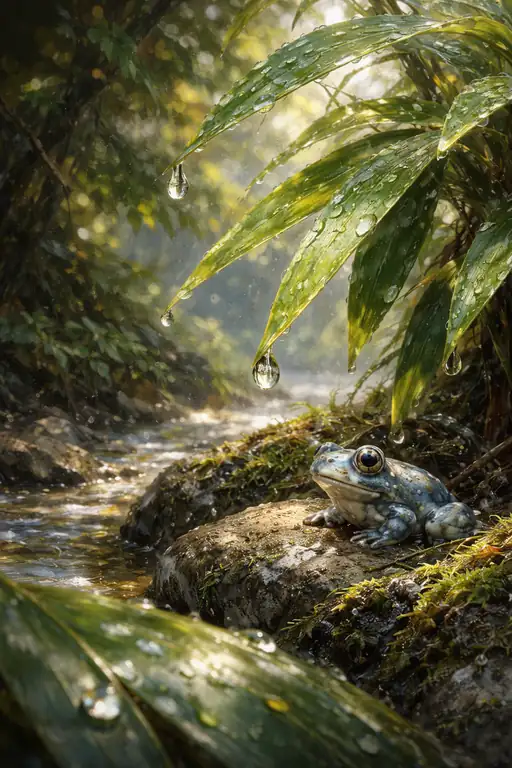 Patient Guardian of the Emerald Flow
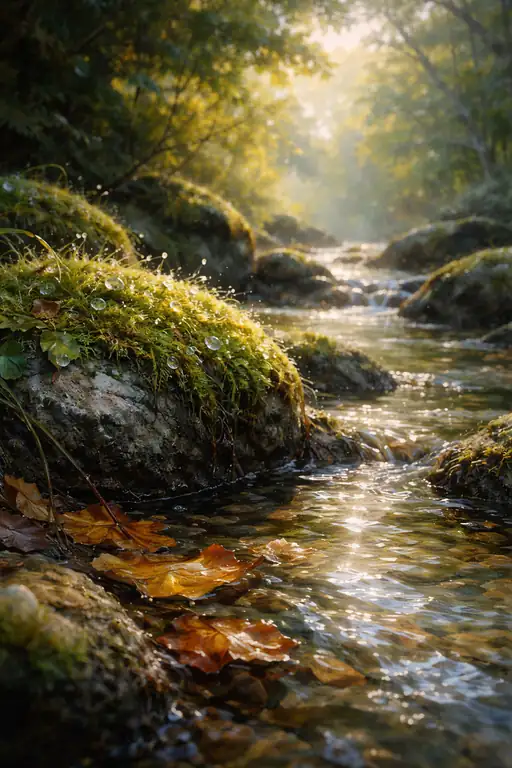 Autumn's Golden Breath over the Stream
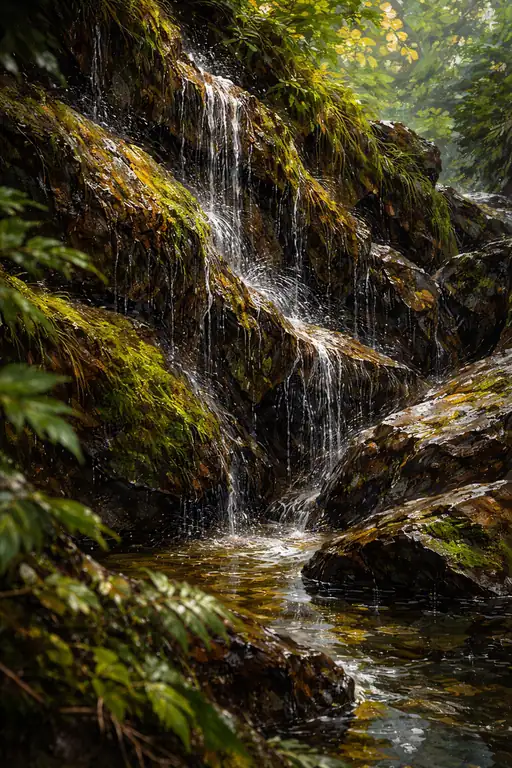 Whispers of the Mossy Stream
 The River Answers a Gentle Giant
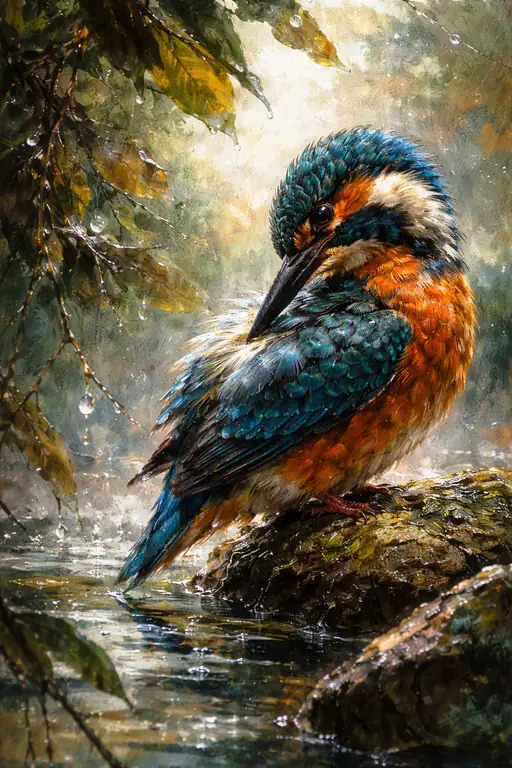 A Quiet Solace in the Silver Rain
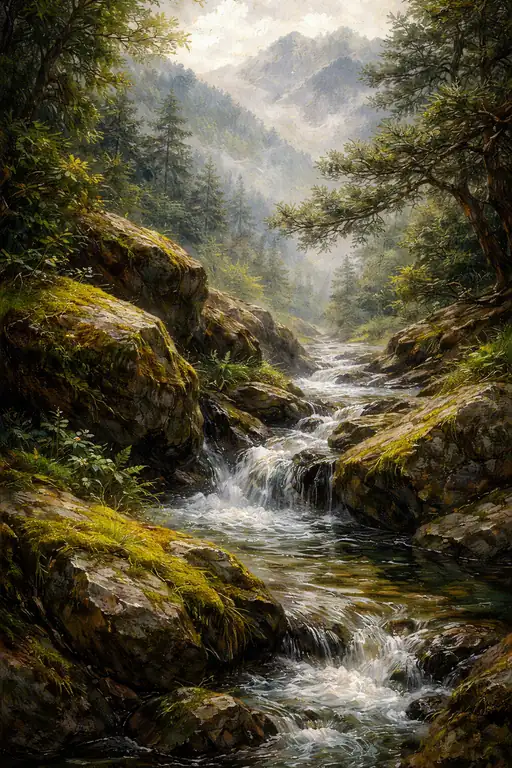 The Vehement Rush of the Mountain Stream
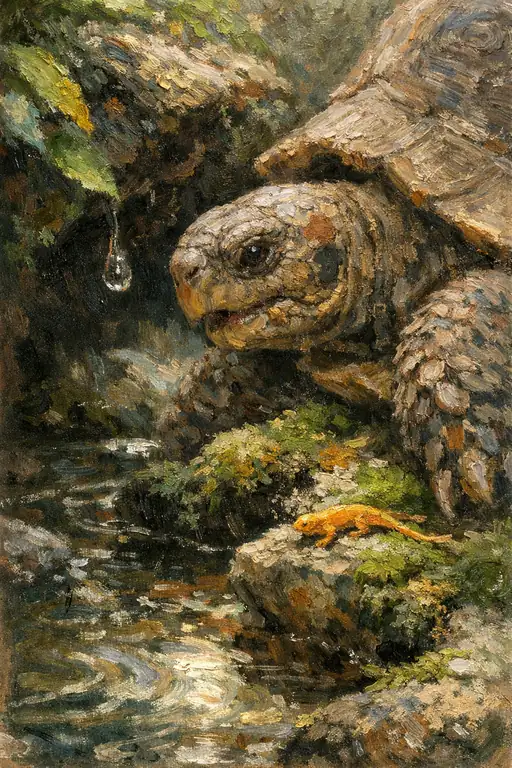 Whispers of the Eternal Shell
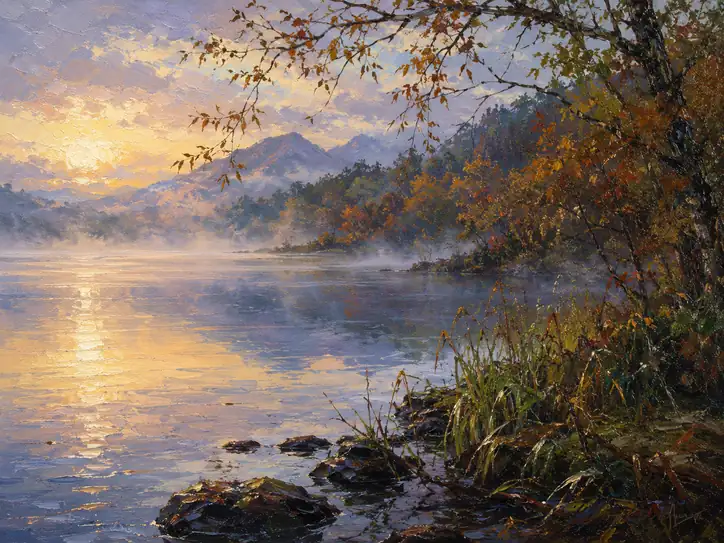 Solitude by the Fog-Bound Pond
 Golden Peace in the Pine-Framed Garden
 Sacred Whisper of the Forest Stream