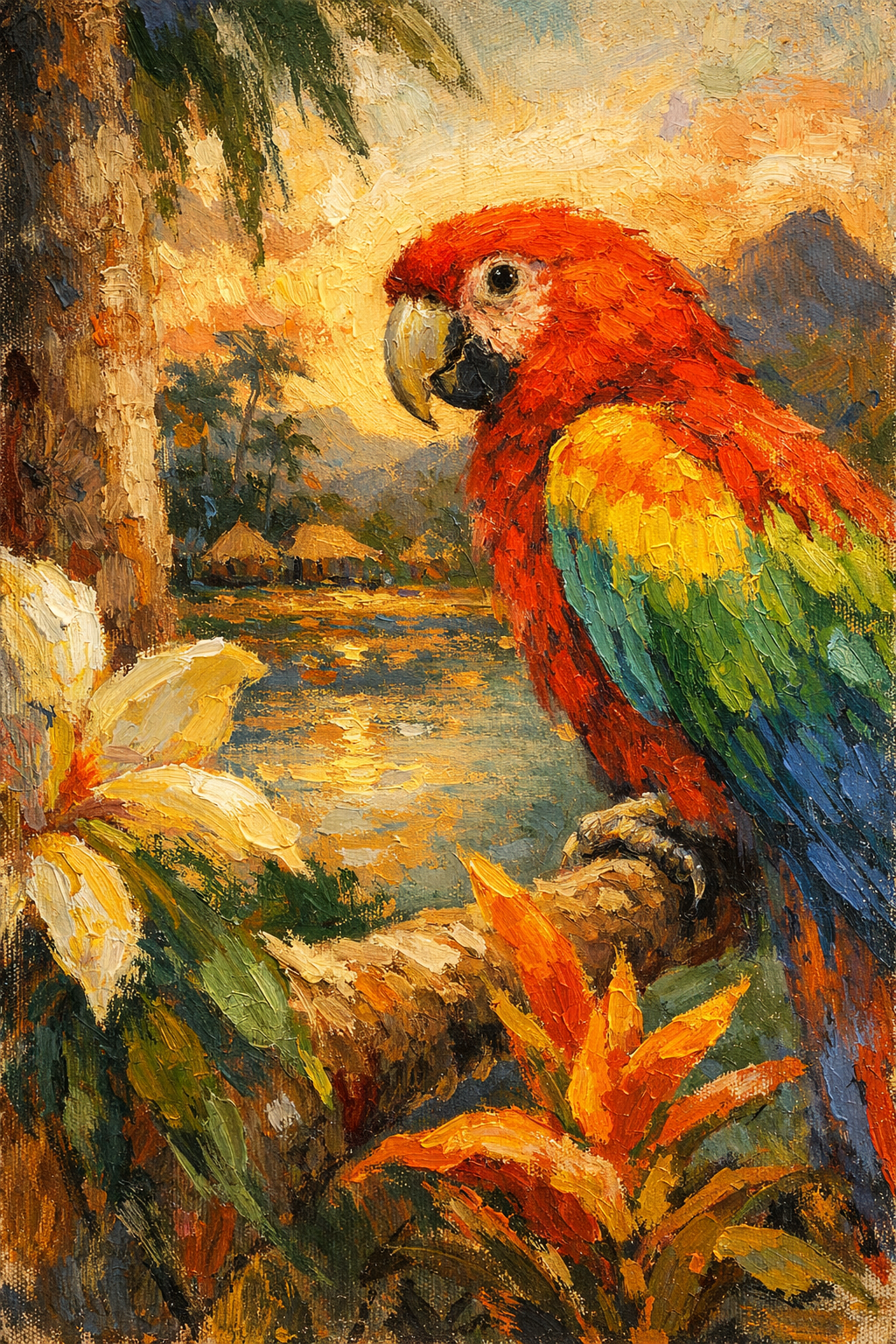
Crimson King of the Twilight Jungle
Critique
1. Introduction This oil on canvas painting presents a vivid close-up of a scarlet macaw perched prominently on a thick branch. Set against a lush tropical landscape at sunset, the work captures the exotic beauty and vibrant energy of the avian subject. The composition is executed in a highly textured impressionistic style, where thick applications of paint create a sense of movement and raw natural vitality. 2. Description The macaw occupies the right half of the frame, facing left with its sharp beak and intelligent eye clearly visible. Its plumage is a brilliant array of red, yellow, green, and blue, rendered with deep impasto strokes that mimic the texture of feathers. To the left, large white and yellow tropical flowers emerge, while the background reveals a tranquil body of water reflecting the golden light of the setting sun, framed by distant palm trees and small thatched huts. 3. Analysis The artist utilizes a warm, high-contrast color palette, where the fiery reds and oranges of the bird and sky are balanced by the deep greens and blues of the foliage and plumage. The lighting is dramatic, emanating from the horizon and illuminating the bird's side, creating strong highlights and deep shadows. The brushwork is exceptionally vigorous and expressive, with the physical thickness of the paint adding a three-dimensional quality to the surface. 4. Interpretation and Evaluation The painting successfully conveys the heat and intensity of a tropical environment through its bold use of color and texture. The macaw serves as a majestic focal point, symbolizing the untamed spirit of the wilderness. Technically, the work is impressive for its ability to maintain structural clarity despite the heavy, broken brushwork. The rhythmic application of paint creates a visual vibration that effectively mimics the shimmering heat and life of the tropics. 5. Conclusion From an initial impression of a colorful wildlife study, the painting reveals itself to be a sophisticated exploration of light and tactile form. The harmony between the subject's brilliance and the atmospheric background creates a deeply immersive experience. It demonstrates a mastery of the impasto technique to evoke both character and environment. Overall, the work is a powerful and emotive celebration of tropical life, leaving a lasting impression of sensory richness.
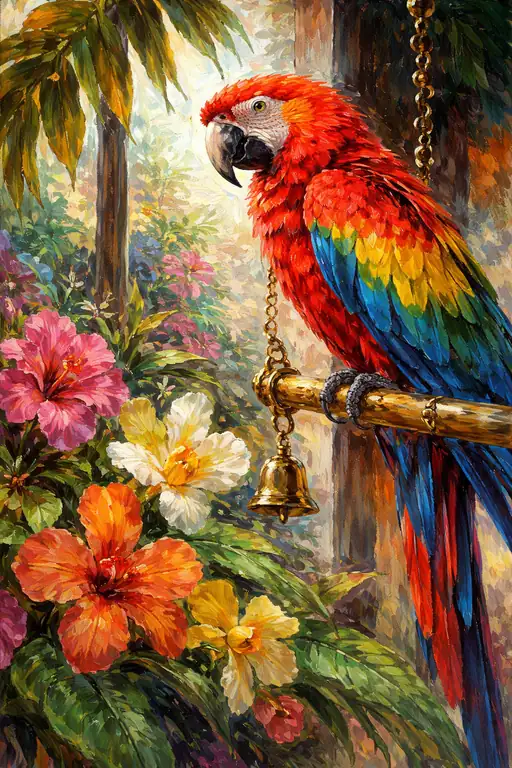 The Emerald Canopy's Crimson Guardian
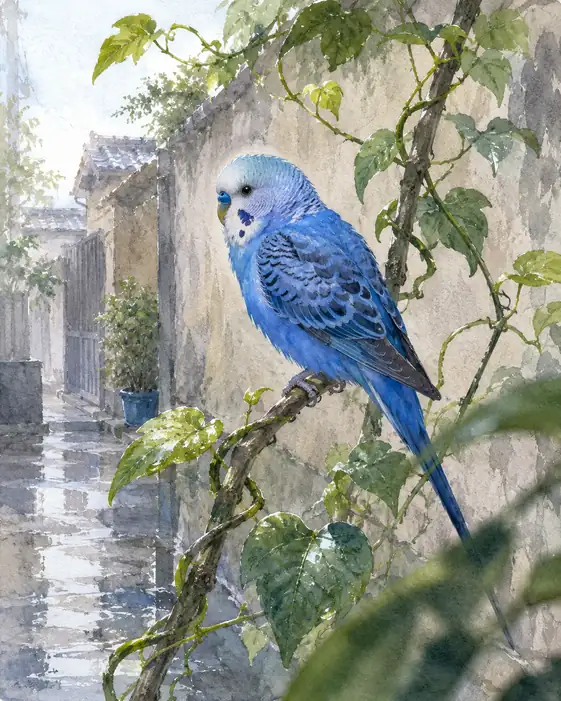 The Blue Bird Who Brought the Rain Home
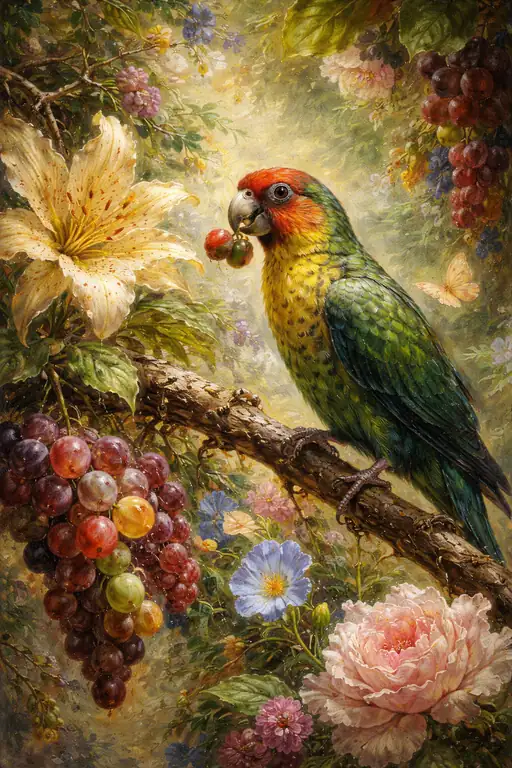 Symphony of the Sunlit Orchard
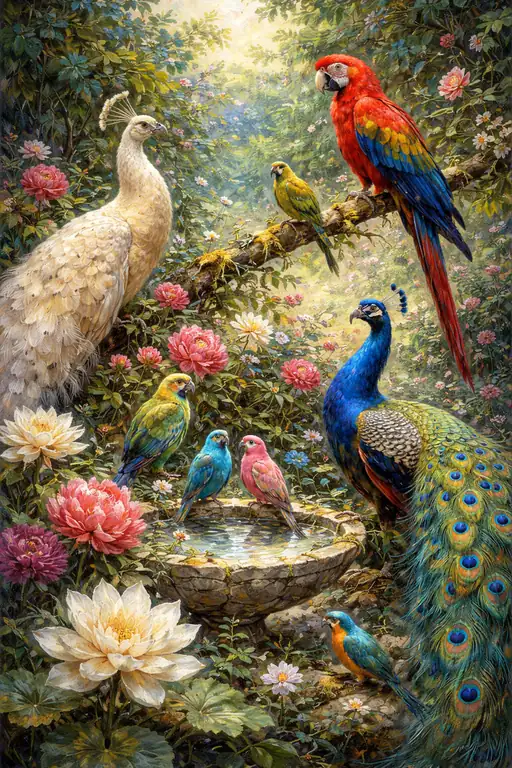 Symphony of the Sapphire Plumage
 River Guardian's Watch
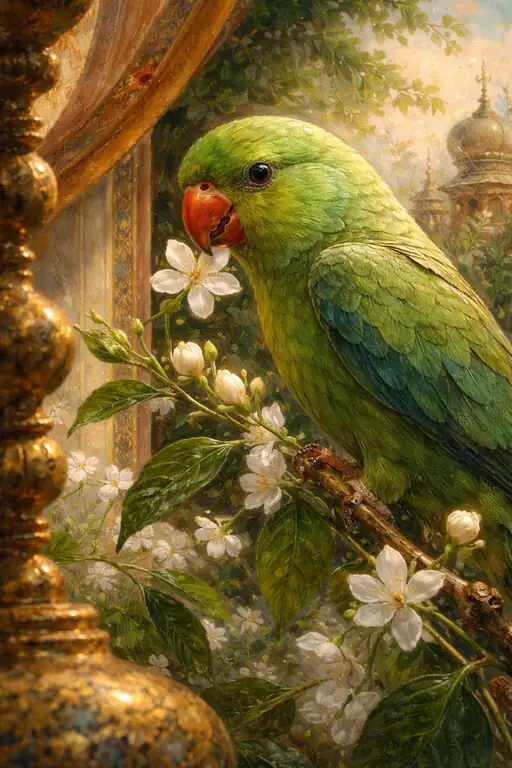 Guardian of the Jasmine Palace
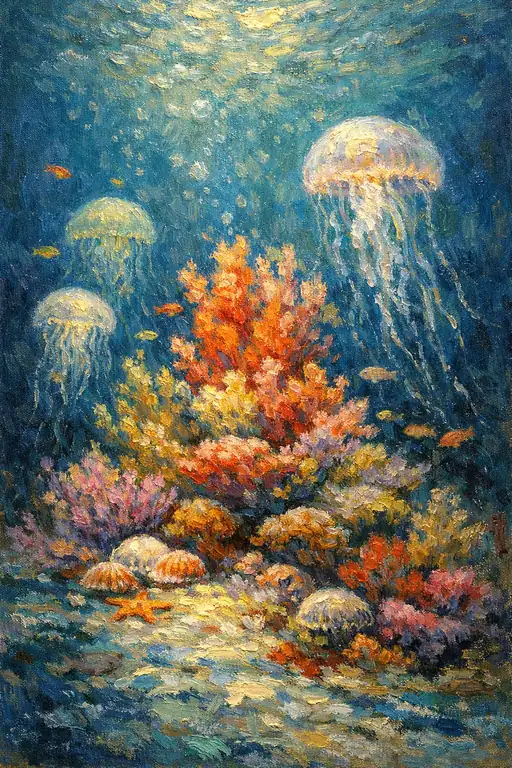 Dance of the Luminous Abyss
 Golden Ease on a Familiar Branch
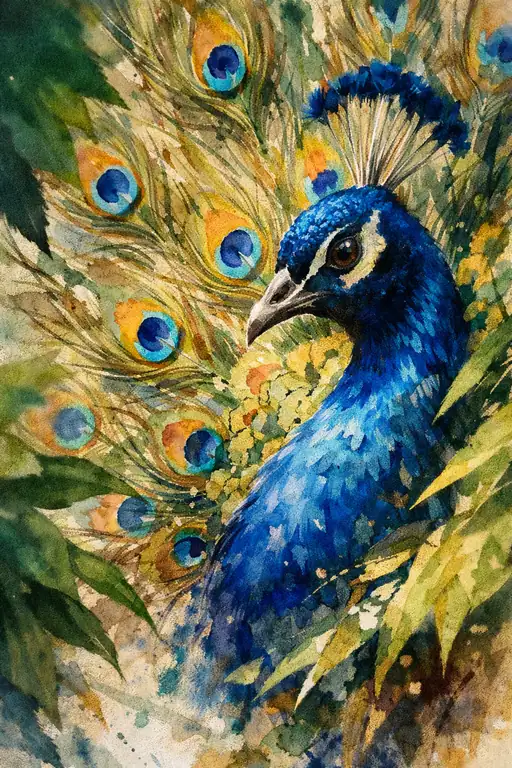 Sapphire Majesty Unveiled
 The Sky's Awakening
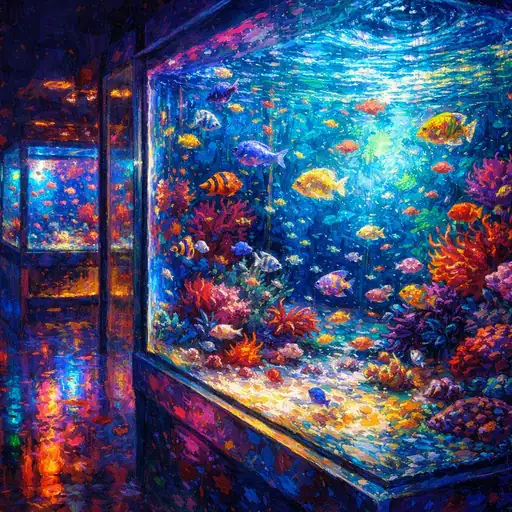 Neon Abyss