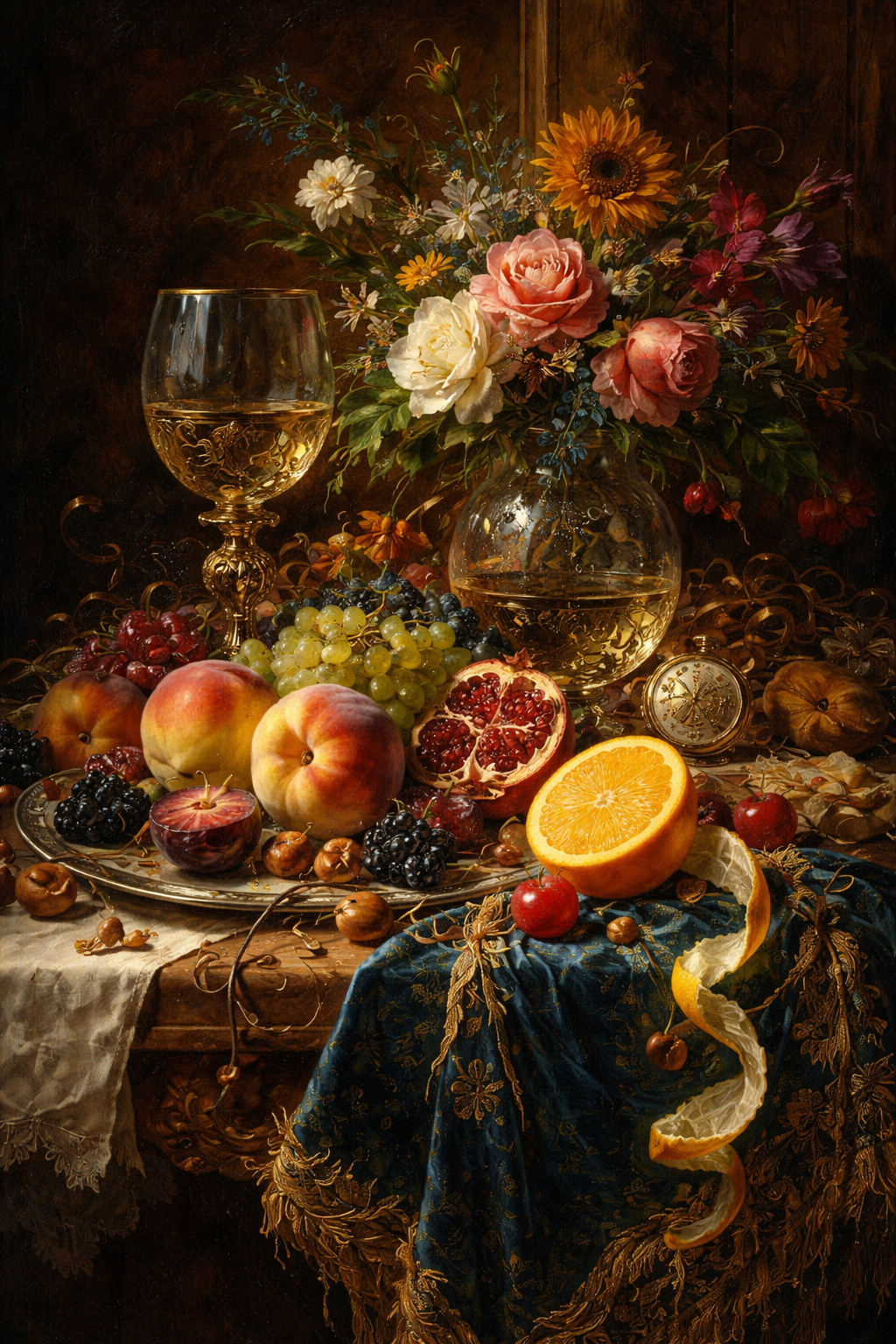
A Banquet of Fading Splendor
Critique
1. Introduction This vertical still life painting presents a sumptuous arrangement of flowers, fruits, and luxury objects set against a dark, atmospheric background. The work explores the themes of abundance and the fleeting nature of beauty through a highly detailed and classically inspired composition. It invites the viewer to dwell on the varied textures and rich colors of a festive table, evoking the spirit of historical grand still lifes. 2. Description The upper half of the canvas is occupied by a vibrant bouquet of roses, sunflowers, and delicate blossoms in a glass vase. Below, a diverse collection of fruit, including peaches, grapes, a split pomegranate, and a sliced orange, is spread across a silver platter and a wooden table. A decorative gold chalice filled with wine stands on the left, while a golden pocket watch and a peeled orange rind rest on the right. A deep blue cloth with intricate gold embroidery and fringe drapes over the table edge, grounding the entire arrangement. 3. Analysis The composition is built on a triangular structure, with the flowers at the peak and the base extending across the width of the table. Strong chiaroscuro lighting is used to define the volumes of the fruit and the transparency of the glass, creating a sense of dramatic three-dimensionality. The color palette is exceptionally rich, featuring deep reds, oranges, and golds that contrast sharply with the dark background and the cool blue of the fabric. Meticulous brushwork is evident in the rendering of every surface, from the velvety skin of the peaches to the metallic glint of the watch. 4. Interpretation and Evaluation This painting demonstrates an extraordinary mastery of traditional still life techniques, particularly in its handling of light and material texture. The inclusion of the pocket watch adds a layer of symbolic meaning, suggesting the passage of time amidst such material wealth. The technical rendering of the glass and the pomegranate seeds is particularly impressive, showing a high level of precision and observational skill. The harmonious balance of warm and cool tones ensures that the complex arrangement remains visually unified and engaging. 5. Conclusion Ultimately, the work succeeds in creating a vivid sensory experience that celebrates both natural and man-made beauty. It transforms a group of domestic objects into a monumental study of form, light, and symbolism through refined technical execution. While the initial impression is one of overwhelming luxury, the careful placement of each element reveals a thoughtful meditation on the richness of life. This still life stands as a masterful example of how classical themes can be rendered with modern clarity and depth.
Same Subcategory
Similar Artworks
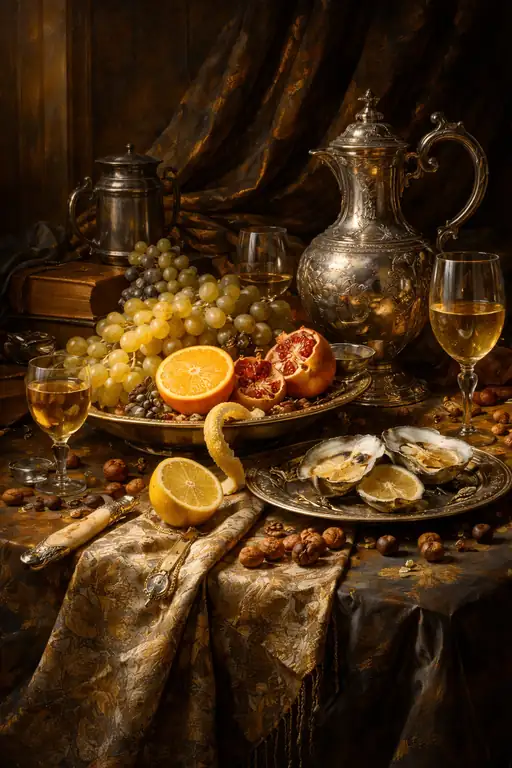 Vanitas in Silver and Crimson
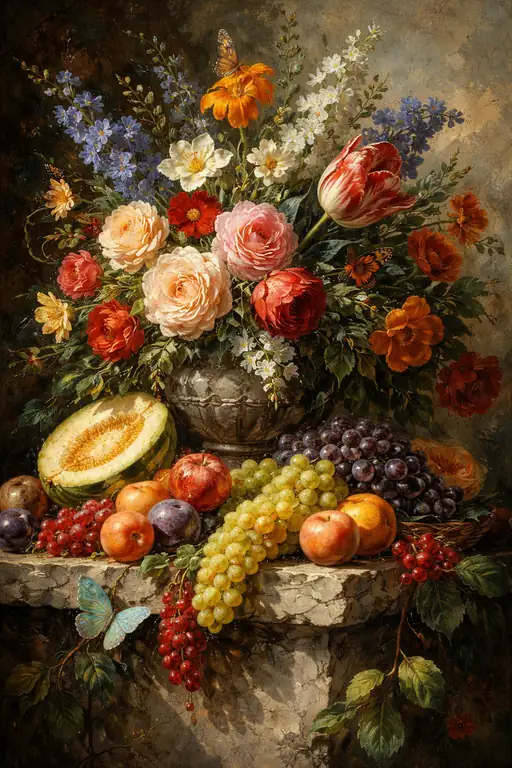 Symphony of the Bountiful Harvest
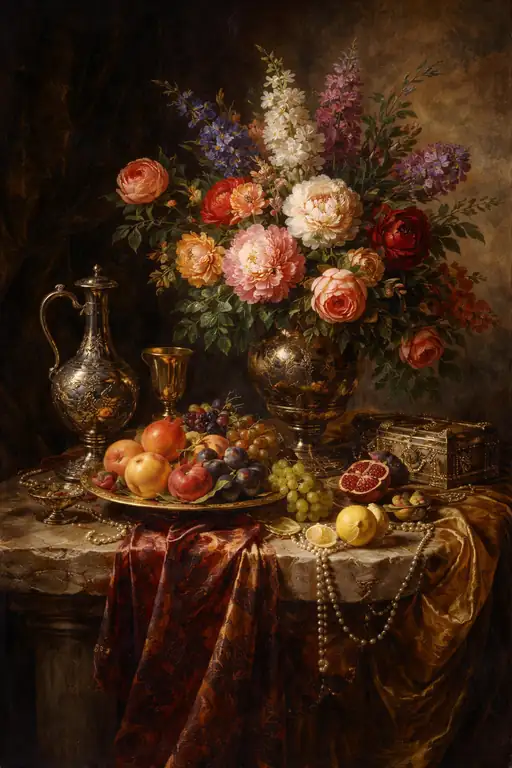 Flowers, Fruits, and Precious Objects
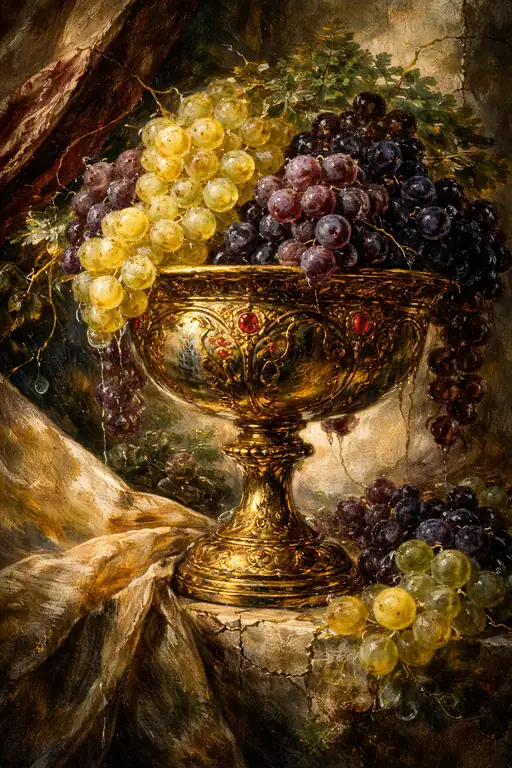 The Golden Tears of Bacchus
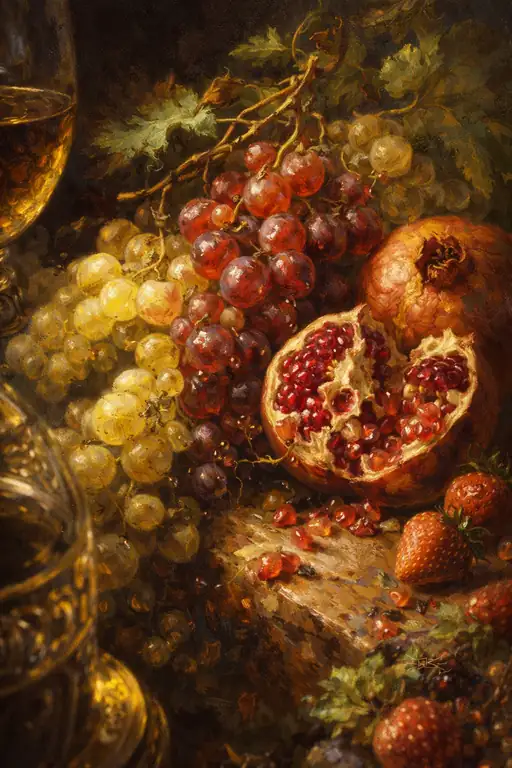 Sunlight Spilled in Crimson Seeds
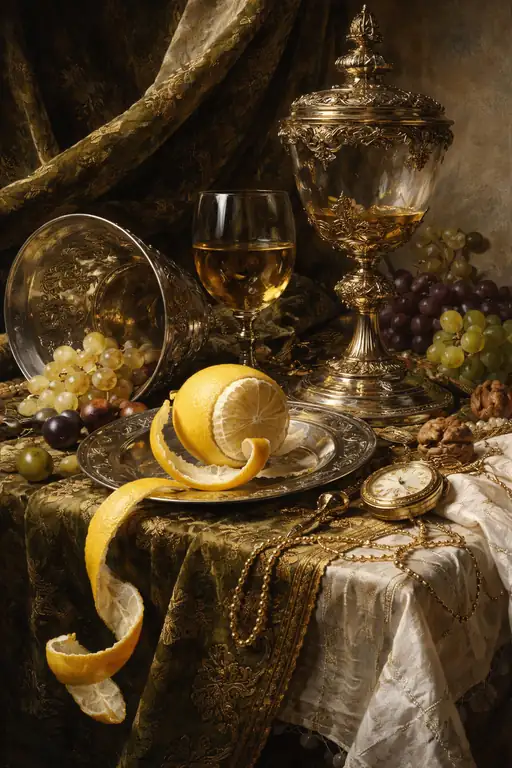 Echoes of the Golden Age: The Fleeting Citrus
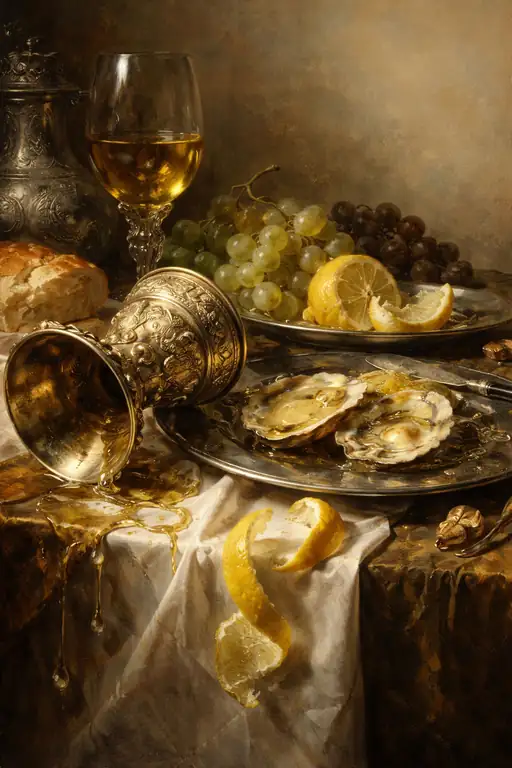 The Fallen Goblet of Vanity
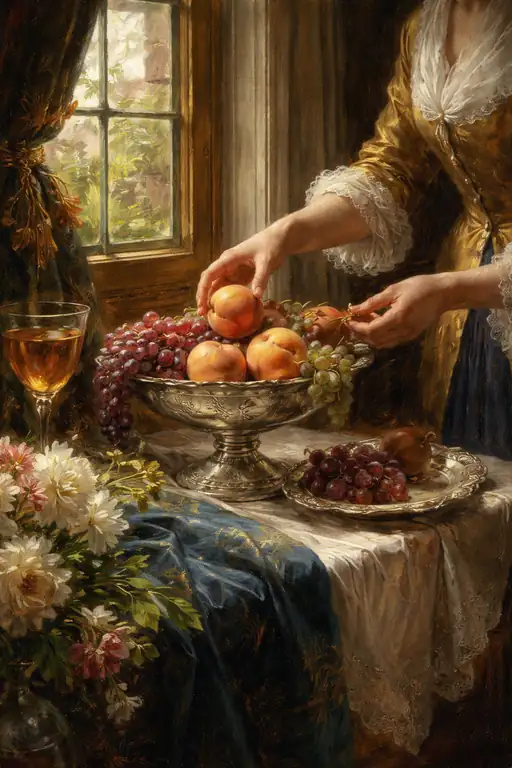 Golden Afternoon Preparations
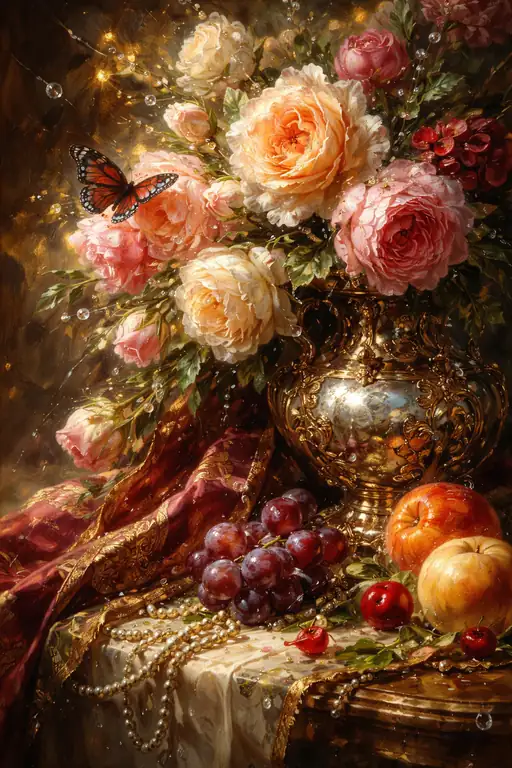 Abundance and Ephemera: The Golden Hymn
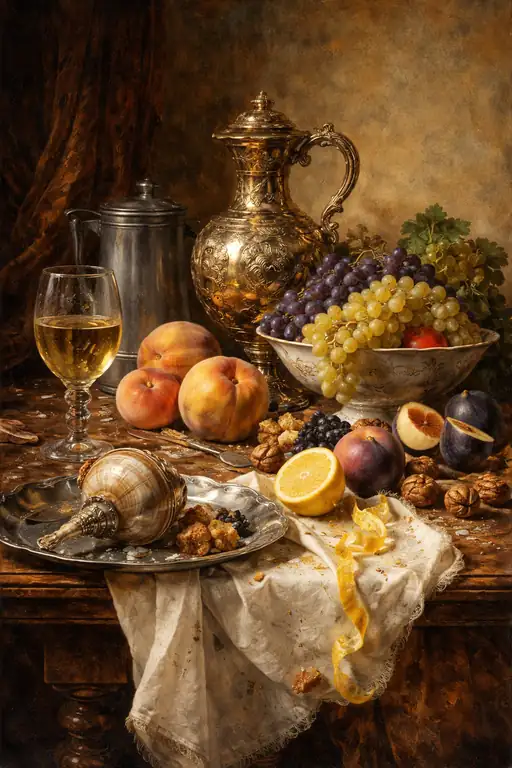 Classical Still Life with a Golden Ewer, Fruit, and Wine