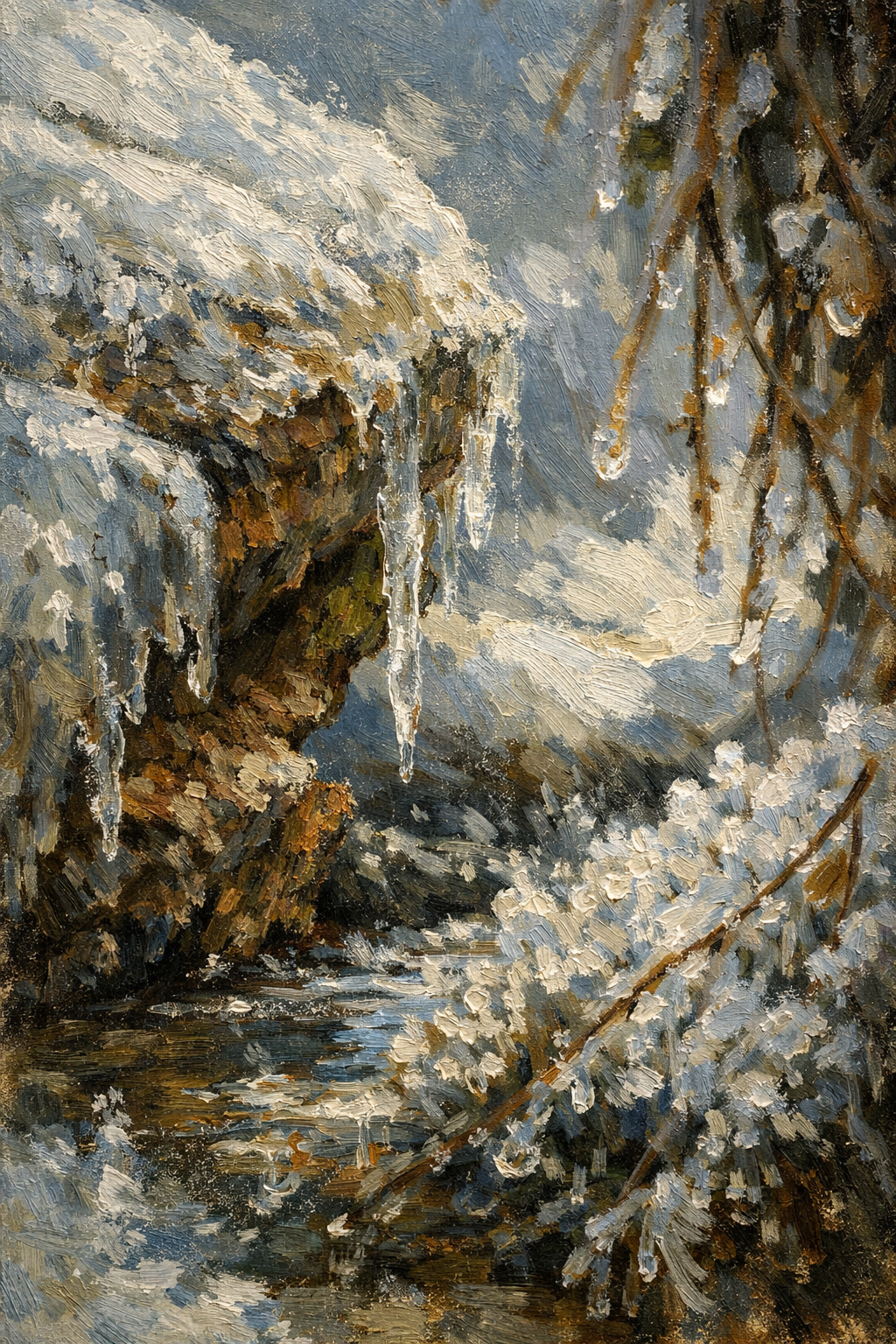
Silent Tears of the Frozen Realm
Critique
1. Introduction This evocative winter painting captures a close-up view of ice and snow, focusing on the formation of long icicles hanging from a rugged, snow-capped edge. The work explores the stark beauty of the cold season through a tactile and textured approach to landscape painting. It invites the viewer to appreciate the intricate details of frozen moisture and the silent transformation of the environment under winter’s grip. 2. Description On the left side of the frame, a dark, mossy rock or structure is heavily laden with a thick layer of white snow, from which several translucent icicles descend. The largest icicle drips toward the center, its surface catching the faint, cool light of a winter day. In the lower right, frost-covered branches or reeds lean diagonally across the scene, their forms obscured by clumps of bright white snow. The background is a hazy blend of muted blues and greys, suggesting a cold, clouded sky or a distant, snow-filled forest. 3. Analysis The composition relies on a strong vertical element—the icicles—contrasted with the diagonal lines of the snowy branches in the foreground. Thick, impasto brushwork is used throughout to give the snow a physical presence, making it appear heavy and frozen. The color palette is restricted to a range of cool tones, with the brownish hues of the rock providing the only warmth in an otherwise icy landscape. Light is handled subtly, emphasizing the transparency of the ice against the opaque weight of the surrounding snow. 4. Interpretation and Evaluation The painting demonstrates a remarkable ability to convey the physical sensation of cold through visual texture. The artist’s use of bold, expressive strokes to define the snow and ice adds a modern, almost abstract quality to the traditional winter scene. Technical skill is evident in the rendering of the icicles, which appear both fragile and enduring. The successful balance between the dark, solid rock and the light, ephemeral snow creates a compelling visual tension that sustains the viewer’s interest. 5. Conclusion Ultimately, the work serves as a powerful reminder of the quiet majesty found in the smallest details of the natural world. It transforms a common winter occurrence into a subject of profound aesthetic study through careful lighting and vigorous technique. While the initial impression is one of a harsh and freezing environment, the delicate interplay of light and form eventually reveals a serene and fragile beauty. This piece stands as a masterful exploration of the atmospheric and textural possibilities of winter landscape art.
Same Subcategory
 Winter's Soft Embrace
Similar Artworks
 Golden Glow in the Frosty Woods
 Crystalline Memories of a Winter Morning
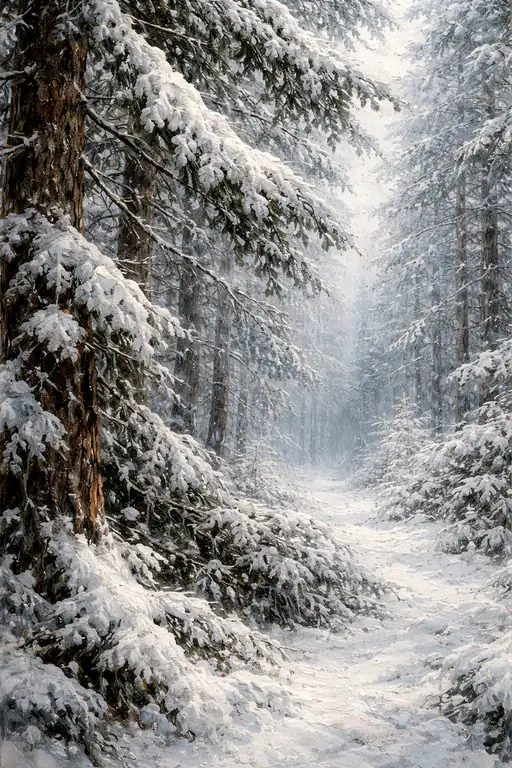 Path Through the Winter Woods
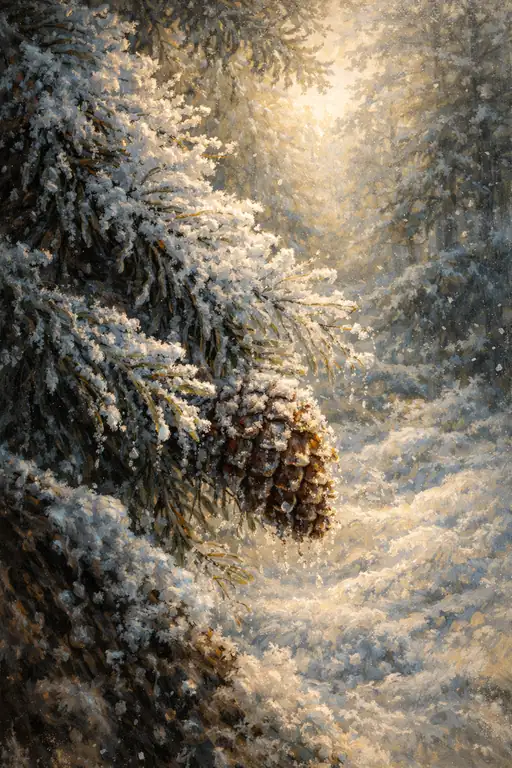 Frozen Whispers of the Winter Sun
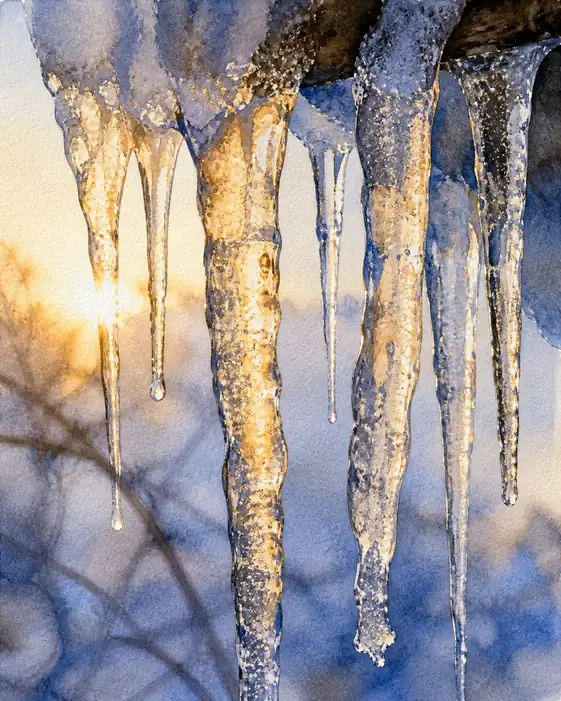 The Golden Threshold: Where Ice Meets Fire
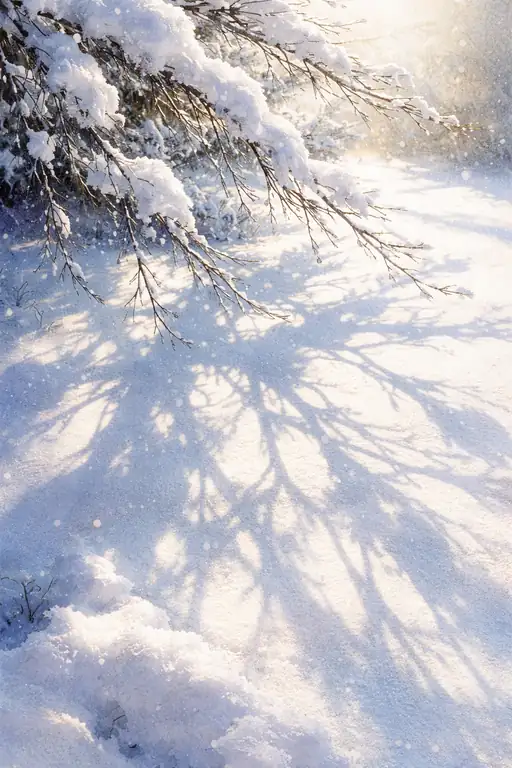 Whispers of the Golden Frost
 Crystal Snowflakes in Macro
 Winter's Golden Pulse
 The Geometry of a Winter Dream
 Where the Frost Remembers Spring