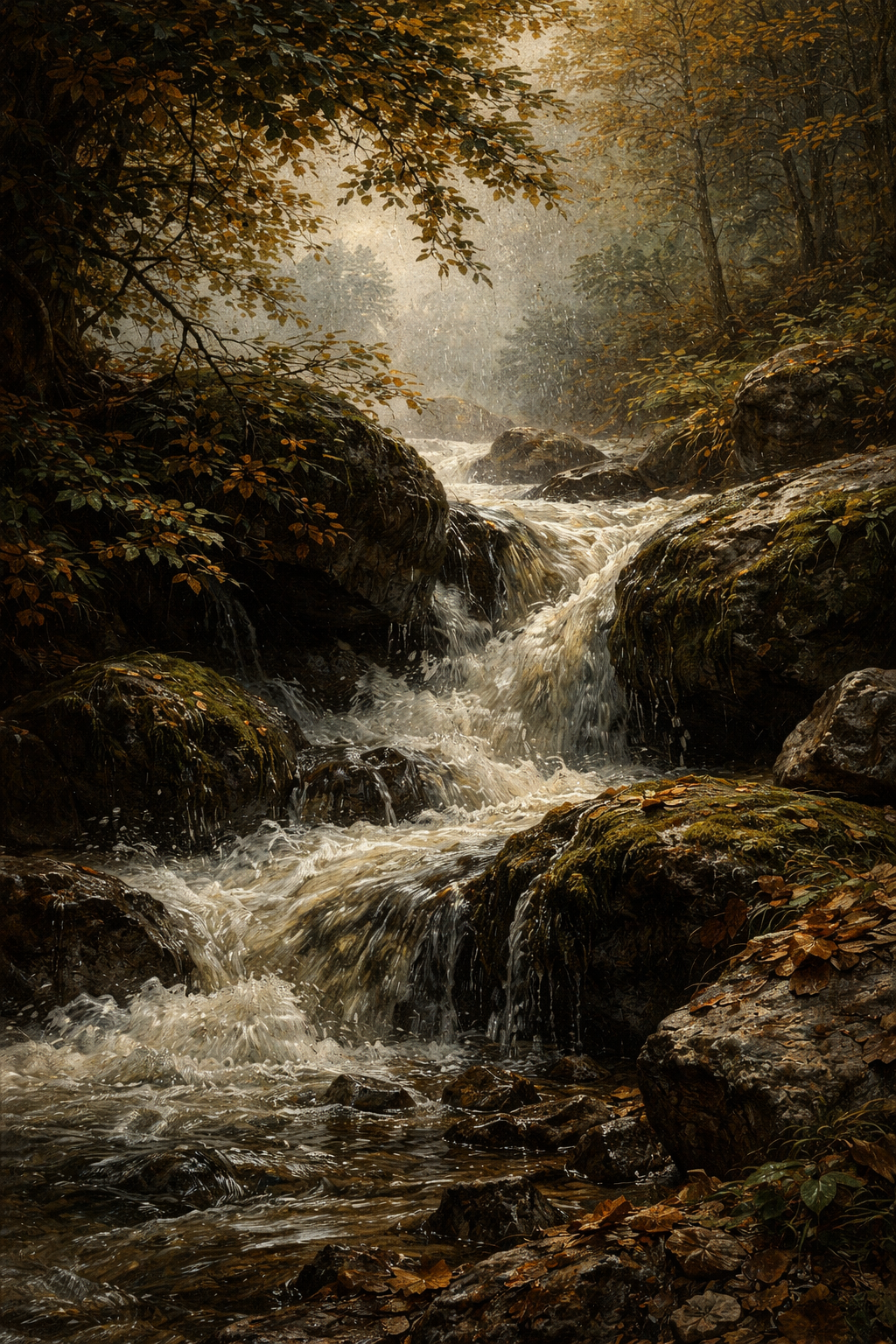
The Whispering Veils of Autumn
Critique
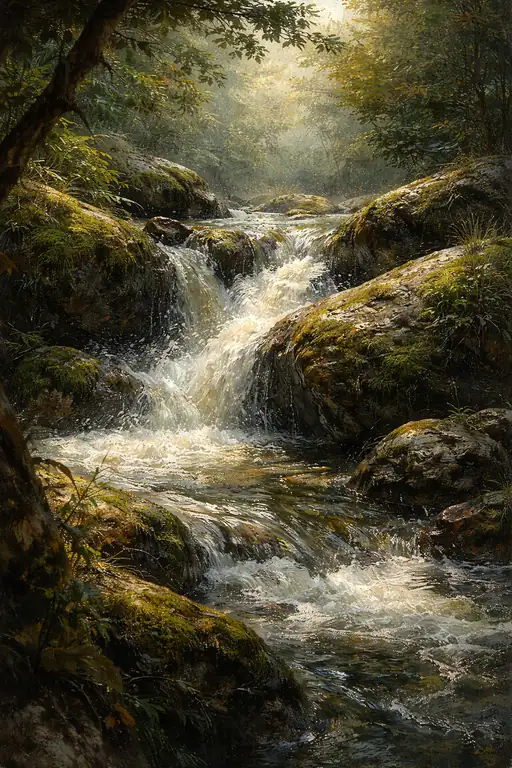
1. Introduction This vertical landscape painting presents a vivid depiction of a forest stream cascading over a series of rocky steps during the autumn season. The work focuses on the dynamic movement of water within a densely wooded environment, capturing a fleeting moment of natural energy. It serves as an exploration of the various textures found in a wilderness setting, from the hard surfaces of wet stones to the delicate forms of falling leaves. 2. Description A central stream of white, frothy water flows from the background toward the viewer, breaking into several small falls as it encounters large, moss-covered boulders. On either side, the banks are crowded with trees whose leaves have turned to shades of gold, brown, and burnt orange. Atmospheric light filters through the upper canopy, creating a misty glow that illuminates the spray of the water and the distant forest. Scattered autumn leaves rest upon the dark, damp rocks in the foreground, adding dots of warm color to the earthy tones. 3. Analysis The composition utilizes a vertical orientation to mirror the downward trajectory of the waterfall, drawing the viewer’s eye through the center of the frame. There is a clear contrast between the blurred, energetic motion of the cascading water and the sharp, static details of the surrounding geology and flora. The color palette is dominated by warm autumnal hues which are balanced by the cool, dark shadows beneath the rocks and the brilliant white of the rapids. The use of light creates a strong sense of depth, with the background receding into a soft-focus haze. 4. Interpretation and Evaluation The painting succeeds in evoking a sensory experience of the forest through its meticulous attention to light and moisture. The technical rendering of the water’s surface, particularly where it splashes against the rocks, demonstrates a high level of observational skill. Furthermore, the harmonious integration of the chaotic water flow with the structured forest elements reflects a balanced understanding of natural composition. The work’s ability to capture both the grand scale of the landscape and the minute details of the autumn foliage is particularly noteworthy. 5. Conclusion Ultimately, the piece offers a contemplative look at the seasonal transformation of the natural world and the perpetual motion of water. It effectively communicates the coolness and humidity of the forest air through visual cues alone. While the initial impression is one of untamed power, a closer look reveals a carefully ordered aesthetic that emphasizes the beauty of natural cycles. This landscape stands as a refined example of how light and movement can be synthesized to create a compelling sense of place.
Same Subcategory
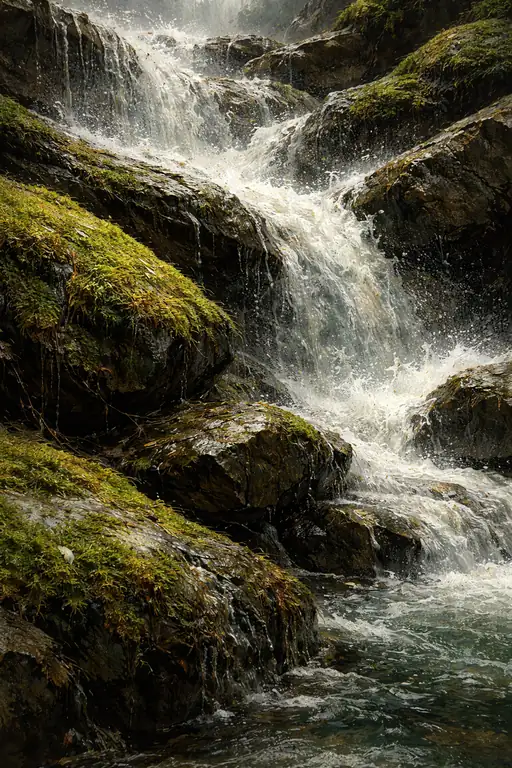 Embrace of the Emerald Cascade
Similar Artworks
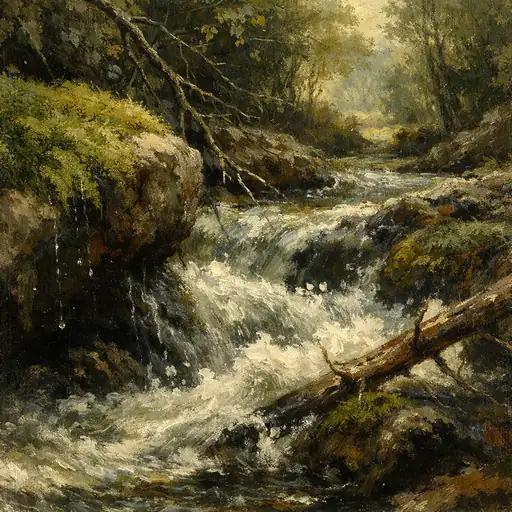 Pulse of the Untamed Waters
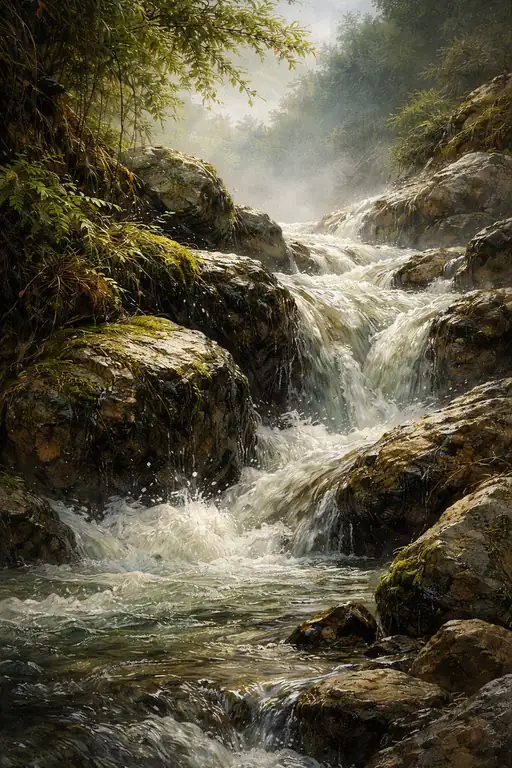 The Timeless Spirit of the Rushing Stream
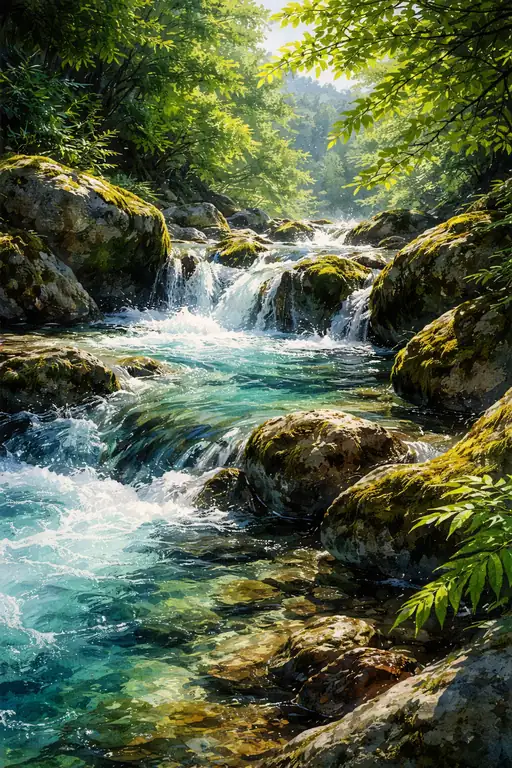 Rushing Waters: A River Cutting Through a Steep Moss-Covered Gorge
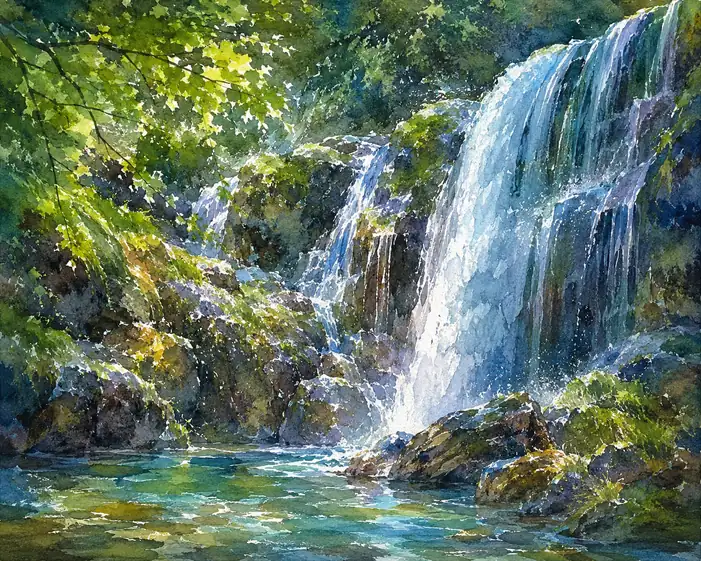 Breath of the Emerald Cascade
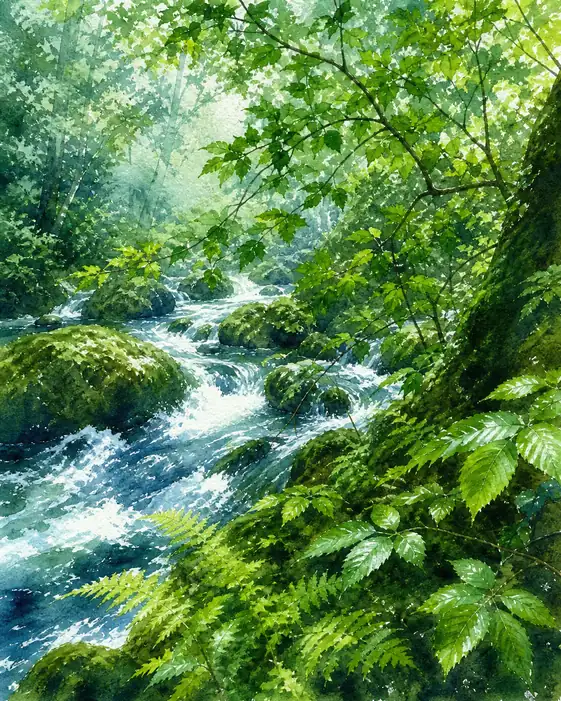 The Verdant Symphony of the Mountain Brook
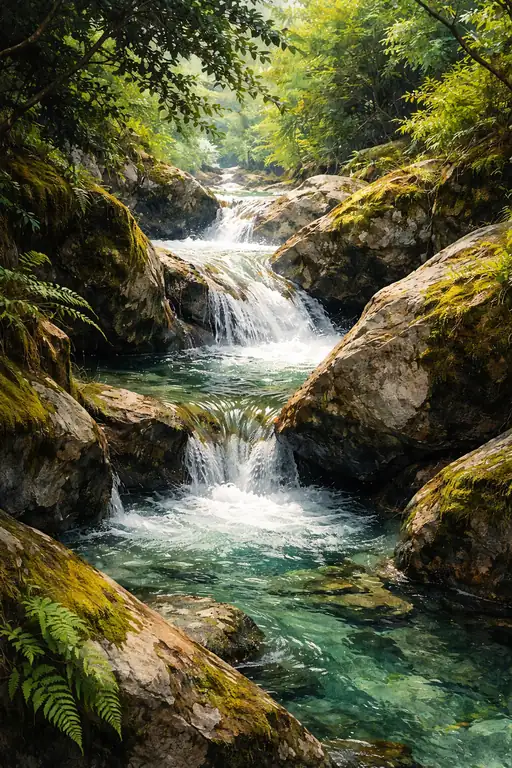 A Moment of Grace and Thought
 The Emerald Cascade of the Hidden Sanctuary
 Light Cascading Through the Emerald Gorge
 The Radiant Heart of the Deepwood
 Eternal Flow of the Forest