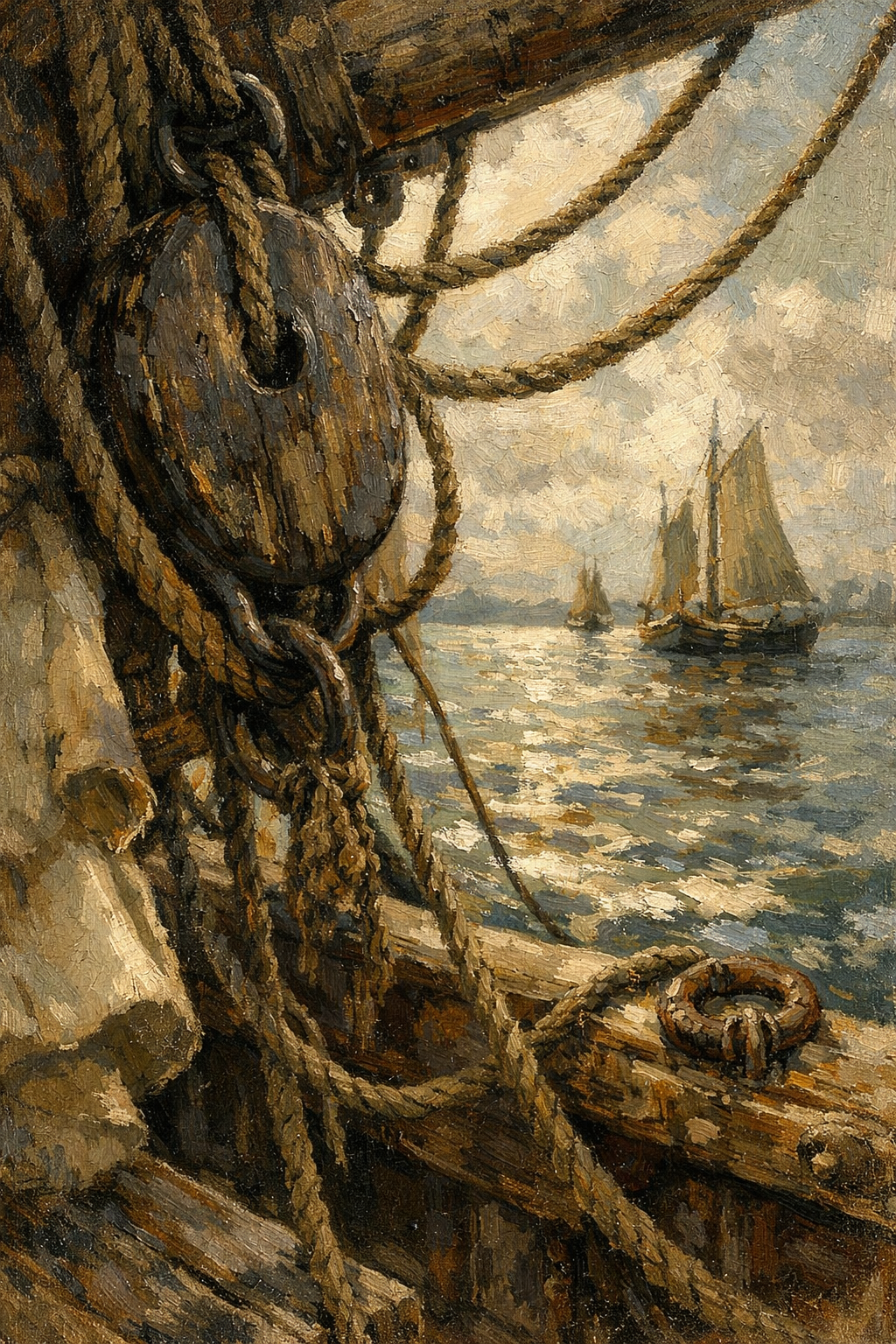
Dance of the Rigging in the Sea Breeze
Critique
1. Introduction This maritime oil painting captures a serene yet dynamic moment at sea, focusing on the intricate details of a sailing vessel's rigging. The work emphasizes the historical and atmospheric qualities of traditional seafaring life through a specialized lens. It invites the viewer to experience the tactile nature of maritime equipment while simultaneously gazing toward the vast horizon. 2. Description In the immediate foreground, a weathered wooden block and thick, coiled ropes dominate the left side of the composition. These elements are rendered with high contrast and physical presence, showing the wear of sea salt and sun. The background reveals a sparkling expanse of ocean where two masted sailing ships glide across the water under a bright, clouded sky. Sunlight reflects brilliantly on the gentle waves, creating a path of golden highlights that leads the eye toward the distant vessels. 3. Analysis The composition utilizes a strong foreground-to-background relationship to create a sense of depth and scale. The heavy, dark tones of the rigging contrast sharply with the luminous, airy quality of the sea and sky. Broad and textured brushstrokes define the surfaces, particularly on the wooden deck and the water's surface, lending an impressionistic vitality to the scene. The diagonal lines created by the ropes and the ship's railing guide the viewer's focus into the open maritime landscape. 4. Interpretation and Evaluation This painting demonstrates exceptional skill in capturing the interplay between light and texture. The artist’s choice to focus on the mechanical aspects of the ship adds a grounded, realistic dimension to what might otherwise be a romanticized seascape. The use of a warm color palette in the foreground effectively anchors the scene, while the cool tones of the water provide a refreshing visual balance. The technical execution of the impasto highlights on the water is particularly effective in simulating the glare of the afternoon sun. 5. Conclusion Ultimately, the work succeeds in bridging the gap between the intimate reality of a working ship and the expansive beauty of the sea. It transforms mundane maritime tools into objects of aesthetic interest through careful observation and light. The initial focus on the heavy rigging eventually gives way to a broader appreciation of the maritime environment and the freedom of the open water. This piece stands as a testament to the enduring allure of traditional sailing and the atmospheric power of light.
 The Golden Hour's Embrace
 Golden Twilight Over the Islands
 The Gale's Defiance
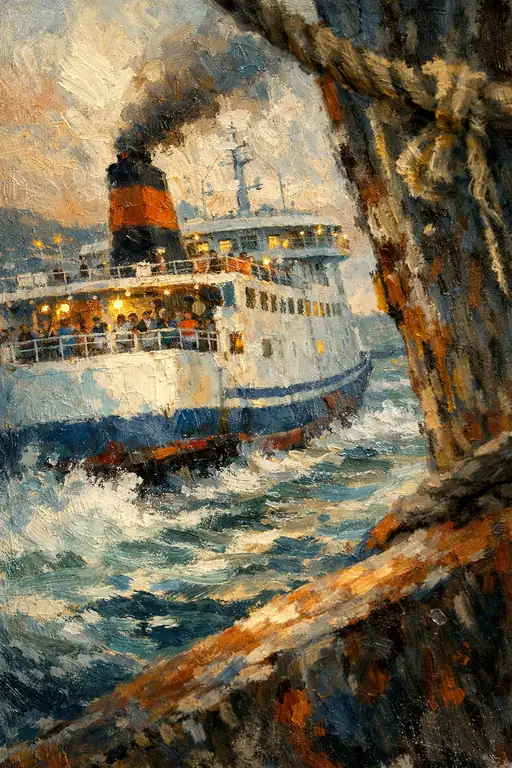 Voyage Through the Churning Blue
 Chasing the Morning Tide
 Monument of the Gilded Tide
 Crimson Sails Defying the Silence
 Defying the Tempest's Wrath
 Beyond the Shadows of the Deep
 Colors of a New Horizon
 Echoes of an Endless Voyage
 Voyage of the Sunlit Canvas