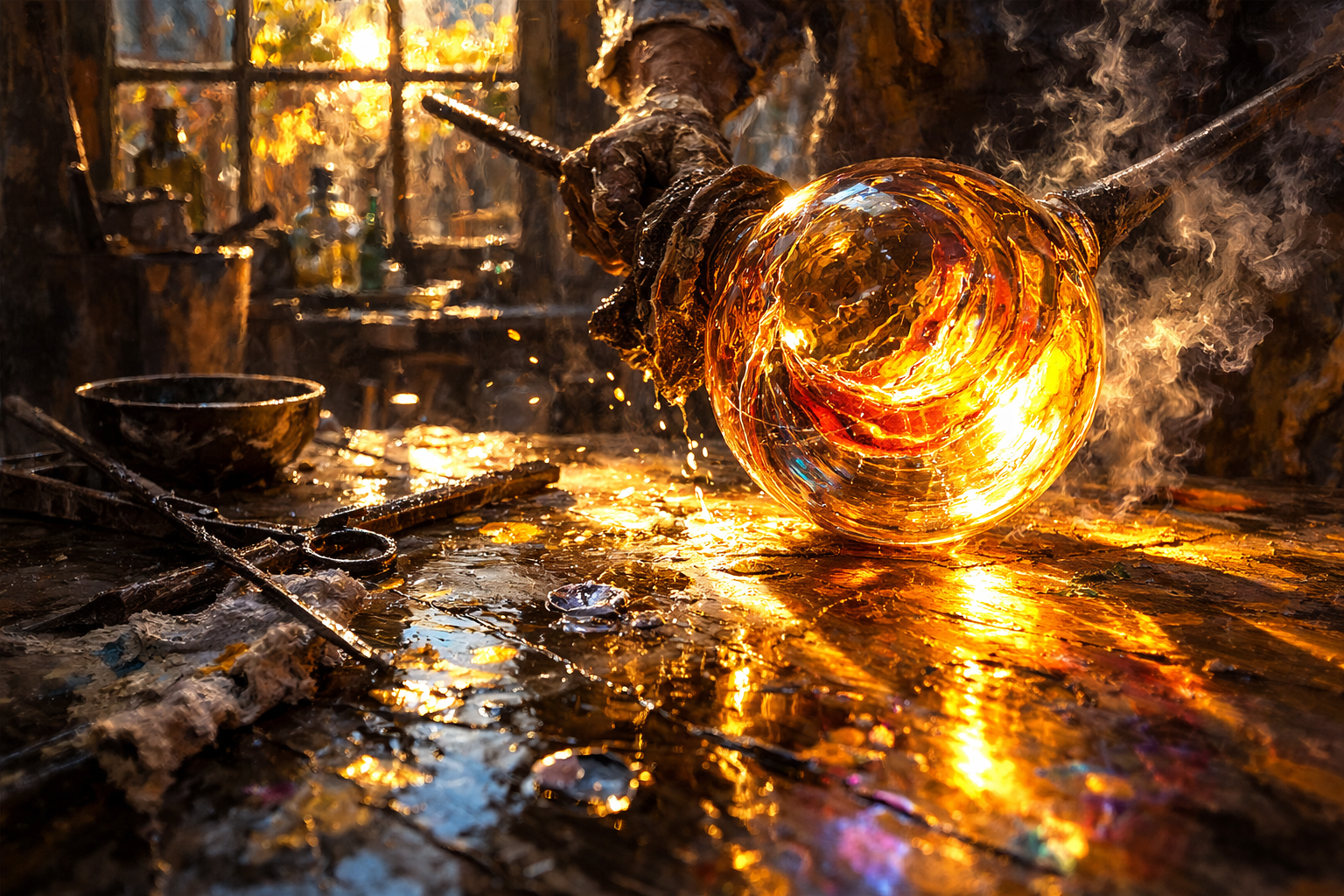
Breath of the Fire Tamer
Critique
1. Introduction This horizontal painting offers a close-up, dramatic view of an artisan engaged in the demanding process of glassmaking. The composition centers on a brilliant sphere of molten glass, captured at the peak of its incandescent heat. The work emphasizes the physical relationship between the creator and the raw, glowing material, set within an atmospheric workshop that feels both timeless and industrial. 2. Description The upper-right section of the frame is dominated by a glowing orb of orange and yellow glass, held by the heavy, heat-resistant gloves of an unseen artisan. Dense plumes of white smoke curl around the glass, while the dark, workbench below reflects the intense light in shimmering gold ripples. Scattered across the workspace are various tools, including large metal shears, and a window in the background allows a soft, diffused light to enter the cluttered studio. 3. Analysis The artist employs a dynamic and high-contrast lighting scheme, where the primary illumination emanates from the molten glass itself. This creates a powerful focal point that anchors the entire composition and dictates the distribution of shadows. The thick, expressive brushstrokes used to depict the smoke and the reflections on the table add a sense of rapid movement and sensory intensity, effectively conveying the heat of the environment. 4. Interpretation and Evaluation This work can be interpreted as a celebration of human skill and the transformative power of fire. The focus on the artisan's hands suggests a profound mastery over elemental forces, turning liquid heat into solid art. The painting is technically impressive for its ability to render the complex transparency of smoke and the multifaceted reflections on a cluttered surface. It successfully captures the raw energy of creation in a way that is both visceral and poetic. 5. Conclusion The initial attraction to the fiery brilliance of the glass eventually gives way to a deeper appreciation for the labor and precision inherent in the craft. This work serves as a powerful testament to the enduring beauty of traditional glassmaking techniques. Through its masterful use of light and texture, the painting provides a compelling and atmospheric exploration of the moment when raw heat is transformed by human agency.
Same Subcategory
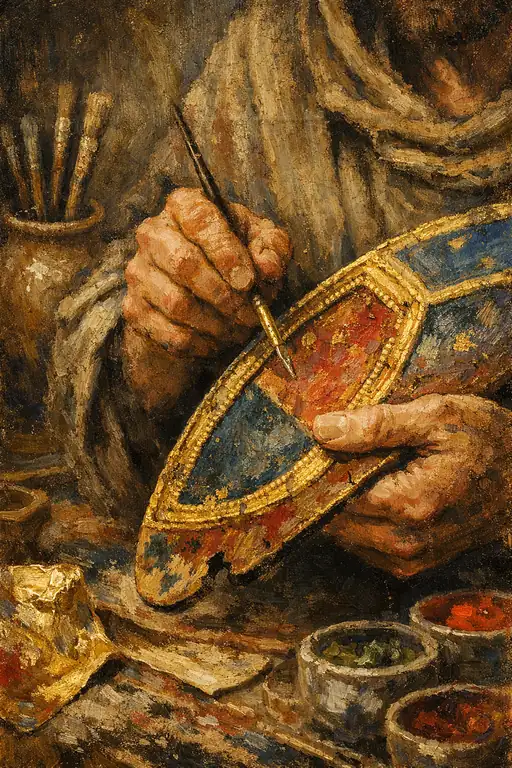 The Devotion of an Artisan's Touch
Similar Artworks
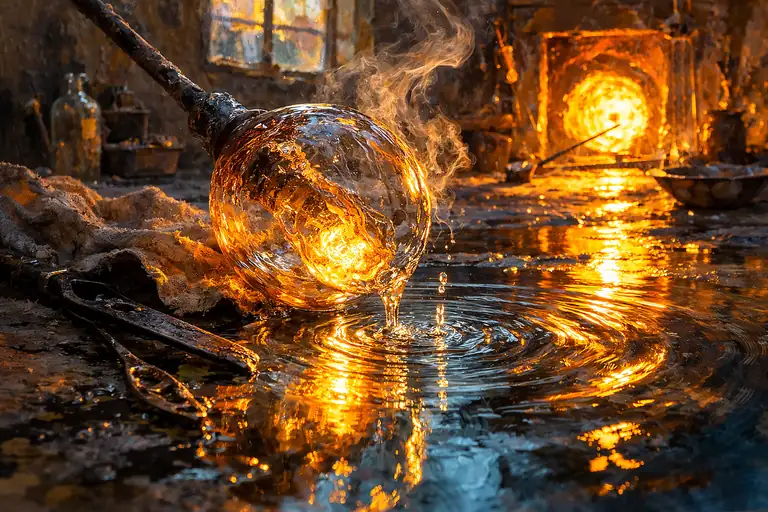 Forged in the Heart of the Inferno
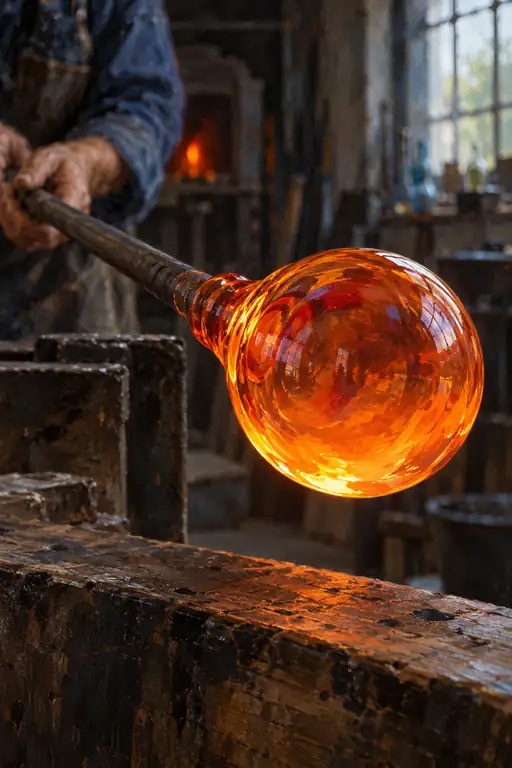 A Sun Still Learning Its Shape
 Breathing Fire into Form
 Breath of Fire, Sphere of Light
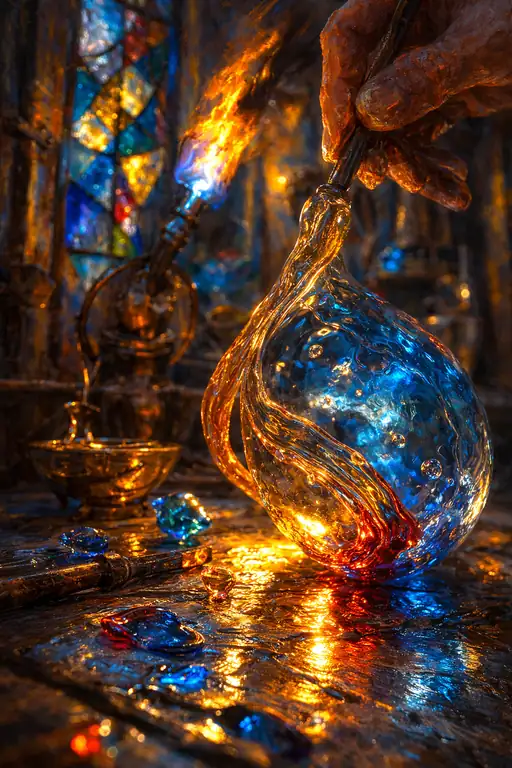 Breath of the Molten Flame
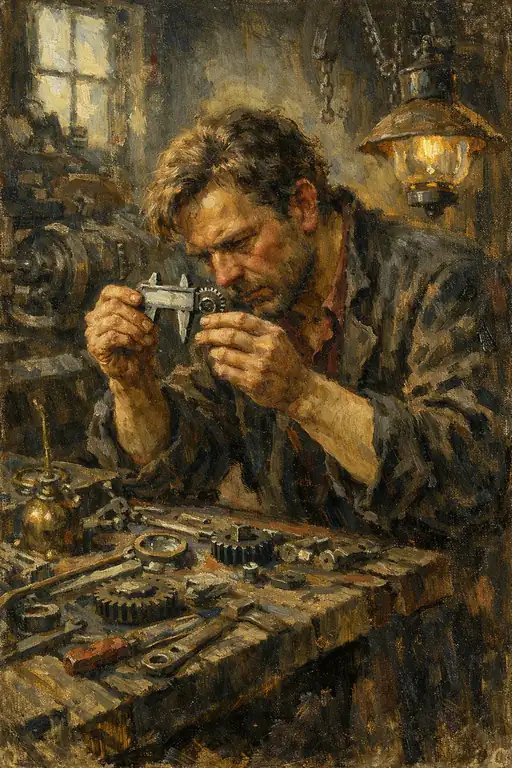 The Artisan's Gaze: Adjusting Gears in an Antique Workshop
 Geometric Rays in Hand
 Polishing the Promise of Tomorrow
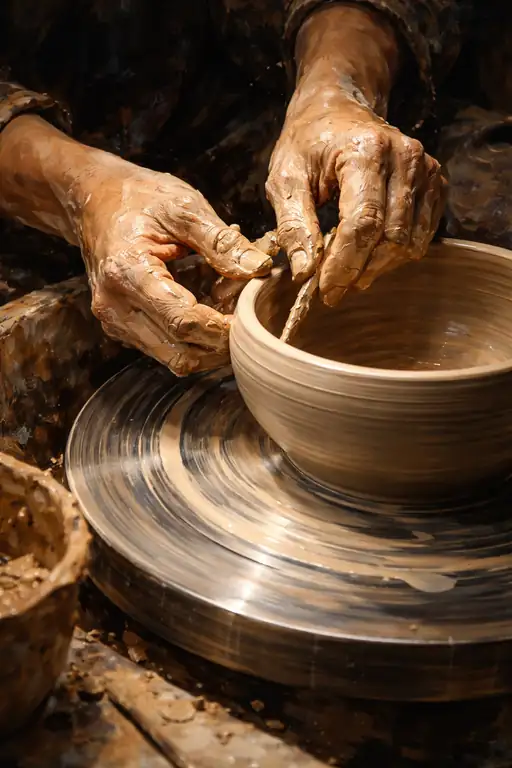 Earthly Genesis: Form from Formless Clay
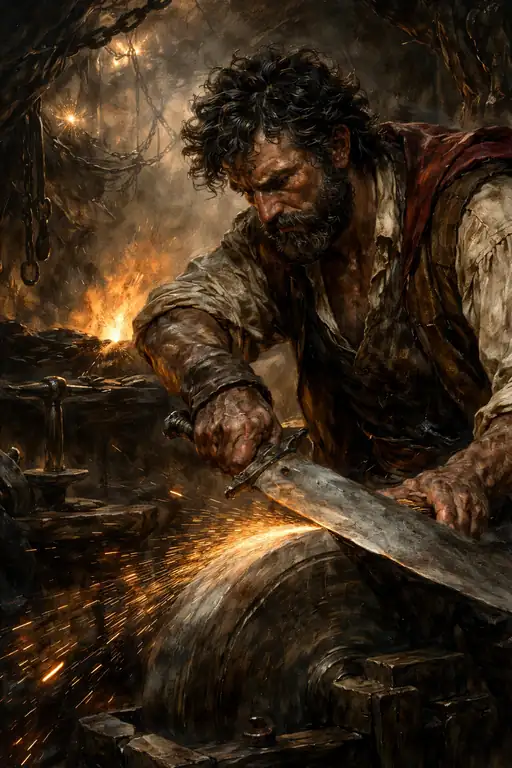 The Silent Oath of the Blade