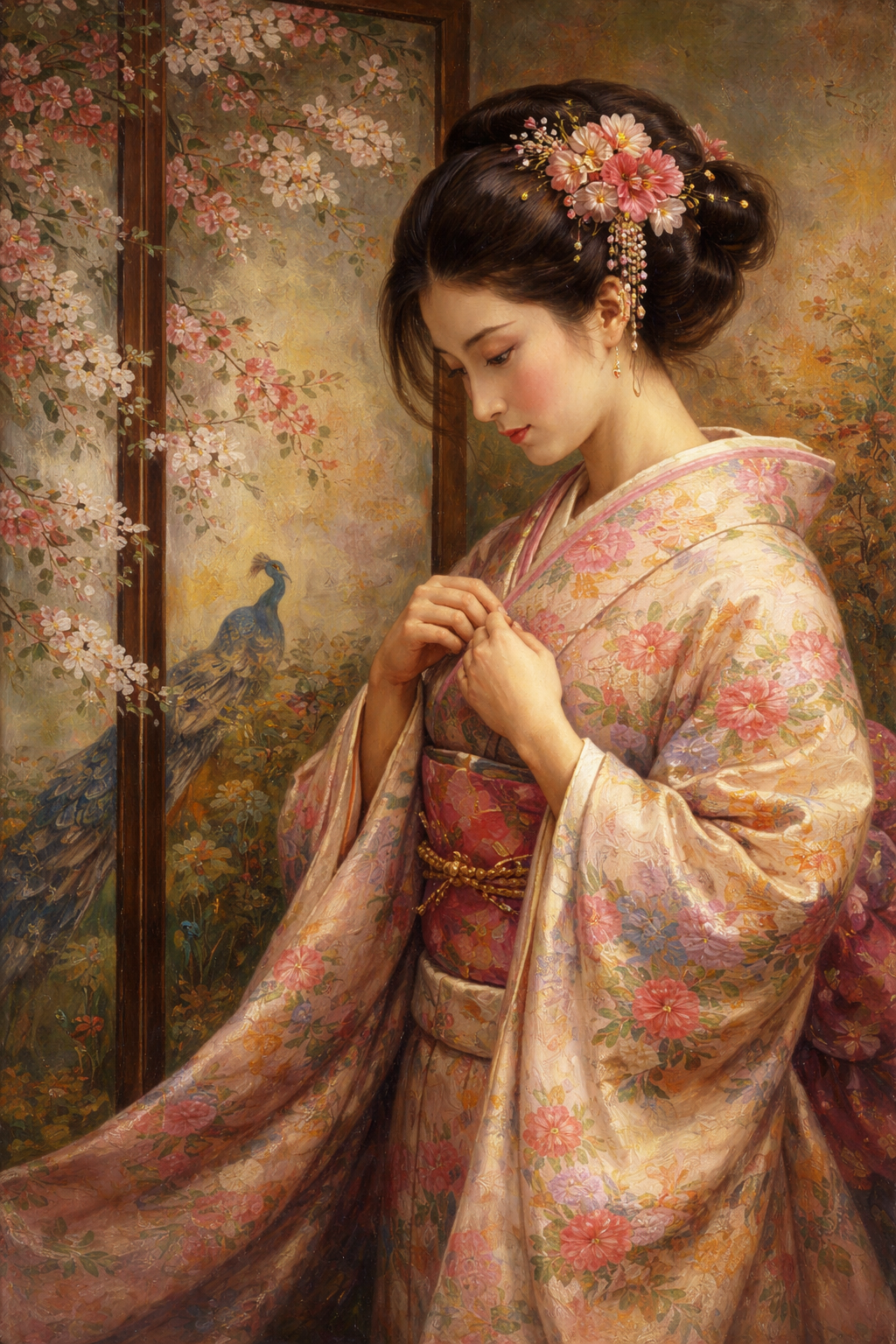
A Dream Woven in Sakura and Silk
Critique
1. Introduction This oil painting presents a graceful full-length portrait of a woman wearing a richly decorated kimono, standing beside a traditional folding screen. The composition is elegantly balanced, utilizing a vertical format to emphasize the slender figure of the subject and the intricate details of her surroundings. This work serves as a refined study of feminine beauty and cultural heritage, captured with a soft yet precise technical approach. The overall mood is one of quiet serenity, reflecting a harmonious blend of nature and human artistry within a historical interior setting. 2. Description The subject is depicted in profile, her gaze directed downward as she adjusts the collar of her floral-patterned garment. Her hair is styled in an elaborate updo, adorned with delicate pink floral ornaments that mirror the patterns on her kimono. To her left stands a painted folding screen featuring a majestic blue peacock amidst blooming cherry blossoms. The background is rendered with soft, atmospheric brushwork that suggests a spacious room filled with diffused light. The color palette is dominated by soft pinks, creams, and the vibrant blue of the peacock, creating a visually pleasing and sophisticated array of tones. 3. Analysis The artist demonstrates a masterly control of delicate tonal transitions, particularly in the rendering of the woman's skin and the flowing fabric of her attire. The composition is structured around the vertical lines of the folding screen and the subject's posture, providing a stable yet dynamic framework. Light is handled with great subtlety, appearing to emanate from the front and side to highlight the textures of the silk and the decorative elements in her hair. The contrast between the detailed foreground elements and the more impressionistic background adds a sense of depth to the scene. Precision in the floral motifs demonstrates a high level of technical skill and attention to decorative detail. 4. Interpretation and Evaluation This painting can be interpreted as a celebration of the "kacho-fugetsu" (flower, bird, wind, and moon) aesthetic, where human beauty is seen as inseparable from the natural world. The inclusion of the peacock, a symbol of dignity and beauty, serves to elevate the status of the woman and reinforces the theme of elegance. The work is highly successful in its ability to convey a sense of tactile reality while maintaining a romanticized, almost dreamlike quality. The composition’s strength lies in its balance, successfully integrating the complex patterns of the kimono with the equally intricate imagery of the screen. It is a testament to the enduring appeal of traditional themes rendered with modern painterly sensitivity. 5. Conclusion In summary, the portrait is a beautiful and sophisticated exploration of cultural identity and aesthetic refinement. Through the careful use of color and light, the artist has created a work that is both grounded in tradition and alive with contemporary feeling. The initial impression of a simple interior scene deepens into an appreciation for the complex interplay between the subject and her environment. Ultimately, this painting stands as a distinguished example of figurative art that honors the past while showcasing individual technical mastery. The harmony between the floral patterns and the quiet dignity of the woman remains the piece's most enduring quality.
Same Subcategory
 Reflections Woven in Pearls
Similar Artworks
 Whispers of the Spring Breeze
 Ephemeral Elegance in Bloom
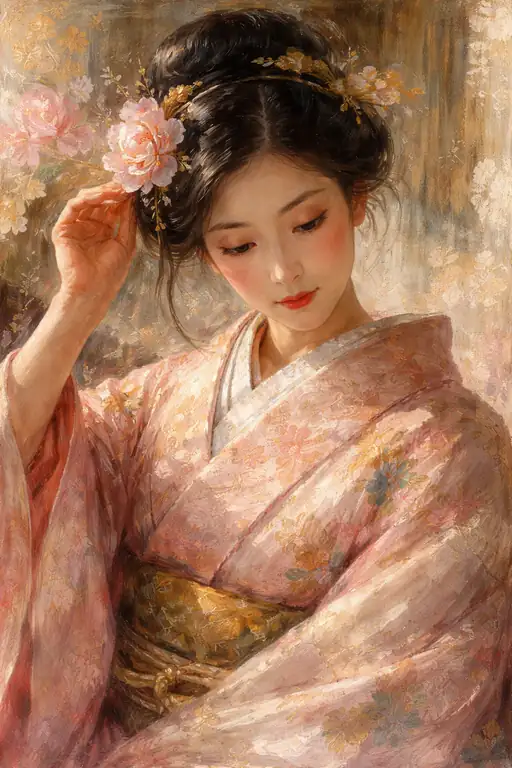 Echoes of Timeless Azure Grace
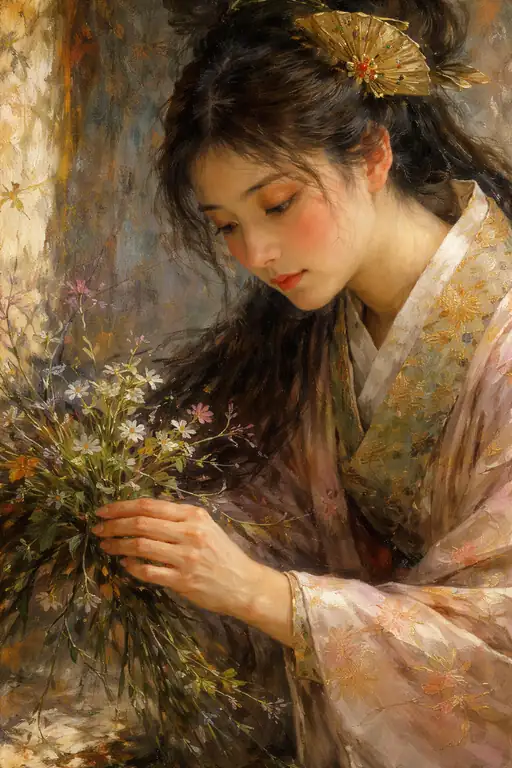 A Melancholy Gaze Adorned with Wildflowers
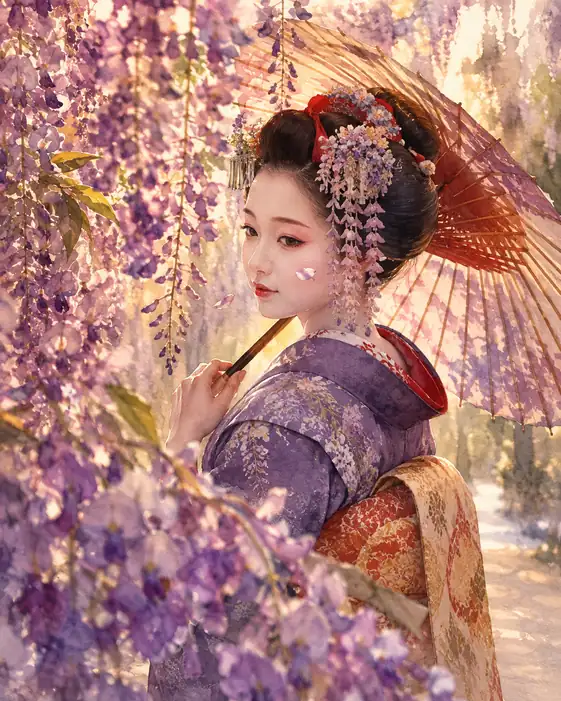 Graceful Glance Beneath Cascading Wisteria
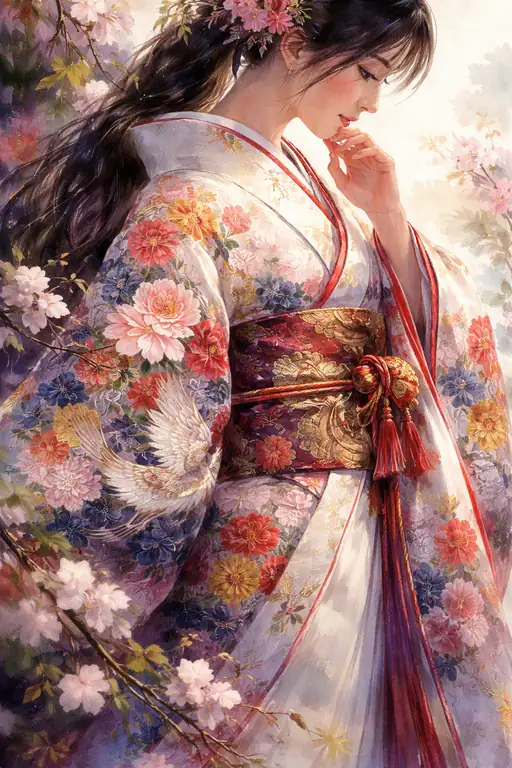 Spring's Silent Reverie
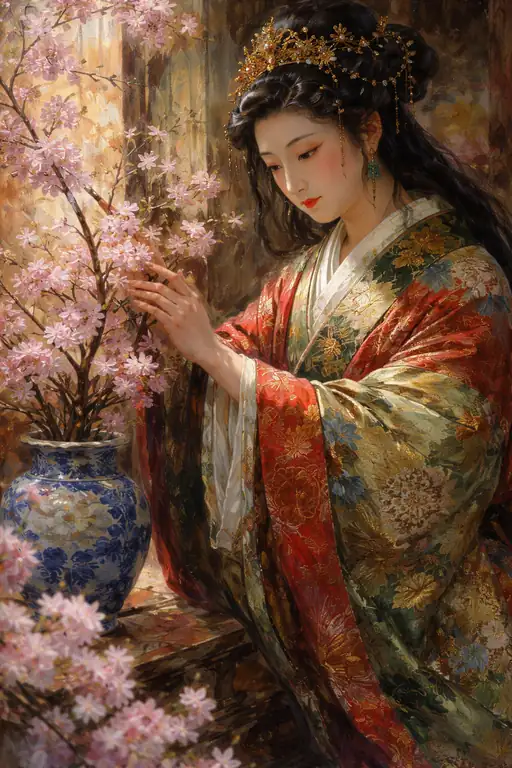 Contemplation Beneath the Spring Petals
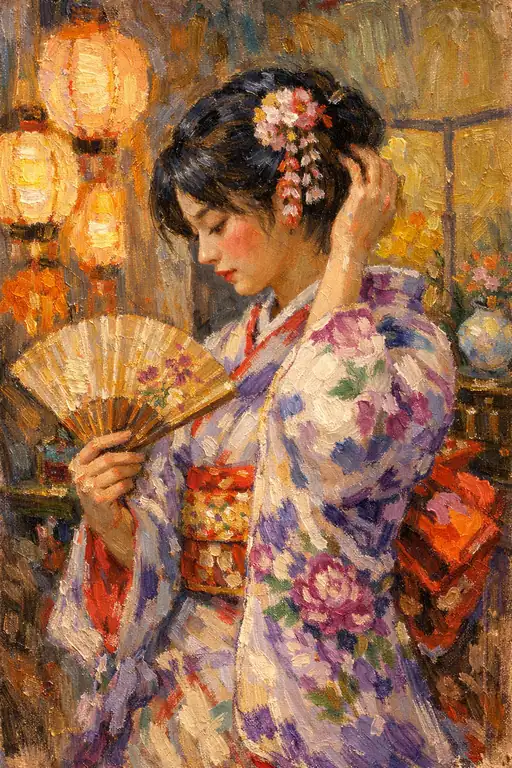 Fleeting Grace in the Spring Breeze
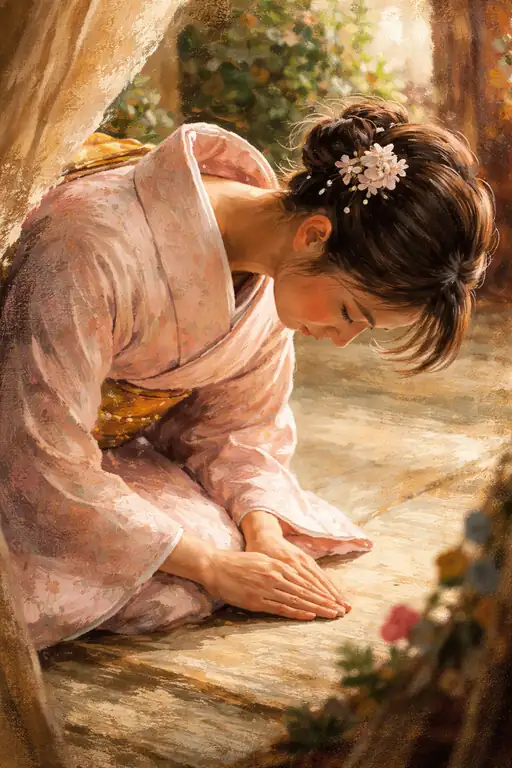 Grace in the Sunbeams
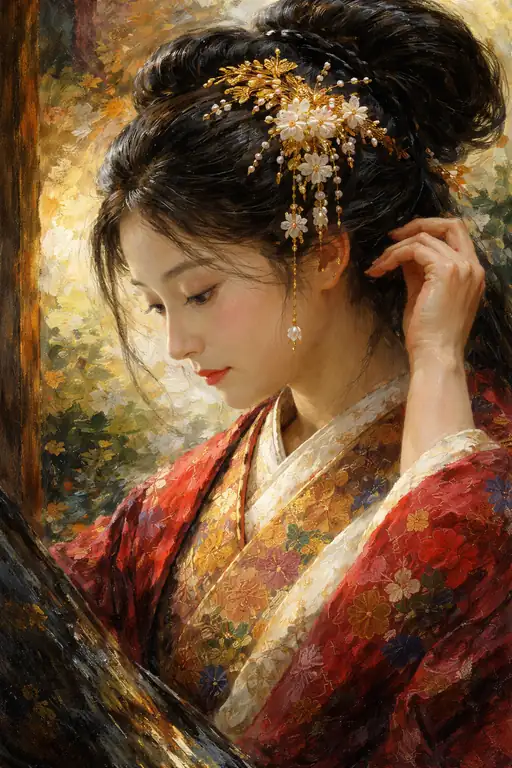 The Hidden Observer's Gaze