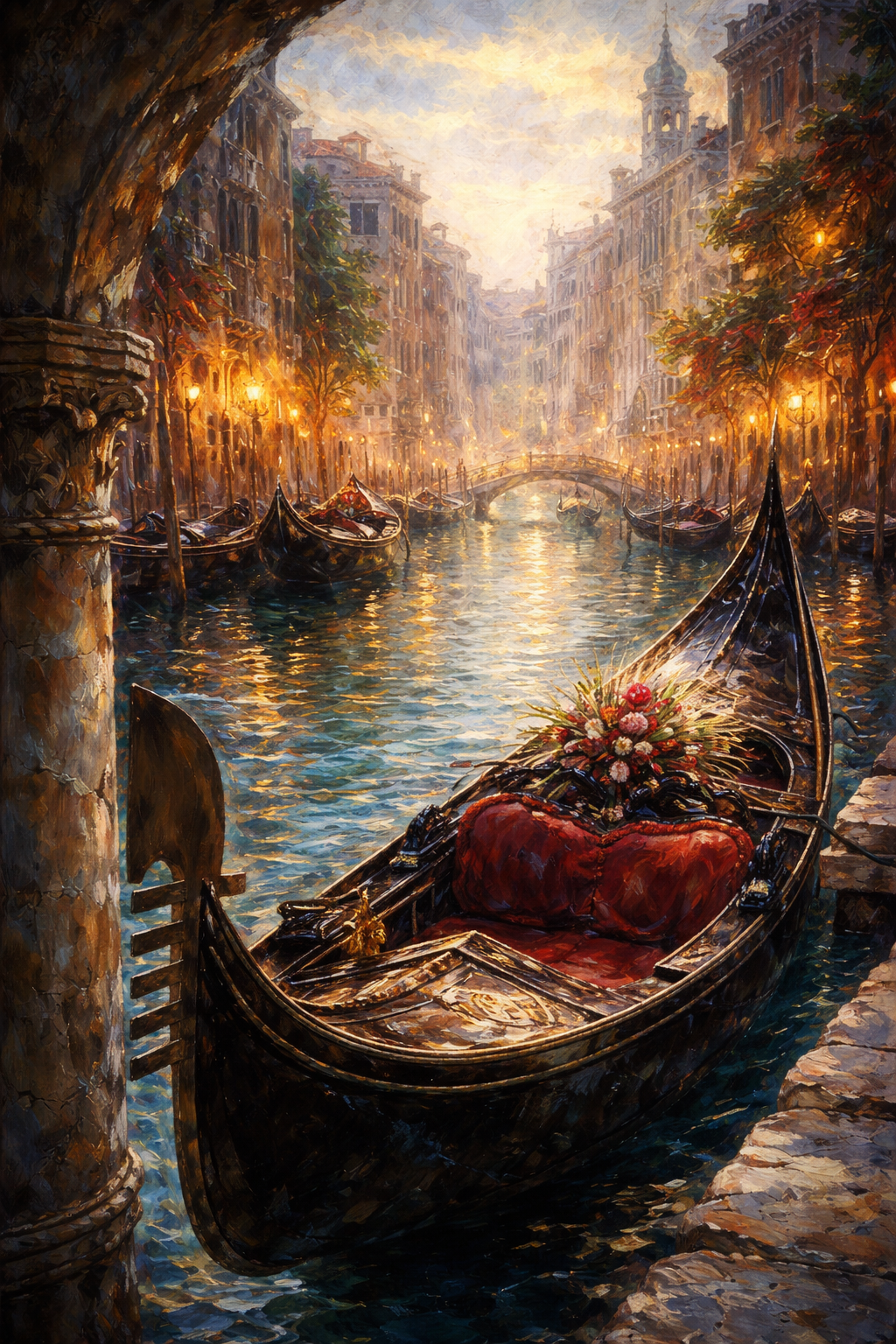
Twilight's Embrace on the Grand Canal
Critique
1. Introduction This oil painting presents a romantic scene of a single gondola resting on a canal at twilight, evoking the serene beauty of a timeless city. Framed by a stone arch on the left, the composition leads the viewer’s eye down the water toward a distant bridge under a glowing sky. A bouquet of flowers and plush red cushions inside the gondola suggest a private, special moment, inviting the viewer into a narrative of elegance and mystery. The warm illumination and flickering reflections on the water signal the beginning of an enchanted evening. 2. Description The foreground is dominated by the intricately decorated black hull of a gondola, featuring vibrant crimson cushions and a colorful floral arrangement. Along the canal banks, rows of historic buildings are illuminated by the soft glow of street lamps that cast elongated shadows. In the mid-ground, a classic stone bridge arches over the water, while the background reveals a soft, hazy sky tinged with the last light of the sun. The massive stone pillar on the left provides a solid textural contrast to the fluid movement of the water. 3. Analysis The color palette is a sophisticated blend of golden yellows, deep umbers, and rich blacks, creating a dramatic interplay between light and shadow. The intense red of the interior furnishings serves as a crucial visual anchor within the otherwise harmonious warm tones of the environment. Technically, the artist employs fragmented brushstrokes to capture the shimmering quality of light reflecting off the ripples. This treatment of light, combining the natural sunset with artificial lamps, results in a highly atmospheric and dreamlike spatial quality. 4. Interpretation and Evaluation The work uses the vacant gondola as a vessel for themes of presence and absence, reflecting the inherent romanticism of the urban landscape. By peering through the architectural framing of the arch, the viewer assumes the role of a silent observer to a quiet, intimate scene. The execution is masterful, particularly in the rendering of diverse materials such as cold stone, polished wood, and soft fabric through varied brushwork. This ability to elevate traditional motifs into a poignant sensory experience is a testament to the artist's creative vision. 5. Conclusion A careful study of the painting reveals that its initial romantic charm is sustained by a foundation of rigorous formal qualities and color theory. The meticulous attention to detail, from the gondola’s ornate carvings to the distant windows, ensures a consistent level of artistic excellence. Ultimately, this piece is a profound success, offering a poetic reinterpretation of a classic subject through a sensitive lens. This quiet moment on the canal leaves the viewer with a sense of peace and a lingering appreciation for the enduring allure of the city.
Same Subcategory
Similar Artworks
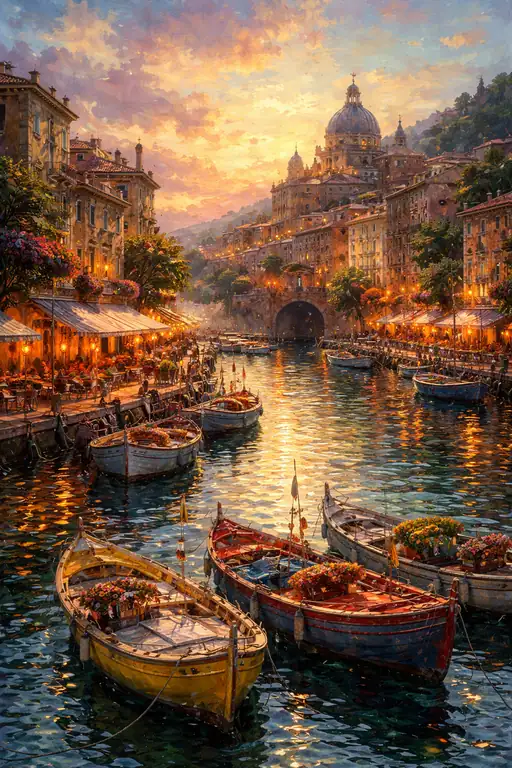 Golden Echoes of the Grand Canal
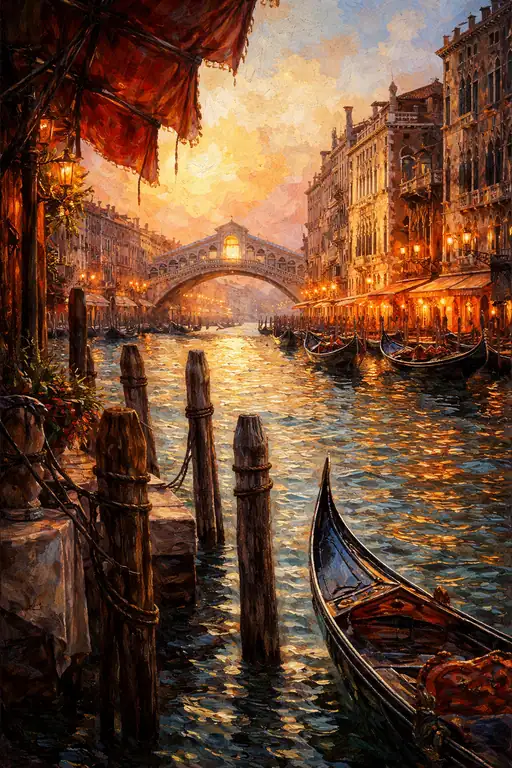 Fiery Sunset on the Venetian Waters
 Golden Serenade on the Venetian Canal
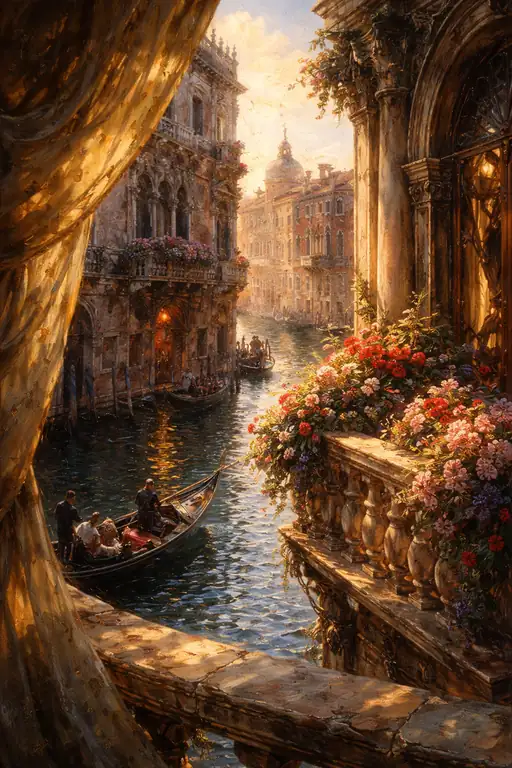 Serenade of the Floating City
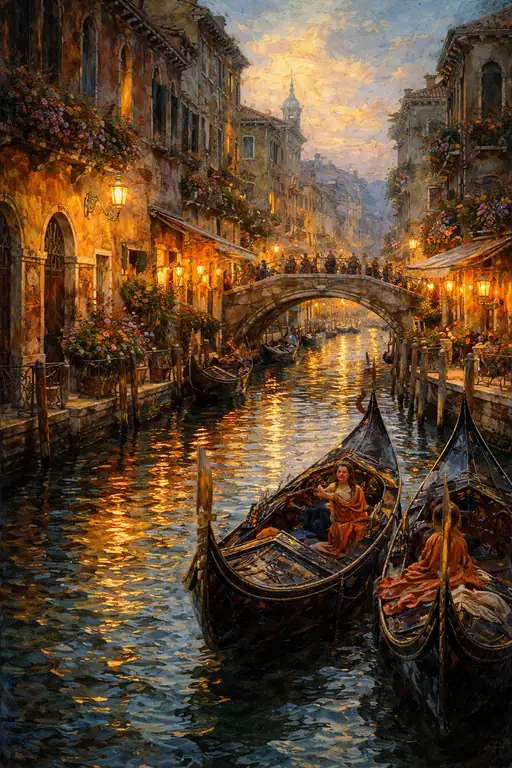 Golden Sighs of the Drowning City
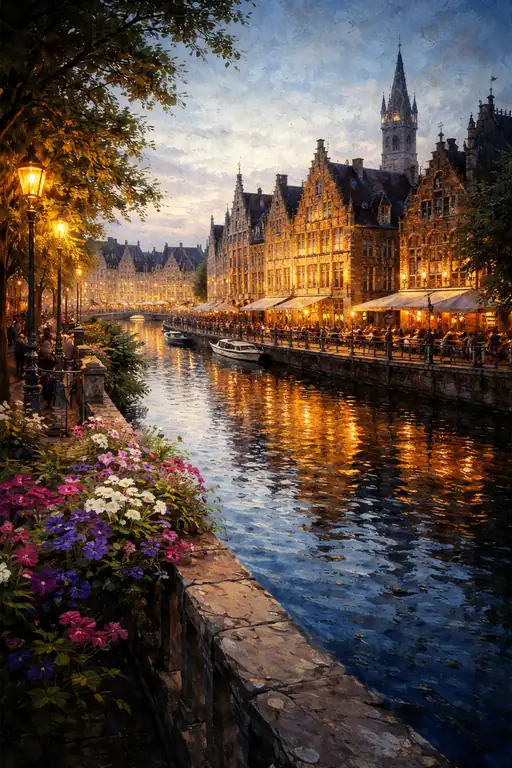 Twilight Echoes of Ghent
 Golden Hour on the Grand Canal
 Serenade of the Tasselled Prow at Dusk
 Golden Wake at the Fading of the Venetian Sun
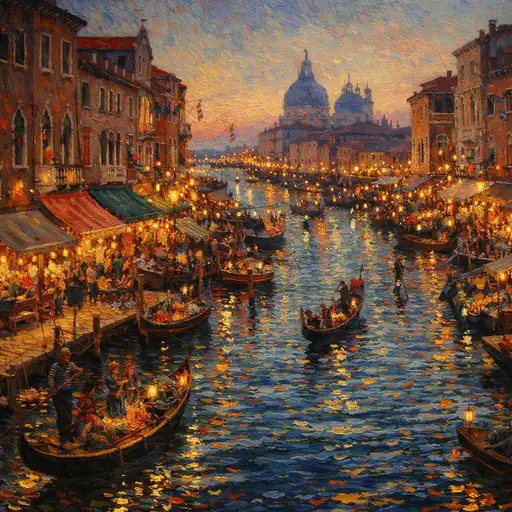 Venetian Serenade Under the Starlit Canopy