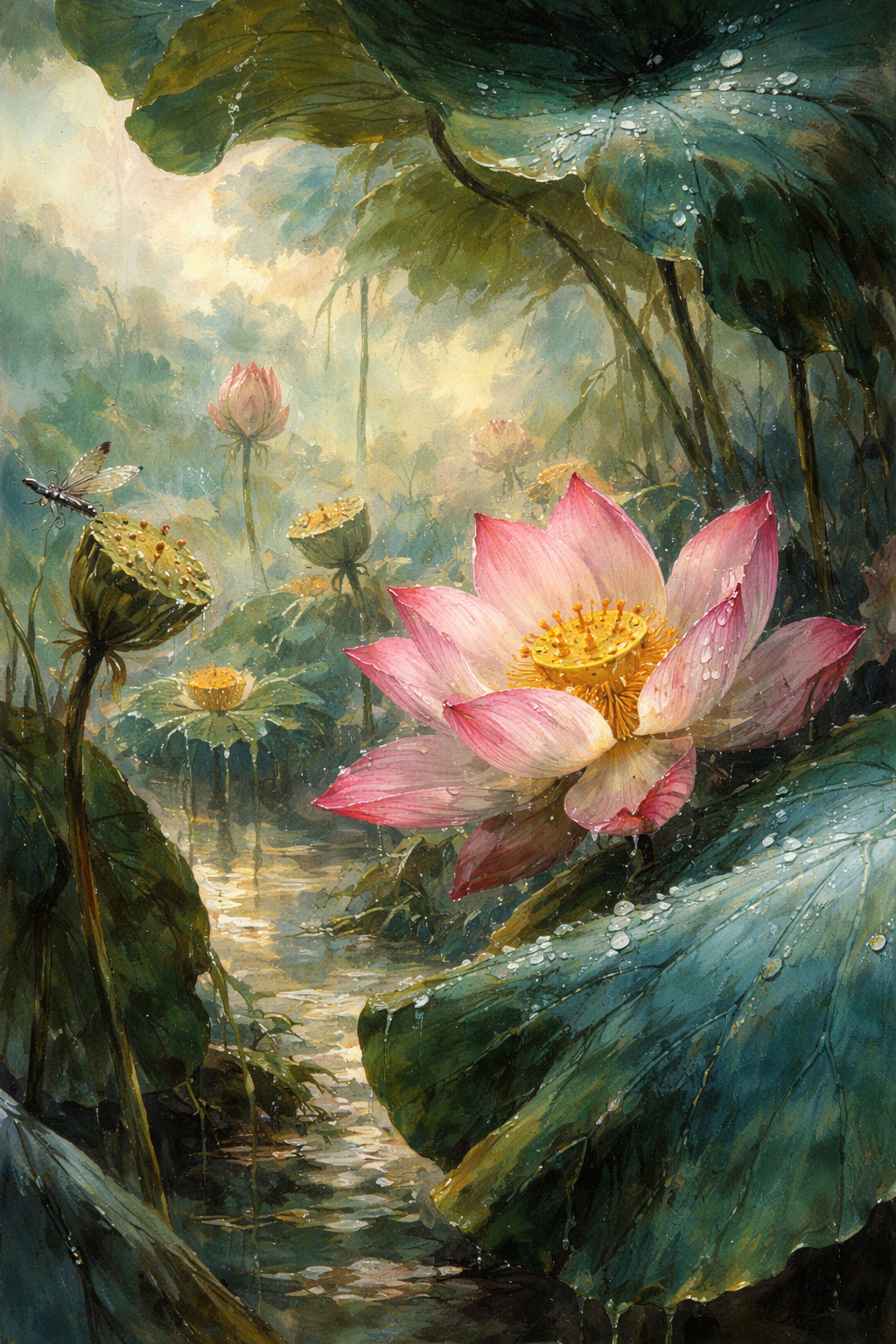
The Hidden Sanctuary of the Lotus Pond
Critique
1. Introduction This oil painting captures the lush and atmospheric environment of a lotus pond during or after a gentle rain. The vertical composition is framed by massive, overarching lotus leaves that create a sense of enclosure and intimacy. Central to the piece is a fully bloomed pink lotus, serving as a beacon of color against the verdant surroundings. This work explores the themes of growth, decay, and the refreshing purity of water within a natural ecosystem. 2. Description The foreground is dominated by large, dark green lotus leaves, their surfaces glistening with prominent water droplets. A vibrant pink lotus flower, partially open, sits slightly to the right of the center, its golden stamen clearly visible. To the left, several lotus seed pods in various stages of maturity stand on tall stalks, one of which provides a resting place for a small dragonfly. A narrow stream of murky water winds through the dense foliage, reflecting the soft light from above. 3. Analysis The artist uses a rich palette of deep emerald greens, earthy browns, and luminous pinks to create a high-contrast visual experience. The scale of the leaves compared to the flowers adds a sense of grandeur and prehistoric weight to the scene. Light is treated softly, diffusing through the misty background and catching the edges of the petals and droplets to provide a sense of moisture. The rhythmic arrangement of the circular leaves and vertical stalks creates a complex, multi-layered space that draws the eye inward. 4. Interpretation and Evaluation The painting can be interpreted as a meditation on the life cycle of the lotus, showing both the peak of bloom and the drying seed pods. The presence of the dragonfly adds a touch of transient life to the enduring flora. Technically, the artist excels in rendering the various textures of the pond—from the rough, dried pods to the delicate, wet petals. The composition is masterful, using the large leaves as a natural canopy that guides the viewer's focus. It is a profound and skillfully executed representation of a classic botanical subject. 5. Conclusion In summary, this work provides a captivating and immersive look into the hidden world of a lotus pond. The attention to atmospheric detail and the tactile quality of the rain-slicked surfaces make the scene feel remarkably immediate. My initial view of a traditional floral painting evolved into an appreciation for the work's complex environmental storytelling. The painting stands as a highly accomplished example of naturalistic landscape art, celebrating the quiet beauty of the wetlands.
Same Subcategory
Similar Artworks
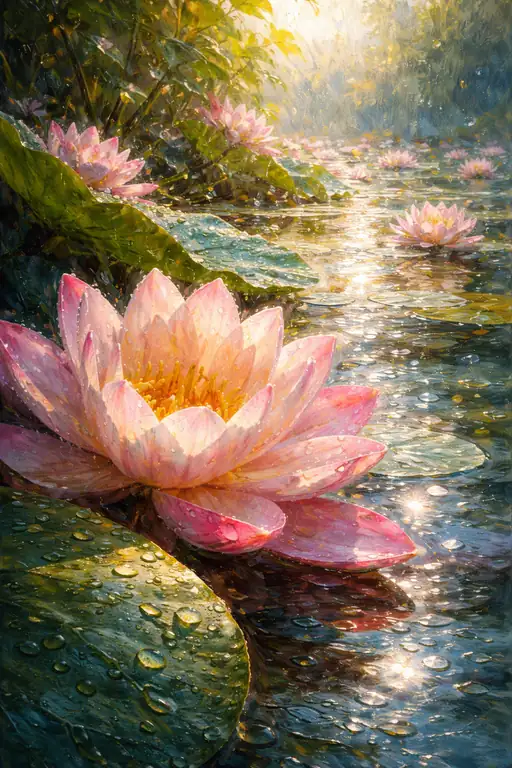 Slumber of the Rose Petals
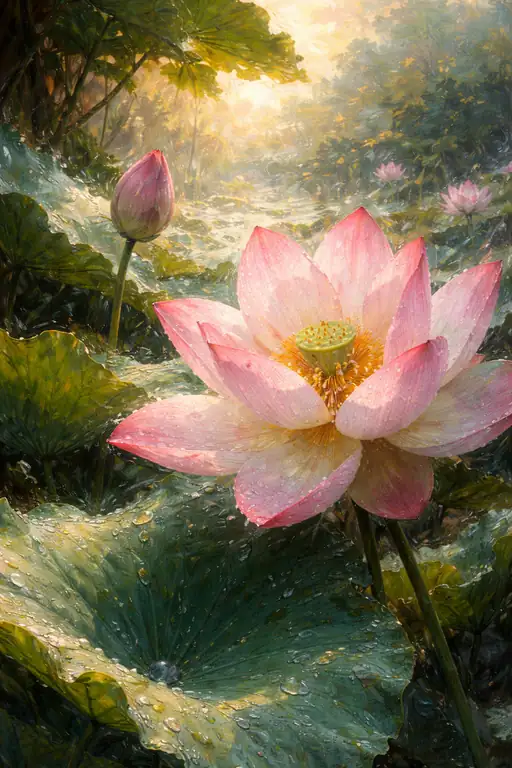 Awakening in the Mist
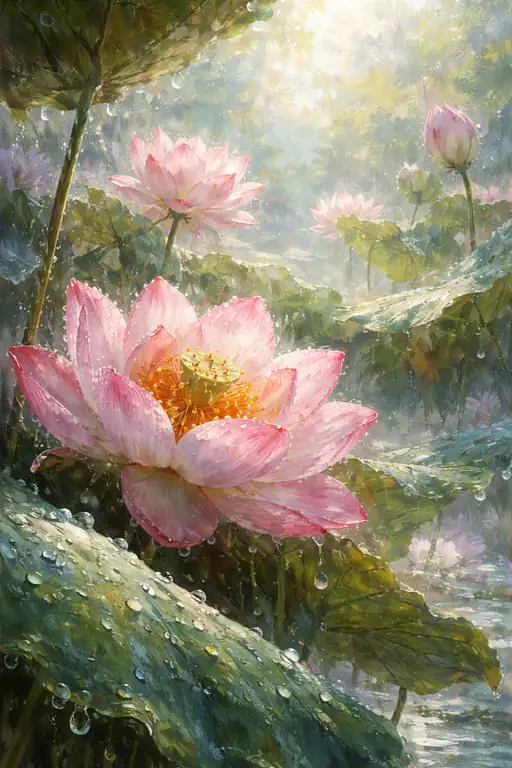 Breath of the Lotus in Morning Mist
 The Crystalline Breath of Morning
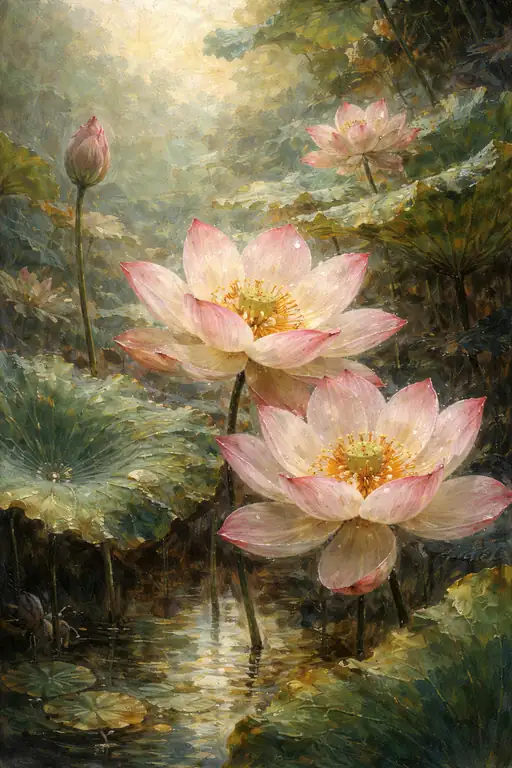 Tender Blush of Morning Dew
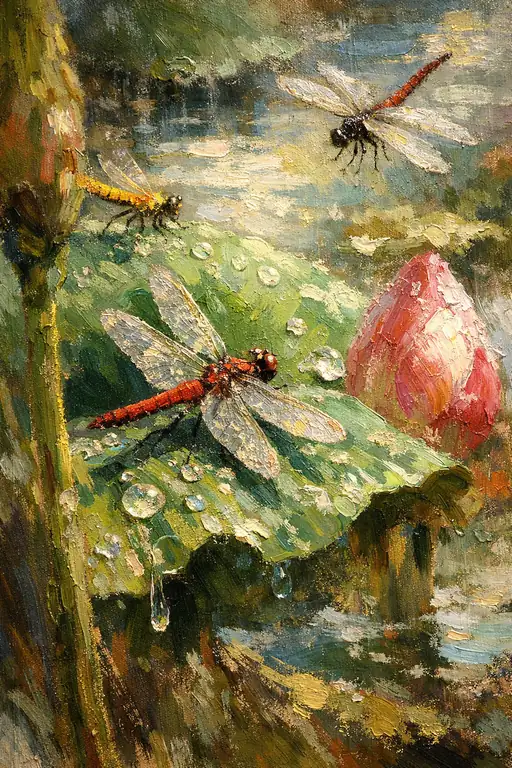 Dragonflies Dancing on Summer Dew
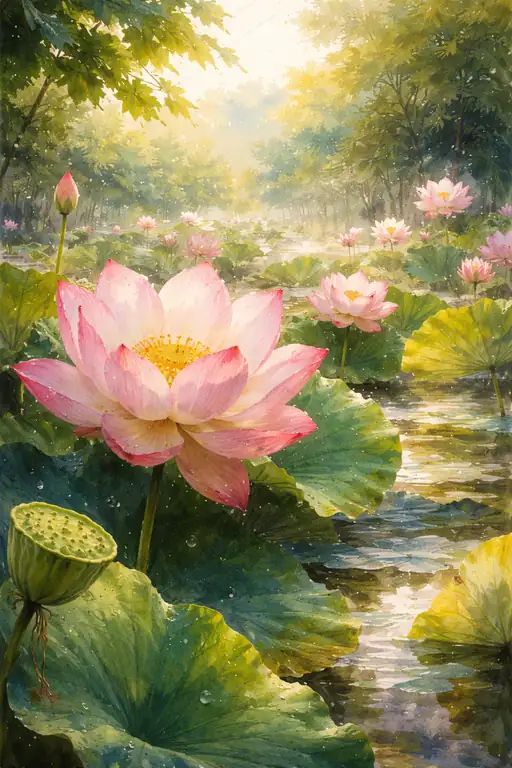 Whispers of the Misty Blossom
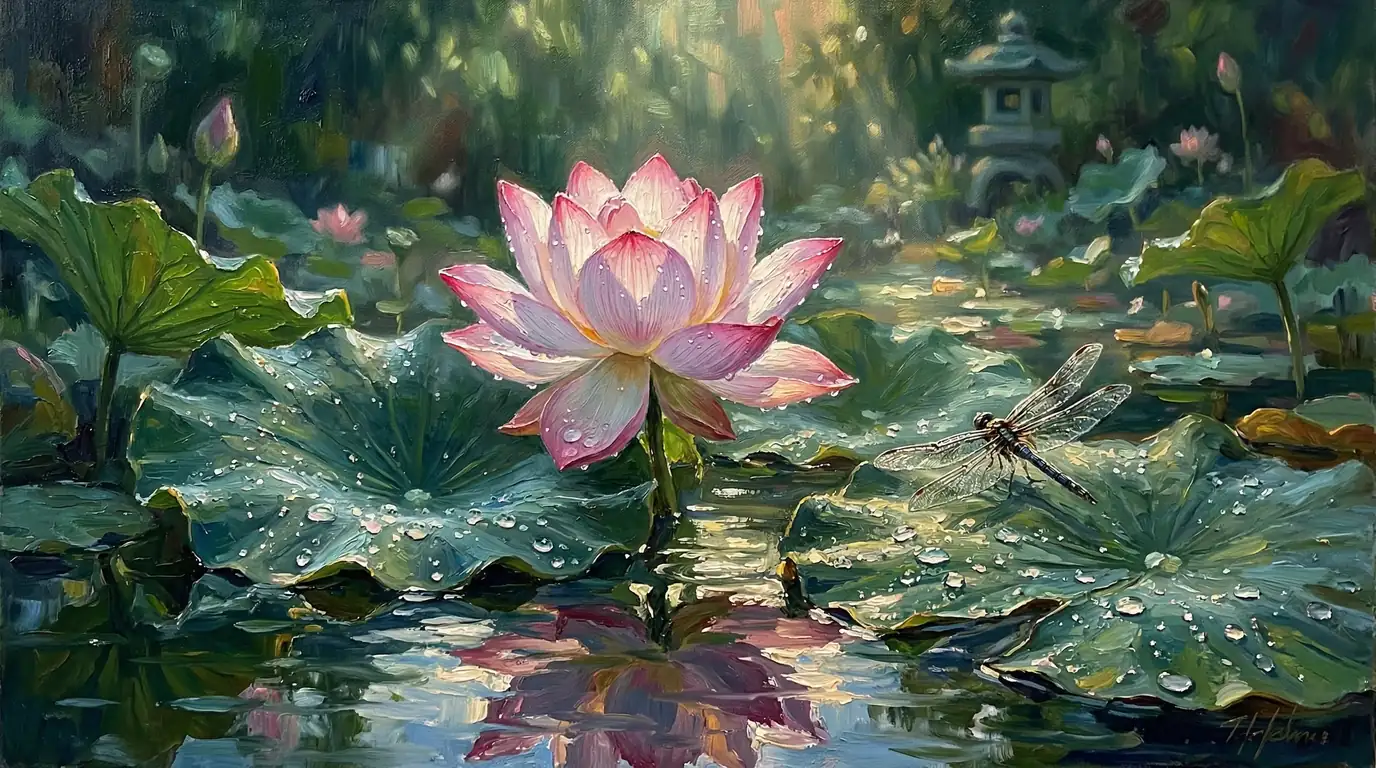 Awakening of the Pink Lotus
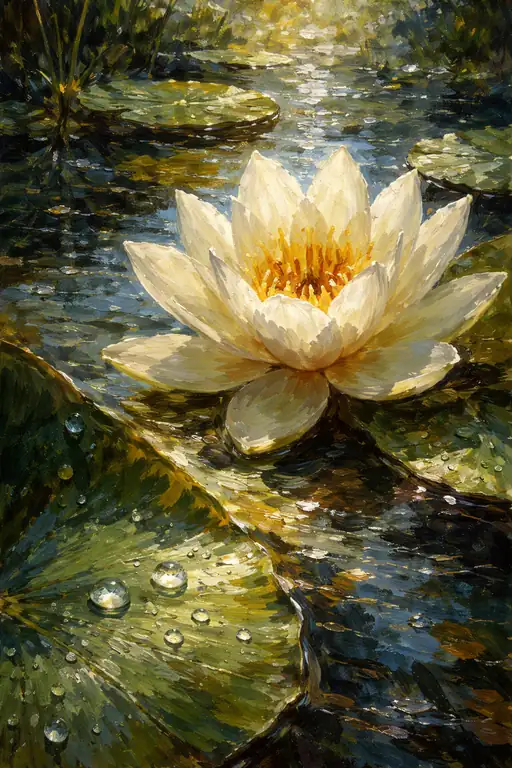 Tears of Morning Dew on the Sacred Petals
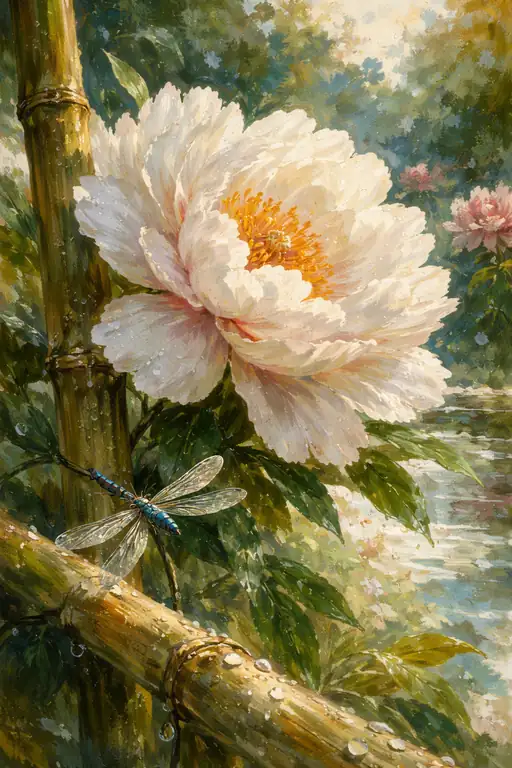 A Fleeting Moment in the Luminous Garden