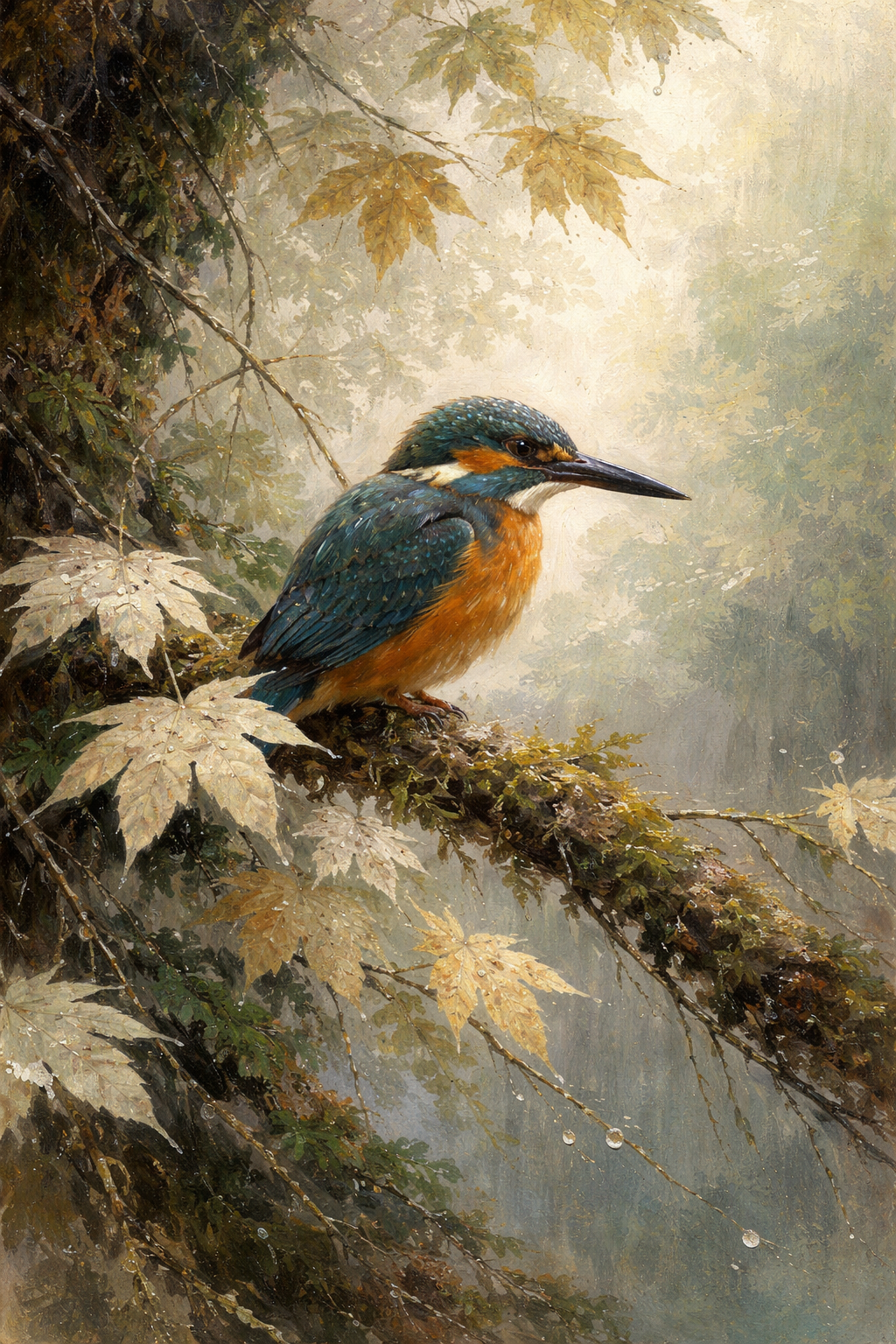
The Silent Kingfisher's Gaze
Critique
1. Introduction This oil painting depicts a single kingfisher perched on a mossy branch, surrounded by autumnal maple leaves. The composition is vertically oriented, focusing on the bird's profile against a misty, ethereal background that suggests a damp woodland environment. The work exhibits a high degree of technical precision while maintaining a painterly quality through visible yet refined brushwork. 2. Description The central figure is a kingfisher with iridescent turquoise-blue feathers on its wings and back, contrasting with its vibrant orange breast. It sits on a thick, dark branch covered in green moss and tiny textured details. Several pale yellow and brown maple leaves frame the bird, some appearing almost translucent. Translucent water droplets are meticulously rendered on the leaves and the branch, catching the light and adding a sense of freshness to the scene. 3. Analysis The artist utilizes a limited but effective color palette, where the saturated tones of the bird act as a focal point against the muted, atmospheric backdrop. Soft, diffused lighting emanates from behind the subject, creating a gentle halo effect and emphasizing the delicate textures of the feathers and foliage. The diagonal orientation of the branch provides a sense of structural stability, while the organic shapes of the leaves add a dynamic, naturalistic rhythm to the overall composition. 4. Interpretation and Evaluation This piece successfully captures a fleeting moment of stillness within a vibrant ecosystem, reflecting a profound appreciation for natural detail. The technical execution of the bird's plumage and the subtle transparency of the water droplets demonstrate significant skill and attention to realism. While the subject is traditional, the atmospheric depth and the harmonious integration of flora and fauna provide a compelling sense of place and mood. The work's strength lies in its ability to balance intricate detail with a cohesive, evocative atmosphere. 5. Conclusion The painting invites the viewer to appreciate the quiet beauty of a specific natural encounter through its refined technique and thoughtful composition. Initial observations of the bird's striking colors gradually give way to an appreciation for the subtle interplay of light and moisture throughout the scene. This artwork stands as a testament to the evocative power of naturalistic representation, offering a serene and meticulously crafted vision of the wild.
Same Subcategory
Similar Artworks
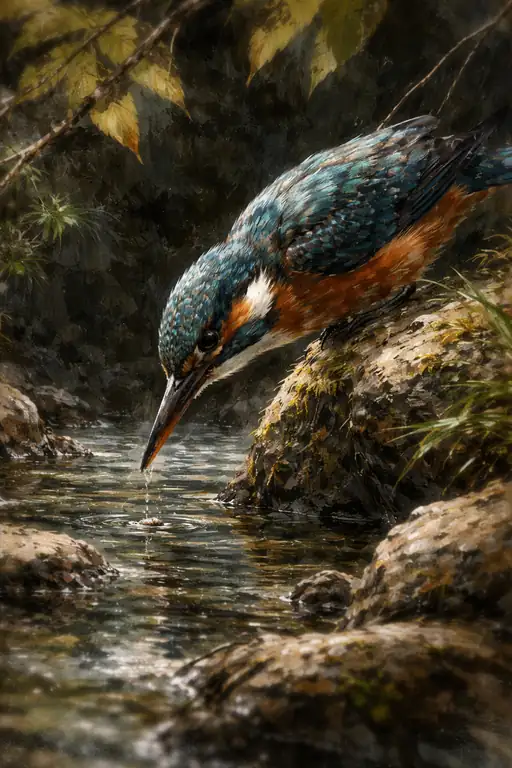 The Poised Jewel of the Stream
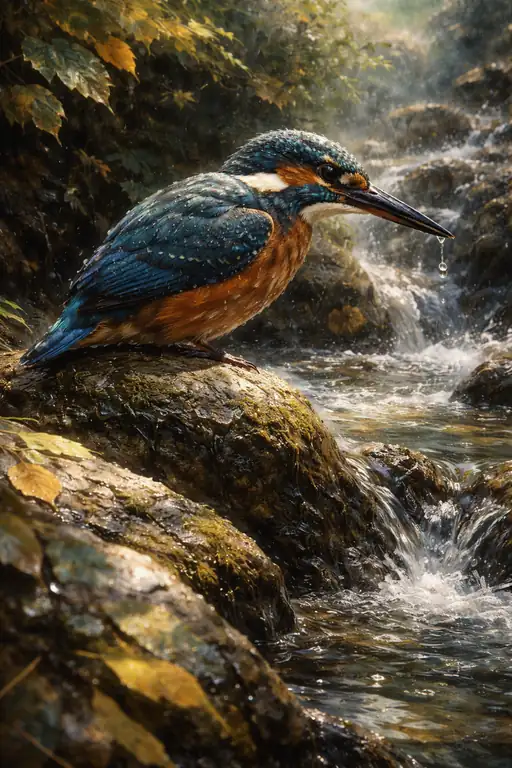 The Sapphire Sentinel
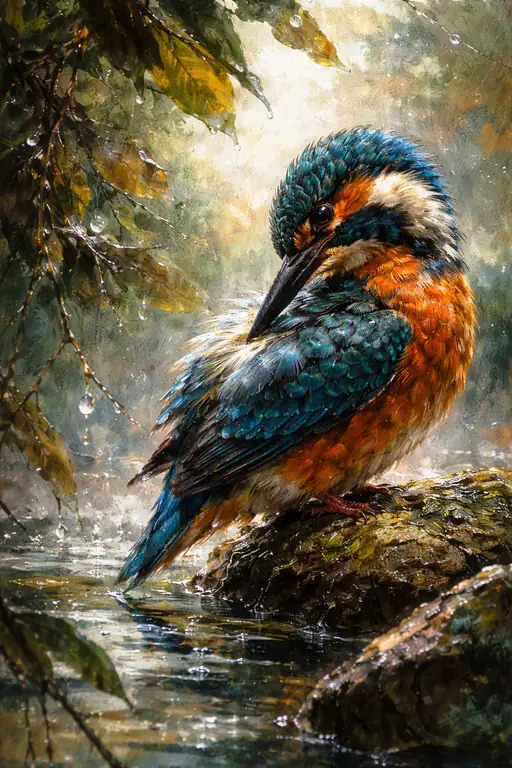 A Quiet Solace in the Silver Rain
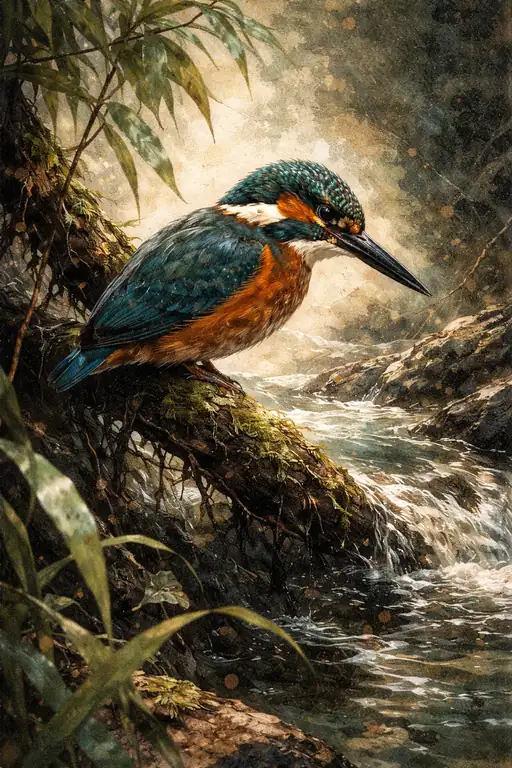 Jewel of the Wild Stream
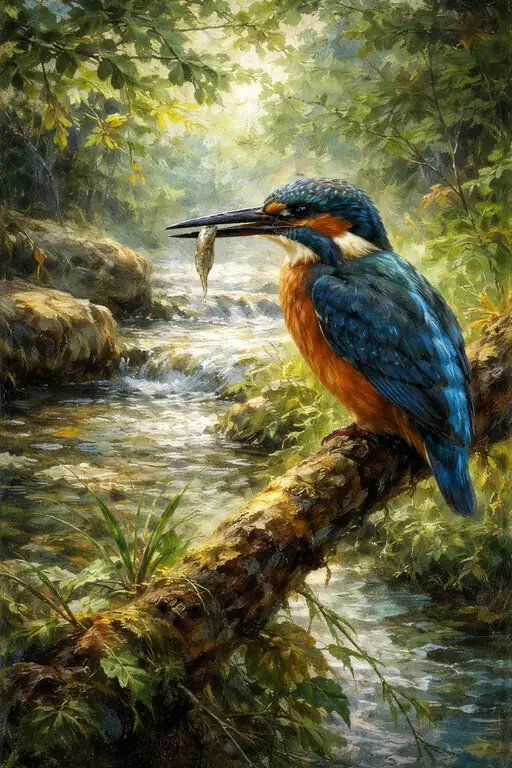 A Sapphire Flash in the Emerald Heart
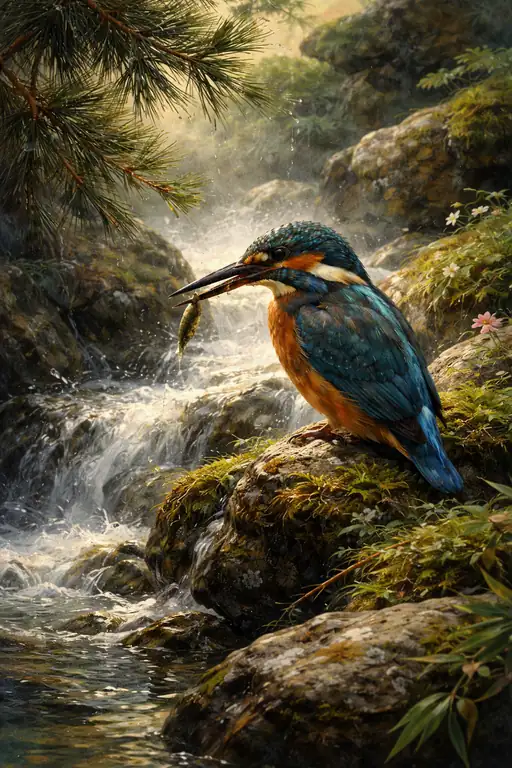 The Halcyon's Triumph Amidst the Mists
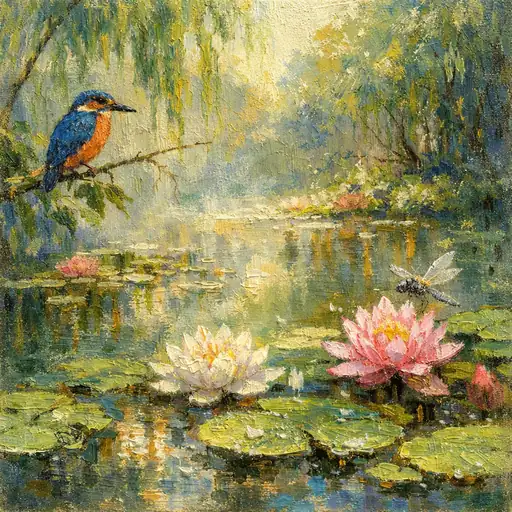 Glimmering Water, Emerald Dance
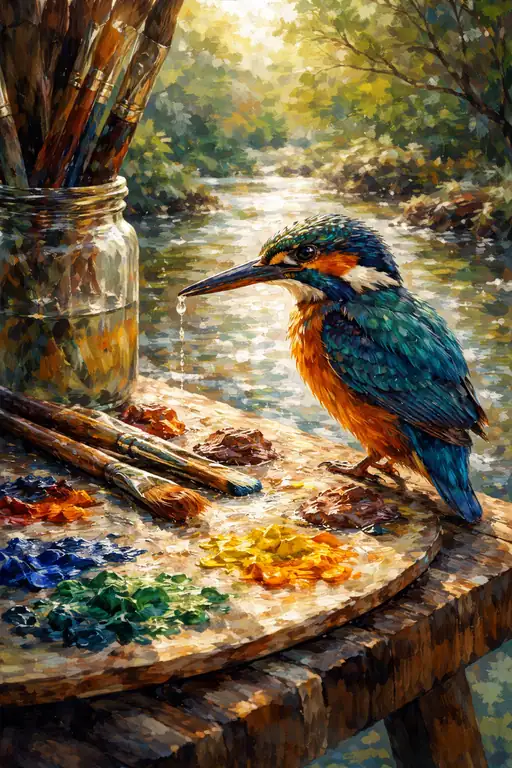 River Guardian's Watch
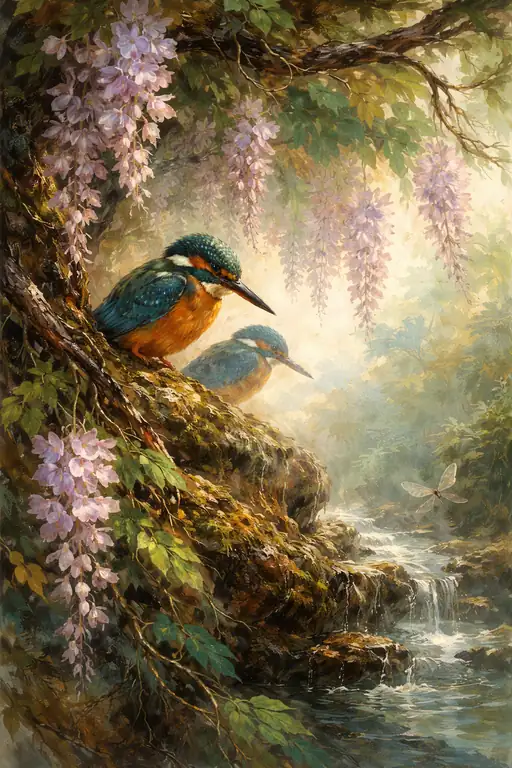 Love's Dance Beneath the Wisteria
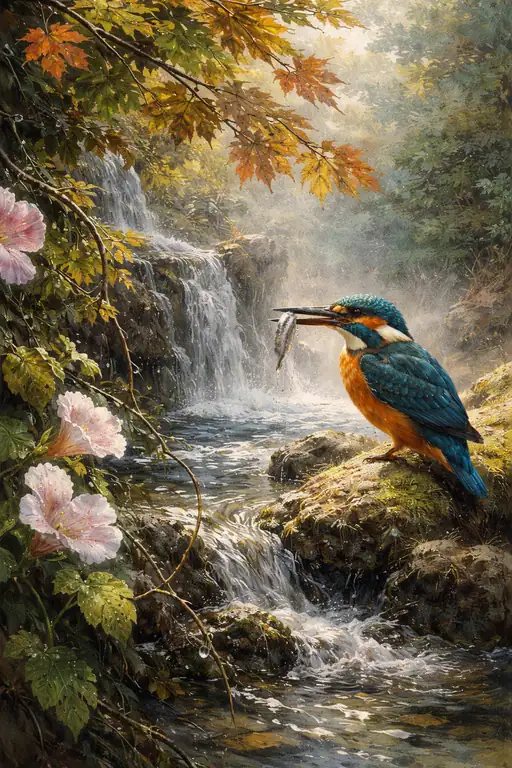 Flash of the Autumn Sapphire