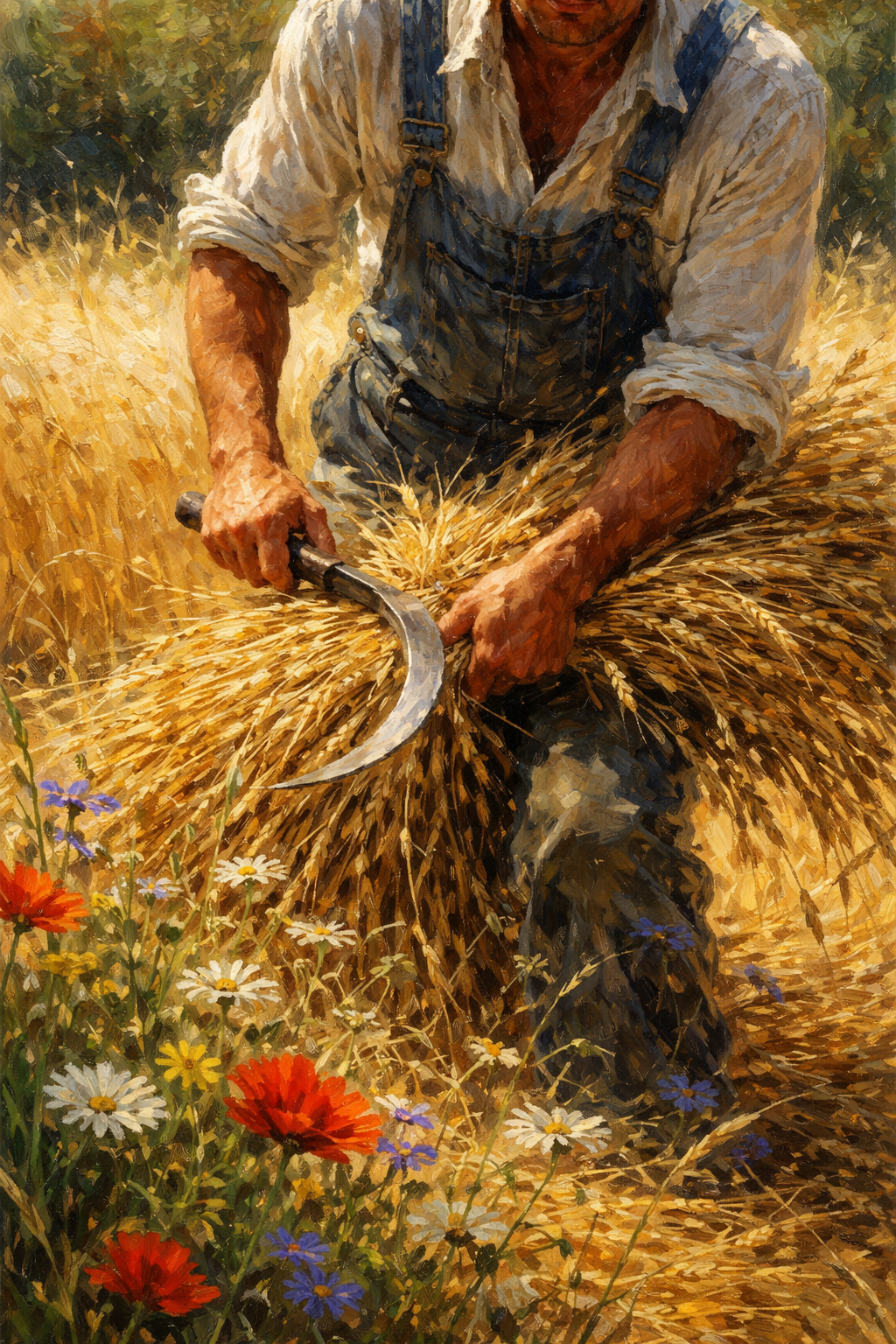
Golden Hymn of the Earth
Critique
1. Introduction This vertical oil painting depicts a farmer engaged in the timeless labor of harvesting wheat, set within a radiant, sun-drenched field. Through a spirited impressionistic style, the work captures the physical effort and the natural abundance associated with traditional manual agriculture. It serves as a luminous tribute to the dignity of work and the inherent beauty of the land. The artist successfully bridges the gap between the individual human figure and the vast, shimmering environment, creating a scene that feels both personal and universal. 2. Description The composition centers on a muscular figure wearing blue denim overalls and a simple white shirt, their sun-reddened hands firmly grasping a large bundle of golden wheat and a sharp, curved sickle. The middle ground is filled with a dense, textured field of ripe grain that seems to glow with internal fire under the intense afternoon sunlight. In the immediate foreground, a variety of vibrant wildflowers, including bright red poppies and delicate white daisies, add a splash of varied color to the predominantly golden landscape. 3. Analysis The artist employs a vigorous and highly expressive brushwork, where each thick stroke contributes to the sense of movement and rustling energy in the wheat field. The lighting is bright and direct, coming from overhead to create high-contrast highlights on the farmer's forearms and the polished metallic surface of the sickle. The color palette is masterfully balanced, using the dominant warm, golden hues of the wheat to contrast effectively with the cool blues of the overalls and the scattered wildflowers, providing a rich visual rhythm. 4. Interpretation and Evaluation The painting serves as an evocative celebration of manual labor and the harmonious relationship between humanity and the earth. By focusing on the decisive action of the harvest, the work emphasizes the cyclical nature of growth and the tangible rewards of sustained effort. Technically, the artist's ability to capture the shimmering, atmospheric quality of the wheat field and the rugged texture of the farmer's attire demonstrates a high level of proficiency and a deep, authentic appreciation for the subject matter. 5. Conclusion This work successfully transforms a scene of agrarian labor into a radiant and uplifting celebration of life and sustenance. The initial impression of a simple harvest scene eventually gives way to a profound appreciation for the essential connection between human endeavor and the natural world. Ultimately, the painting stands as a powerful testament to the beauty found in traditional ways of life and the enduring sources of our nourishment. It leaves the viewer with a sense of respect for the labor that sustains society and the environment that provides for it.
 The Golden Sweat of Summer
 Joy of Life Ripened in Sunlight, Season of Grace
 The Golden Dignity of the Harvest Sweat
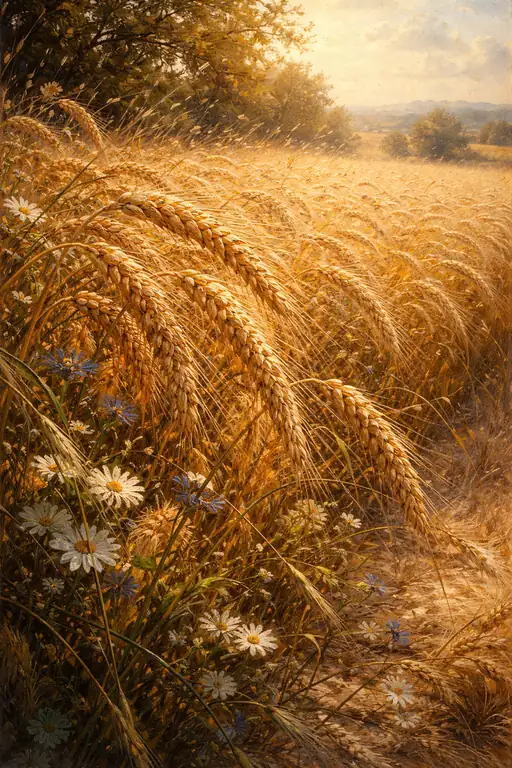 Amber Harvest
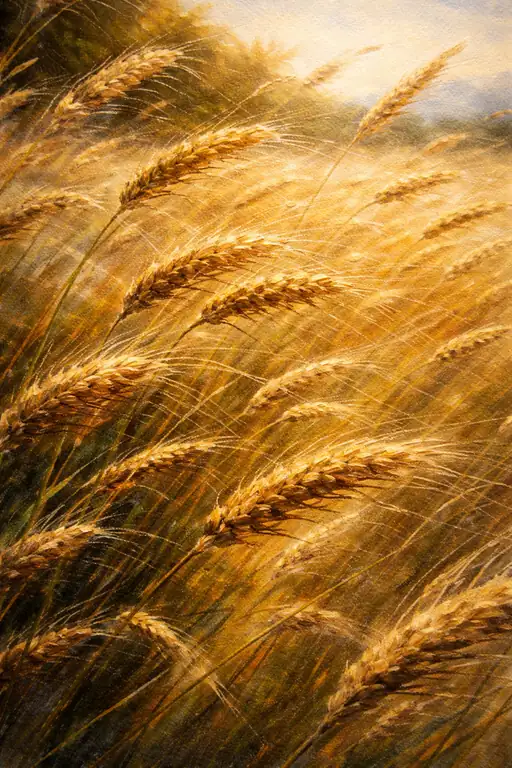 The Earth's Golden Blessing
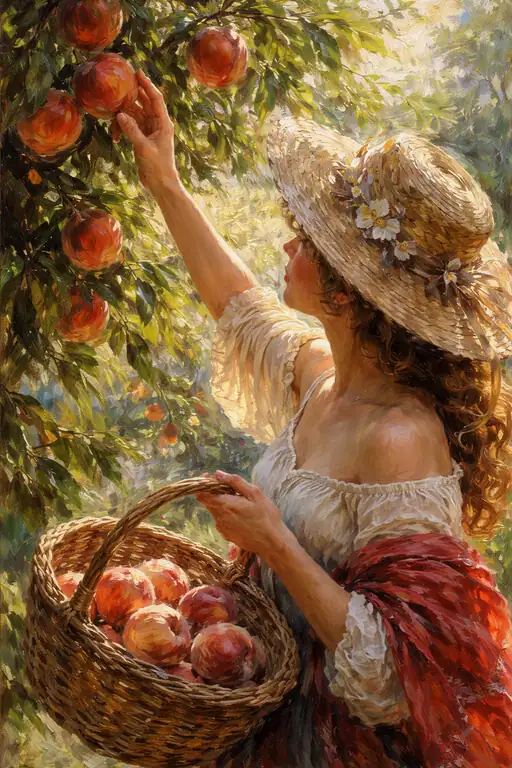 Bathed in Golden Warmth
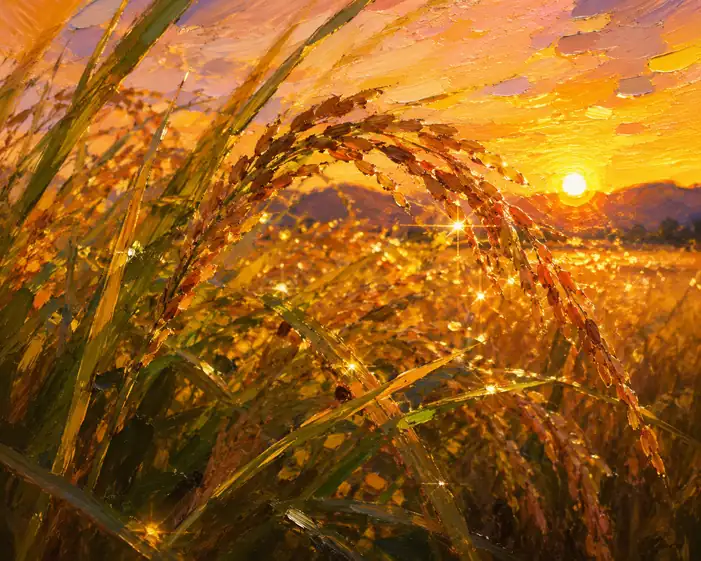 The Golden Whisper of Autumn
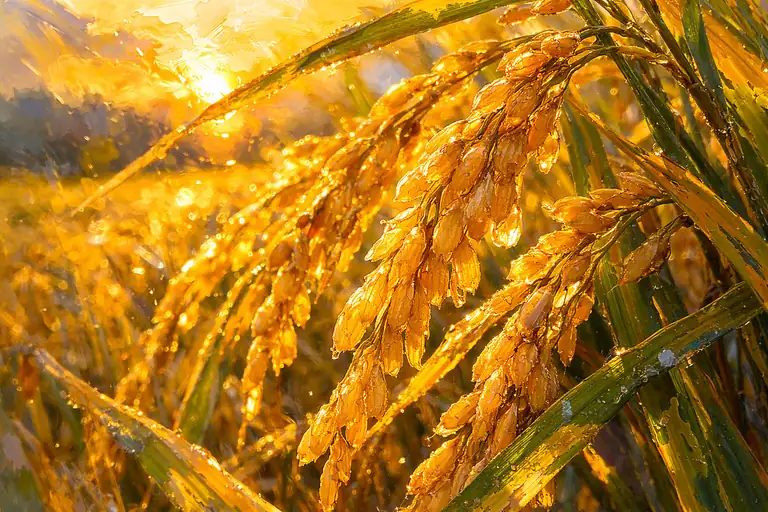 Shimmering Fields of Gold
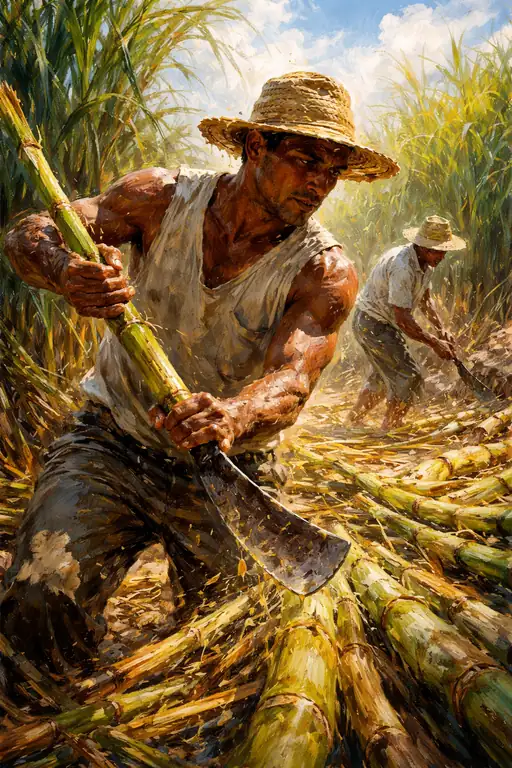 Echoes of the Sunbaked Harvest
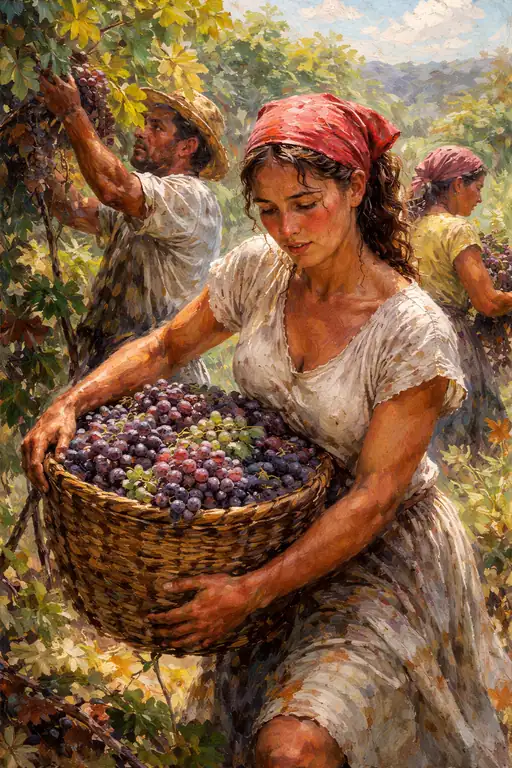 Hymn of the Sun-Kissed Earth
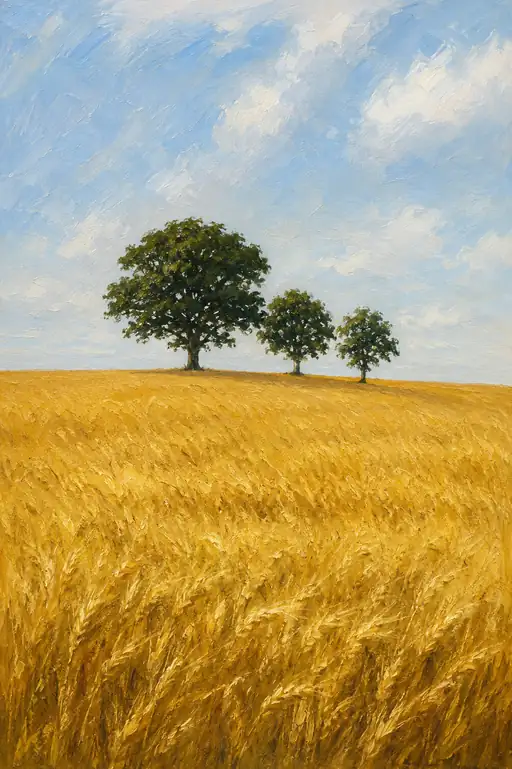 In the Golden Wind