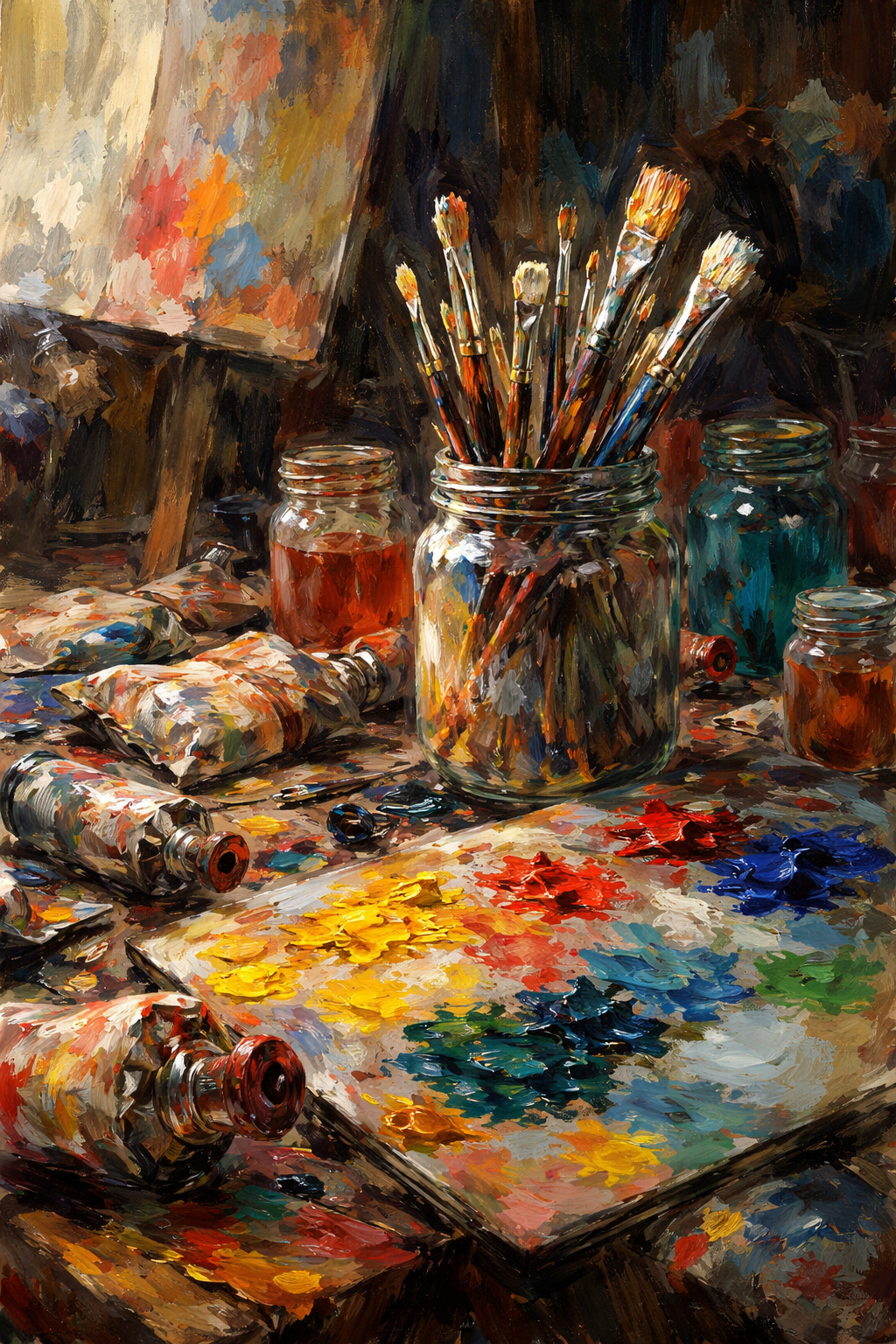
Silent Passion in the Studio
Critique
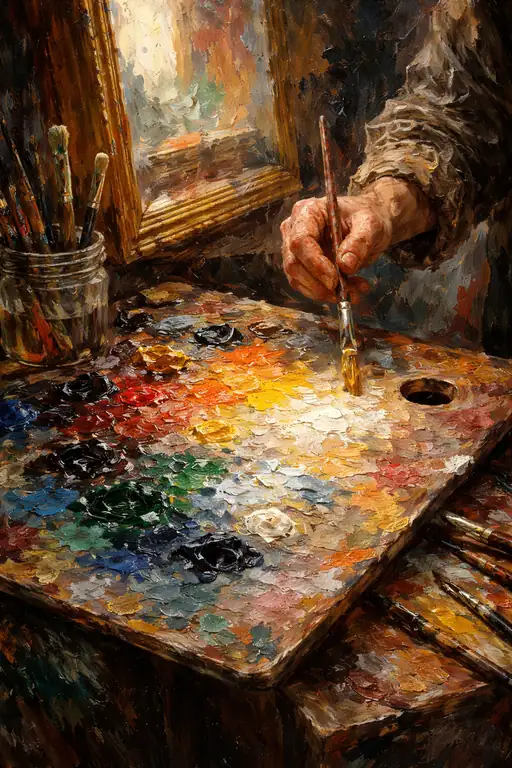
1. Introduction This vertical composition presents a detailed view of an artist's workspace, centering on a jar of brushes and a vibrant, paint-splattered palette. The work captures the essence of the creative process through a dynamic still-life arrangement of essential tools and raw pigments. It serves as a visual celebration of the labor and material reality that underpins the act of painting. This intimate glimpse into the studio environment transforms a functional setting into a dramatic stage where artistic inspiration takes physical form. 2. Description In the middle ground, a clear glass jar holds an assortment of well-worn brushes, their bristles still stained with varied hues of dried and wet paint. Below this focal point, a wooden palette is laden with thick, juicy dabs of primary and secondary colors, including brilliant yellows, deep blues, and fiery reds. Several crumpled metallic paint tubes are scattered across the weathered wooden tabletop, some with their caps removed to reveal the rich, textured pigments within. The background features blurred shapes of canvases and easels, grounding the objects in a professional workspace. 3. Analysis The artist utilizes a vigorous impasto technique, applying paint in thick, textured layers that provide a tangible physical presence to the depicted objects. Lighting enters the scene from the upper left, casting soft, directional shadows that define the cylindrical volume of the glass jar and the irregular forms of the tubes. The composition is carefully balanced through the distribution of color, contrasting the earthy tones of the background with the intense saturation on the palette. This contrast ensures that the viewer's eye is naturally drawn to the center of the creative action. 4. Interpretation and Evaluation This piece elevates mundane studio objects into a compelling narrative about the chaotic nature of inspiration and the order found in artistic practice. The energetic brushwork reflects the physical movement inherent in creation, suggesting that the tools themselves possess a history of past artistic endeavors. Technically, the rendering of light reflecting off the glass surface and the tactile quality of the spilled paint demonstrates a high level of proficiency and sensory awareness. The synthesis of realistic observation with expressionistic execution results in a work that is both grounded and emotionally resonant. 5. Conclusion The work successfully transforms a cluttered environment into a coherent and aesthetically pleasing study of light, color, and form. Although the initial impression may be one of disarray, the deliberate arrangement of texture and hue provides a sense of underlying harmony that rewards careful observation. Ultimately, the painting invites the viewer to appreciate the raw, unrefined materials that serve as the essential foundation for artistic beauty. It leaves the viewer with a profound sense of respect for the physical labor and dedication required to bring a vision to life.
Same Subcategory
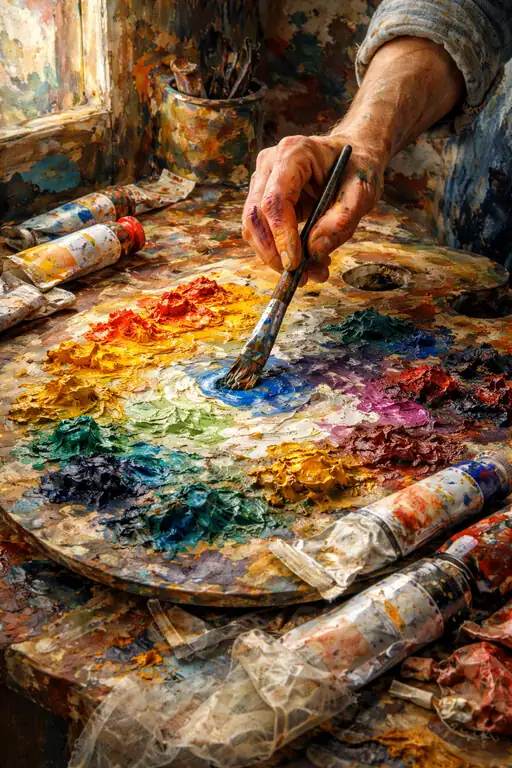 The Alchemist of Colors
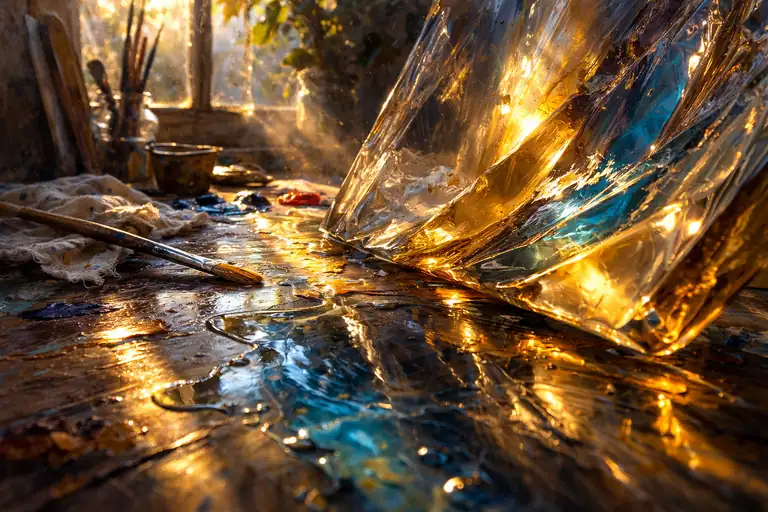 The Artist's Golden Spell on the Canvas
Similar Artworks
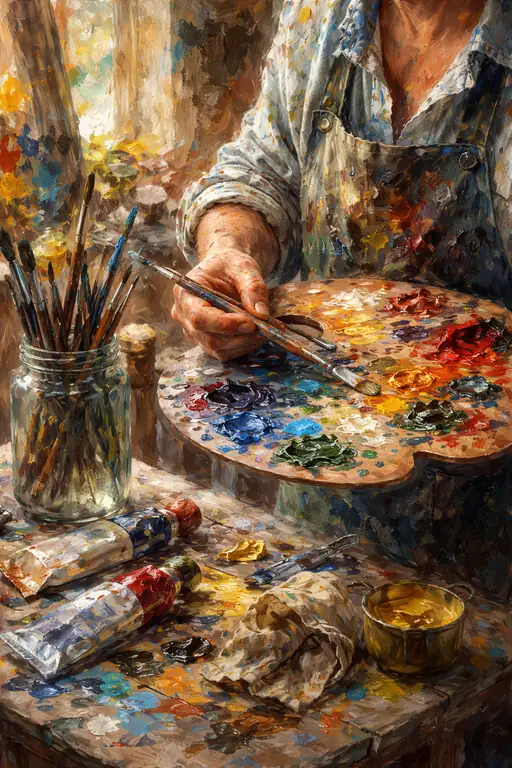 Birth of Colors on the Master's Palette
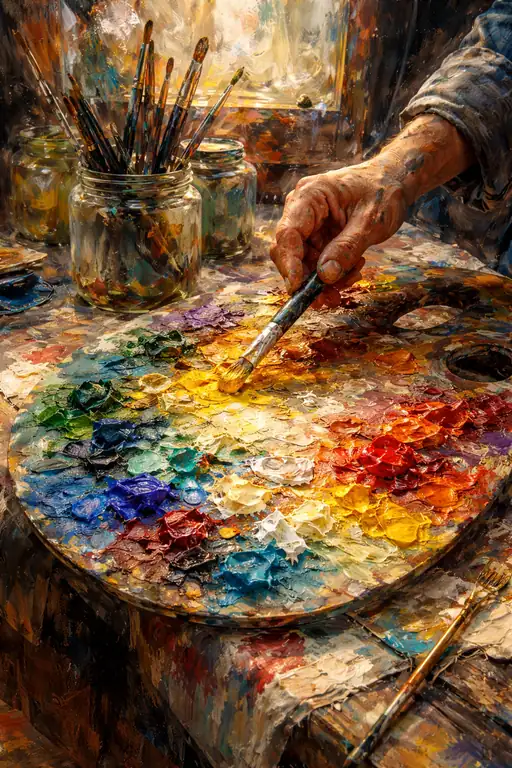 The Alchemist's Chromatic Pulse
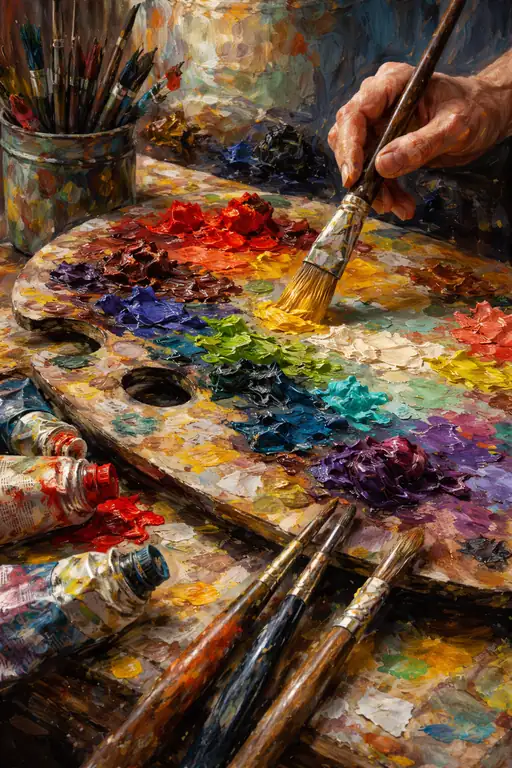 The Vibrant Pulse of the Artist's Soul
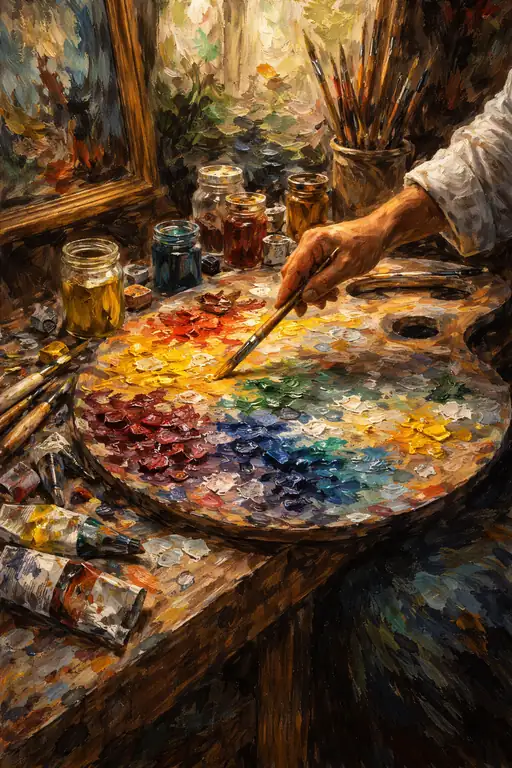 Genesis of a Masterpiece
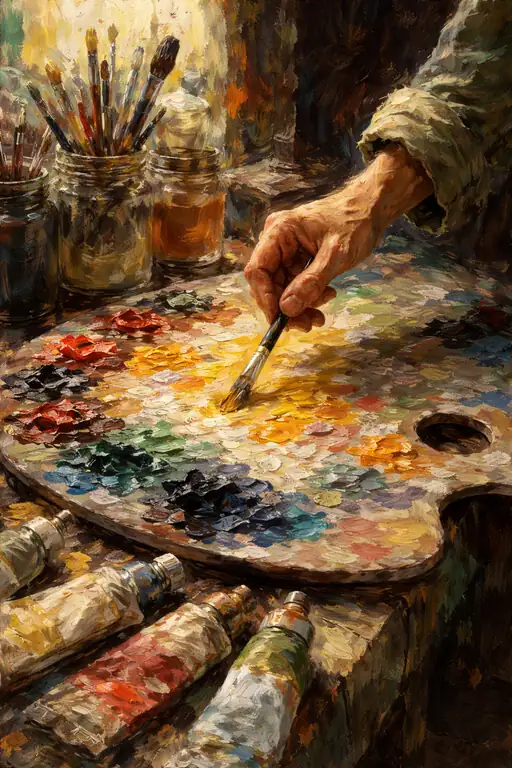 Colors Born from the Soul
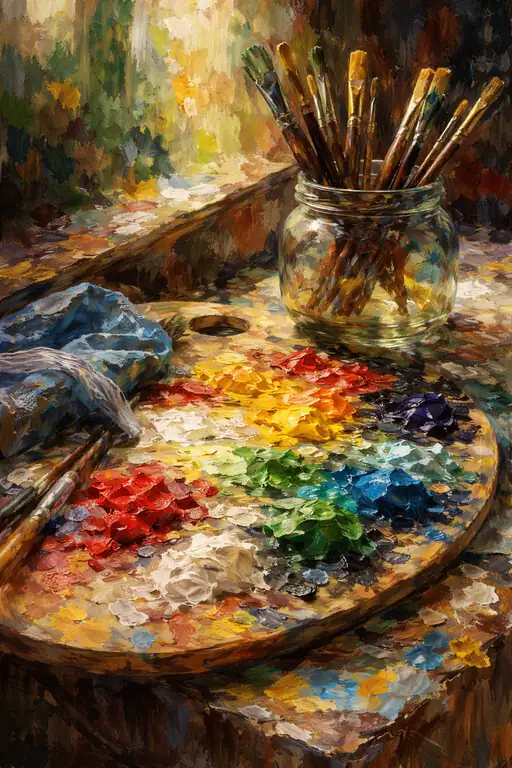 The Silent Heat of Creation
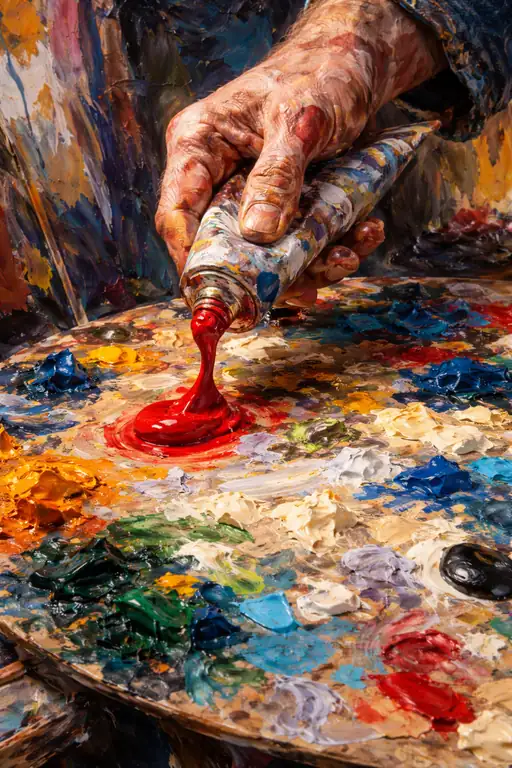 The Bleeding Palette of Creation
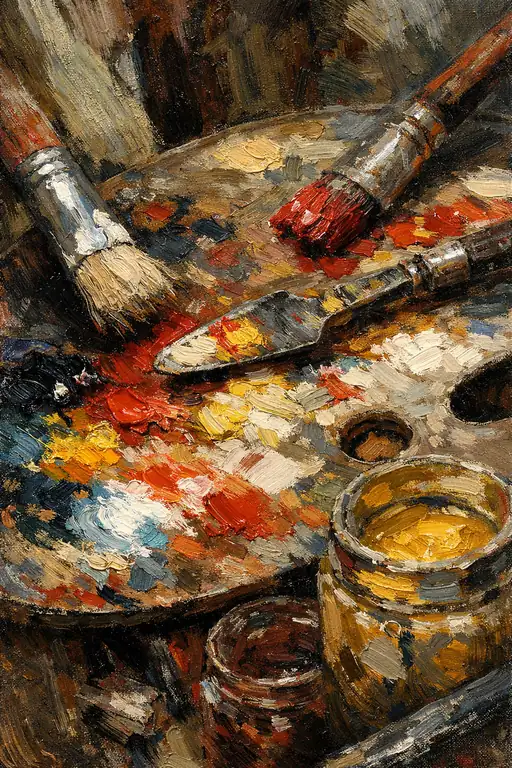 Heart of Creation
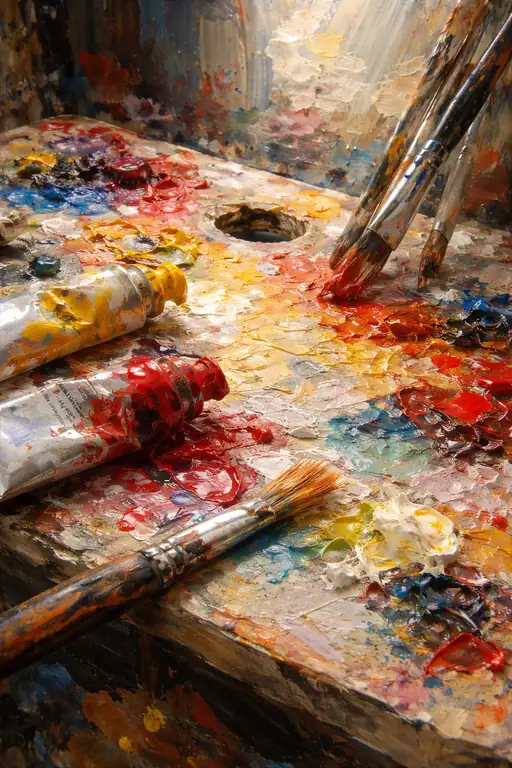 The Alchemist's Stage: Where Inspiration Takes Color
 The Intense Genesis of Art