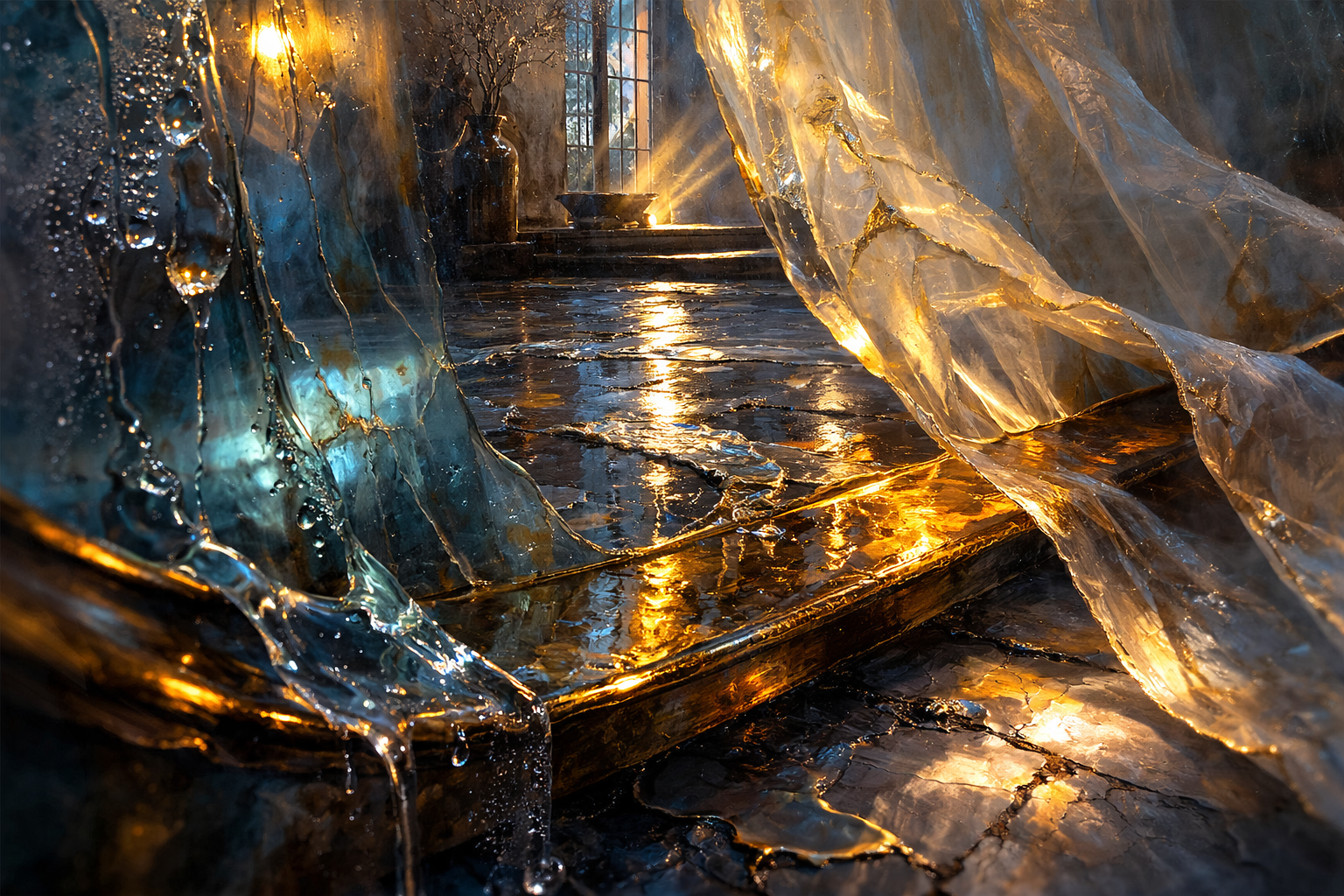
Where the Sacred Light Meets the Water
Critique
1. Introduction This oil painting depicts an ethereal interior scene where the boundaries between solid architecture and fluid elements are beautifully blurred. The composition centers on a stone-paved hall illuminated by dramatic shafts of light, which interact with transparent, wave-like structures in the foreground. By combining classical architectural motifs with dynamic, translucent forms, the work creates a sense of sacred stillness interrupted by the kinetic energy of water and light. 2. Description The scene features a wet, reflective stone floor that leads toward a distant window where golden sunlight streams into the space. In the foreground, large, ice-like or aqueous formations rise from the ground, catching the light and displaying intricate patterns of droplets and ripples. To the right, a translucent, golden fabric-like substance billows, echoing the movement of the liquid forms. The background contains subtle details of a grand interior, including a stone basin and a darkened alcove, all rendered with a focus on atmospheric depth. 3. Analysis The artist utilizes a sophisticated palette of warm golds and cool, translucent blues to create a powerful sense of depth and luminosity. The use of diagonal light beams serves as a strong directional force, guiding the viewer's eye through the space and highlighting the textures of the stone and the clarity of the fluid structures. The brushwork is particularly expressive in the depiction of the reflective floor and the shimmering highlights on the translucent curtains, suggesting a mastery of light-material interaction. 4. Interpretation and Evaluation The imagery evokes themes of purification and the transformative power of light within a contemplative space. The presence of water and ice-like forms in a seemingly ancient hall suggests a timeless cycle of nature invading human-made structures. Technically, the painting is an exceptional study of transparency and reflection, as the artist successfully captures the complex way light refracts through different media. The overall effect is one of profound tranquility and spiritual mystery, achieved through meticulous attention to atmospheric detail. 5. Conclusion Initially, the viewer is drawn to the striking contrast between the heavy stone environment and the delicate, fluid foreground elements. Upon closer inspection, the harmonious integration of these opposing forces reveals a deeper unity within the composition. The way the golden light unites the architecture with the liquid forms creates a cohesive and emotionally resonant experience. Ultimately, the work stands as a masterful exploration of how light and water can redefine the perception of architectural space and its inherent atmosphere.
Same Subcategory
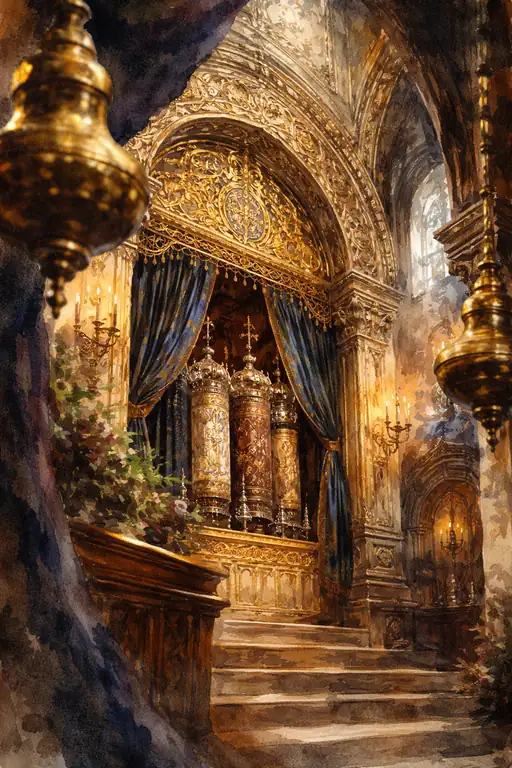 The Sacred Ark: Light of the Torah
Similar Artworks
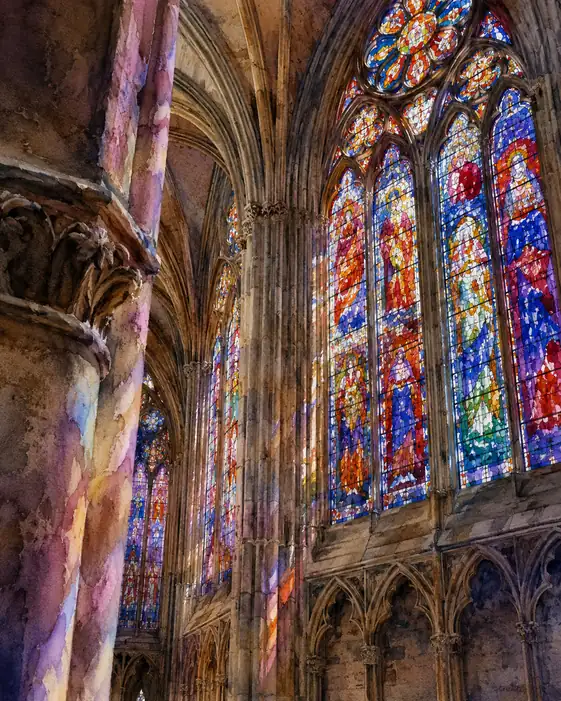 Stained in Grace
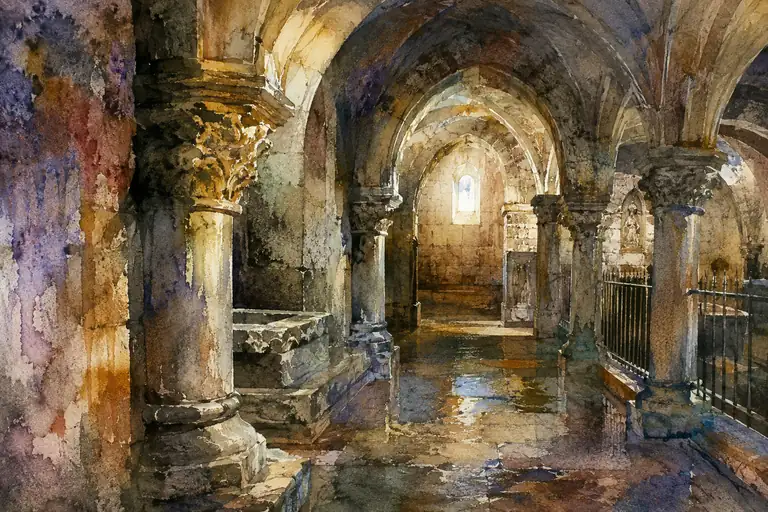 Light of Prayer Bleeding into the Dark
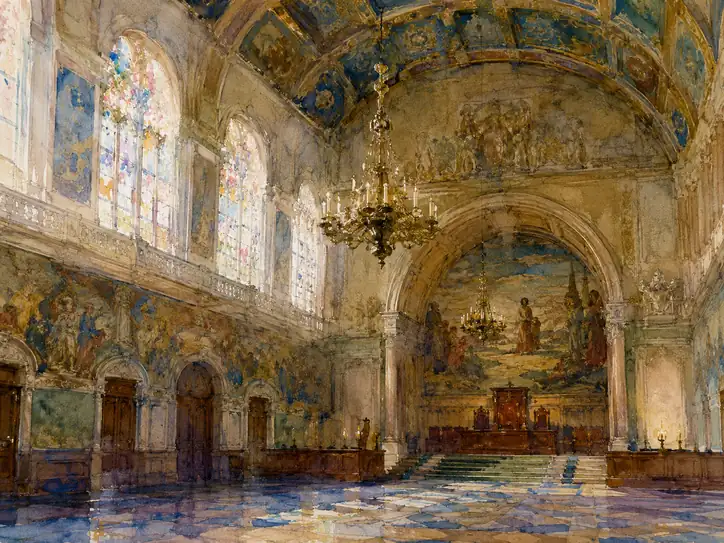 A Prayer in Blue and Gold
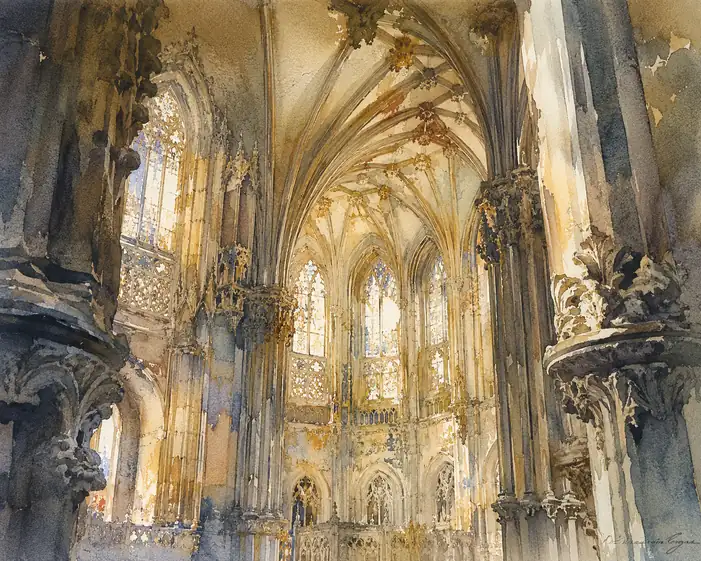 Silent Hope in the Stone Forest
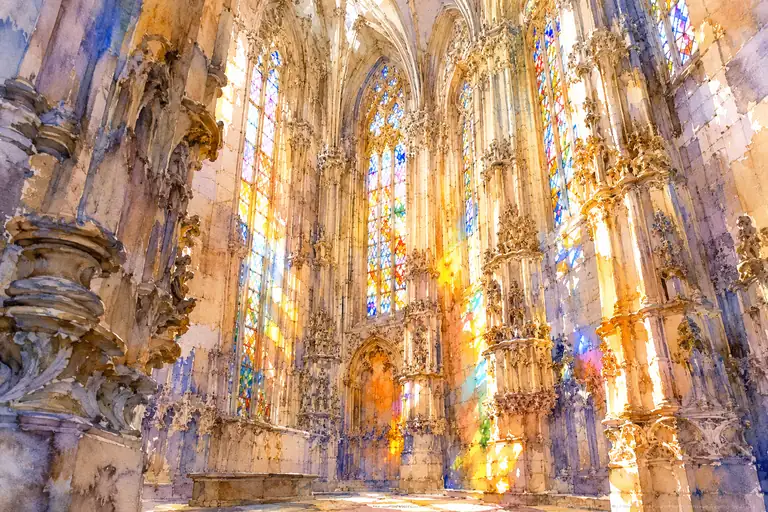 Shower of Heavenly Grace
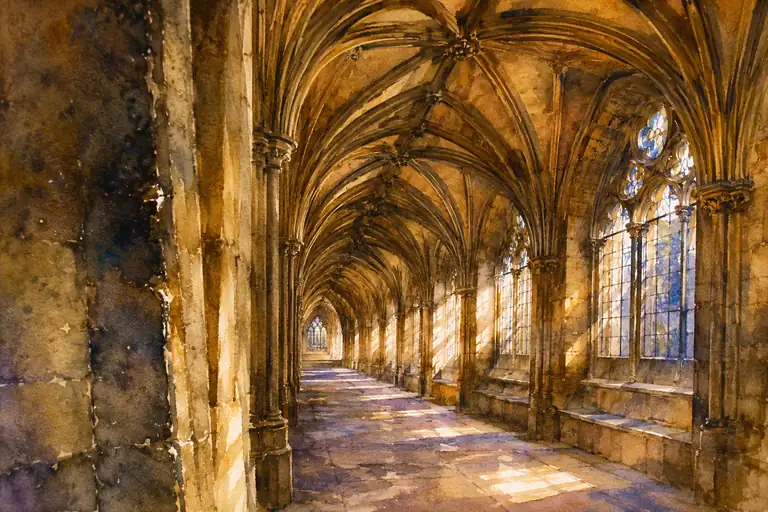 Cloister of Silence Woven by Light
 Symphony of Luminous Miracles
 Pilgrimage in Cobalt Silence
 Beyond the Shadow: Cathedral Ascending the Blue
 Beyond the Sacred Veil