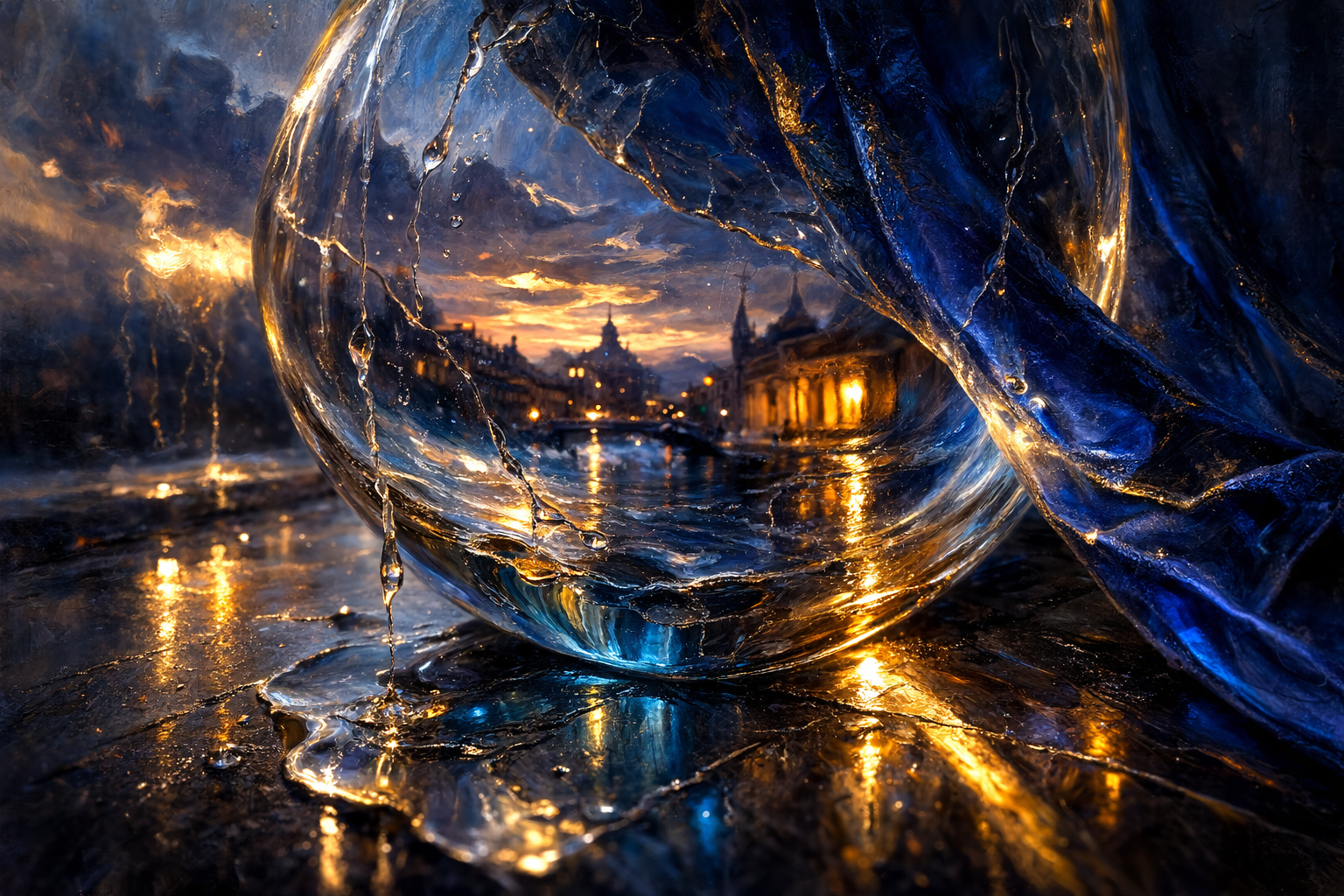
City of Mirages Trapped in a Tear
Critique
1. Introduction This oil painting presents a complex and evocative scene where a large, transparent sphere becomes the central focus of a sunset landscape. The work captures a transient moment of light and water, merging the physical environment with a refractive, dreamlike perspective. By positioning a globe filled with liquid against an urban backdrop, the composition challenges conventional spatial boundaries and invites the viewer into a multifaceted exploration of reflection and light. 2. Description The foreground is dominated by a crystal-like orb that appears to be partially filled with water, which splashes and drips across a dark, wet surface. Within and through this sphere, we see a detailed cityscape reminiscent of a historic European canal district at dusk, illuminated by golden lamps and a fiery horizon. To the right, a heavy blue fabric with shimmering textures drapes across the frame, while the surrounding area is filled with dark shadows and sparkling highlights that suggest a rainy or humid atmosphere. 3. Analysis Technically, the artist employs a striking chiaroscuro effect, utilizing the intense contrast between deep ultramarine blues and radiant amber yellows. The brushwork is particularly intricate in the depiction of water droplets and the refractive distortions within the sphere, creating a sense of tactile realism amidst an atmospheric setting. The circular form of the orb acts as a powerful compositional anchor, drawing the eye inward and organizing the surrounding chaos of light and shadow into a coherent focal point. 4. Interpretation and Evaluation The imagery suggests a profound dialogue between the microcosm of the water droplet and the macrocosm of the urban world. The sphere acts as both a lens and a barrier, distorting the city's reality while simultaneously preserving its beauty in a fragile, suspended state. The work is highly successful in its technical execution of complex light effects and textures, demonstrating a sophisticated understanding of how light interacts with transparent and reflective surfaces to create emotional resonance. 5. Conclusion Upon initial observation, the piece seems to focus on the technical spectacle of refraction, but deeper engagement reveals a poetic meditation on the fleeting nature of light and urban life. The integration of the blue fabric and the splashing water adds a layer of physical immediacy that contrasts with the distant, glowing city. Ultimately, the painting stands as a compelling testament to the power of light to transform ordinary elements into a scene of extraordinary beauty and mystery.
Same Subcategory
 Reflections of a Hushed Reverence
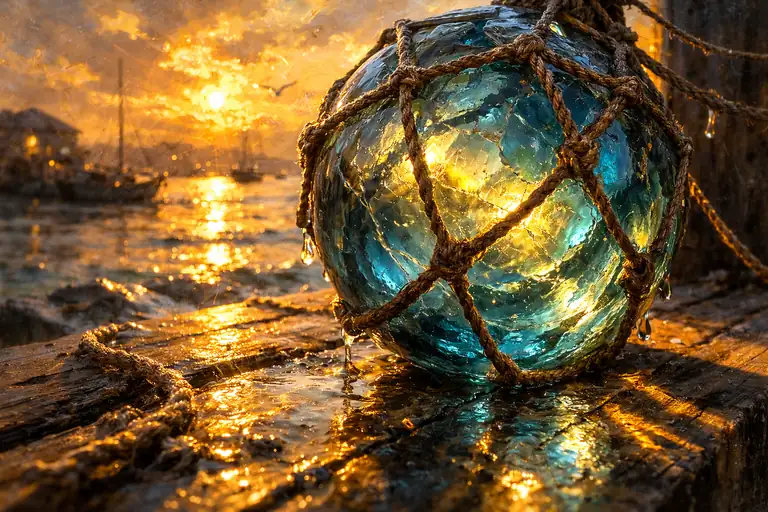 Golden Twilight Held in a Glass Buoy
Similar Artworks
 Wisdom of Centuries
 Nature's Embrace
 Heart of the Luminous Cavern
 Melody of the Dripping Sunset
 Crimson Peony and Dawn Over Mount Fuji
 Leaving the Blue Glow of Flowers Behind
 The Radiant Core of Silence
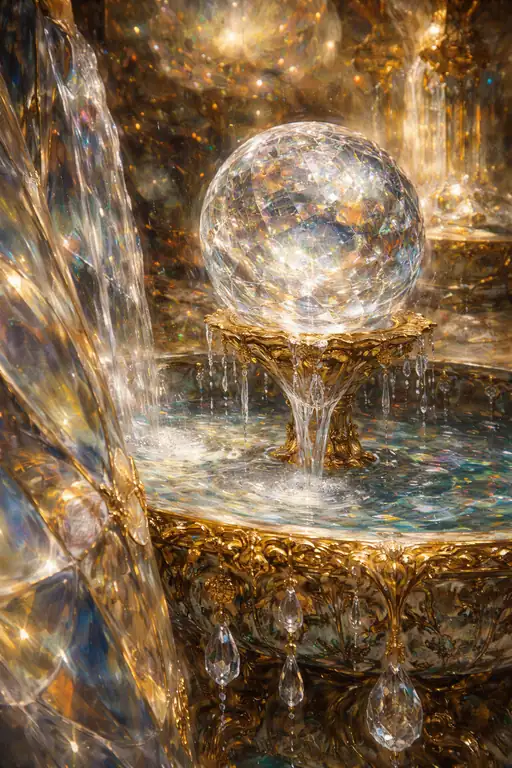 Golden Depths of Inner Light
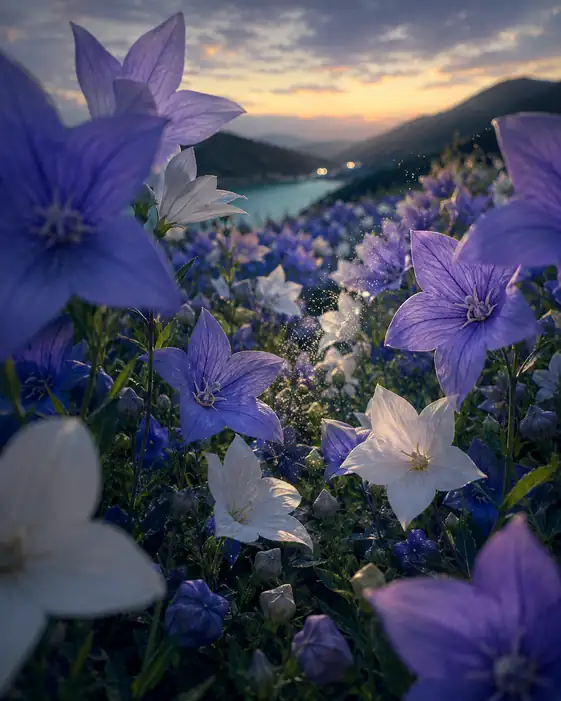 Floating Light Particles and Purple-White Bellflowers by the Twilight Lake
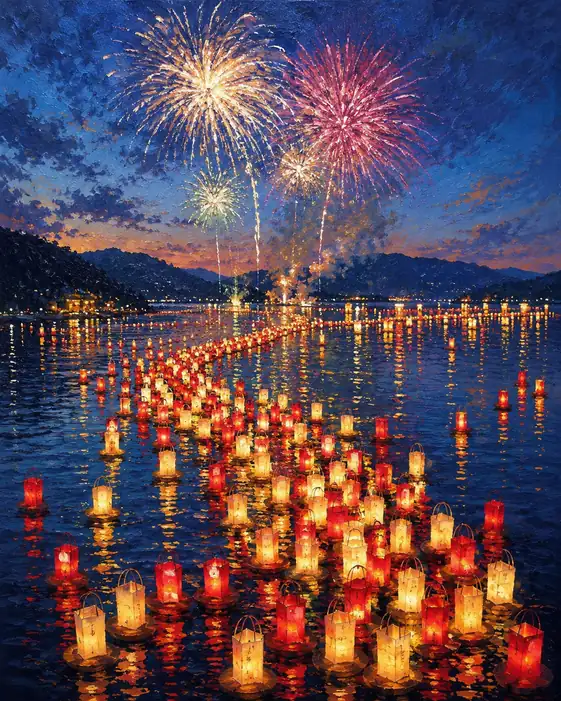 River of Lanterns and Summer Fireworks