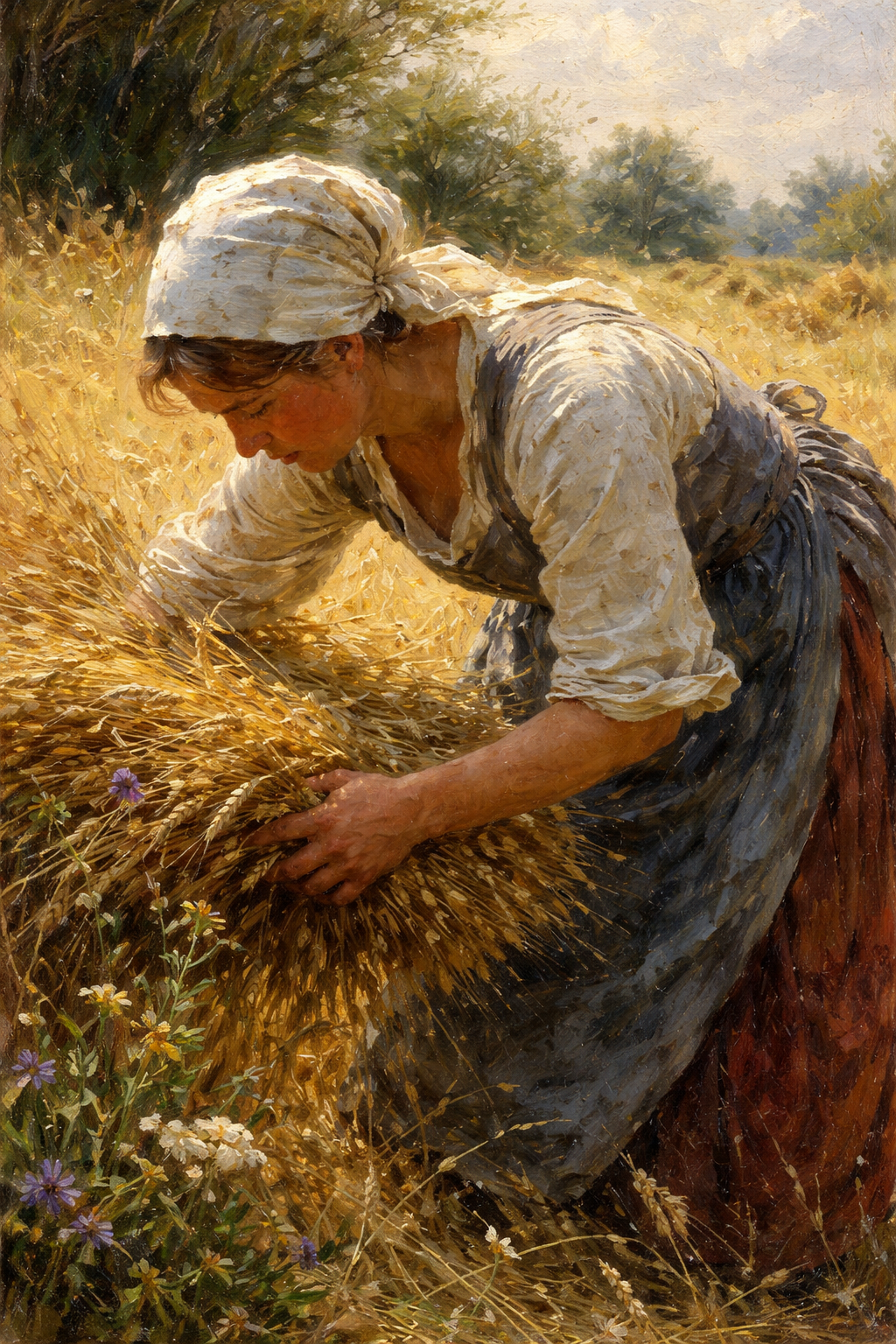
The Golden Sweat of Summer
Critique
1. Introduction This oil painting presents a classic scene of agricultural labor, focusing on a single female figure engaged in the harvest. The work is deeply rooted in the traditions of nineteenth-century naturalism, emphasizing the dignity and physical reality of manual toil. It employs a warm, sun-drenched palette to capture the atmosphere of a late summer field. The composition centers on the interaction between the worker and the crops, highlighting the cyclical relationship between humanity and the land. 2. Description A woman wearing a white headscarf and a sturdy blue apron over a red skirt is positioned in the center, stooped over a large bundle of golden wheat. Her face is shown in profile, concentrated on the task of gathering the stalks into a sheaf. The surrounding field is filled with ripe grain, punctuated by small clusters of purple and white wildflowers in the lower-left foreground. In the background, soft-focus trees and a bright, hazy sky suggest a vast, open landscape under intense afternoon light. 3. Analysis The artist uses rich, textured brushstrokes to differentiate between the coarse fabric of the clothing and the dry, brittle texture of the wheat. The color scheme is dominated by golden yellows and warm ochres, which are balanced by the cool blues of the woman's apron and the dark greens of the distant trees. Light is the primary organizing element, creating strong highlights on the woman's shoulder and the wheat she holds. The diagonal line created by the woman’s bent back provides a sense of stable, grounded movement. 4. Interpretation and Evaluation The work can be interpreted as a silent tribute to the enduring nature of rural life and the quiet strength required for agricultural survival. Technically, the painting demonstrates a high degree of skill in rendering light and shadow to create volume and a sense of three-dimensional space. The choice to keep the background simplified ensures that the viewer’s focus remains entirely on the laborer and her environment. Overall, the painting is a successful example of figurative realism that evokes a sense of timelessness and respect for labor. 5. Conclusion Upon first viewing, the painting impresses with its luminous warmth and the convincing weight of the harvested wheat. Further study reveals a sensitive portrayal of a moment of focused concentration within the broader rhythm of the farming season. The piece effectively communicates the physical demands of the harvest while maintaining an aesthetic balance through light and color. It remains a poignant study of the human condition and its fundamental connection to the natural world.
Same Subcategory
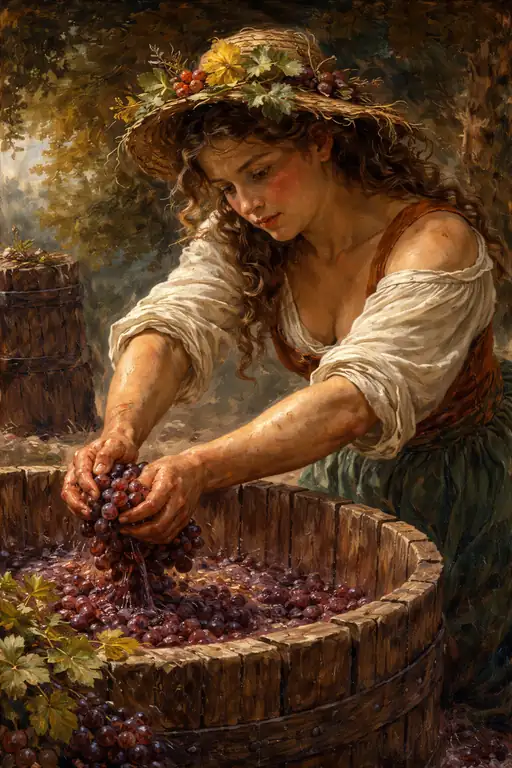 The Weight of the Harvest
Similar Artworks
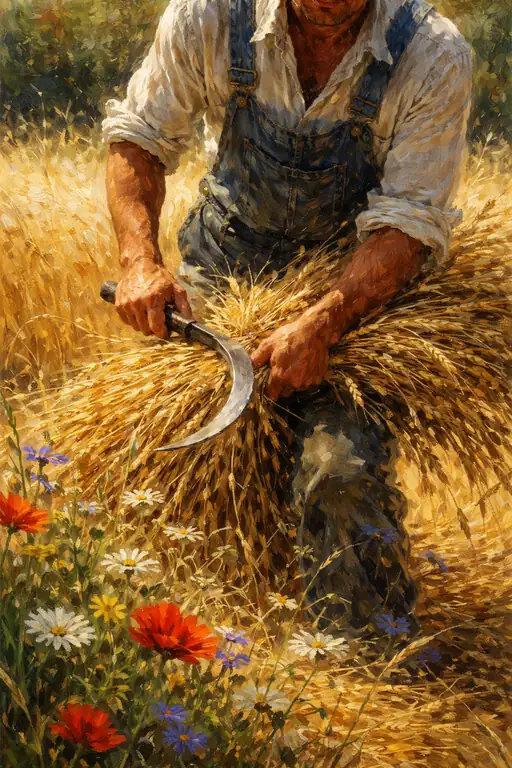 Golden Hymn of the Earth
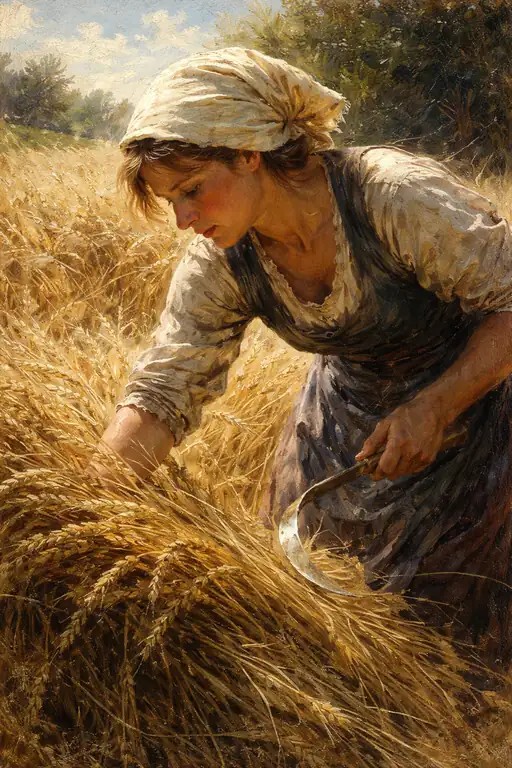 The Golden Dignity of the Harvest Sweat
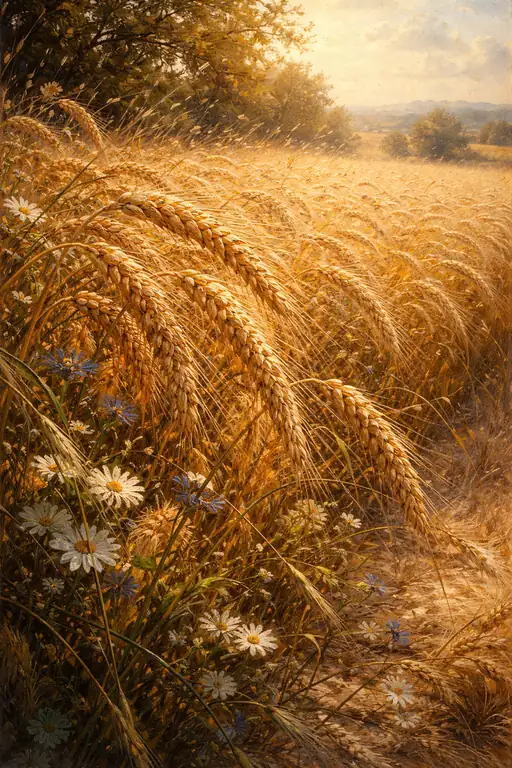 Amber Harvest
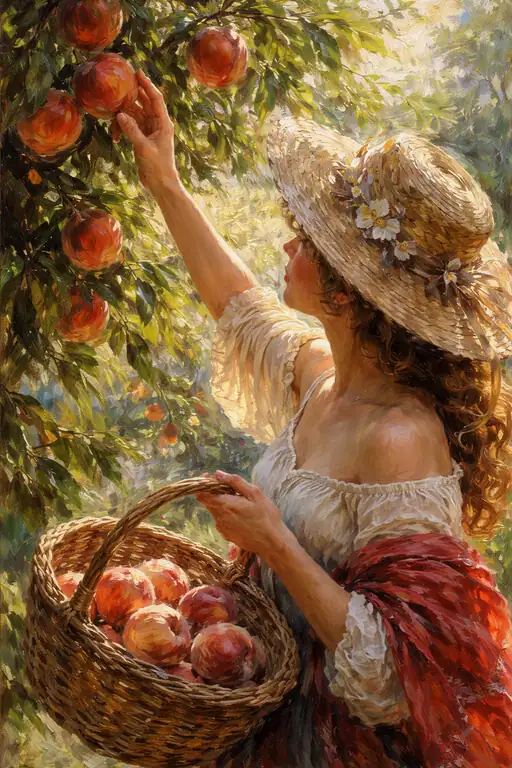 Bathed in Golden Warmth
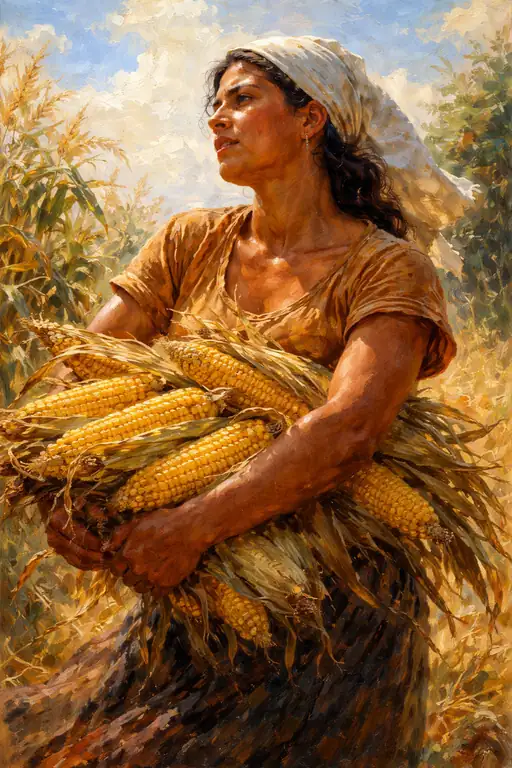 The Harvest of Hope: A Song for the Fertile Land
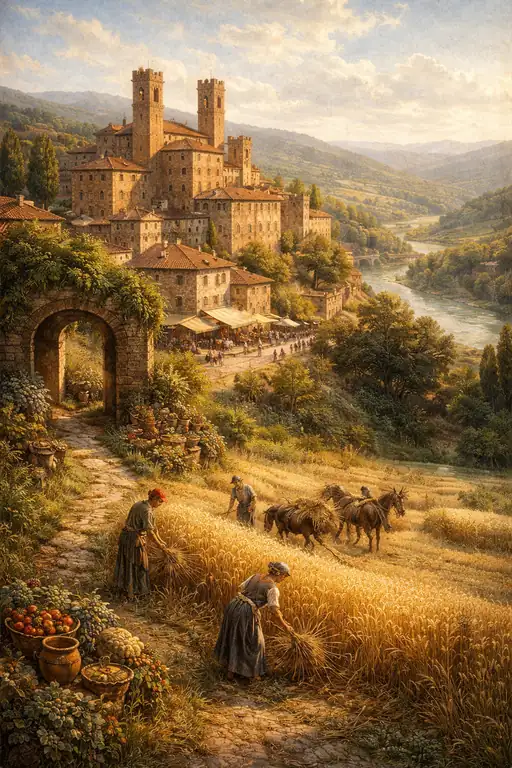 A Golden Harvest Under the Watchful Towers
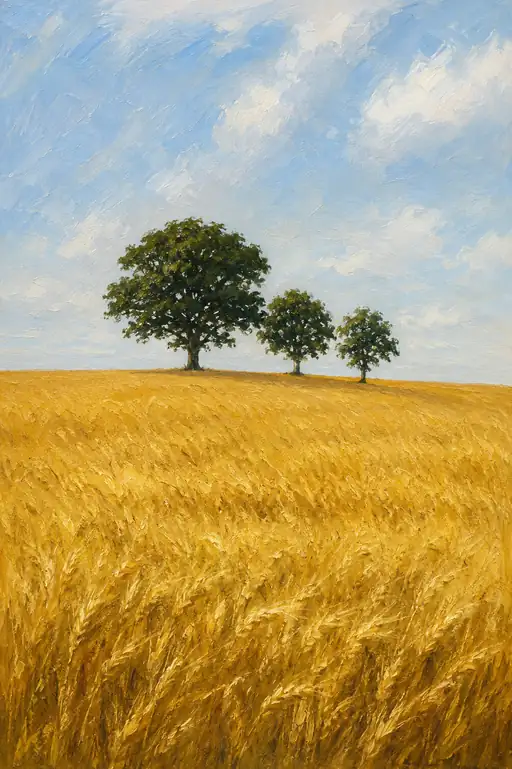 In the Golden Wind
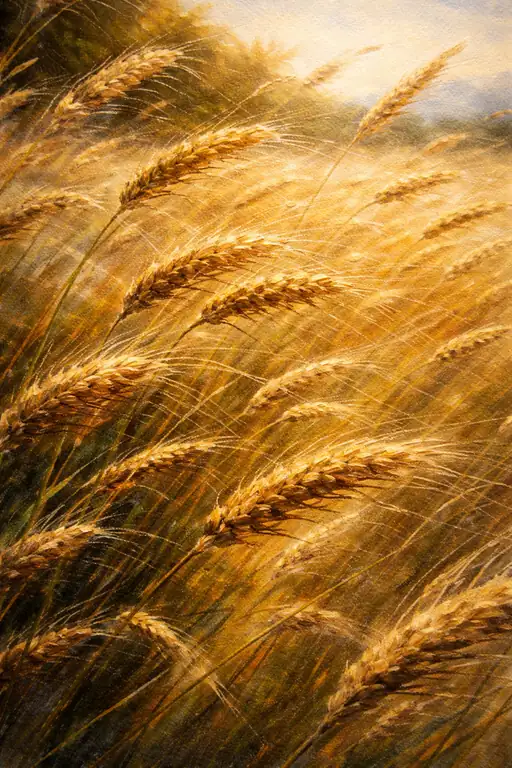 The Earth's Golden Blessing
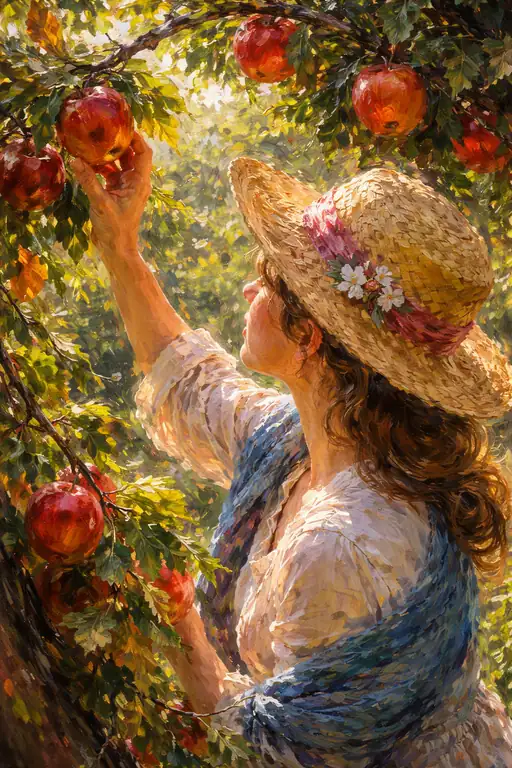 Joy of Life Ripened in Sunlight, Season of Grace
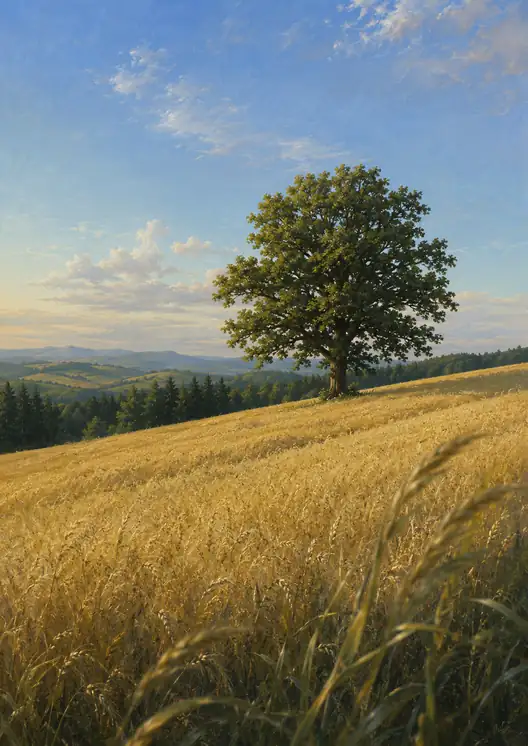 The Silent Master of the Golden Hill