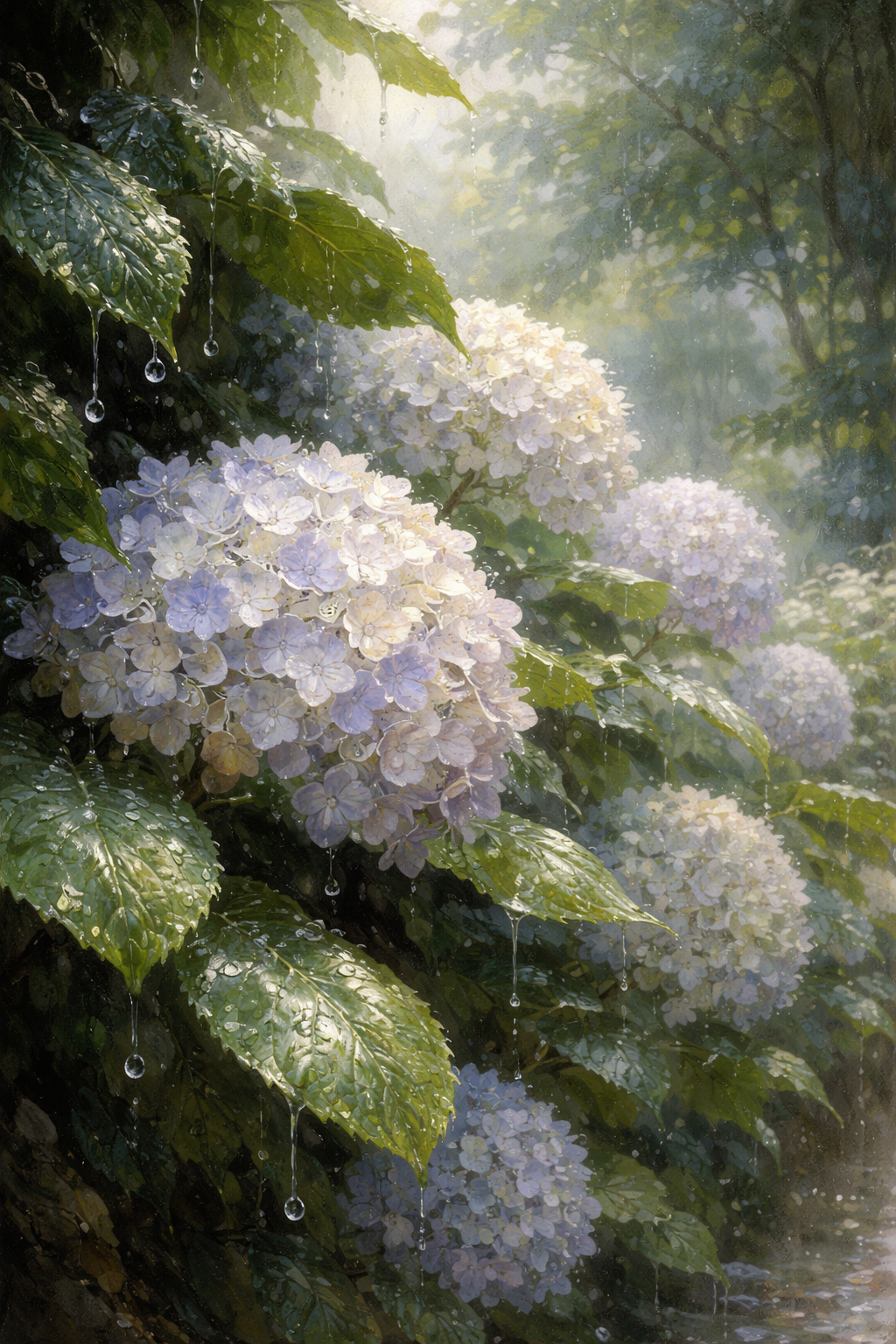
The Melancholy of the Azure Sea
Critique
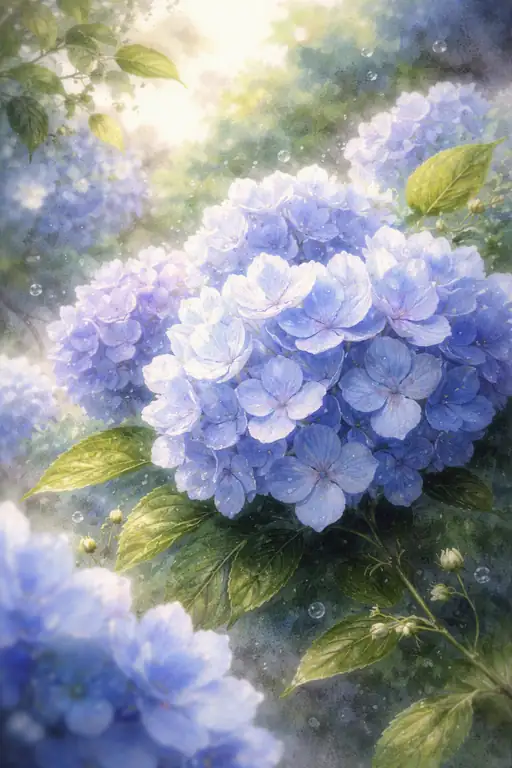
1. Introduction This landscape painting features hydrangeas, symbolic of the rainy season, rendered with the soft light of a wet day. The gradations of pale blue and white that envelop the scene, along with the depiction of rain dripping from the leaves, provide the viewer with a sense of cool, quiet emotion. A key characteristic of this work is its treatment of rain not merely as background but as an active element that brings movement and moisture to the entire canvas. Based on keen observation, this piece successfully visualizes even the humid atmosphere, possessing both a high level of painterly completion and deep spirituality. 2. Description Large hydrangea blooms, shifting from white to pale blue, are arranged across the center and foreground. Each individual floret is delicately painted, with fine rain droplets clinging to their surfaces. The large leaves supporting the flowers are deep green, their wet textures rendered realistically through the depiction of water streaks. From the upper-right, thin lines represent falling rain, while the background trees are blurred, adding a fantastical sense of depth. The entire composition is unified by a subdued color palette, illuminated by the soft, diffused light typical of a rainy day. 3. Analysis The composition creates a visual rhythm through the contrast between the round forms of the hydrangeas and the vertical lines of the falling rain. In terms of color, the cool tones of the flowers harmonize with the green of the leaves, effectively recreating the calm atmosphere of a rainy day. Technically, the fine lines capturing falling drops and the depictions of water dripping from the leaves introduce a sense of temporal flow into the scene. While the brushwork is meticulous for the subjects, the intentional omission of detail in the background successfully highlights the presence of the hydrangeas. 4. Interpretation and Evaluation This work symbolizes the universal beauty inherent in fleeting weather changes and the quiet vitality of plants. The artist’s sensibility in reinterpreting rain—a phenomenon often seen as gloomy—as a life-giving blessing is highly commendable. Based on exceptional descriptive technique, the ability to convey intangible elements such as humidity and temperature elevates this work beyond a simple botanical study into a piece of fine art. The originality in expressing the symbiosis between rain and plants, part of nature’s cycle, through unique light and color brings deep peace to the viewer. 5. Conclusion A detailed study of this work leads the viewer from a refreshing sense of cool air to a vivid feeling of being present in a garden where even the sound of rain can be heard. The harmony between the delicate colors of the hydrangeas and the dripping droplets represents the aesthetic pinnacle of the piece. This artwork, where mature descriptive skill and a deep love for the landscape coincide, once again demonstrates the expressive power of realistic painting. Ultimately, it is concluded that this is a highly accomplished masterpiece that provides both visual beauty and a rich, appreciative spirit toward a rainy day.
Same Subcategory
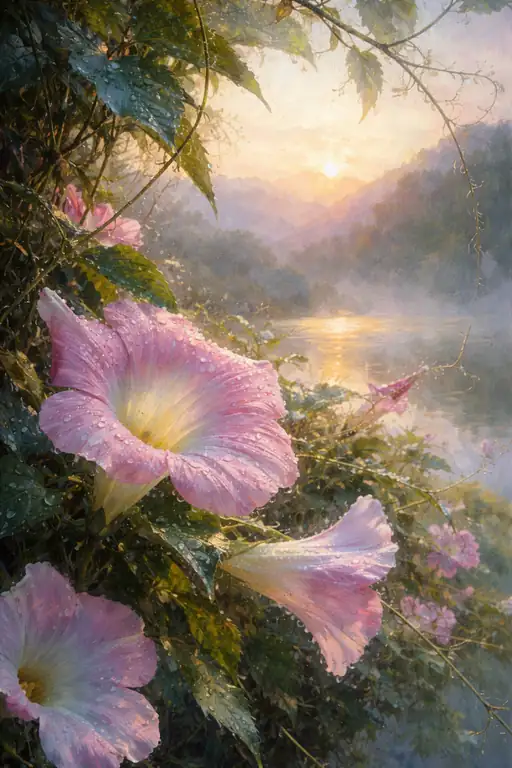 Morning Glory's Awakening Through the Mist
Similar Artworks
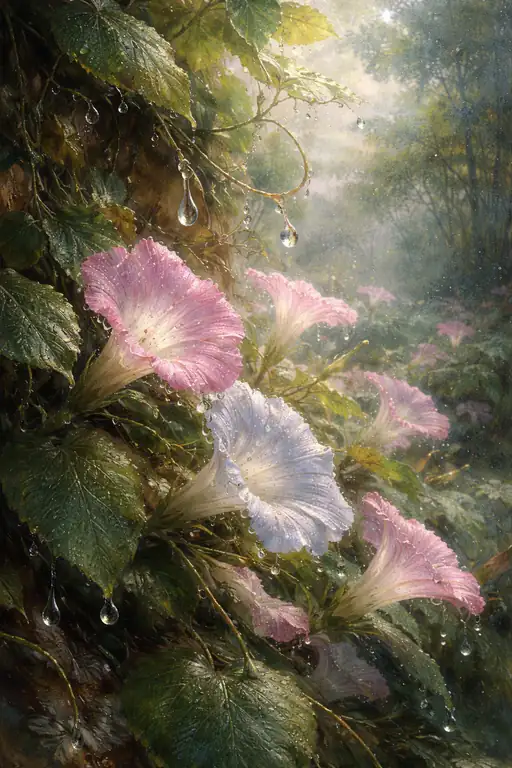 Silent Vigil of the Crimson Guard
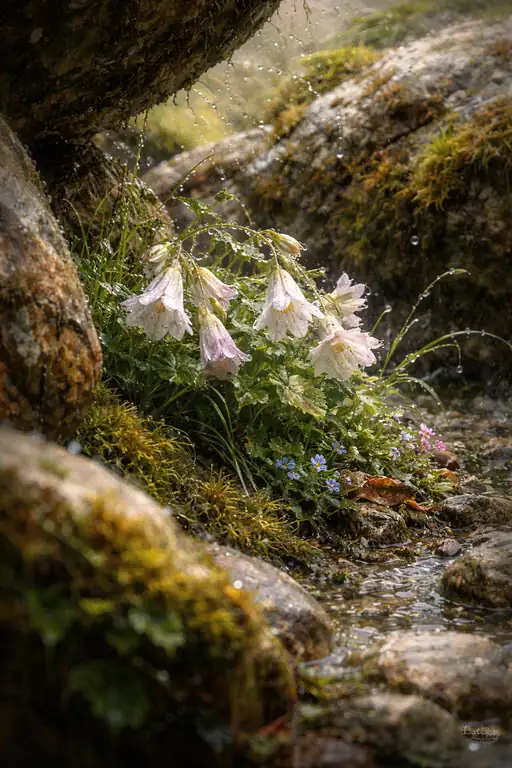 Hymn of the Mountain Stream
 Raindrops on Sapphire Petals
 Whispers of the Gentle Rain
 Glistening Vows of Summer
 Morning Glory Glistening with Rain
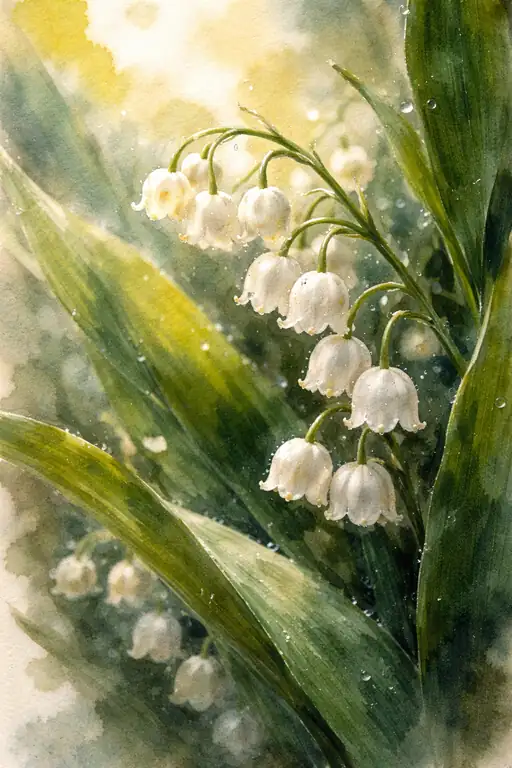 Quiet Elegance of the Forest Bells
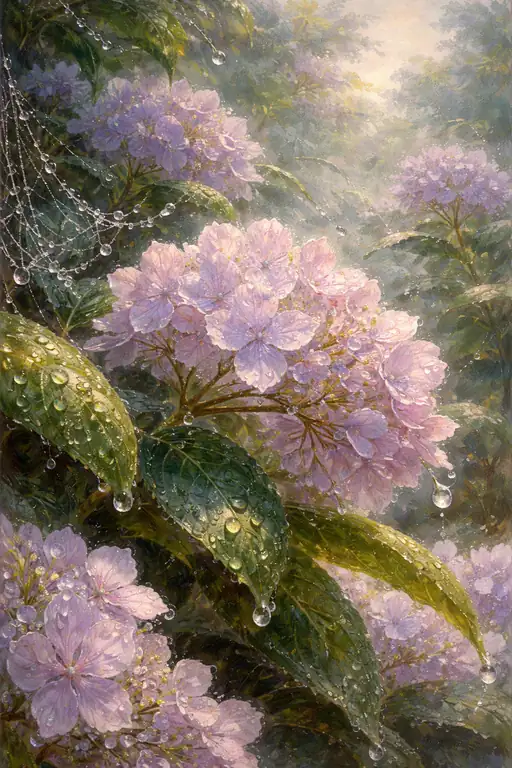 Lilac Hydrangea Enveloped in Mist
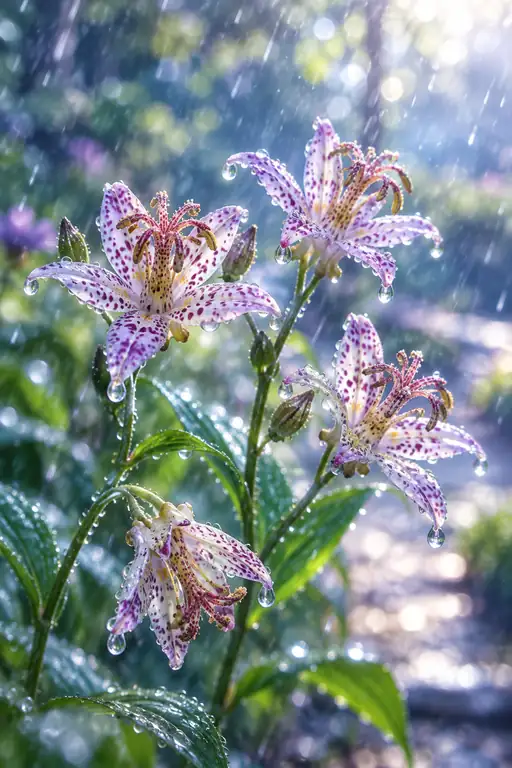 I Bloom Beneath the Rain
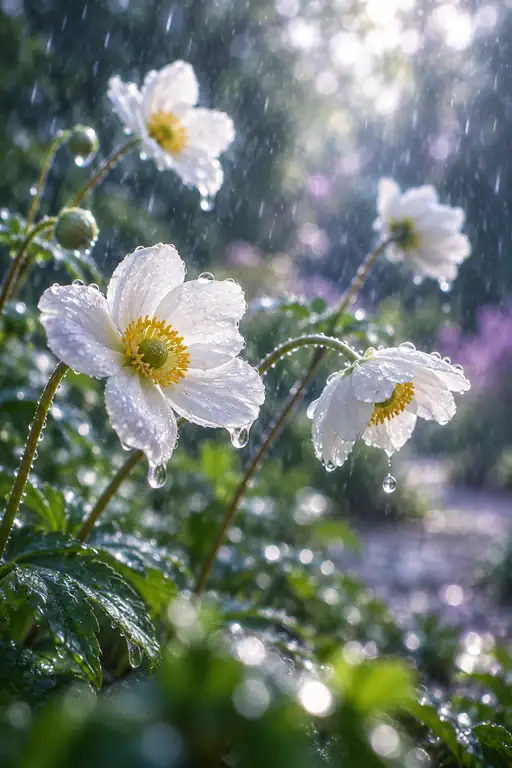 Raindrops on White Anemone