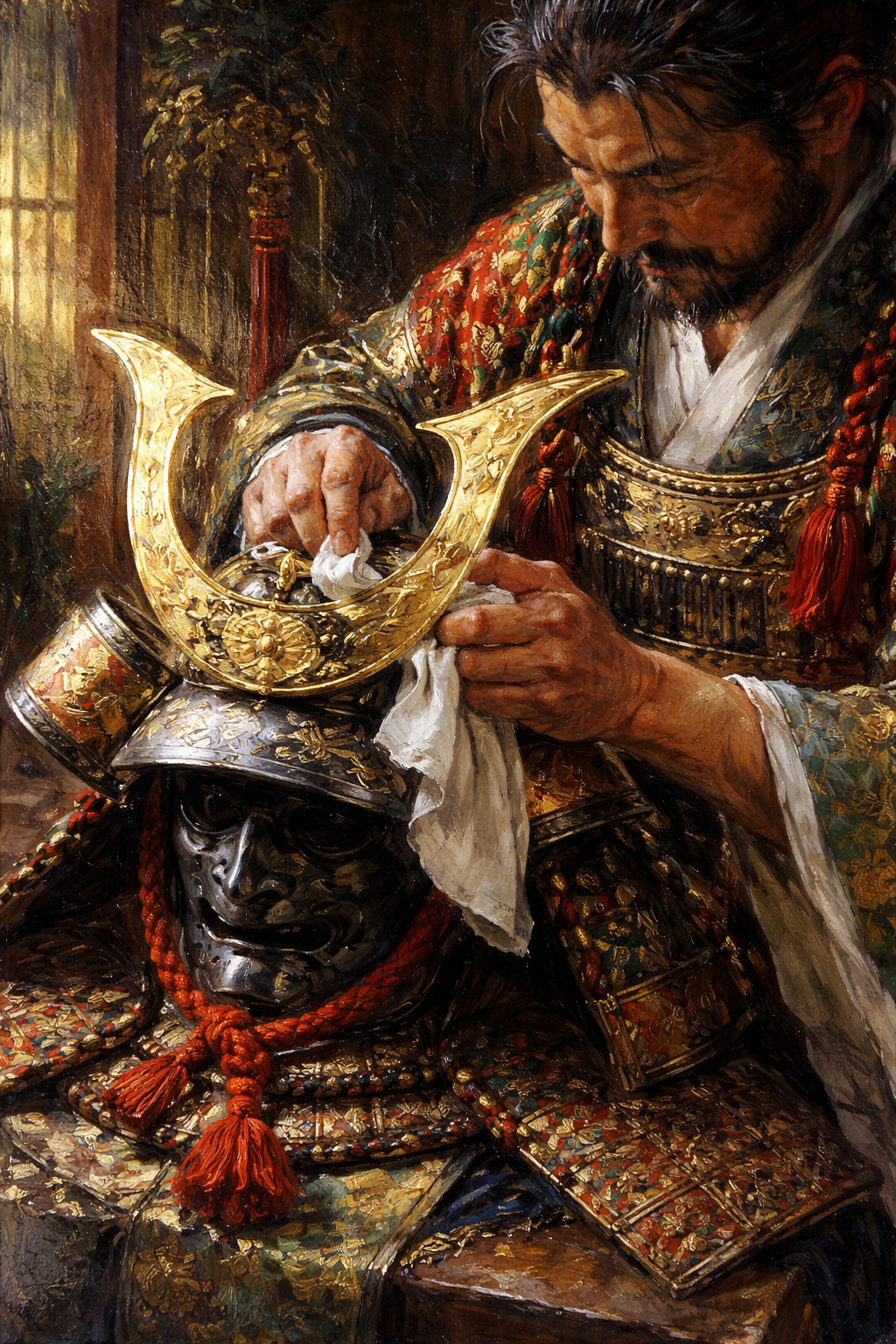
Spirit of the Warrior: Polishing the Golden Crescent
Critique
1. Introduction This evocative oil painting depicts a Japanese warrior meticulously maintaining his traditional armor, specifically focusing on the cleaning of a kabuto (helmet). The scene is set in a dimly lit interior, where warm light highlights the intricate details of the gear and the warrior's focused expression. The work explores themes of duty, preparation, and the solemn relationship between a soldier and his equipment. 2. Description The composition is a close-up that features a bearded man with a stern, concentrated gaze, holding a white cloth to a large, golden crescent-moon ornament atop a black lacquered helmet. Below the ornament, a fierce-looking menpo (face mask) is visible, accompanied by vibrant red braided cords and tassels. The warrior wears a richly patterned garment with floral and geometric motifs, and the background shows a hint of a traditional sliding door, adding to the domestic yet disciplined atmosphere. 3. Analysis The artist utilizes a textured, realist style with visible brushstrokes that emphasize the varied materials, from the smooth, reflective metal of the mask to the coarse fabric of the tassels. The lighting is dramatic, casting deep shadows that give the scene a sense of gravitas and weight. A strong diagonal is formed by the warrior’s arms and the golden maedate, which draws the viewer's attention to the central act of cleaning. 4. Interpretation and Evaluation This painting is a powerful study of character and cultural heritage. By showing the warrior in a moment of quiet maintenance rather than active combat, the artist emphasizes the ritualistic and psychological aspects of the samurai class. The technical rendering of the metallic sheen and the textile patterns is exceptional, providing a high degree of visual interest. The piece effectively balances the intimidating appearance of the armor with the humanity of the person behind it. 5. Conclusion What initially appears as a detailed military portrait reveals itself to be a profound reflection on discipline and the passage of time. The painting successfully captures the quiet intensity inherent in the preparation for conflict. Ultimately, it serves as a dignified tribute to the craftsmanship and spirit of a historical era, leaving a lasting impression of silent resolve.
Same Subcategory
 Tattered Pride in the Morning Mist
Similar Artworks
 Silent Pride of the Warrior
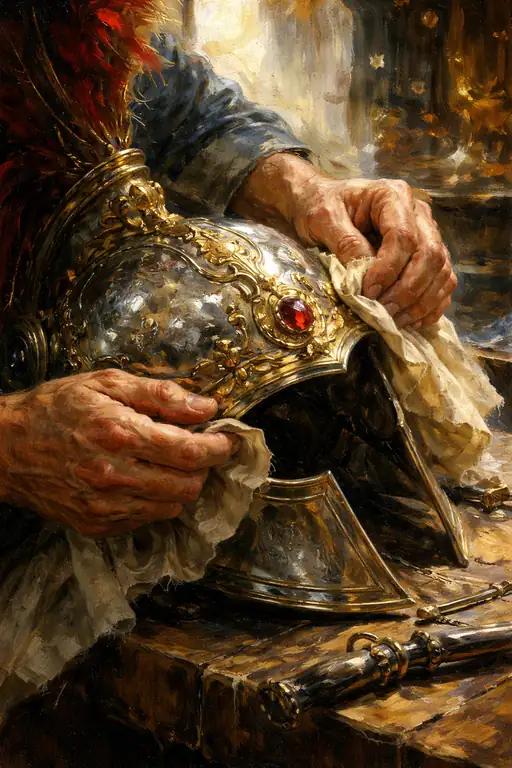 The Silver Pride of a Fallen Era
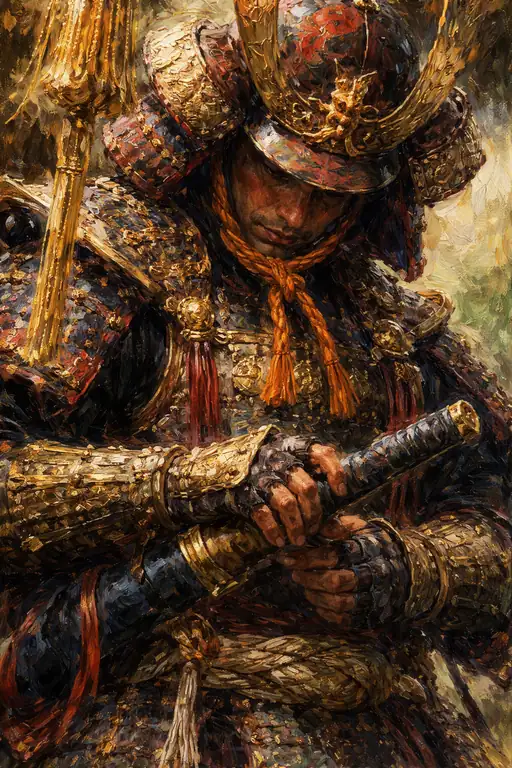 Golden Armor Shimmering in Silent Thought
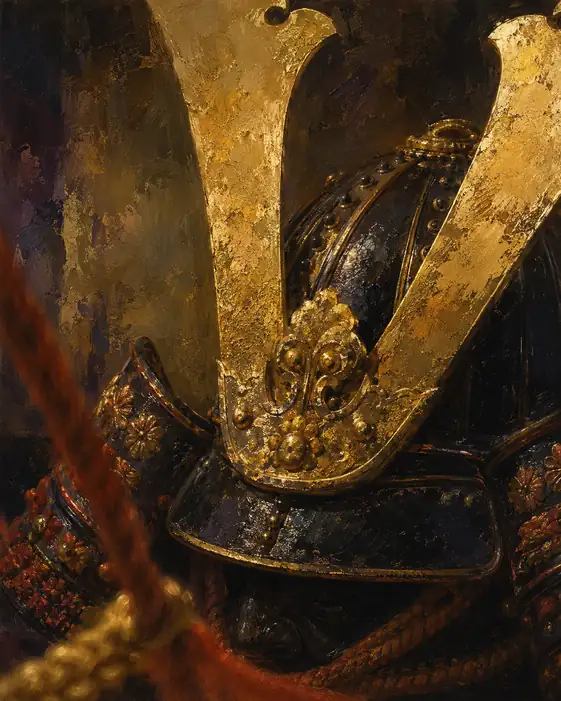 Prayer of Gold and Lacquer
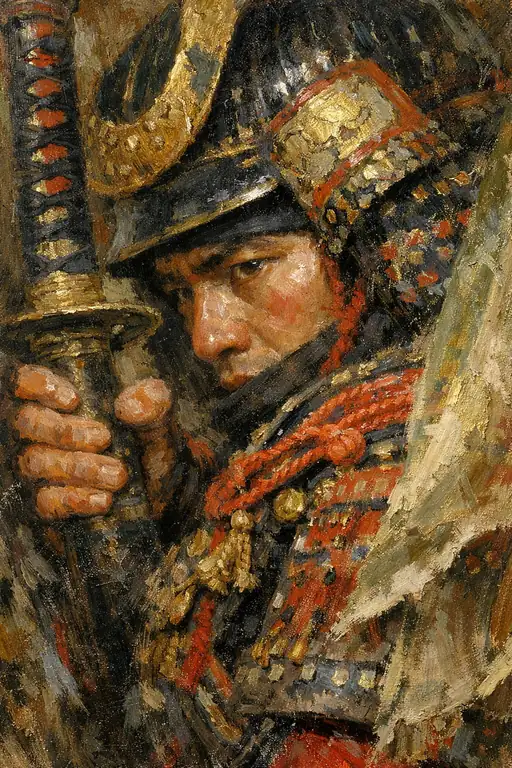 Burden of the Blade
 Whisper of the Bronze Soul
 Pride Frozen in Gold
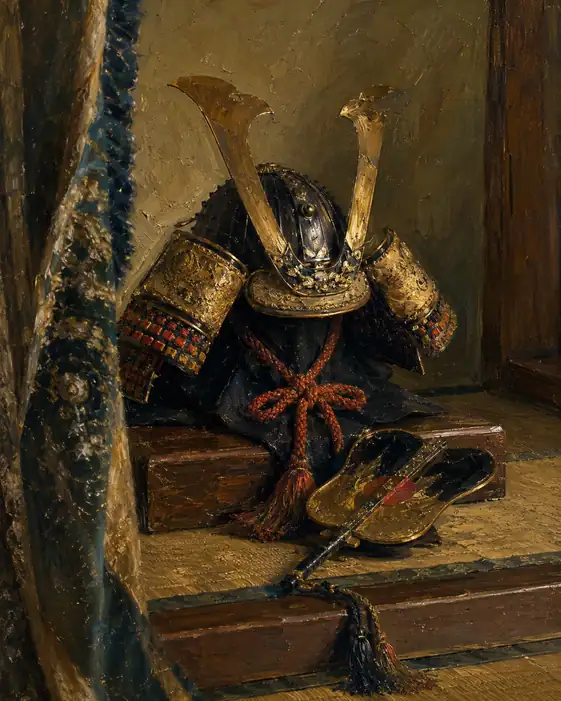 The Silent Pride of the Kabuto
 Honor Carved in Steel
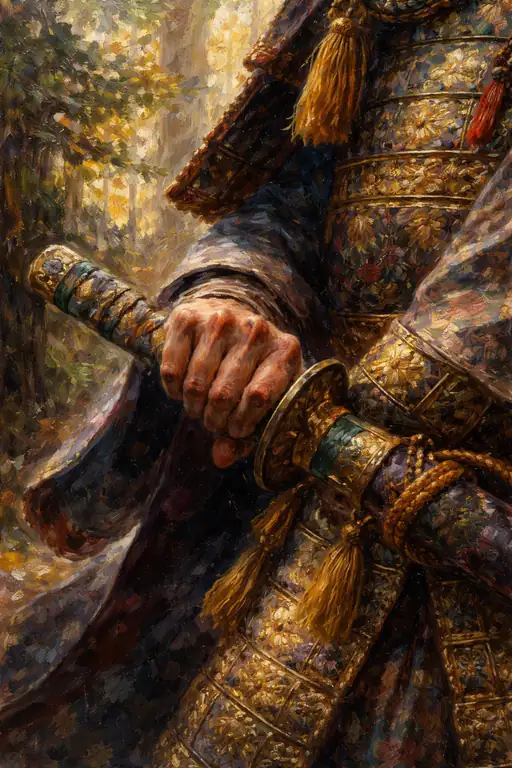 The Final Resolve: Grasping the Soul of the Blade