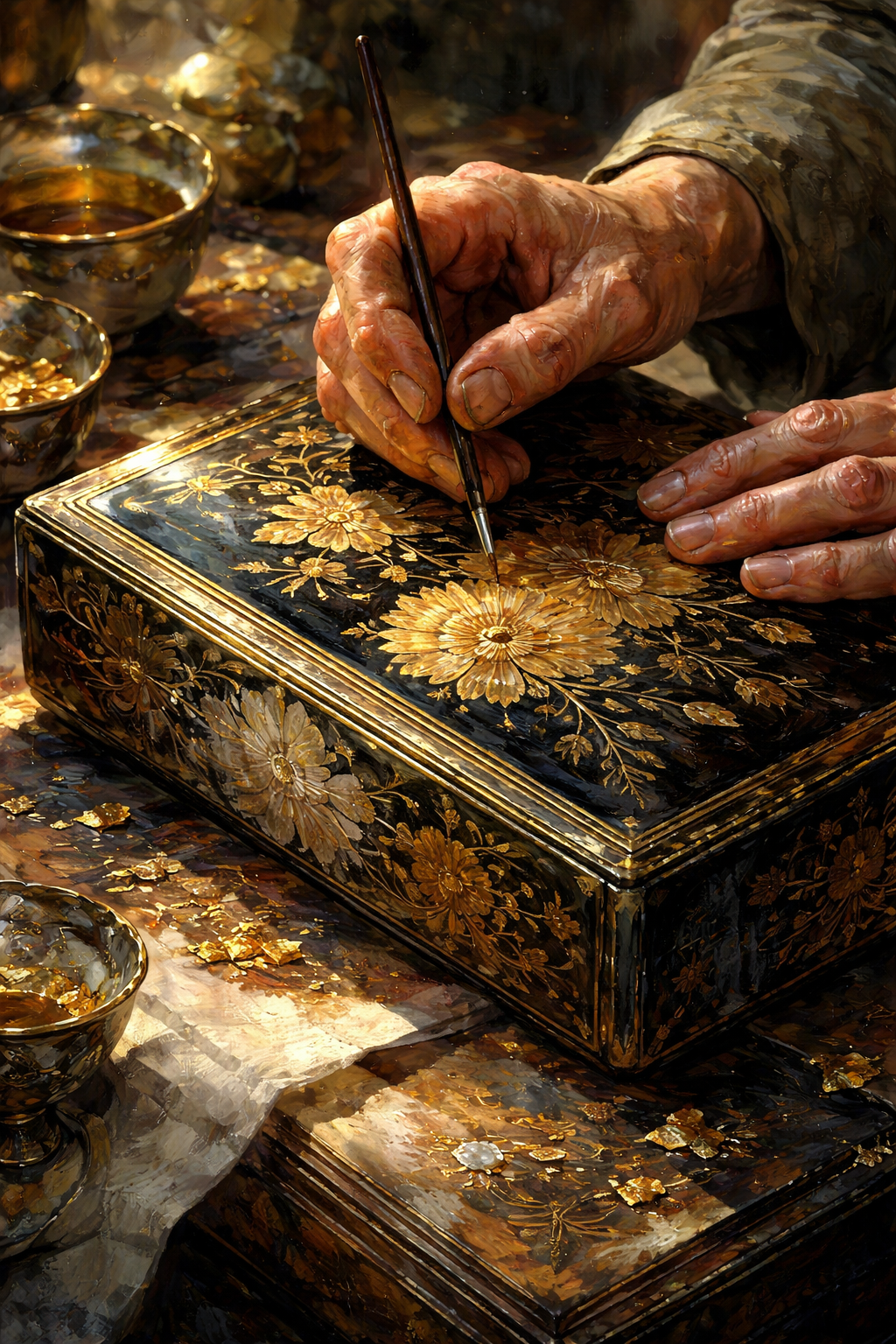
Golden Petals Born of Weathered Hands
Critique
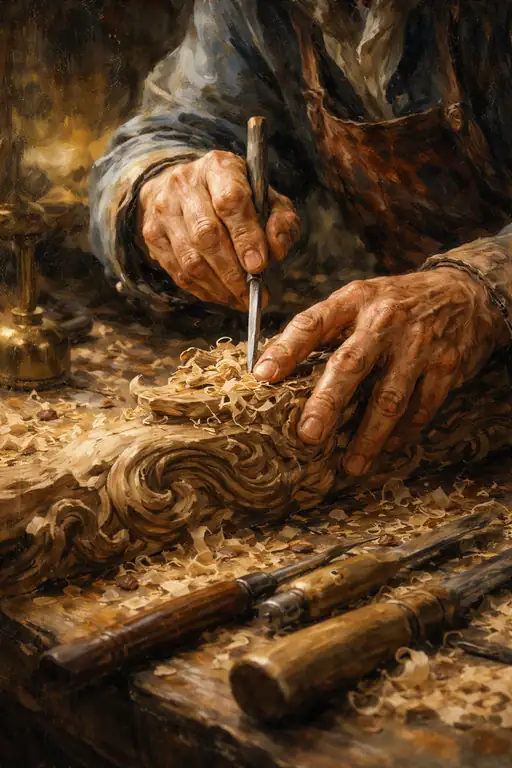
1. Introduction This oil painting presents a poignant tribute to traditional craftsmanship, depicting the weathered hands of an artisan engaged in the delicate process of gold lacquer work. The composition focuses intensely on the interaction between the human touch and the intricate floral patterns of a black lacquer box. The work explores themes of dedication, heritage, and the beauty of manual labor through a highly detailed and atmospheric style. 2. Description In the center of the frame, a pair of aged, wrinkled hands carefully applies gold pigment to a rectangular lacquer box. The box is adorned with elaborate chrysanthemum motifs in shimmering gold and silver against a deep black background. To the left, several small bowls containing gold leaf and liquids are visible on a cluttered workbench scattered with golden flakes. The lighting is warm and directional, casting long shadows and highlighting the textures of both the artisan’s skin and the polished lacquer surface. 3. Analysis The artist utilizes a rich, impasto technique to emphasize the rugged texture of the craftsman's hands, contrasting them with the smooth, reflective finish of the box. High-contrast lighting creates a dramatic sense of depth, drawing the viewer's attention to the precision of the fine brush in the artisan’s right hand. The color palette is dominated by deep blacks, rich browns, and brilliant golds, creating a sense of luxury and timelessness. The tight, close-up composition creates an intimate atmosphere, making the viewer a silent observer of this focused ritual. 4. Interpretation and Evaluation The painting beautifully captures the essence of "living tradition," where decades of experience are distilled into a single, steady movement. The technical rendering of the gold inlay and the anatomical detail of the hands demonstrate exceptional skill and a deep appreciation for the subject matter. The inclusion of the scattered gold leaf and the well-used tools adds a layer of authenticity and a sense of history to the scene. The work successfully elevates a moment of labor into a spiritual act of creation, honoring the quiet persistence of traditional arts. 5. Conclusion Ultimately, the piece serves as a powerful meditation on the value of time and the human spirit in the face of mass production. The initial attraction to the brilliant gold patterns matures into a profound respect for the hands that created them. This painting reaffirms the importance of preserving cultural heritage through the celebration of individual mastery. The final impression is one of reverent silence and the enduring brilliance of a craft perfected over a lifetime.
Same Subcategory
 Bathed in the Amber Glow of Labor
Similar Artworks
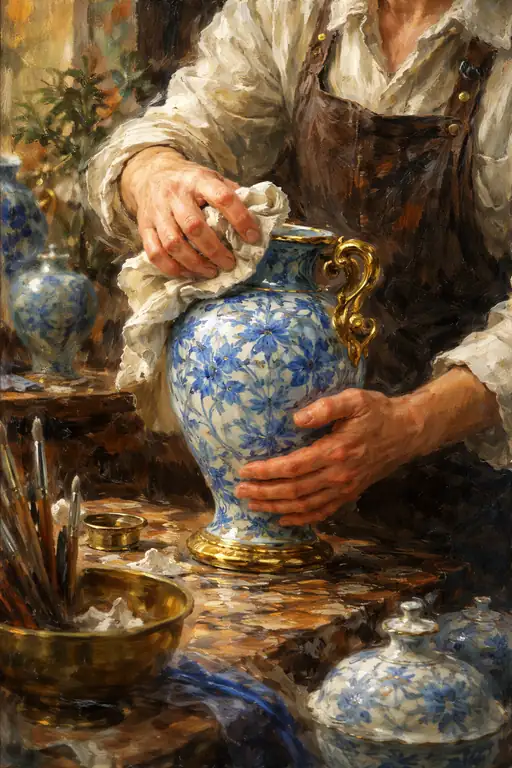 Gentle Hands of the Blue Heritage
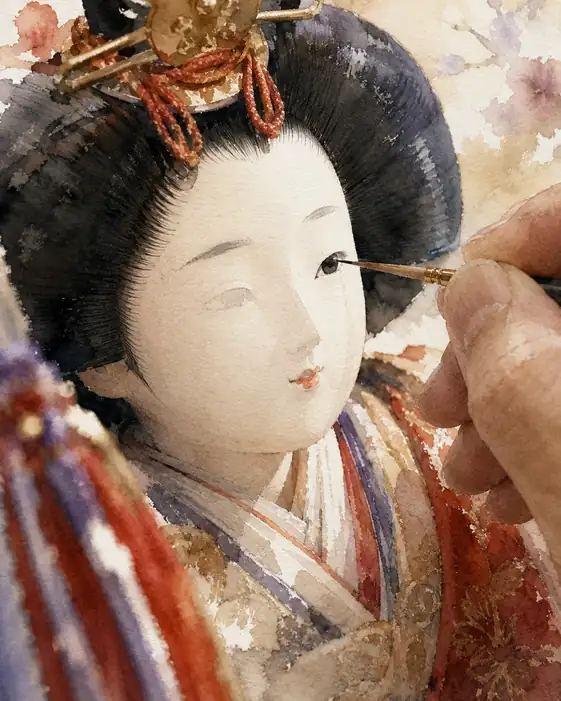 Breathing Soul into the Figure
 Autumn Flowers Blooming in Jet Black
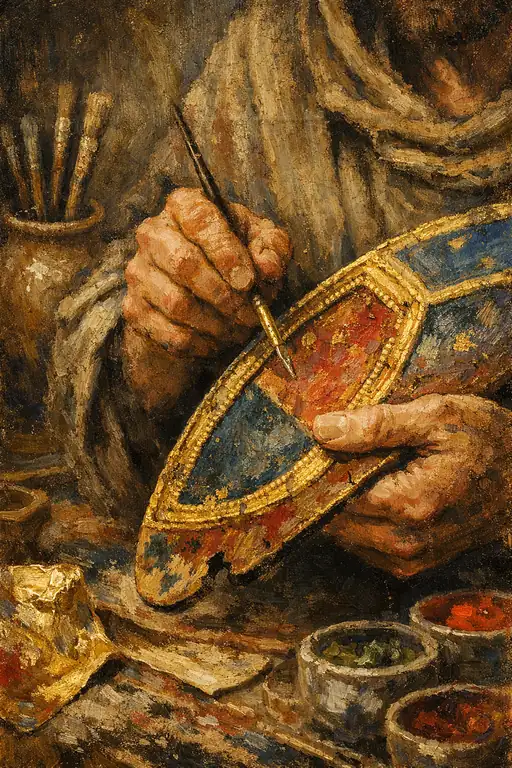 The Devotion of an Artisan's Touch
 The Master's Touch: Awakening the Azure Bloom
 Wisdom in the Clay
 Crossweave of the Indigo Line
 Sailing Seas Within a Glass Bottle
 Polishing the Echoes of Time
 The Soul Carved in Wood