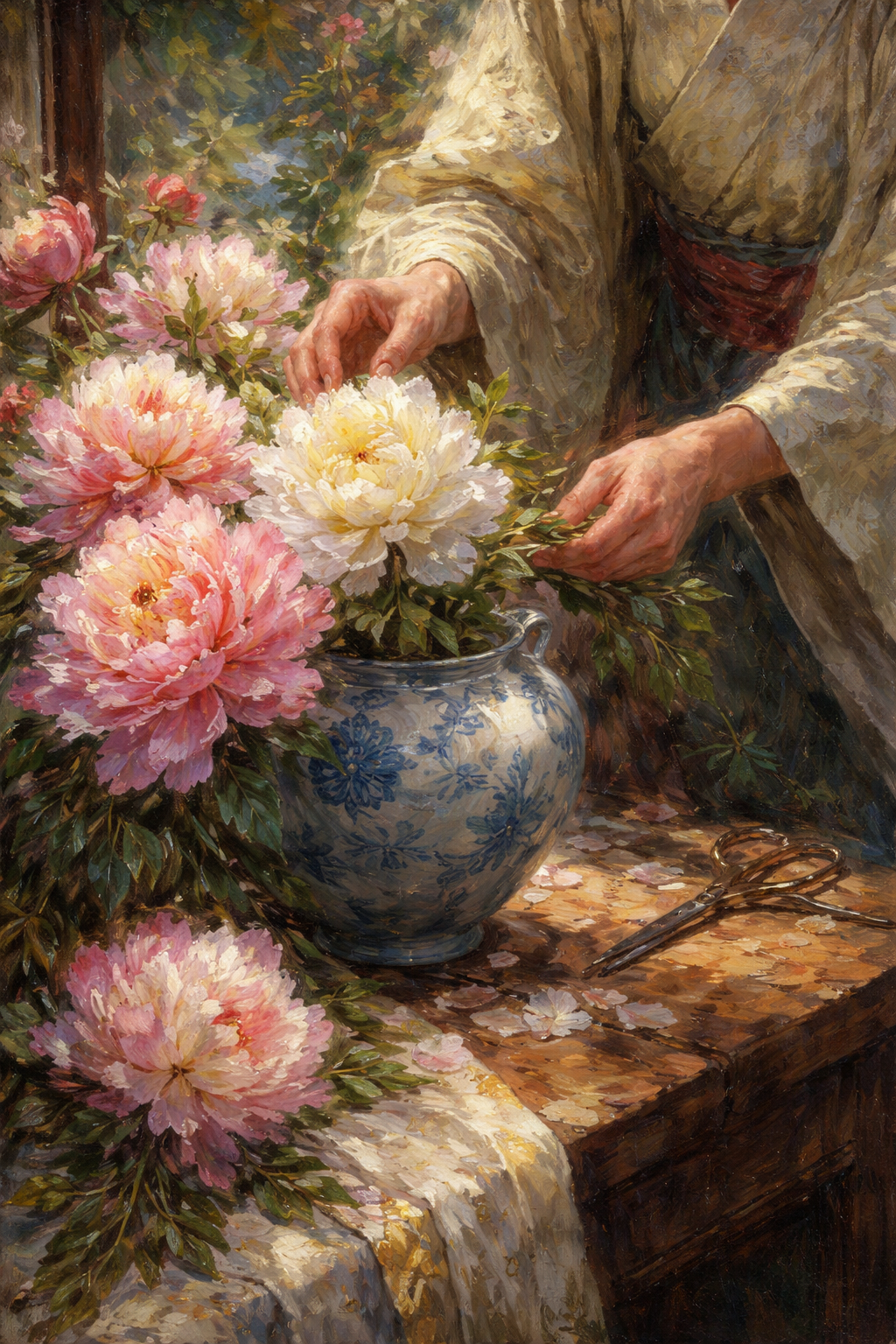
Tending the Blooms of Serenity
Critique
1. Introduction This oil painting captures a serene moment of flower arrangement, featuring a person in traditional attire tending to large, vibrant peonies. The composition balances the delicate beauty of the blossoms with the steady, focused movements of the hands. The work explores themes of tradition, mindfulness, and the ephemeral nature of beauty through a rich, impressionistic style. 2. Description In the center, a blue and white porcelain vase holds several full-bloom peonies in shades of pink and white. A person wearing a pale, patterned kimono with a dark red obi is seen from the chest down, their hands gently adjusting the stems. On the wooden table to the right, a pair of metallic scissors rests among fallen petals, under a patch of warm sunlight. The background consists of soft, dappled light and greenery, suggesting an indoor setting near a window or an outdoor garden. 3. Analysis The artist uses thick, expressive brushstrokes to give the peonies a remarkable sense of volume and texture. High-contrast lighting creates a strong sense of depth, particularly in the way sunlight hits the table and the folds of the kimono. The color palette is dominated by the soft pinks of the flowers and the cool blues of the vase, which are grounded by the warm brown tones of the table. The diagonal line formed by the person’s arms and the scissors leads the viewer’s eye toward the central bouquet. 4. Interpretation and Evaluation The painting beautifully conveys the quiet dedication involved in the art of flower arrangement, elevating a simple domestic task into a meditative practice. The technical rendering of the petals and the translucent quality of the light demonstrate significant skill in capturing complex organic forms. The inclusion of the scissors and fallen petals adds a layer of realism and a poignant reminder of the transience of life. The work successfully blends cultural tradition with a deeply personal, atmospheric execution. 5. Conclusion Ultimately, the piece serves as a contemplative study of harmony between human action and natural beauty. The initial focus on the lush peonies evolves into an appreciation for the cultural and spiritual significance of the scene. This painting stands as a vibrant example of how traditional subjects can be revitalized through an expressive, light-filled technique. The final impression is one of profound tranquility and a deep respect for the quiet beauty found in everyday rituals.
Same Subcategory
Similar Artworks
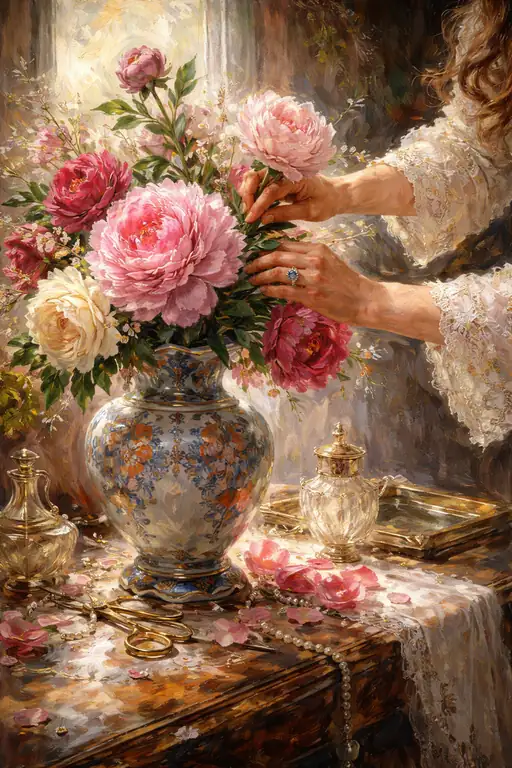 Whispers of a Sunlit Morning
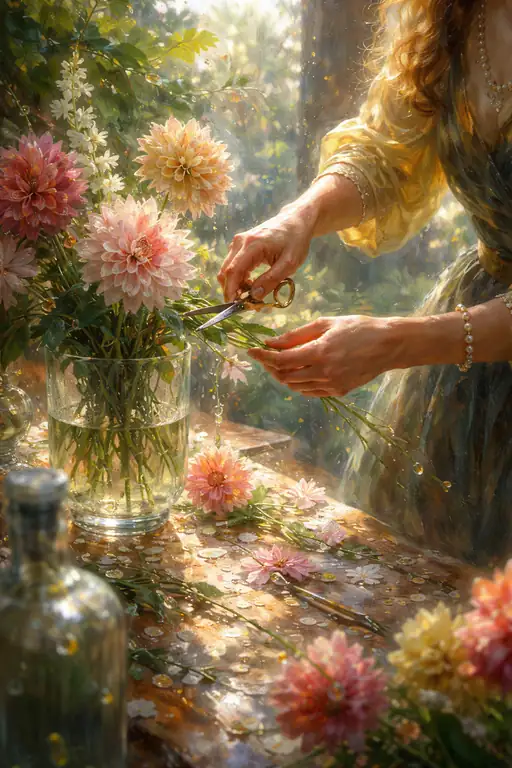 Sunlight Tangled in the Dahlias
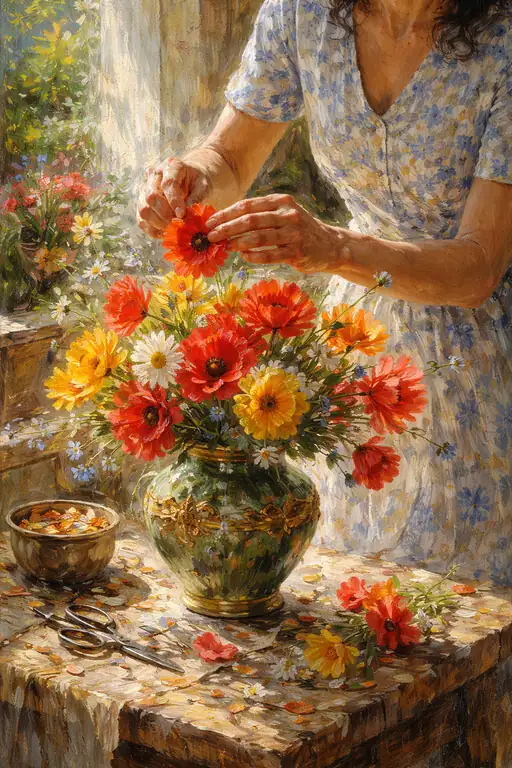 A Serene Symphony of Floral Colors
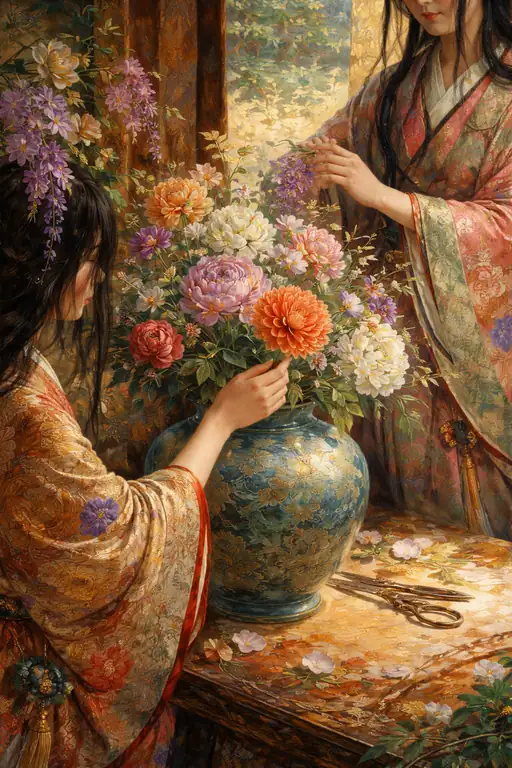 A Shared Moment of Floral Harmony
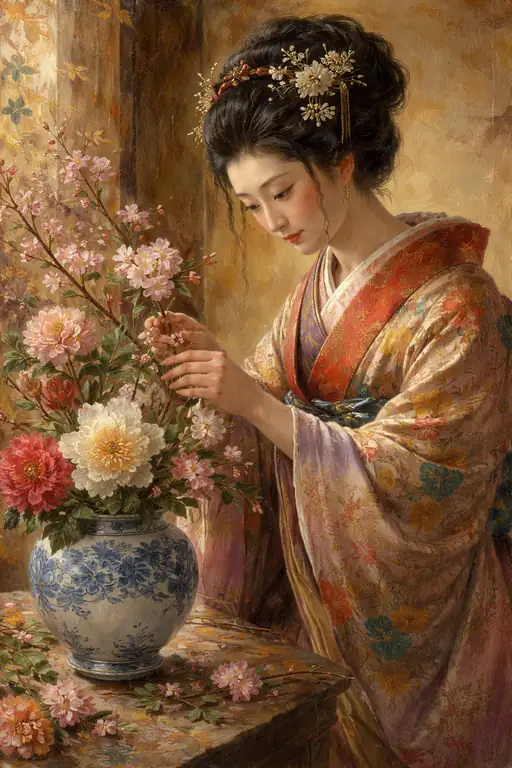 The Golden Silence of Ikebana
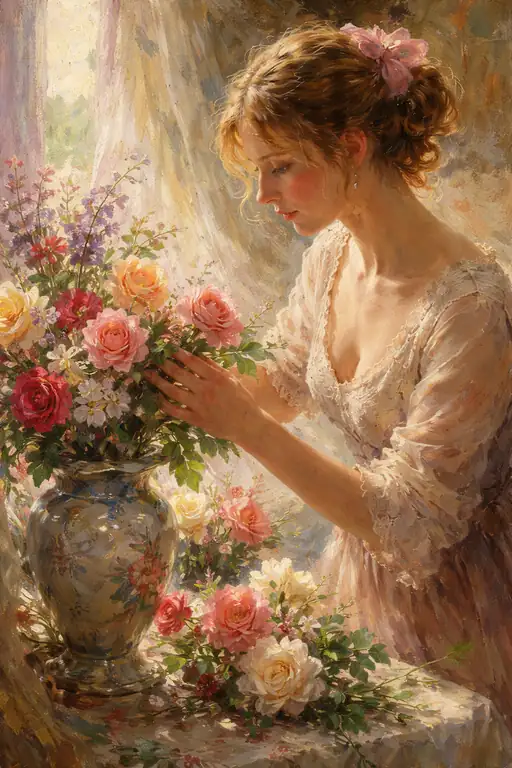 Sunlit Serenity in a Bouquet of Roses
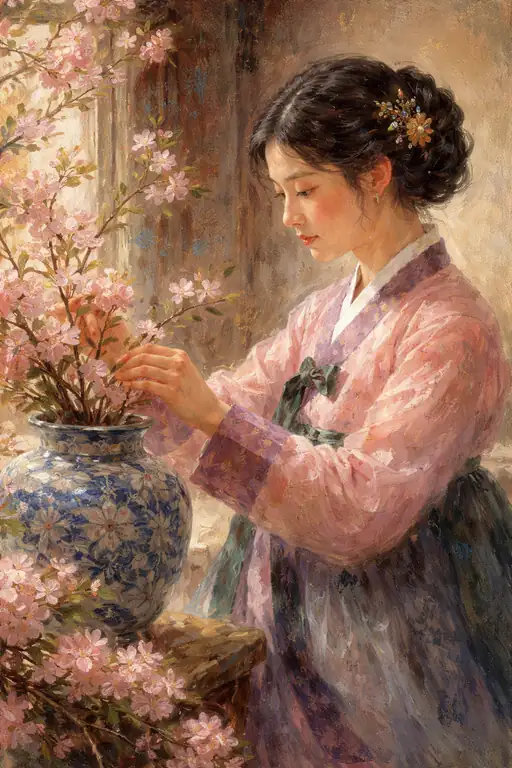 Spring's Gentle Embrace
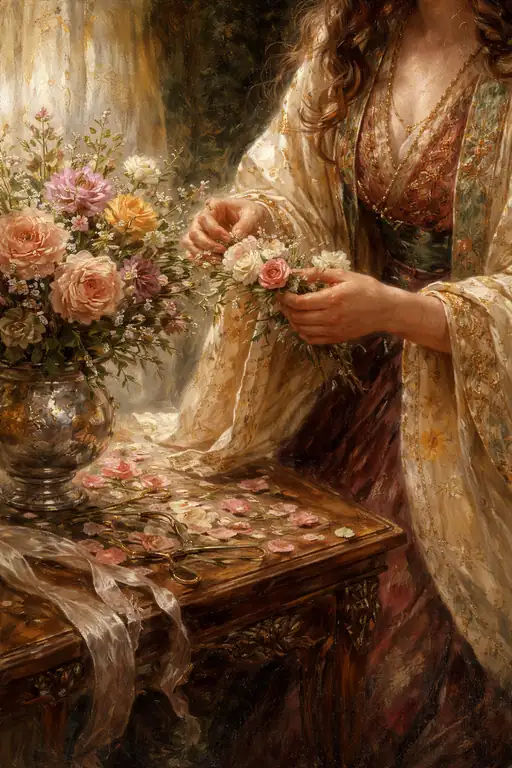 Whispers of Silk and Petals
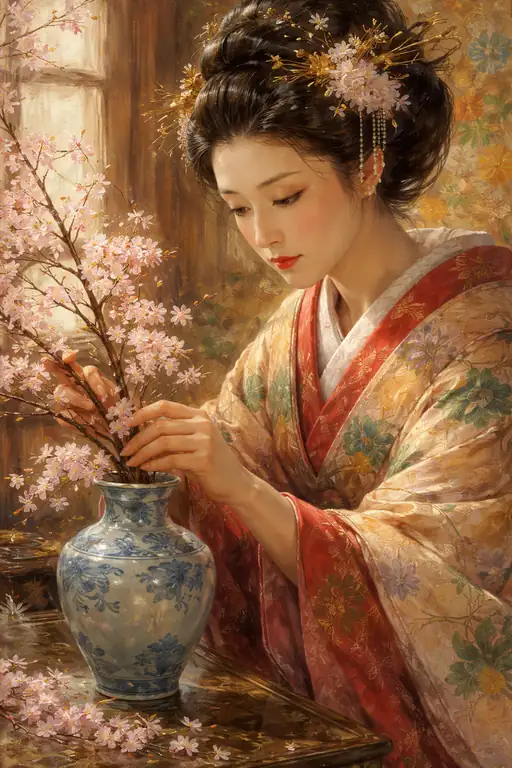 Whispers of Sakura in Porcelain
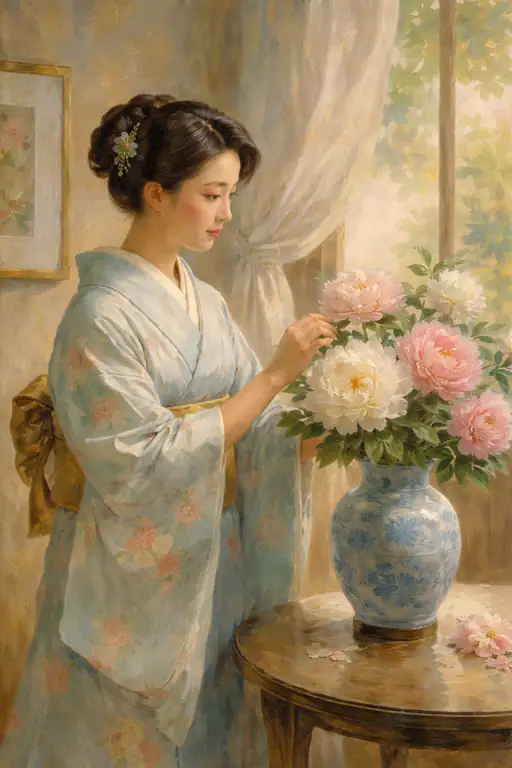 Whispering Petals in the Morning's Gentle Embrace