Whispers of the Cosmos in Brass
Critique
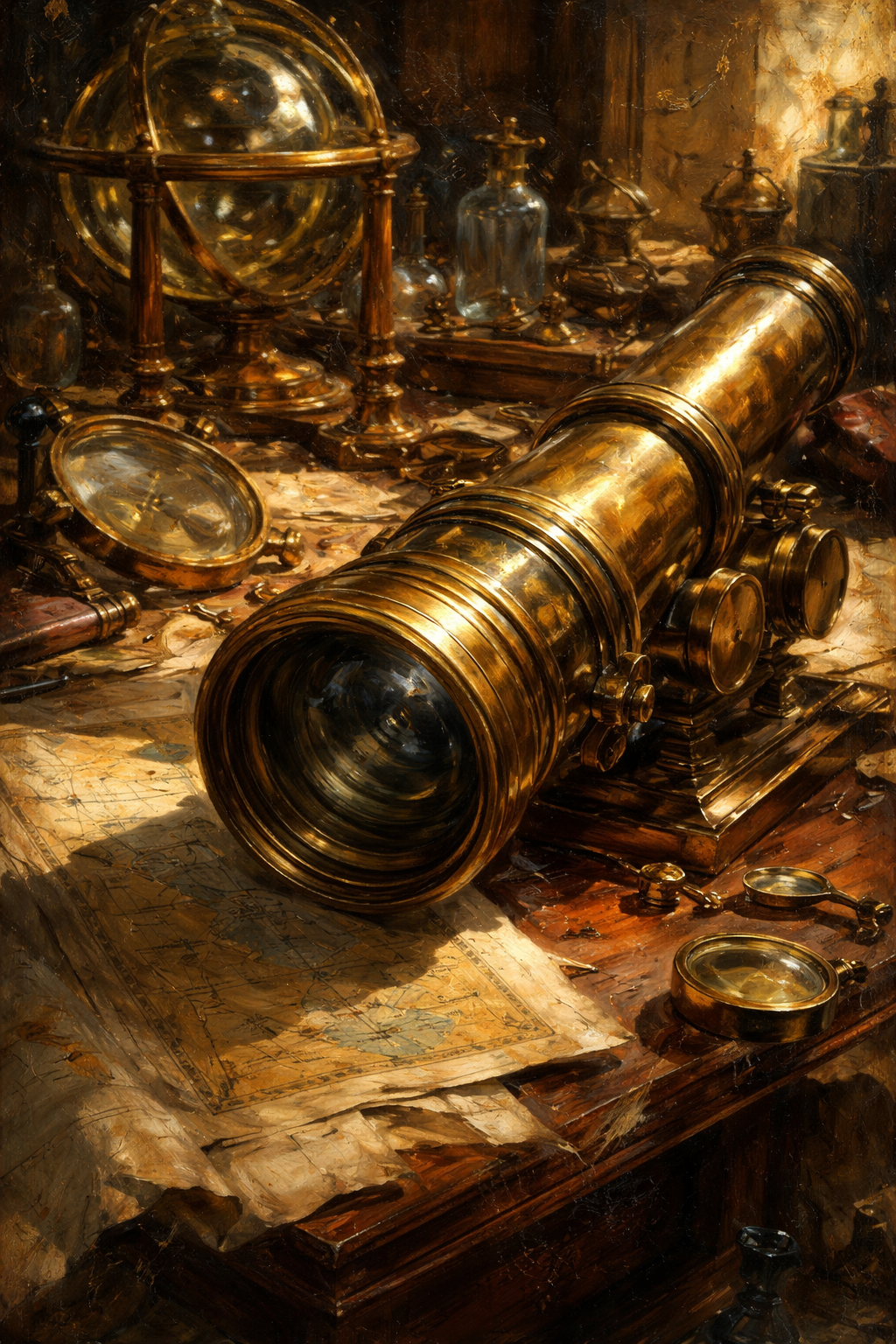
1. Introduction This detailed oil painting centers on a large, polished brass telescope, serving as a powerful symbol of the human quest for discovery and celestial understanding. The work presents a dense accumulation of scientific artifacts, creating a rich narrative environment that evokes the spirit of the Age of Discovery. Through its masterful rendering of materials and light, the piece celebrates the tools that have expanded the boundaries of the known world. 2. Description The primary subject is a substantial telescope positioned diagonally across a wooden desk, with its large lens facing the viewer. Beneath the instrument lies a tattered, intricately detailed map showing coastlines and geographical notations. In the background, a large brass globe and various glass vials and smaller metallic tools are visible, suggesting a well-equipped laboratory or observatory. The lighting is intense, creating sharp highlights on the metallic surfaces and emphasizing the weathered, tactile quality of the parchment maps. 3. Analysis The artist employs a low-angle perspective that lends the telescope a monumental, almost heroic presence within the frame. The color palette is dominated by warm ochre, sienna, and brilliant gold tones, which harmonize the various metallic and wooden elements. Technical execution is particularly evident in the rendering of the brass's reflective sheen and the subtle distortions visible through the magnifying lenses on the table. The diagonal composition of the telescope creates a dynamic sense of movement, drawing the eye toward the center of the optical lens. 4. Interpretation and Evaluation The painting successfully captures the intellectual excitement and rigorous observation associated with early modern science. By grouping the telescope with maps and globes, the artist highlights the interconnectedness of navigation, astronomy, and geography. The level of detail achieved in the textures of paper and metal is exceptional, demonstrating a high degree of technical proficiency. This work is not merely a collection of objects but a profound meditation on the human desire to see beyond the immediate horizon. 5. Conclusion An initial observation of a technical still life gradually transforms into a compelling tribute to human curiosity and scientific progress. The harmonious integration of light, texture, and historical context makes this piece a significant exploration of the instruments of knowledge. It stands as a masterful example of how artistic representation can convey the weight and significance of intellectual pursuit through the depiction of its physical tools.
 Touching the Infinite
 The Alchemist's Dream of Starlight
 Touch of Time Upon the Stars
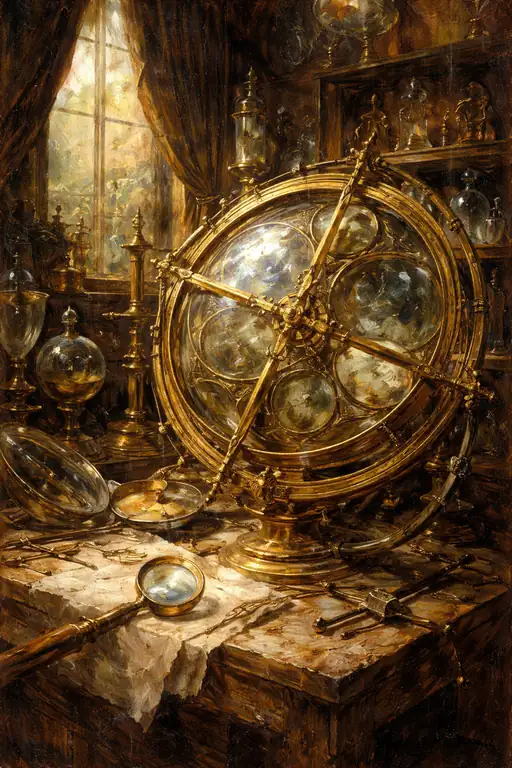 Gleaming Relics of the Astral Study
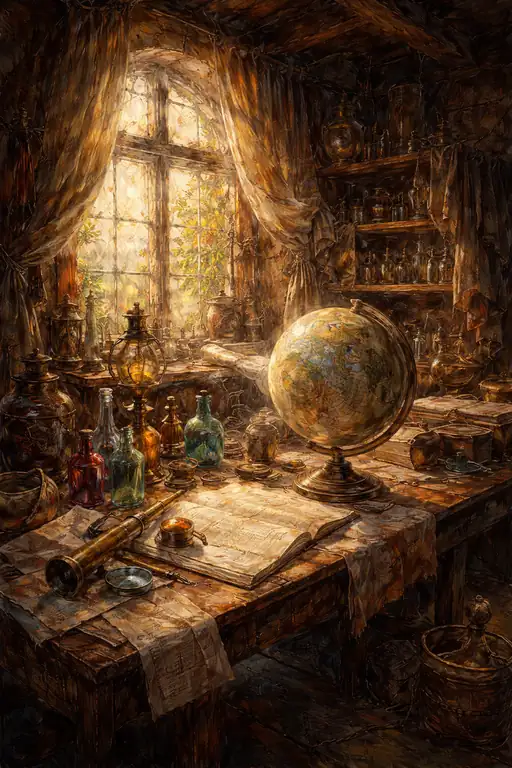 Voyage Beyond the Scholar's Desk
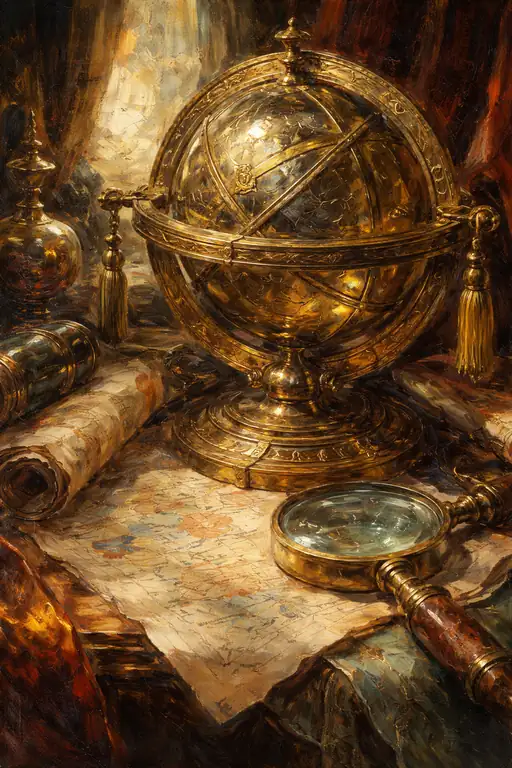 The Golden Map
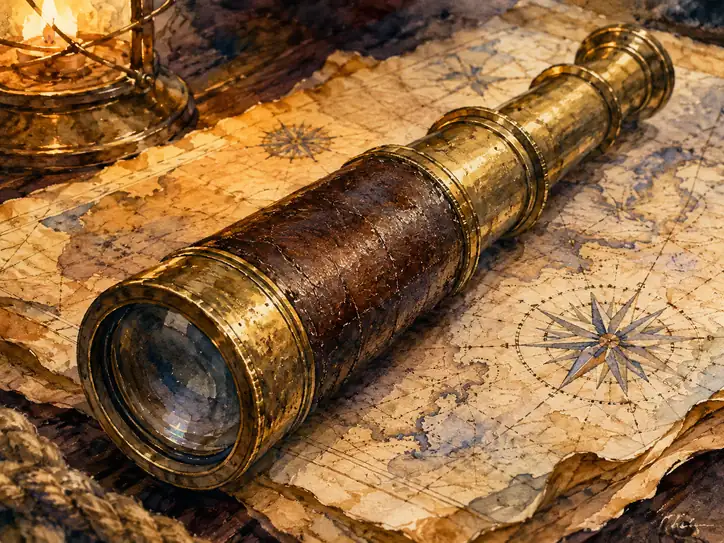 The Navigator's Nostalgia
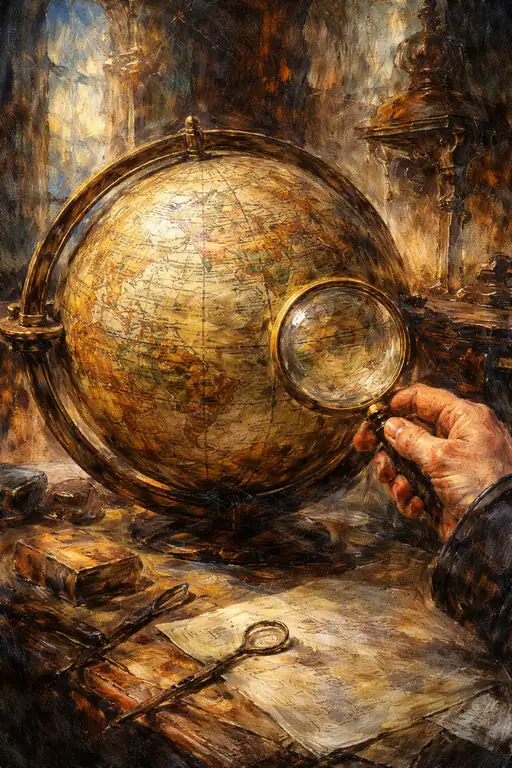 Whispers of the Old Cartographer
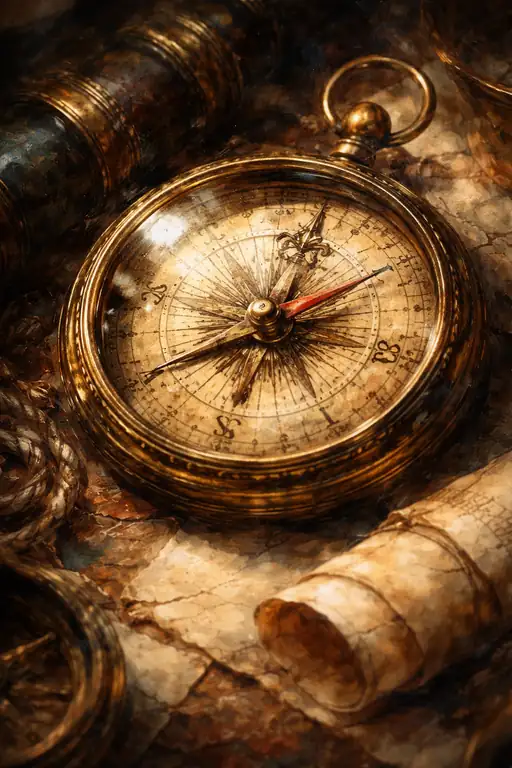 The Compass that Knows My Heart's Direction
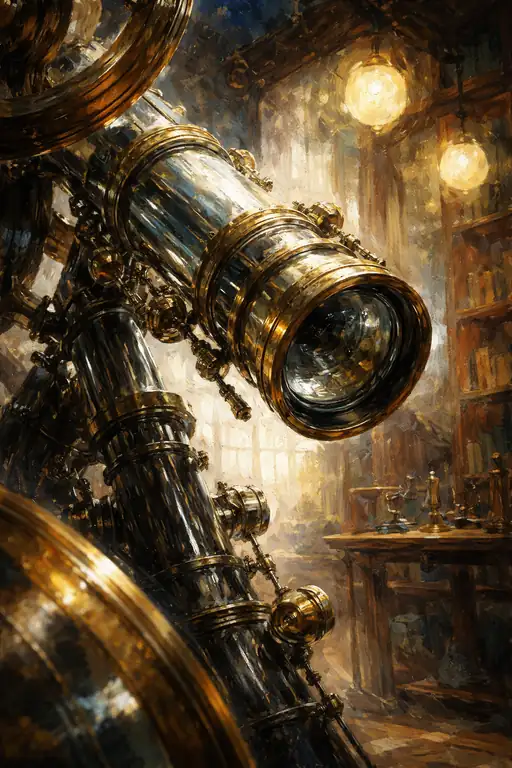 The Scholar's Cosmos
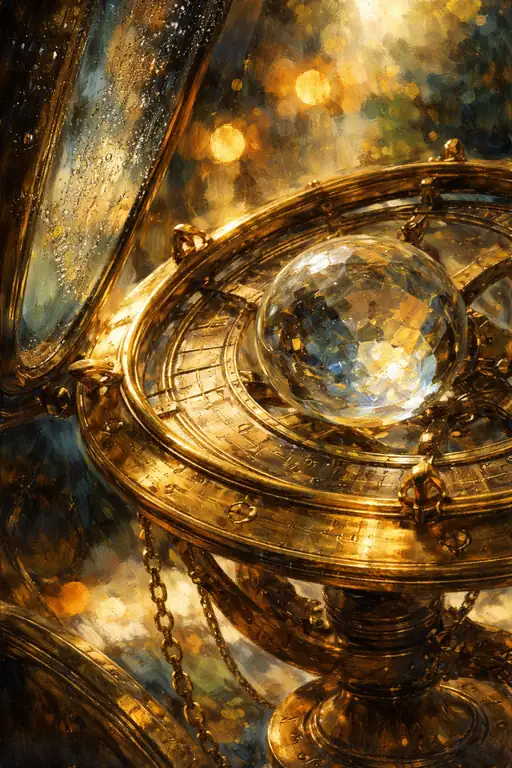 Starlight Bound in Gold
 The Last Horizon